
Oil prices fell 2% on Tuesday based solely on whispers of a deal. The Strait of Hormuz remained closed, and a cargo vessel still reportedly took a projectile hit off Oman's coast near the strategic waterway. This is the dissonant reality framing urgent talks to end a blockade of the world's most critical oil chokepoint, according to Guardian World.

Global TrendsAugust 10, 2026· 7 min read· By XOOMAR Insights Team
Oil Plunges 2% on Secret Iran Peace Deal Hints
Updated on August 10, 2026
XOOMAR Intelligence
Analyst Take
66/ 100
3 sources analyzedMedium confidenceTrend10Freshness97Source Trust90Factual Grounding75Signal Cluster20
The optimism stems from mediators Qatar, Pakistan, and Oman, who say they are exchanging draft proposals between Washington and Tehran. U.S. Treasury Secretary Scott Bessent told CNBC, "I think there is a chance we may have a deal today or tomorrow to open the strait." His comments echoed President Donald Trump's Monday claim of an imminent breakthrough, which Tehran promptly denied.
But the physical and diplomatic landscapes tell conflicting stories. The immediate goal is a fragile, technical arrangement to get ships moving again, even as the wider U.S.-Iran war and a parallel Red Sea crisis continue to simmer.
Crude Oil Tanks on Whispered Promises of Peace
On Tuesday, the fuel for a market rally wasn't a signed document or an official announcement. It was anonymous official optimism. This triggered that 2% drop in crude prices, a clear signal of how starved the energy complex is for any sign of relief.
The trigger was deliberate. U.S. and Qatari officials publicly talked up progress. Qatar’s Foreign Ministry spokesman, Majed al-Ansari, stated negotiations were at "very progressive stages." Bessent gave his "today or tomorrow" timeline. These statements function as trial balloons and market pacifiers.
They stand in stark, almost absurd, contrast to the facts on the water. On Monday night, Britain’s maritime security agency, UKMTO, reported a vessel strike off Oman's coast near the strait. On Tuesday, India condemned an "unprovoked" attack on its commercial ship MSV Faize Noore Oliya in the Red Sea, which Yemen's government blamed on Iran-backed Houthi rebels. The Strait of Hormuz itself? Still closed.
The core tension is whether this is genuine diplomatic progress or sophisticated political theater aimed at calming volatile energy markets. The answer likely lies somewhere in between: a desperate push for a temporary fix, where perception is a tool as important as the terms of any deal.
The Anatomy of a Proposed Temporary Shipping Lane
The heart of the current negotiation is not a grand peace treaty. It is a highly technical, provisional scheme for ship traffic. According to regional diplomats cited in the report, the U.S., Europe, and Saudi Arabia are pressuring Oman to accept a specific plan.
The proposed arrangement involves a temporary transit scheme:
- Ships would enter the Gulf via a route through the strait close to Iran.
- They would then exit on a southern route along the Omani coast, which would be jointly controlled with Iran.
- The most contentious issue|Iran's demand to charge tolls|would be deferred for a 60-day negotiating period. This period would also address Iran's nuclear programme.
Oman's resistance is a key obstacle. The Omani government fears the "temporary" scheme could become permanent, giving Tehran enduring influence over sea routes in Omani waters.
Iranian state media framed the talks differently, reporting negotiations with Oman are "focused on determining safe routes for ships to transit" and developing "mechanisms for future arrangements to manage shipping traffic." This sanitized language masks the geopolitical scramble underneath.
XOOMAR Interpretation: This proposed lane is a classic diplomatic fudge. It offers Iran a symbolic role in managing traffic (the "joint control" of the southern route) and a promise of future talks on tolls, while physically reopening the waterway. It's designed to provide a face-saving off-ramp for all parties, especially the U.S. administration needing a pre-election win.
Three Capitals, Three Agendas, One Chokepoint
The push to reopen the Strait of Hormuz is driven by overlapping but distinct motivations in Washington, Doha, and Tehran.
The U.S. Perspective: A Need for Stability The Biden administration faces a direct economic threat. The strait is the conduit for a fifth of the world's oil and liquified natural gas. Continued closure means soaring energy prices, global economic headwinds, and political vulnerability. Secretary of State Marco Rubio's statement that "progress" had been made, but there was "no finality yet," underscores a desire to claim momentum while managing expectations. The pressure is acute, with regional diplomats saying Riyadh believes "we may be on the brink of a regional war."
The Qatari Perspective: The Indispensable Broker Qatar, alongside Pakistan, has positioned itself as the essential conduit. Al-Ansari's detailed briefings emphasize that "Qatar, Pakistan and Oman were mediating in close coordination." For Doha, successful mediation cements its role as a unique power broker capable of speaking to both the U.S. and Iran, enhancing its security and geopolitical stock. This follows a pattern of Qatar leveraging its niche diplomacy, similar to how regional powers are realigning in other security pacts, as seen in Mideast Powers Forge Pact Echoing NATO Mutual Defense.
The Iranian Perspective: A Divided Regime with a Ultimate Bargaining Chip Tehran holds the strongest physical card|control of the strait|but is playing from a position of internal division. Regional diplomats describe a split:
- The foreign ministry is "keen to do a deal," fearing Iran's control could become a "wasting asset" as traffic finds alternatives.
- Regime hardliners "oppose the deal," arguing the U.S. cannot be trusted to deliver promised financial benefits.
One regional diplomat summarized the hardliner view: "I think the regime understands the magnitude of the hold Iran has over the strait, and they smell the desperation coming from the U.S." Iran's capacity to act as a spoiler was further demonstrated by the parallel Houthi attack in the Red Sea, showing its ability to sustain pressure on multiple maritime fronts even as it negotiates on one.
A diplomat from the region said: "I think the regime understands the magnitude of the hold Iran has over the strait, and they smell the desperation coming from the US in terms of [trying to] strike a deal."
Why Any Deal Will Be Deeply Fragile
Any agreement emerging from these talks will be a tactical ceasefire, not a strategic resolution. The core grievances|the U.S.-Iran war that began on February 28, nuclear ambitions, regional proxy conflicts|remain entirely unaddressed. The talks are narrowly focused on a shipping lane, with broader issues like sanctions and military posture deferred.
This sets the stage for a volatile cycle.
- A Deal's Inherent Instability: The proposed 60-day negotiating period on tolls and nuclear issues is a minefield. Disagreements over inspection regimes or fee structures could cause immediate collapse.
- Proxy Group Spoilers: As seen with the Houthi attack on the Indian vessel, Iran-aligned groups can act independently, providing plausible deniability for Tehran while derailing talks. An incident like the Saudi Oil Tanker Hit, Exposing World's Backup Supply Routes could instantly reset the calculus.
- Domestic Politics in Tehran: Hardliner opposition means any Iranian concession is vulnerable to being framed as surrender, forcing the government to adopt a harder line to maintain legitimacy.
The market's 2% dip on mere whispers reveals a dangerous dependency on these talks. It primes energy traders for relief rallies on every rumor and panic sell-offs on every setback. This episodic volatility may become the new normal for oil markets.
What to Watch Next:
- Oman's Decision: Will Muscat formally accept the temporary routing plan under immense U.S.-Saudi pressure?
- The First Transit: The first attempted passage under any new scheme will be the ultimate test. Will it proceed without incident?
- The Red Sea Front: Continued Houthi attacks, like the one on the MSV Faize Noore Oliya, will undermine the credibility of any Gulf agreement and signal Iran's intent to keep other pressure points active.
The Strait of Hormuz may soon reopen, but the underlying conflict has entered a new, more complex phase. The diplomacy is now as much about managing global energy prices and domestic political clocks as it is about resolving a war. In this environment, a reopened strait is not a sign of peace, but a temporary valve release on a still-pressurized system.
The Bottom Line
- A ceasefire and reopening the Strait of Hormuz would ease global energy prices, reducing costs for consumers and businesses worldwide.
- The continued attacks near this critical chokepoint underscore the high risk of market volatility and supply chain disruptions if diplomatic efforts fail.
- The progress signals a potential de-escalation in a broader regional conflict that has threatened global maritime security and trade routes.
Crude Oil Reaction to Ceasefire Optimism
Price Drop on Whispered Deal
%2
Sources

Written by
XOOMAR Insights Team
Research and Editorial Desk
The XOOMAR Insights Team pairs automated research with human editorial judgment. We track hundreds of sources across technology, fintech, trading, SaaS, and cybersecurity, cross-check the facts, and explain what happened, why it matters, and what to watch next. We do not just rewrite headlines. Every article is fact-checked and scored for reliability before it goes live, and we link back to the original sources so you can verify anything yourself.
Explore More Topics
Related Articles
 Global Trends
Iran Seizes Control Over Strait of Hormuz Via Secret Oman Deal
Iran formalized a temporary shipping route with Oman, cementing Tehran's administrative control over the Strait of Hormuz while keeping blame for insecurity on
Aug 5, 20266 min
 Global Trends
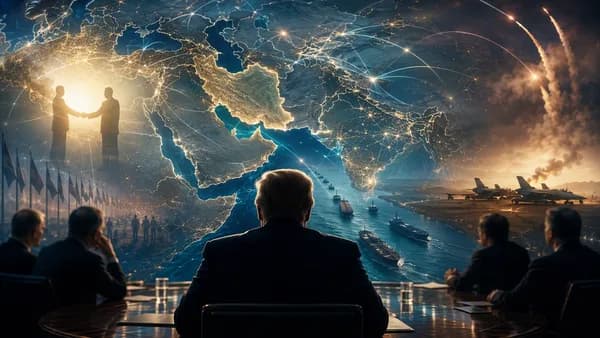
Trump Shelves Iran Strikes Unless a Deal Lands Fast
Trump says Iran strikes are shelved only if a rapid deal opens Hormuz and ends the nuclear threat. The pressure hasn't vanished.
Aug 2, 20265 min
 Global Trends
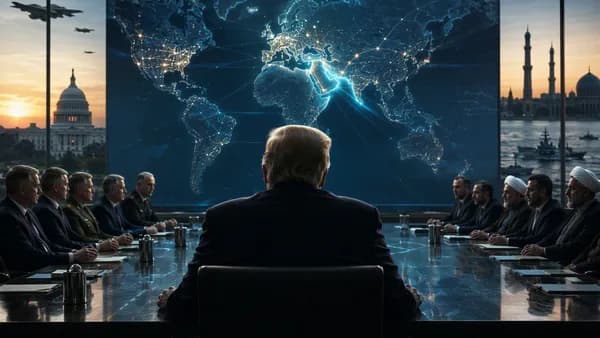
Trump Iran Talks Turn Paused U.S. Strike Into Leverage
Trump paused U.S. strikes to force Iran back to talks, but the threat could deepen the Hormuz and nuclear standoff.
Aug 3, 20267 min
 Global Trends
Saudi Oil Tanker Hit, Exposing World's Backup Supply Routes
A reported Houthi missile strike on a Saudi Aramco tanker near the Red Sea port of Yanbu has shattered the global oil market's primary contingency plan, proving
Aug 9, 20266 min
 Global Trends
Mideast Powers Forge Pact Echoing NATO Mutual Defense
Saudi Arabia, Turkey, and Pakistan signed a pact vowing mutual defense like Article 5 of NATO, forming a Sunni bloc with a nuclear deterrent during a war with I
Aug 7, 20265 min
 Cybersecurity
Silicon Dust Precedes Troops as Cyber War Becomes First Strike
Cyber operations are no longer a shadow war. They're now the first, required phase of modern military conflict, degrading an enemy's systems before traditional
Aug 9, 20266 min
 Fintech
US Services Index Plunges Into Survival Test
A strong surge in new business orders masks a deep contraction in service sector jobs and a fierce reacceleration in costs, revealing an economy stuck in inflat
Aug 9, 20267 min
 Trading
Sterling Slips as Hormuz Fears Prompt Safe-Haven Dollar Rush
The British Pound fell from recent highs because rising tensions in the Middle East, centered on the Strait of Hormuz, triggered a classic flight to the safety
Aug 10, 20266 min
 Technology
BMW Forces Spider-Man Ads on Driver Dashboards Without Consent
BMW is rolling out unskippable, full-screen Spider-Man movie ads onto vehicle screens worldwide as part of a corporate partnership, reneging on a promise not to
Aug 10, 20267 min
 Global Trends
Labour Members Shun Welfare for Health, Economy Priorities
A new poll shows Labour Party members overwhelmingly prioritize health and the economy, with nearly half believing the government spends too much on welfare.
Aug 10, 20267 min
Don't miss the signal
Get our weekly roundup of the stories that matter across tech, fintech, and trading. No noise, just signal.
Free forever. No spam. Unsubscribe anytime.