Updated: March 27, 2025 This article has been revised to reflect the latest status of the incident, official statements, and post-incident analysis following the extinguishment of the fire.
XOOMAR Intelligence
Analyst Take
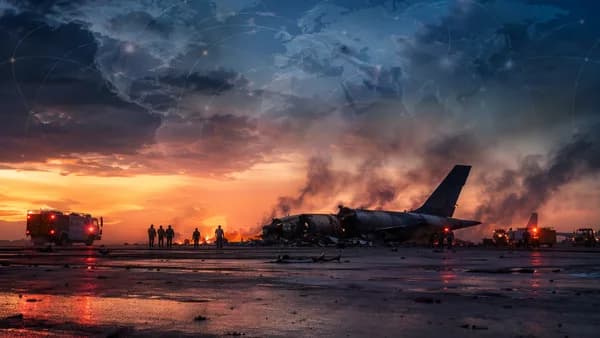
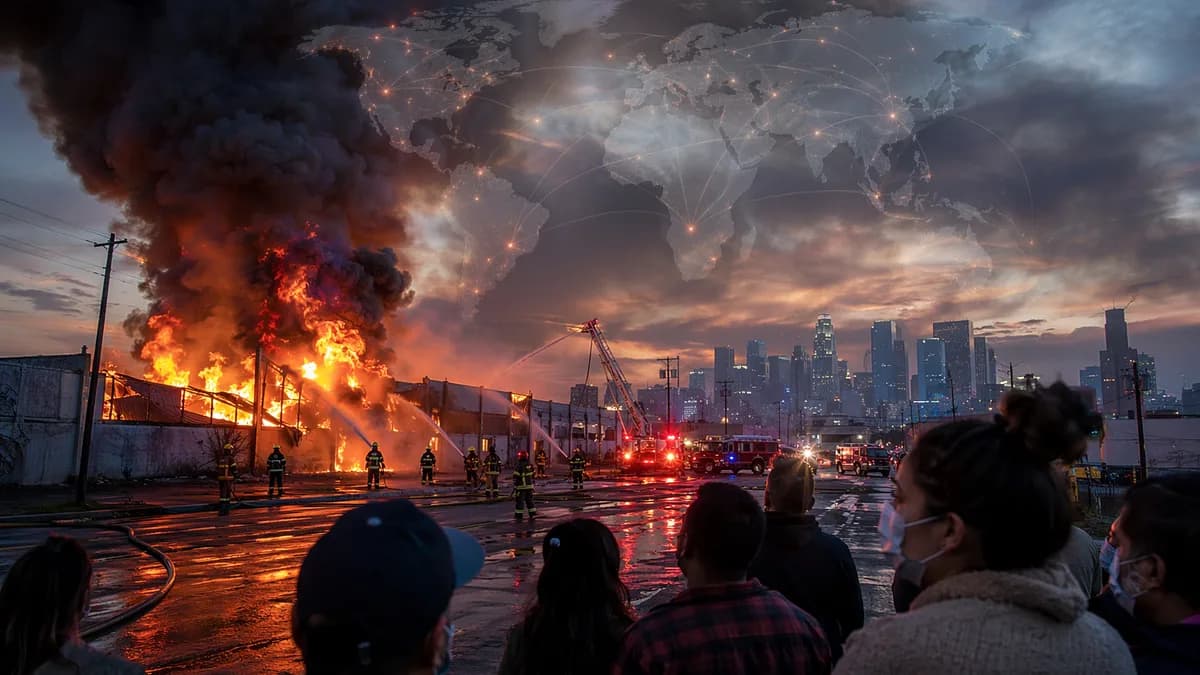
The Los Angeles warehouse fire that began in June 2024 escalated from a structural blaze into a prolonged public health and logistical crisis, leading Mayor Karen Bass to declare a citywide state of emergency due to the extensive smoke spread from the Boyle Heights site.
The fire ignited on 17 June 2024 at a massive 500,000-sq-ft cold-storage facility in the Boyle Heights neighborhood. While firefighters knocked down the initial rooftop flames relatively quickly, a deep-seated, smoldering fire persisted within the building's insulation and stored materials for days, generating a continuous and widespread smoke plume.
Emergency declaration broadens crisis response beyond firefighting
Mayor Bass’s emergency declaration formally requested Governor Gavin Newsom to expedite state relief and deploy aid under the California Disaster Assistance Act. This pivotal shift transformed the incident from a fire department operation into a coordinated, multi-agency city response involving public health, emergency management, environmental protection, and resident support services.
Councilmember Ysabel Jurado, representing Boyle Heights, emphasized that the declaration addressed the extended community impact, not just the fire.
“This emergency declaration was crucial because Boyle Heights was not just responding to a fire. Residents lived through days of smoke, shelter-in-place orders, disruptions to daily life, and ongoing questions about what this meant for their health and well-being,” Jurado stated.
The city and county established smoke relief centers to provide respite for affected residents, a measure Bass highlighted in her ongoing communications.
Prolonged smoke exposure creates extended public health concern
A core challenge was the persistence of hazardous smoke long after visible flames were subdued. Officials initially issued shelter-in-place orders for nearby residents due to dangerous air pollution and the confirmed rupture of an on-site ammonia line. Ammonia, a common industrial refrigerant, is highly toxic and flammable, forcing firefighters to alter tactics and work from a safer distance, utilizing helicopter water drops.
For residents, the lingering smoke raised urgent, practical questions about air quality, health risks for vulnerable populations, and the safety of daily activities. The public demand shifted from fire updates to real-time, plain-language information on environmental hazards.
XOOMAR analysis: The emergency declaration provided City Hall with critical tools for resource coordination, but it also elevated public expectations for transparency. After enduring days of disruption, residents required clear, specific health guidance and credible timelines, not vague reassurances. This incident mirrors accountability patterns seen in other crises, where official declarations are followed by intense scrutiny over government follow-through and communication.
A complex cold-storage facility presented unprecedented challenges
The scale and design of the facility defined the crisis. The 500,000-sq-ft warehouse, topped with a solar-panel array that initially caught fire, was engineered to retain cold, making interior access and complete extinguishment extremely difficult. The smoldering fire within layers of insulation and stored material proved stubborn.
Once the fire was finally declared fully extinguished, a monumental cleanup began. The Los Angeles Fire Department and contracted crews faced the removal of approximately 85 million pounds of spoiled food, including poultry, pork, beef, and bread, presenting significant biohazard and logistical challenges. This post-suppression phase turned the incident into a prolonged environmental and operational recovery effort.
| Stage | Initial Assumption | Evolved Reality |
|---|---|---|
| Fire Response | Extinguish the rooftop blaze | A deep-seated, smoldering fire persisted for days |
| Public Safety | Short-term shelter-in-place orders | Prolonged smoke disruption across the metro area |
| Hazmat Risk | Contain a single ammonia leak | Manage ongoing complex hazardous smoke composition |
| Cleanup | Secure the building post-fire | Execute a massive, multi-week spoiled food removal operation |
From crisis response to recovery and accountability
The emergency declaration enabled Los Angeles to accelerate interagency coordination, emergency spending, and state resource requests. The focus transitioned from fire suppression to managing consequences: air quality monitoring, public health advisories, damage assessment, and long-term cleanup planning.
Key Post-Incident Developments:
- The fire was ultimately extinguished after a multi-day effort, but smoke impacts and odor lingered in the community for some time.
- The massive cleanup operation to remove tens of millions of pounds of rotted food was completed, mitigating further public health risks.
- Investigations into the exact cause of the fire and the performance of safety systems (like the solar array and ammonia containment) are concluded, with findings leading to new regulatory discussions for industrial cold-storage facilities in urban areas.
The most critical outcome was the test of crisis communication and operational clarity. The event underscored that in modern urban industrial disasters, the immediate firefight is only the first chapter. Managing the ensuing environmental, health, and community disruption requires sustained, transparent, and well-coordinated action from city leadership.
Impact Analysis
- The Los Angeles warehouse fire demonstrated how a single industrial fire can escalate into a multi-week citywide public health and logistical emergency.
- The event tested interagency coordination beyond the fire department, involving public health, environmental agencies, and emergency management at city and state levels.
- It has prompted renewed scrutiny of safety regulations and emergency preparedness for large-scale cold storage facilities located near residential communities.
- The prolonged smoke event highlighted the critical public need for timely, accurate, and accessible environmental hazard information during extended crises.
Primary Sources & Disclosures

Written by
XOOMAR
Data desk
XOOMAR is a capital markets software and data company. Every brief on this site starts from a dataset the company collects itself from primary sources (CFTC, SEC EDGAR, FINRA, the Federal Reserve, exchange APIs) and names the numbers it is built on, with a link to the data page so you can check them. Briefs are reviewed before they go out and corrected in place when the data is revised.