Three die of asphyxiation during Mexico City World Cup celebrations
Three people died of asphyxiation during Mexico City World Cup celebrations after Mexico beat Ecuador and secured a place in the World Cup Round of 16, turning a night of national euphoria into a public safety emergency.
XOOMAR Intelligence
Analyst Take
Mexican health authorities said the deaths happened during massive celebrations in downtown Mexico City, according to ABC International. The victims were found unconscious on streets near the Angel of Independence monument, where thousands had gathered Tuesday night.
The Mexico City Health Secretariat said the victims were 48, 44 and 19 years old. They were not publicly identified. Authorities said two were women and one was a man.
Officials have not released a full account of how the deaths occurred. That matters. The confirmed cause given by authorities is asphyxiation, meaning a lack of oxygen, but the public record does not yet explain the exact sequence that led each person to collapse.
Mexico City Mayor Clara Brugada said emergency crews responded after reports of three unconscious people near Paseo de la Reforma, but they had already died.
Brugada urged the public to celebrate “responsibly, carefully and with empathy.”
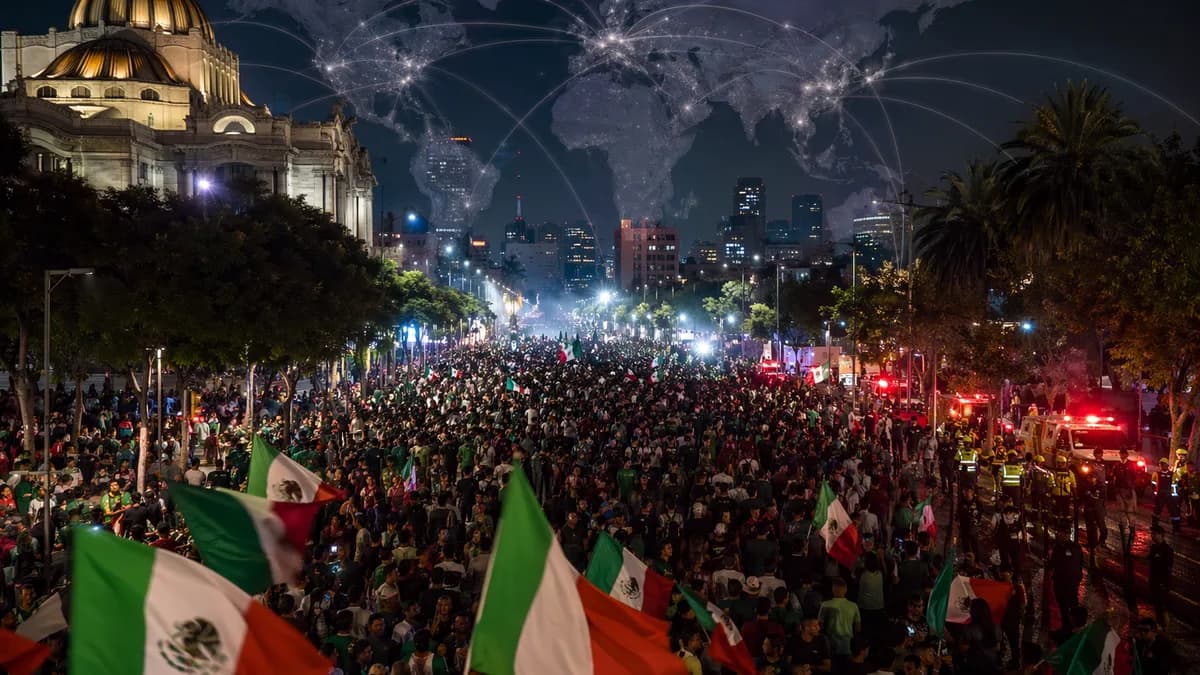
The celebrations followed Mexico’s victory over Ecuador, which sent the national team into the knockout rounds. Fireworks lit up the area around the Independence Monument, popularly known as “El Ángel”, as crowds packed the central corridor linking the Zócalo with Chapultepec Park.
Brugada said in a video posted Tuesday that about 1 million people were celebrating in the streets and urged more people not to head into the city center because of overcrowding. She encouraged people instead to attend a concert by a popular cumbia band in the eastern part of the city.
Downtown crowds near El Ángel overwhelmed the capital’s celebration zone
The fatal incidents were reported around one of Mexico City’s most symbolic gathering points. El Ángel often becomes the capital’s emotional center after major national moments, and Tuesday night’s World Cup win drew dense crowds along the 5-kilometer (3-mile) Paseo de la Reforma.
The scene, as described by the Associated Press, was crowded and chaotic. Improvised bands played on street corners. Carts carrying fireworks known as “toritos” moved through streets where people could barely move. Bottles of alcohol passed between young revelers as many tried to push closer to the city center.
Those details do not establish the precise cause of the deaths. They do show the condition officials were dealing with: a huge celebration, limited movement, heavy crowding and emergency responders trying to reach people in the middle of it.
| Confirmed by officials | Still not released |
|---|---|
| Three deaths during the celebrations | Victims’ names |
| Asphyxiation cited by health authorities | Exact circumstances of each death |
| Victims were 48, 44 and 19 | Full medical findings |
| Deaths occurred near El Ángel and Paseo de la Reforma | Complete timeline of emergency response |
| About 1 million people were in the streets, according to Brugada | Any final assessment of crowd controls |
A related report from The Guardian said more than a million people gathered in Mexico City and identified the match as a 2-0 victory over Ecuador, citing the capital’s health secretariat and local officials.
XOOMAR analysis: The key issue is not whether the celebration was large. Officials have already said it was. The unanswered question is whether the crowd conditions around Reforma left enough room for people to move, breathe and receive medical help once distress calls came in.
That question cannot be answered from the first official statements. Authorities have confirmed the deaths, the general location and the medical category. They have not yet described whether the victims were trapped, separated, pushed, unable to exit, or affected by another factor.
For readers tracking public safety around major events, XOOMAR has also covered Gunfire at San Jose World Cup Fan Zone Kills 1, Injures 1 and Monaco Explosion Unleashes Manhunt After Backpack Blast. Those are separate incidents, but they point to the same editorial reality: large public gatherings can turn quickly from celebration to emergency.
Mexico City officials now face hard questions on fan safety and emergency access
The next official updates should clarify three things: who the victims were, what medical findings show and how emergency crews reached them through the crowd.
Brugada said the city was in contact with the victims’ families, according to related reports, and offered condolences. The health secretariat’s first statements focused on the deaths and the immediate medical response. They did not provide a detailed crowd-management account.
That gap is the center of the story now.
Practical questions for officials include:
- Access: How quickly could emergency crews reach the unconscious victims near Paseo de la Reforma?
- Crowd density: Where were the most dangerous bottlenecks around El Ángel and nearby streets?
- Closures: Which streets were closed to traffic, and did closures help or hinder medical access?
- Communication: How were Brugada’s warnings to stop heading toward the city center delivered to people already en route?
- Medical timeline: Were the victims treated at the scene, transported, or declared dead before hospital care?
The source material confirms overcrowding and a crush of people, but it does not confirm a specific crowd surge, policing failure or act of violence tied to the deaths. Any claim beyond that would outrun the evidence.
Mexico’s advance to the Round of 16 means authorities will be under pressure to explain what happened before the next major public gathering around the national team. The watch item is narrow and urgent: whether Mexico City releases a clearer timeline of the three deaths, and whether officials change crowd-control, road-closure or emergency-access plans for future celebrations.
Impact Analysis
- The deaths turned a major national celebration into a public safety emergency.
- Authorities have confirmed asphyxiation but have not yet explained how the victims collapsed.
- The incident highlights crowd-control risks during massive public gatherings, including events drawing about 1 million people.
Primary Sources & Disclosures
- [1]ABC International
- [2]Three people die in mass fan celebrations in Mexico City after World Cup victory
- [3]Three people die from suffocation during celebrations in Mexico City as fans take to the streets following World Cup win over Ecuador | LBC
- [4]Three dead as fans in Mexico City celebrate historic World Cup win

Written by
XOOMAR Insights Team
Research and Editorial Desk
The XOOMAR Insights Team pairs automated research with human editorial judgment. We track hundreds of sources across technology, fintech, trading, SaaS, and cybersecurity, cross-check the facts, and explain what happened, why it matters, and what to watch next. We do not just rewrite headlines. Every article is fact-checked and scored for reliability before it goes live, and we link back to the original sources so you can verify anything yourself.