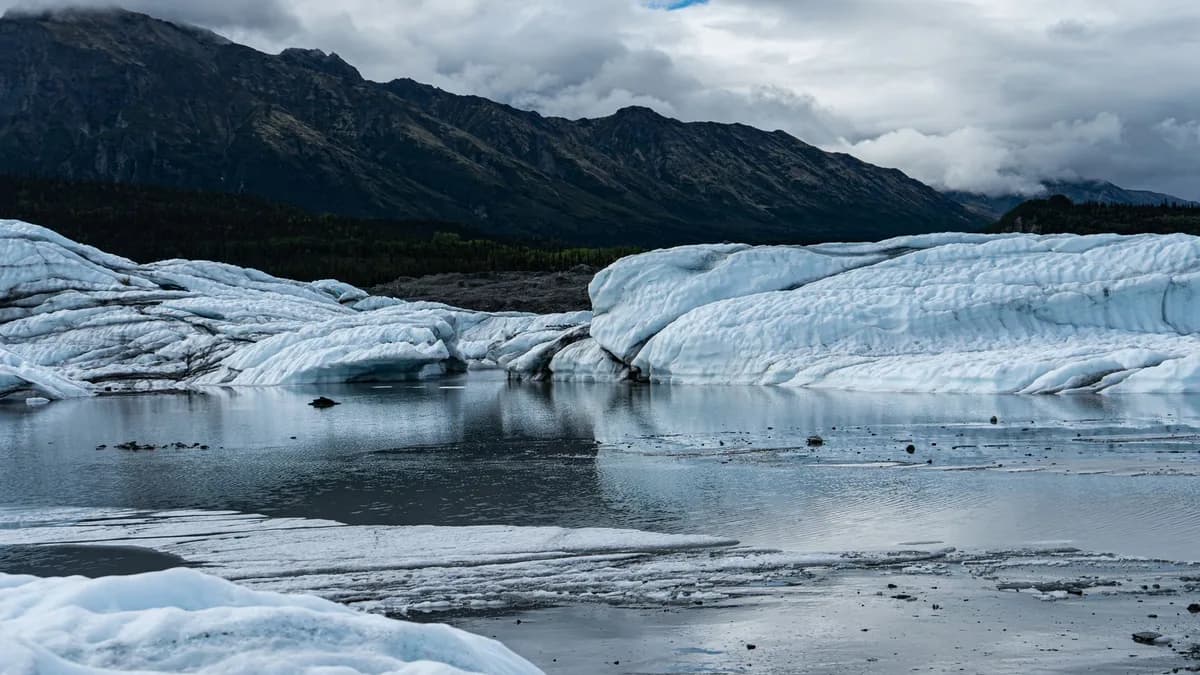
What triggered a magnitude 5.2 earthquake without an actual earthquake? The answer is the Langtang Lirung glacier disintegrating violently, an event that sent a lethal cascade of ice, rock, and water down a Himalayan valley, killing at least 469 people in a flash flood on the Nepal-Tibet border according to BBC World. This wasn't a typical overflow. It was a full-throated collapse of a frozen mountain feature, a growing symptom of how climate change is rewriting disaster scripts.
XOOMAR Intelligence
Analyst Take
For context on the regional threats, see our previous coverage on the Himalayan Flood Toll Climbs As Glacial Collapse Blamed and Himalaya Flash Flood Leaves Hundreds Lost.
How Does a High-Altitude Glacial Collapse Become a Tidal Wave?
The initial shock of the disaster was seismic. The impact of the glacial mass hitting the valley floor registered as a magnitude 5.2 event, according to the U.S. Geological Survey. It triggered what many initially reported as an earthquake. The geography then became a deadly accelerator.
Dr. Simon Cook, a glacier expert with the University of Dundee, identified that the lower part of a glacier near the Langtang Lirung peak collapsed. The International Centre for Integrated Mountain Development (ICIMOD) detailed the cascade:
"an ice-rock avalanche originating from a high-altitude area" caused "a large volume of ice and rock debris" to enter the Lende Khola, a tributary of the Bhote Koshi river.
The steep, funnel-like valleys on both sides of the mountain, as noted by Oxford University's Professor Mike Searle, provided a natural sluice. The result? Water levels in rivers downstream rose by between seven and nine metres within just 30 minutes.
What Makes a Solid Glacier Shatter "In One Go"?
It's a geologic process layered with a climate trigger.
Tectonic Jacking: Searle explains that the Himalayas are rising because one tectonic plate is pushing another up. "It’s like putting a jack under a car," he told the BBC. As the mountain rises, the glacier on its flank gets steeper.
"It's inevitable that parts of it fall off."
The Climate Multiplier: Usually, these are smaller chunks. What's "very unusual," Searle said, is the whole lower section collapsing "in one go." He argues this scale of disaster results from a combination: "tectonics with the Himalayas uplifting, and then climate change with increasingly high temperatures and melting of glaciers." This is the logical inference from the experts cited: warming thins, weakens, and lubricates the ice. A recent ICIMOD analysis noted a critical data point: ice loss in the Hindu Kush Himalaya glaciers has doubled since 2000.
The process turns a stable, creeping ice mass into a precariously balanced stack, vulnerable to a total structural failure.
Why Did This Hazard Slip Past Traditional Monitoring?
Here lies a critical and dangerous knowledge gap. Traditional glacial hazard monitoring in the Himalayas has focused heavily on Glacial Lake Outburst Floods (GLOFs), identifying lakes growing behind unstable moraines. This event was different: a glacial collapse, followed by an ice-rock avalanche and debris flow.
The timeline underscores the stealth. Professor Searle notes that the process, from landslide to catastrophic flood, "could have taken hours or even days." It was a hidden, internal disintegration, not a visibly swelling lake. The silent threat: Permafrost degradation and internal ice fracturing are largely invisible to conventional observation methods. By the time the avalanche mobilized and the river levels spiked, the wave of destruction was already unstoppable, washing away several water monitoring stations in its path.
Are We Now in an Era of Catastrophic Collapses, Not Just Melting?
This event is not an isolated rupture; it's a data point in a worsening trend. Dr. Cook pointed out similar incidents in Chamoli, India (2021), Switzerland, and Italy.
The science points to a phase shift:
- Accelerated Warming: The Himalayan cryosphere is warming faster than the global average.
- Widespread Destabilization: Warming degrades the permafrost that acts as a "glue" for mountain slopes and saturates glacier beds with meltwater, reducing friction.
- New Hazard Portfolio: The risk expands from gradual melt and lake floods to include sudden, high-energy ice avalanches and full glacial collapses.
Azam Mohd Farooq of ICIMOD states the hard truth: "The pace of change is so rapid." The scientific logic, as Dr. Cook articulates it, is direct: a warming planet leads to shrinking glaciers, thawing permafrost, and ultimately, destabilized high-mountain environments. This yields more of exactly what we just saw: landslides, debris flows, and glacial collapses.
What Can Be Done to Monitor the Invisible?
Science is scrambling to adapt. The forward look isn't about prevention; it's about improving detection and warning for these stealthy, high-impact events.
Technological Leap Required:
- Satellite Interferometry: Using radar satellites to detect millimeter-scale movements of glaciers over time could flag unstable sections before they fail.
- High-Resolution Terrain Modeling: AI and photogrammetry can analyze slope stability and identify potential avalanche runout zones.
- Robust Sensor Networks: Hardening and expanding real-time acoustic and seismic monitoring in high-risk valleys to detect the initial collapse signal.
The Implementation Hurdle: This is not just a tech problem. It's a geopolitical and logistical challenge requiring rare cross-border data sharing between Nepal, China, and others, sustained funding, and integrating complex data into actionable early warnings for remote communities.
For now, the region remains in a dangerous lag period. The hazard model has changed faster than our monitoring systems. The Langtang Lirung collapse is a devastating signal that the mountain's rules are being rewritten by heat, and the next test will come without warning.
Why It Matters
- Climate change is triggering new, catastrophic disaster mechanisms like sudden glacier collapse, expanding regional risk profiles.
- The event mimicked an earthquake in seismic magnitude (5.2), complicating early warning and disaster response efforts.
- Rapid flooding (7-9 meter river rise in 30 minutes) demonstrates the lethal speed of these events, leaving little time for evacuation.
Glacial Collapse Flash Flood Impact
Primary Sources & Disclosures

Written by
XOOMAR Insights Team
Research and Editorial Desk
The XOOMAR Insights Team pairs automated research with human editorial judgment. We track hundreds of sources across technology, fintech, trading, SaaS, and cybersecurity, cross-check the facts, and explain what happened, why it matters, and what to watch next. We do not just rewrite headlines. Every article is fact-checked and scored for reliability before it goes live, and we link back to the original sources so you can verify anything yourself.