
The Nolan Wells autopsy did not close the case. It exposed the harder question: who controls the timeline when an 18-year-old dies and the official record still has gaps?
Global TrendsJuly 27, 2026· 12 min read· By XOOMAR Insights Team
Nolan Wells Autopsy Throws Teen’s Death Into Doubt
Updated on July 27, 2026
XOOMAR Intelligence
Analyst Take
68/ 100
4 sources analyzedMedium confidenceTrend10Freshness95Source Trust90Factual Grounding91Signal Cluster20
According to Guardian World, an independent autopsy announced by family attorney Ben Crump found both the cause and manner of Wells’s death “undetermined, pending investigation.” That phrase keeps the case open. It also gives public doubt room to grow.
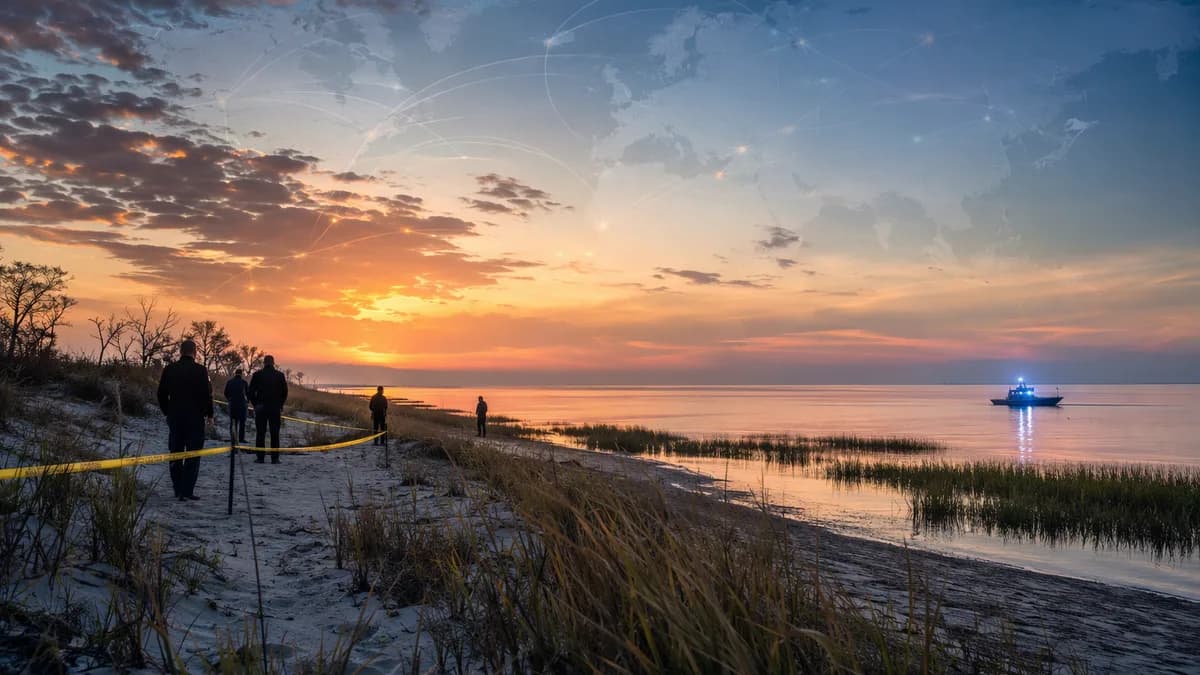
Wells, a Black college freshman from Ocean Springs, Mississippi, went to Horn Island with friends on the Fourth of July. His friends returned. He did not. His body was found on the island on 6 July after his family launched a missing person’s search.
XOOMAR analysis: when a young Black person dies under unresolved circumstances, thin timelines don’t stay neutral for long. They become part of the case. The family’s demand is no longer just about a medical finding. It’s about reconstructing the last hours of Wells’s life before speculation hardens into belief.
Why did the Nolan Wells autopsy raise pressure instead of settling the case?
Because “undetermined” is not an answer a grieving family can live inside for long.
The independent exam did not identify a final medical cause of death. It also did not classify the death as an accident, homicide, suicide, natural death, or another firm manner. That matters because the public debate around Wells has already moved faster than the official record.
Crump said there were 300 to 400 people on Horn Island, and he questioned how no one could know what happened to one of the few Black people there. The source material also says Wells was Black, while many people on the island, including people pictured with him, were white. Those facts do not prove what happened. They do explain why the family and Black leaders are demanding transparency.
Christine Wonsley, Wells’s mother, said during the press conference that a member of the Cajun Navy told her Wells was found fully clothed and face down. In the last known photos of Wells, he was not wearing a shirt. That discrepancy is now central because it touches the timeline, the scene, and the reliability of the public narrative.
The first institutional message also matters. Shortly after Wells’s body was found, Jackson County Sheriff John Ledbetter said he did not suspect foul play. Wonsley called that premature. XOOMAR analysis: early reassurance can calm a community if the facts later support it. If the facts remain incomplete, it can look like a conclusion reached before the investigation caught up.
What does “undetermined” actually mean in Wells’s case?
An undetermined autopsy finding does not clear anyone. It does not accuse anyone either.
Cause of death is the medical reason someone died. Manner of death is the classification attached to that death, such as homicide, suicide, accident, natural, or undetermined. In Wells’s case, the independent pathologist did not have enough evidence to make either call.
That distinction is crucial. A finding of “undetermined, pending investigation” means the medical evidence available to that examiner did not support a firm conclusion. It does not mean investigators have no leads. It also does not mean the family’s concerns are validated as fact.
The independent autopsy had limits. Crump said the body was received after the state of Mississippi performed its own autopsy. The Guardian reported that the independent investigators could not view the body when it was recovered, and by the time it was received on 10 July, decomposition made it difficult to determine whether Wells was bruised or decomposed.
The preliminary findings also raised specific forensic issues. Crump said the report noted Wells’s body was missing its interior neck structures when received after the first autopsy. He also said there was significant “red discoloration” in tissue at the back of Wells’s head for unknown reasons.
Those details do not establish what killed Wells. They show why a second autopsy can be narrower than a first one. Once a body has decomposed and certain structures have already been removed for examination, later reviewers may be working from a compromised record.
“The only question we have is, what happened to our son?” Christine Wonsley said.
That question now reaches beyond pathology. Toxicology, witness statements, recovery details, scene evidence, medical history, records from the first autopsy, and the official investigative timeline could all shape the final answer.
Which dates now matter most in the death of an 18-year-old freshman?
The Wells case is now a timeline case as much as an autopsy case.
The known dates are few, but they carry weight:
| Date | Publicly known event |
|---|---|
| 4 July | Wells and friends took a boat to Horn Island, a barrier island off the Mississippi Gulf coast |
| 6 July | Wells’s body was found on the island after a missing person’s search |
| 10 July | The independent examiner received Wells’s body, according to the source material |
| 10 July | A person held a “Justice for Nolan” placard outside National Action Network headquarters in New York City, per the Reuters photo caption in the source |
| Monday before the Wednesday announcement | Wells was laid to rest in Ocean Springs, Mississippi |
| Wednesday, 22 July | Crump announced the independent autopsy findings |
The institutional clock and the family clock are running at different speeds. For medical examiners, pending toxicology and lab review can take time. ABC News reported that the official autopsy from the State Medical Examiner’s office in Mississippi is still pending, according to Jackson County Coroner Bruce Lynd Jr.
For the family, every day without a complete timeline can feel less like procedure and more like abandonment.
That gap is where misinformation grows. The Guardian reported that social media conversations about Wells’s case are already full of misinformation and online speculation because so little is publicly known about what happened. That is not a side issue. It is a predictable result when official facts arrive slowly and community suspicion arrives instantly.
For readers following other cases where the public record, charges, and official timelines shape trust, XOOMAR’s coverage of Last Isla Bell Death Charge Survives Ganiev's Fight offers a separate example of how death investigations can become fights over process as much as outcome.
Why are the family, Crump, investigators, and the public reading the same silence differently?
Because each side has a different risk.
The Wells family risks never knowing what happened. Their attorney risks letting the case fade before key facts are released. Investigators risk saying too much before reports are complete. The public risks filling the vacuum with claims that later prove wrong.
Crump is doing what high-profile civil rights lawyers often do in unresolved deaths: moving the case into public view before official agencies define it alone. The independent autopsy, paid for by Colin Kaepernick, is part of that pressure campaign. So is the reward announced by Tyler Perry and the Rev Al Sharpton, who are offering $100,000 for information that “could give the information that will lead to an arrest and a conviction in the case of what happened”.
That reward language assumes the possibility of criminal conduct, but it does not establish it. Police have not publicly confirmed foul play. ABC News reported that Ledbetter said there was no initial indication of a crime, while also saying investigators are “working diligently to determine exactly what occurred.”
The family’s skepticism centers on the friend account that Wells decided to stay on the island. Wells’s parents find that hard to believe.
“We always taught him that if you go with a group, you stay with a group,” Elmore Wonsley said on Good Morning America. “If you go with five, you come back with five. Do not separate from the group. Because I always said: ‘Safety is in numbers.’ So he knew to stay with this group, so why would he split from the group? I don’t know.”
That quote is not evidence of what happened on Horn Island. It is evidence of why the family does not accept the simplest available explanation without documentation.
Media attention cuts both ways. It can force agencies to explain themselves. It can also amplify unresolved details faster than verified facts can catch up. XOOMAR has seen the same pressure dynamic in breaking public safety stories such as 1 Dead as Berlin Pride Ramming Attack Triggers Manhunt, where early uncertainty can define public perception before investigators finish the work.
Why do independent autopsies become the family’s audit trail in unresolved Black deaths?
In Wells’s case, the independent autopsy functions less as a final answer than as an audit of the official process.
That is the deeper point. Families request outside review when they do not trust the pace, transparency, or framing of the official investigation. The second examiner may not be able to determine more than the first. Sometimes the second examiner can determine less, especially when decomposition, prior dissections, or missing tissue limit review. But the act of seeking another exam signals distrust.
Here, the source material gives the reasons for that distrust. The sheriff said he did not suspect foul play soon after the body was found. The state autopsy has not been released. The independent autopsy listed cause and manner as undetermined. The family has questions about clothing, location, witness accounts, and why Wells would have stayed behind.
Black leaders, locally and nationally, have called for transparency and clarity. That public demand is not the same as claiming a specific crime occurred. It is a demand that officials show their work.
XOOMAR analysis: trust is not restored by asking families to wait. It is restored through documentation, consistent communication, and a timeline that can survive scrutiny. If investigators cannot release a detail during an active case, they can still explain what category of information is pending, who controls it, and when the next update is expected.
The hardest part for officials is that silence may be legally cautious and socially corrosive at the same time. Both can be true.
What does Wells’s unresolved death mean for campuses, families, and local accountability systems?
Wells was an 18-year-old college freshman. That fact expands the audience for the case.
Parents sending teenagers into college life expect risk. They do not expect to learn that a child disappeared during a group outing, was found dead days later, and still has no determined cause or manner of death nearly three weeks after recovery.
The public record remains incomplete in ways that matter:
- Timeline: When was Wells last seen, by whom, and in what condition?
- Scene: Where exactly was the body found, and what was documented at recovery?
- Clothing: Why does the family say recovery details differ from last known photos?
- Medical record: What did the first autopsy find, and what did it remove or preserve?
- Toxicology: What results are pending, and who will receive them first?
- Witnesses: What have the friends and others on Horn Island told investigators?
Families can learn a practical lesson from this case without assuming any conclusion about Wells’s death. Preserve records. Save photos and messages. Write down timelines while memories are fresh. Request reports in writing. Ask who has custody of evidence. If necessary, seek independent review quickly, before time and decomposition narrow what can be learned.
The accountability gap is not only medical. An autopsy rarely tells the full story by itself. The timeline, witness accounts, scene documentation, recovery conditions, and official communications are the parts that convert a medical file into a credible public explanation.
A credible process protects everyone. It protects the family from being dismissed. It protects investigators from claims they cannot answer later. It protects the community from rumor becoming the default record.
Which facts could narrow the Nolan Wells investigation before public belief hardens?
The next phase of the Nolan Wells autopsy story will turn on whether official facts arrive before public suspicion settles into permanence.
The state autopsy remains the central pending document. Toxicology may matter. So may the first autopsy’s notes, photographs, tissue retention records, recovery reports, and interviews with people who were on Horn Island. The condition of Wells before any possible entry into water is especially important, because Crump said the independent pathologist could not determine whether Wells was conscious or unconscious, forced or unforced, before entering water.
That is the crux. If the official investigation produces a coherent timeline, explains the forensic limits, and accounts for the clothing and recovery questions, the case may narrow. If it produces only delays and broad reassurances, public pressure will grow.
Crump will likely keep the case visible until the cause and manner of death are updated or officials explain why they cannot be determined. The family has little reason to stop pressing while the official autopsy is pending and key scene questions remain unanswered.
The evidence that would strengthen official credibility is simple: dated records, clear witness chronology, documented recovery conditions, released forensic conclusions, and direct explanations for discrepancies. The evidence that would weaken it is just as simple: vague updates, shifting accounts, missing records, and no public explanation for why early statements were made before final findings.
For now, Wells’s death remains unresolved in the most painful way. The medical answer is pending. The public answer is contested. And the family is still forced to ask the first question any investigation should be built to answer: what happened?
The Stakes
- An undetermined autopsy keeps the investigation open and leaves Wells’s family without clear answers.
- The case raises concerns about transparency when a young Black man dies under unresolved circumstances.
- Reconstructing Wells’s final hours is critical before speculation overtakes the official record.
Sources
- [1] Guardian World
- [2] Nolan Wells' private autopsy says cause, manner of death 'undetermined pending investigation'
- [3] Nolan Wells’ preliminary autopsy results reveal 7 unanswered questions after teen vanished on trip with friends
- [4] Independent autopsy 'inconclusive' on cause of death for 18-year-old Mississippi teen

Written by
XOOMAR Insights Team
Research and Editorial Desk
The XOOMAR Insights Team pairs automated research with human editorial judgment. We track hundreds of sources across technology, fintech, trading, SaaS, and cybersecurity, cross-check the facts, and explain what happened, why it matters, and what to watch next. We do not just rewrite headlines. Every article is fact-checked and scored for reliability before it goes live, and we link back to the original sources so you can verify anything yourself.
Explore More Topics
Related Articles
 Global Trends
50mph Tropical Storm Bertha Crawls Toward Gulf Coast Floods
Bertha hit 50mph and is crawling toward the Gulf Coast, raising flooding, surge and tornado threats from Florida to Louisiana.
Jul 21, 20265 min
 Global Trends
9-8 Vote Throws Jay Clayton DNI Nomination Into Peril
Jay Clayton cleared committee 9-8, leaving Trump's DNI pick facing a tense Senate fight over loyalty and intelligence experience.
Jul 21, 20266 min
 Global Trends
Houthi Maritime Embargo Throws Saudi Oil Route in Doubt
Houthis say Saudi ships are barred from Bab al-Mandab, putting a key oil route under new strain.
Jul 20, 20266 min
 Global Trends
Milei Lula Insult Torches Argentina-Brazil Ties Before Vote
Milei’s attack on Lula in São Paulo pushed a campaign stunt into a diplomatic clash, with Brazil recalling its ambassador.
Jul 27, 20267 min
 Global Trends
Typhoon Noul Rips Hong Kong Scaffolding Into Street
Typhoon Noul tore scaffolding off a Hong Kong building and cancelled 360 flights before China’s strongest 2026 landfall.
Jul 27, 20265 min
 Global Trends
Mamdani Arrest Threat Hands Netanyahu a Gaza Escape
Mamdani's legally empty arrest threat gave Netanyahu an easy way to dodge tougher questions on Gaza and the ICC case.
Jul 27, 20267 min
 Fintech
Revolut Valuation Rockets to $115B in Employee Share Sale
Revolut’s $115B employee share sale crowns it Europe’s top private company and puts fresh heat on its banking ambitions.
Jul 27, 20265 min
 Technology
Brain Waves May Teach Physical AI What Video Misses
Encord is testing brain-wave data to teach robots the intent, hesitation, and error signals cameras miss.
Jul 27, 20269 min
 Global Trends
£100 a Story Offer Drags CT Group Into Press Cash Storm
CT Group was filmed discussing £100 payments for published stories, raising fresh questions over hidden lobbying in UK newspapers.
Jul 26, 20267 min
 Fintech
BitMart Shutdown Sends Crypto Traders Racing for Exits
BitMart is winding down after nine years, giving users fixed deadlines to close trades and withdraw assets.
Jul 26, 20268 min
Don't miss the signal
Get our weekly roundup of the stories that matter across tech, fintech, and trading. No noise, just signal.
Free forever. No spam. Unsubscribe anytime.