
How far will Islamabad go after Pakistan Afghan border strikes involving air power and ground troops killed or wounded scores and drew Taliban accusations of a “crime and atrocity”?
Global TrendsJune 29, 2026· 6 min read· By XOOMAR Insights Team
Pakistan Afghan Border Strikes Shatter Fragile Truce
Updated on June 29, 2026
XOOMAR Intelligence
Analyst Take
62/ 100
4 sources analyzedLow confidenceTrend10Freshness94Source Trust92Factual Grounding92Signal Cluster60
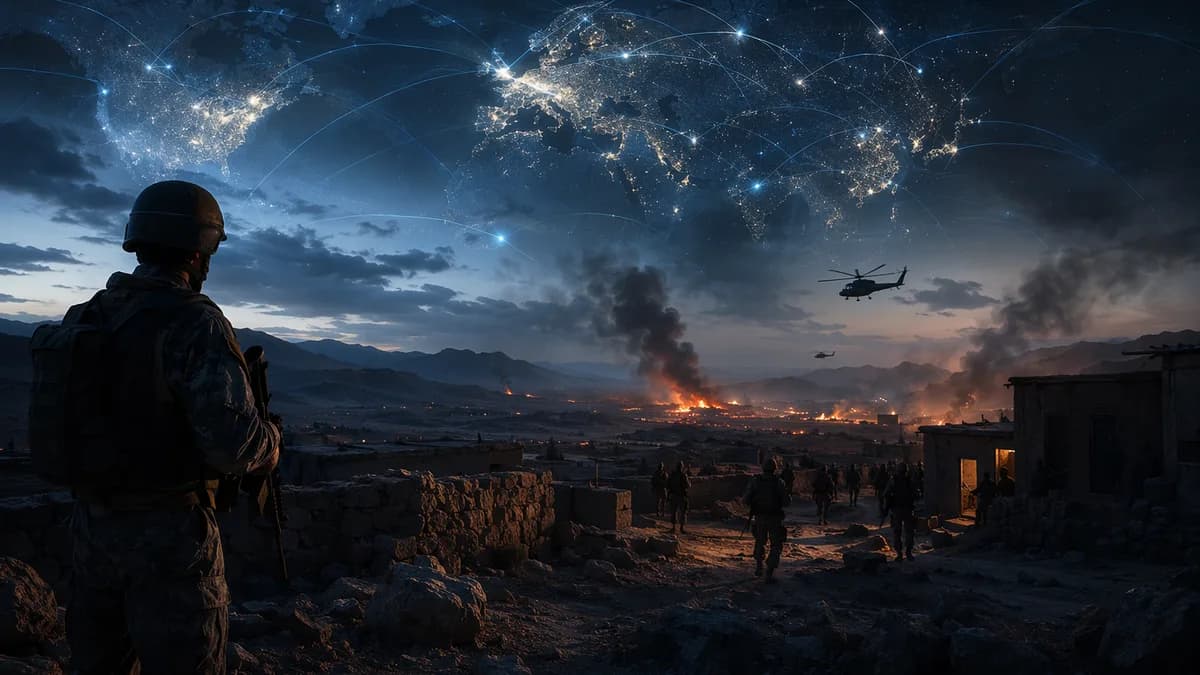
Pakistan launched airstrikes and sent ground forces into Afghan provinces along its western border on Sunday, with officials on both sides giving sharply different accounts of who was hit, according to BBC World. Pakistan said the operation targeted militant hideouts. Afghanistan’s Taliban government said civilian homes were struck.
How far could Pakistan Afghan border strikes push a collapsed ceasefire?
The immediate trigger, Islamabad says, was retaliation. Pakistan’s information minister Attaullah Tarar said 29 militants were killed in strikes aimed at their hideouts, and that the attacks answered “recent terrorist attacks against innocent people.”
Taliban officials told BBC Pashto that at least 100 people were killed or wounded. The BBC said it has not independently confirmed casualty figures claimed by either Pakistan or Taliban officials.
That gap matters. Pakistan is framing the operation as counterterrorism. Kabul is framing it as an attack on civilians and Afghan territory.
Afghanistan’s Taliban government condemned the strikes as a “cowardly act” and called them “a crime and atrocity”.
The Pakistan Afghan border strikes reportedly hit areas in Paktia, Paktika and Kunar provinces, according to Pakistan’s account. Taliban officials said casualties were concentrated in Mandikhel, a village in Paktika province.
The strike package appears broader than a single air raid. The BBC reported airstrikes and ground troops. NBC News, citing the Associated Press, described a Pakistani ground operation followed by “calibrated strikes” against militant hideouts and safe havens.
Analysis: The operative word is “calibrated.” Pakistan is signaling that it sees these strikes as limited and targeted. Kabul’s civilian-casualty claim challenges that premise and raises the political cost of treating the operation as routine border security.
Did Pakistan hit militant hideouts, civilian homes, or both?
The two governments are describing different wars.
| Issue | Pakistan’s account | Taliban government’s account |
|---|---|---|
| Targets | Militant hideouts in Afghan provinces | Civilian homes |
| Casualties | 29 militants killed | At least 100 people killed or wounded |
| Justification | Response to “recent terrorist attacks against innocent people” | Condemned as a “cowardly act” and “a crime and atrocity” |
| Verification | Not independently confirmed by BBC | Not independently confirmed by BBC |
Pakistan has long accused Afghanistan of harboring militants who stage attacks on Pakistani soil. The Taliban government rejects that allegation.
Kabul has made its own counterclaim in past incidents, accusing Islamabad of unprovoked attacks that killed civilians. Pakistan says it targets militants, not civilians.
The latest Pakistan Afghan border strikes land on top of a ceasefire that is already broken. The two countries agreed to a ceasefire last October after weeks of deadly clashes, but the BBC reports that deal has since fallen apart, as past internationally mediated truce efforts have done.
This is the core problem for outside mediators and local commanders alike: each side describes its own actions as defensive and the other’s as aggression. That makes de-escalation hard even before casualty verification begins.
XOOMAR has tracked similar retaliation dynamics in other conflict zones, including Cargo Ship Attack Triggers US Strikes on Iran Sites and Israel Strikes Lebanon as Hezbollah Rages at Peace Deal. The cases are not the same, but the pattern is familiar: an attack, a claimed response, disputed targets, then pressure for another response.
Why did Islamabad tie the Afghan border strikes to Karachi?
Sunday’s operation came one day after three members of the Sindh Rangers, a Pakistani paramilitary force, were killed at their headquarters in Karachi, according to Pakistan’s military.
Three militants also died in that suicide attack. Pakistani officials said they arrested a fourth attacker, whom they identified as Afghan.
Jamaat-ul-Ahrar, a splinter faction of the TTP, claimed responsibility for the Karachi attack. Both Jamaat-ul-Ahrar and the TTP, also known as the Pakistan Taliban, are banned in Pakistan and by the United Nations because of their involvement in past attacks.
The distinction between the Pakistani Taliban and Afghanistan’s Taliban government is central here. NBC, citing AP, notes that the Pakistani Taliban are separate from the Afghan Taliban, though the two are allies. Islamabad’s political argument is not that Kabul carried out the Karachi attack directly. It is that Afghan territory is being used by militants who attack Pakistan.
Analysis: That framing gives Pakistan room to strike inside or along Afghan territory while presenting the action as self-defense. It also puts Kabul in a bind. If Taliban authorities deny sheltering militants, they must still answer how cross-border groups operate from areas Pakistan claims to have targeted.
The recent record is already bloody. Intermittent border clashes and airstrikes have killed dozens in recent months, according to officials in both countries. In February, clashes left dozens dead. In March, a Pakistani strike on a drug rehabilitation centre in Kabul killed hundreds, according to the BBC. Earlier in June, Pakistan launched deadly airstrikes that it said killed 26 militants. Afghanistan’s Taliban government said 13 people, mostly children, were also killed.
Can Kabul answer without turning frontier violence into a wider fight?
The next phase depends less on the first statements and more on what Kabul does after the casualty count hardens.
A formal diplomatic protest would keep the confrontation in political channels. Troop movements, border closures or retaliatory strikes would move it toward another round of open confrontation.
Several facts remain unverified:
- Locations: The precise strike sites and ground-operation routes have not been independently confirmed.
- Casualties: The number of dead and wounded remains disputed.
- Identities: It is not yet clear how many of those killed were militants, civilians or local residents caught near alleged targets.
- Command targets: Pakistan has not publicly identified senior militant commanders killed in the operation.
- Scale: The full number of strikes and the duration of the ground operation remain unclear.
The stakes are immediate for border communities in Paktika, Paktia and Kunar, but the larger question will take longer to answer: whether Islamabad and Kabul still have enough control over commanders, militants and local retaliation cycles to prevent every attack from becoming the trigger for the next one.
For now, the Pakistan Afghan border strikes have reset the confrontation at a more dangerous level. The watch item is Kabul’s response. If Taliban authorities limit themselves to condemnation and casualty documentation, the crisis may stay contained. If they answer militarily, the collapsed ceasefire could give way to another border flare-up with civilians again carrying the cost.
The Stakes
- The strikes risk escalating an already fragile Pakistan-Afghanistan border conflict.
- Conflicting casualty claims make it harder to verify whether militants or civilians were hit.
- A collapsed ceasefire could fuel more cross-border violence and regional instability.
Competing Accounts of the Pakistan-Afghanistan Border Strikes
| Pakistan's account | Taliban government's account |
|---|---|
| Targeted militant hideouts along the border | Civilian homes were struck |
| Said 29 militants were killed | Said at least 100 people were killed or wounded |
| Framed the operation as retaliation for recent terrorist attacks | Condemned the strikes as a crime and atrocity |
Claimed Casualties From Border Strikes
Pakistan: militants killed
people29
Taliban: killed or wounded
people100
Sources

Written by
XOOMAR Insights Team
Research and Editorial Desk
The XOOMAR Insights Team pairs automated research with human editorial judgment. We track hundreds of sources across technology, fintech, trading, SaaS, and cybersecurity, cross-check the facts, and explain what happened, why it matters, and what to watch next. We do not just rewrite headlines. Every article is fact-checked and scored for reliability before it goes live, and we link back to the original sources so you can verify anything yourself.
Explore More Topics
Related Articles
 Global Trends
Son Escapes, French Woman Rescued in Pakistan Ordeal
A son's escape led police to rescue Sylvie Yasmina and five children after a decade of alleged captivity in Pakistan.
Jun 24, 20263 min
 Global Trends
Christopher Donahue Abruptly Exits Key Army Post in Europe
Gen. Christopher Donahue is leaving a high-profile Army and NATO command after 18 months, and officials haven't said why.
Jun 28, 20266 min
 Global Trends
13 Dead as Qatar Gas Explosion Rips Through Ras Laffan
A blast at Qatar's Barzan gas facility killed 13 and injured 66. Officials say it was an accident, not sabotage.
Jun 22, 20266 min
 Global Trends
Iran Nuclear Inspectors Claim Throws Vance Into Access Fight
Vance says Iran will let inspectors return, but the real fight is access. A 60-day roadmap now hinges on verification.
Jun 22, 20268 min
 Technology
$518B AI Chip Bet in South Korea Leaves Crypto Behind
South Korea's $518B fab rush shows AI is locking up patient capital while crypto still struggles to sell a bigger buildout story.
Jun 29, 20267 min
 Global Trends
Hoka Kaha 3 Alternatives Beat This Pricey Trail Shoe
Months of testing left the Hoka Kaha 3 Low GTX looking too snug and sealed-up for summer trails. Better alternatives deserve a look.
Jun 29, 20268 min
 Technology
42% Off Prime Day Vacuum Deals Hit Shark and Dyson
Prime Day’s final vacuum deals cut up to 42% off Shark, Dyson and Bissell, with the best buys tied to pet hair, hard floors and robots.
Jun 29, 20269 min
 Global Trends
Stop Dumping Baking Soda in Your Yard Before It Backfires
Baking soda can help with five yard jobs, but only in small, targeted doses. Scatter it around and you may hurt soil, roots, or compost.
Jun 29, 20268 min
 Trading
0.6900 Cracks as AUD/USD Price Forecast Targets 0.6830
AUD/USD is losing 0.6900 as Fed hike bets lift the dollar, putting 0.6830 in sellers' reach unless oversold pressure stalls the move.
Jun 29, 20267 min
 Global Trends
Ouster Claims Hit Misan Harriman's Southbank Centre Exit
Misan Harriman says his Southbank Centre departure was planned in January, not forced by the backlash now surrounding him.
Jun 29, 20266 min
Don't miss the signal
Get our weekly roundup of the stories that matter across tech, fintech, and trading. No noise, just signal.
Free forever. No spam. Unsubscribe anytime.