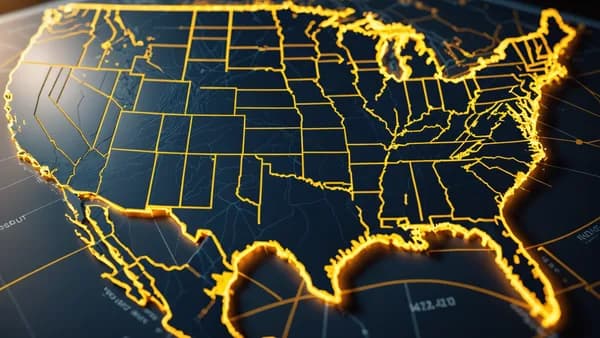
Should the FCC broadcast ownership cap disappear because Netflix, social networks, and streaming apps exist, or because the biggest broadcast chains want permission to get bigger? That is the question behind FCC Chair Brendan Carr’s planned August 6th vote to end the rule blocking a single company from owning broadcast stations that reach more than 39 percent of US TV households, according to The Verge.
XOOMAR Intelligence
Analyst Take
My view is blunt: the FCC shouldn’t scrap the cap. Broadcast licenses are public privileges, not private trophies for the largest station groups. If the rule needs updating, update it carefully. Don’t erase one of the few remaining national guardrails on who controls local TV.
Should the FCC broadcast ownership cap die just because digital platforms reach everyone?
Carr’s argument is simple. In a Breitbart op-ed, he said social media and streaming platforms have changed the competitive field because national programmers can reach “100 percent of the country” without relying on public airwaves. Under that logic, limiting local broadcast owners to 39 percent of TV households “is preventing them from gaining the same scale that their competitors are free to enjoy.”
That’s the strongest case for repeal. It isn’t nonsense. Broadcasters do compete for attention and ad dollars against streaming services, social platforms, podcasts, and other digital outlets. Anyone pretending local TV still sits in a protected media bubble is selling nostalgia.
But Carr’s conclusion jumps too far. A private streaming app and a broadcast station are not the same thing. Broadcasters receive exclusive permission to use public airwaves. That difference matters.
Matt Wood, vice president of policy and general counsel at Free Press, put the distinction cleanly:
“The national cap is not a special disadvantage for broadcasters,” he said. “In fact, broadcasters have a special advantage with their exclusive licenses to use precious national airwaves the way they do.”
That is the core issue. The FCC broadcast ownership cap is not just an old business rule. It reflects a public-interest bargain.
If viewers have more choices, why worry about who owns local TV?
More choices do not automatically mean more independent voices. That’s the trap in Carr’s framing.
Yes, viewers can scroll TikTok, watch YouTube, subscribe to streaming services, or read national news sites. XOOMAR readers have seen similar fights over platform power in tech, from Rival Android App Stores Invade Google Play Next Week to EU Teen Social Media Limits May Force Apps to Prove Safety. Those stories are about digital gatekeepers. This fight is about broadcast gatekeepers.
The difference is important. Local broadcast stations are licensed to serve local communities. The Verge notes that the national cap was intended to prevent one company from dominating media and to encourage local service. Repealing it would not merely let broadcasters “compete.” It would let the largest owners accumulate more local outlets under fewer corporate roofs.
XOOMAR analysis: Carr is right that media consumption has fragmented. But fragmentation can make local broadcast news more valuable, not less, because it remains one of the few formats still organized around place rather than feeds, apps, or national programming strategies. If ownership narrows, the number of channels may stay the same while the number of genuinely separate decision-makers shrinks.
That is the risk policymakers should be staring at.
Would more consolidation save local journalism, or hollow it out?
Supporters of loosening ownership rules argue that larger station groups can strengthen local broadcasters facing national digital rivals. The National Association of Broadcasters, according to the supplied context, has called the ownership cap “outdated,” while not taking a specific position on the Nexstar-Tegna transaction.
That is the best counterargument. If old rules block investment, keep stations subscale, or leave broadcasters unable to compete for advertising, they can become self-defeating. A weak local station is not a civic victory.
But the evidence supplied here cuts both ways, and the downside is serious. The Committee to Protect Journalists warned that the FCC and Justice Department’s approval of the Tegna sale to Nexstar was a sign of “government sponsored media concentration in the United States.” CPJ said Nexstar stated its stations would reach 80 percent of US households after the deal. CPJ also reported that dozens of journalists had already been laid off by Nexstar in New York City, Los Angeles, and Chicago in anticipation of the merger.
“We have seen from our work around the world that corporate consolidation of media, especially at the local level, severely hampers access to information that is in the public interest,” CPJ CEO Jodie Ginsberg said.
That does not prove every consolidation deal will cut reporting. It does prove that the “bigger owners will save local journalism” claim deserves skepticism, not deference.
Efficiency is not the only value in media policy. Local journalism depends on enough separate owners, editors, and reporters to keep community coverage from becoming an accounting line inside a national rollup.
Who benefits first if the FCC replaces a hard cap with case-by-case review?
The immediate winners would be large broadcast groups that want more scale. Carr’s proposal, as reported by Deadline in the supplied material, would replace the national cap with case-by-case review for deals that “promote the public interest.”
That sounds measured. In practice, it shifts the fight from a clear national limit to agency discretion.
Here is the problem: the FCC has already said it is waiving the ownership cap on a one-time basis to allow a $6.2 billion merger between Nexstar and Tegna, according to The Verge. A federal judge put that deal on hold while a challenge by state attorneys general plays out. CPJ said eight states filed suit in federal court in California to block the merger.
So the public is being asked to trust case-by-case judgment at the same time critics say the agency is already stretching its authority.
Democratic FCC Commissioner Anna Gomez put the legal objection sharply:
“The Commission cannot waive away that limit simply because these corporate behemoths want to get out from under it,” Gomez said.
That is not a procedural footnote. Congress set the cap, according to the source material. Opponents argue only Congress has authority to raise or eliminate it. Carr only needs the support of Republican Commissioner Olivia Trusty to approve the agenda item, The Verge reported, but approval would not end the matter. It could trigger another authority fight.
Can Carr be right about outdated rules and still wrong about repeal?
Yes. That is exactly where this lands.
The broadcast market is not frozen in the past. Rules written for an earlier competitive era can become blunt instruments. The FCC should examine whether ownership limits still fit how audiences and advertisers behave now. It should also ask whether smaller local broadcasters need more room to combine resources without surrendering local identity.
But modernization should not mean deletion.
A smarter approach would start with transparency and evidence. The FCC could examine market-by-market conditions, require clearer public-interest showings from buyers, and test whether proposed combinations protect independent local news capacity before expanding ownership reach. It could also explain, in plain terms, why the agency believes it has authority to eliminate or alter a cap that opponents say Congress set.
That would be reform. A blanket repeal is a handout with a legal theory attached.
What should commissioners do before August 6th?
Commissioners should reject a full repeal of the FCC broadcast ownership cap unless Congress acts or the FCC builds a much stronger public record. If the agency wants to argue the cap no longer serves local communities, it should prove that, not assume it because streaming platforms are everywhere.
Local officials, journalists, consumer advocates, and viewers should treat the August 6th vote as a live fight, not an administrative cleanup. The legal question may take months to resolve if the FCC moves forward. The ownership consequences could last much longer.
The future of local TV should not be decided by the companies most eager to own more of it.
Impact Analysis
- Ending the 39% cap could let the largest broadcast chains control more local TV stations.
- The debate tests whether public-airwave broadcasters should be regulated differently from streaming and social platforms.
- Changes to ownership rules could affect competition, local news diversity, and who controls information in communities.
Broadcast Ownership Cap Debate
| Issue | Broadcast Stations | Streaming/Social Platforms |
|---|---|---|
| Regulatory status | Use public airwaves through FCC licenses | Operate as private digital platforms |
| Reach argument | Single-owner reach is capped at 39% of US TV households | Can potentially reach 100% of the country online |
| Policy concern | Repeal could allow larger station-group consolidation | Already compete nationally for attention and ad dollars |
Reach Limits in the FCC Ownership Cap Debate
Primary Sources & Disclosures

Written by
XOOMAR Insights Team
Research and Editorial Desk
The XOOMAR Insights Team pairs automated research with human editorial judgment. We track hundreds of sources across technology, fintech, trading, SaaS, and cybersecurity, cross-check the facts, and explain what happened, why it matters, and what to watch next. We do not just rewrite headlines. Every article is fact-checked and scored for reliability before it goes live, and we link back to the original sources so you can verify anything yourself.