$26.5 billion just turned the SK Hynix IPO into the clearest Wall Street signal yet that AI memory is no longer being priced like ordinary semiconductor inventory. It’s being treated as strategic infrastructure.
XOOMAR Intelligence
Analyst Take
SK Hynix raised $26.5 billion (KRW 40 trillion) in its U.S. market debut, selling 177.9 million American depositary shares at $149 each, according to TechCrunch. The deal surpassed Alibaba’s $25 billion IPO in 2014, making it the largest U.S. debut by a non-American company.
That record matters. But the sharper point is this: SK Hynix is raising historic U.S. capital at the same time Washington is pressing South Korea’s two memory giants, SK Hynix and Samsung, to put more manufacturing on American soil. Investors want exposure to the AI memory shortage. Governments want control over where the next layer of AI infrastructure gets built.
SK Hynix's $26.5 billion Wall Street moment comes with a Washington bill attached
The SK Hynix IPO validates a new market hierarchy in AI hardware. Models and GPUs still get the headlines, but memory suppliers now sit closer to the center of the trade.
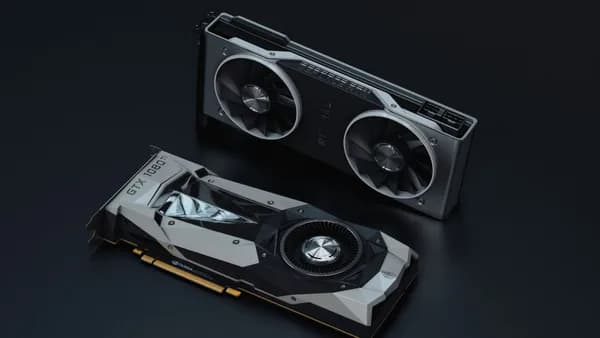
SK Hynix makes high-bandwidth memory (HBM), a key component used with AI GPU processors. TechCrunch reports that Nvidia AI hardware relies on SK Hynix as one of its primary suppliers. That single positioning point explains why U.S. investors were willing to pay up for a Korean memory company despite the long-running Korea Discount, the valuation gap often tied to governance structures, shareholder returns, regulatory uncertainty, and geopolitical risk related to North Korea.
The company’s U.S. shares were priced at a 2.7% premium to its own three-day average in Seoul, according to its Korea Stock Exchange filing cited by TechCrunch. Demand was reportedly more than seven times the available shares. The stock opened 14% above its IPO price and was still rising in early Friday trading.
XOOMAR analysis: this is not just a listing event. It’s a repricing of the memory layer in AI. The market is saying that HBM supply is scarce enough, and strategically important enough, to pull SK Hynix out of the old Korean valuation penalty, at least for now.
The $149 ADR structure made AI memory easier for U.S. investors to buy
The mechanics of the deal also mattered. SK Hynix sold ADRs structured so U.S. investors could buy in at roughly one-tenth of what a full share costs in Seoul. That lowered the access barrier without changing the core exposure: a bet on SK Hynix’s role in the AI chip supply chain.
| Company or deal | Reported figure | Why it matters |
|---|---|---|
| SK Hynix U.S. debut | $26.5 billion | Largest U.S. debut by a non-American company |
| Alibaba 2014 IPO | $25 billion | Previous benchmark cited by TechCrunch |
| SK Hynix ADR price | $149 | Entry point for U.S. investors |
| SK Hynix ADR volume | 177.9 million ADRs | Scale of the U.S. capital raise |
| Reported demand | More than 7x available shares | Shows investor appetite for AI memory exposure |
Per SK Hynix’s filing cited by TechCrunch, the proceeds are earmarked for three areas:
- South Korea fab: a new fabrication plant already being built to address the worldwide memory shortage caused by AI.
- Packaging facility: new capacity in South Korea.
- EUV scanners: machines used to make next-generation chips possible.
That allocation is important because it shows where SK Hynix itself sees the near-term answer: Korea, not the U.S. The capital came from Wall Street, but the planned manufacturing spend listed in the filing remains centered at home.
That tension mirrors a broader question around AI infrastructure spending. As we reported in Half-Empty GPU Utilization Rattles Wall Street's AI Bet, investors are starting to scrutinize whether AI capex translates into durable returns. The SK Hynix deal sits on the other side of that debate: if compute demand keeps expanding, the memory bottleneck becomes a profit center. If expectations cool, capacity plans become more dangerous.
Washington is asking Samsung and SK Hynix for U.S. fabs while Micron commits $250 billion
The political layer arrived almost simultaneously. TechCrunch reports that U.S. Commerce Secretary Howard Lutnick attended a Micron event Thursday and said he is already in talks with Samsung and SK Hynix about building new factories in the U.S.
The stated idea, per the report, is to avoid letting South Korea continue to dominate this important technology. That puts SK Hynix in an awkward position. Its historic U.S. debut gives it visibility and capital, but it also increases political attention from the same country whose investors just funded the raise.
Micron, one of SK Hynix’s biggest competitors, has already embraced the U.S. manufacturing push. It announced plans to invest $250 billion in new U.S. manufacturing, a commitment the company says will create more than 90,000 jobs and keep leading-edge chip production on American soil.
Samsung is part of the same conversation because it is the third major global memory maker named in the source material. The U.S. pressure is not limited to one company or one IPO. It is aimed at the structure of memory supply itself.
XOOMAR analysis: Washington’s leverage is stronger now because AI has made memory more visible. HBM is no longer treated as a background component in the public narrative. It sits inside the AI hardware constraint investors are chasing.
Korea remains the center of SK Hynix's actual expansion plan
The most revealing detail in the SK Hynix IPO filing is not the ticker. It’s the destination of the money.
The company begins trading on Nasdaq today, Friday, July 10, under the temporary ticker SKHYV. Regular trading opens Monday, July 13, when the ticker becomes SKHY. But the raised capital, according to TechCrunch, is directed toward South Korean fabs, South Korean packaging, and EUV equipment.
That creates a strategic split:
- Investors: funding SK Hynix through U.S. markets.
- SK Hynix: allocating proceeds to South Korean production assets.
- Washington: asking SK Hynix and Samsung to build new U.S. factories.
- Micron: using domestic investment commitments as a competitive and political advantage.
The source material does not specify what incentives, tax credits, procurement promises, or regulatory tools Washington might use to persuade SK Hynix or Samsung. That missing detail matters. Asking for U.S. fabs is one thing. Making the economics attractive enough to shift high-value memory investment is another.
For a separate view into how expensive and specialized chip manufacturing infrastructure can become, see our coverage of the €91M Bet Pushes QuantumDiamonds Chip Inspection Into Fabs. SK Hynix’s filing does not mention that company, but the broader point is clear: advanced chip capacity is not just buildings. It pulls in equipment, tooling, process capability, and time.
The Korea Discount cracked because SK Hynix is now an AI infrastructure stock
Korean companies have long traded at lower valuations than global peers, a pattern widely called the Korea Discount. TechCrunch cites complex governance structures, low shareholder returns, regulatory uncertainty, and North Korea-related geopolitical risks as common investor concerns.
The SK Hynix IPO broke through that frame. A 2.7% premium to the Seoul average and demand above seven times available shares are not normal signals for a company supposedly trapped under that discount.
The reason is HBM.
TechCrunch identifies HBM as a key component of AI GPU processors and says Nvidia relies on SK Hynix as one of its primary suppliers. That gives SK Hynix something investors value more than a generic cyclical memory story: exposure to the constrained part of AI infrastructure.
CNN’s reporting added a useful market read from Jung In Yun, chief executive officer at Fibonacci Asset Management Global:
“The strong demand for the offering suggests global appetite for AI infrastructure remains intact, despite recent volatility,”
That quote captures the core investor view. Buyers are not simply buying a Korean semiconductor name. They are buying a claim on a scarce AI input.
Investors, chip buyers, and policymakers are not buying the same story
The SK Hynix IPO means different things depending on who is looking at it.
For investors, it offers direct U.S. market exposure to one of the main memory suppliers behind AI hardware. The risks are also visible in the source material: valuation has moved fast, demand expectations are high, and the company is committing capital to expand supply.
For AI chip buyers, the attraction is more supply. The source material says SK Hynix is building capacity to address the worldwide memory shortage caused by AI. More supply can ease bottlenecks, but it can also change pricing power over time.
For South Korea, the filing points to domestic industrial reinforcement. SK Hynix’s proceeds are slated for Korean production assets, and TechCrunch notes that both Korean chipmakers recently pledged more than $550 billion for new manufacturing investment in South Korea.
For U.S. policymakers, the IPO is both proof and problem. Proof, because U.S. markets can fund the AI hardware chain at massive scale. Problem, because the funded capacity is not automatically American.
The next test is whether AI memory stays scarce enough to justify the politics
The cleanest read is this: Wall Street just rewarded SK Hynix for being central to AI memory, while Washington is trying to convert that strategic importance into domestic manufacturing commitments.
Those goals may align if U.S. incentives are strong enough and if AI memory demand remains tight. They may collide if SK Hynix concludes that its best returns still come from concentrating expansion in South Korea, where its stated IPO proceeds are already headed.
The next evidence to watch is concrete, not rhetorical:
- U.S. fab commitments: whether SK Hynix or Samsung announces specific U.S. factory plans after Lutnick’s talks.
- Capital allocation changes: whether SK Hynix redirects any raised funds beyond the Korea-focused uses listed in its filing.
- HBM demand signals: whether oversubscription and early trading strength translate into sustained investor confidence.
- Micron follow-through: whether its $250 billion U.S. manufacturing plan pressures Korean rivals to match the political scale.
If SK Hynix keeps pricing at a premium while expanding mainly in Korea, the IPO will look like a triumph of capital access without geographic concession. If Washington extracts U.S. fab commitments, the AI memory boom will have moved from market story to industrial policy test.
The Bottom Line
- SK Hynix’s record IPO shows investors now view AI memory as strategic infrastructure, not ordinary chip inventory.
- Washington’s push for U.S.-based fabs could reshape where critical AI hardware supply chains are built.
- The deal highlights SK Hynix’s growing importance as a high-bandwidth memory supplier to Nvidia and the broader AI market.
Major U.S. IPOs by Non-American Companies
| Company | IPO Proceeds | Context |
|---|---|---|
| SK Hynix | $26.5B | Largest U.S. debut by a non-American company |
| Alibaba | $25B | Previous record holder from 2014 |
Foreign IPO Proceeds in the U.S.
Primary Sources & Disclosures

Written by
XOOMAR Insights Team
Research and Editorial Desk
The XOOMAR Insights Team pairs automated research with human editorial judgment. We track hundreds of sources across technology, fintech, trading, SaaS, and cybersecurity, cross-check the facts, and explain what happened, why it matters, and what to watch next. We do not just rewrite headlines. Every article is fact-checked and scored for reliability before it goes live, and we link back to the original sources so you can verify anything yourself.