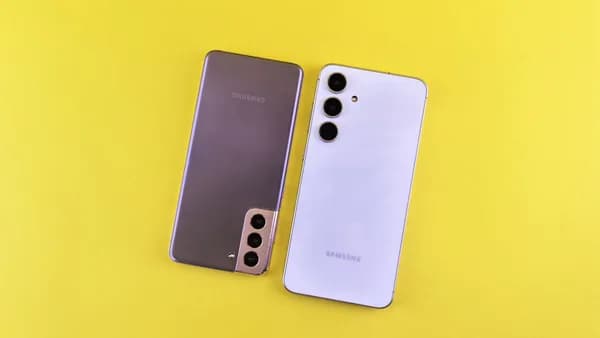
Seven generations into Samsung’s foldable phone push, the company is still chasing the same stubborn enemy: the crease running through the inner display.
XOOMAR Intelligence
Analyst Take
Samsung has now unveiled Flex Titanium display technology, a new foldable screen stack designed to be slimmer, stronger, and less visibly creased, according to The Verge. Samsung says the panel will debut with the upcoming Galaxy Z Fold 8 and Galaxy Z Fold 8 Ultra, giving the next Fold generation a clear hardware story beyond cameras, chips, and software polish.
The claim that matters most is not cosmetic. Samsung says a titanium-alloy film under the OLED panel delivers “20 times greater mechanical stiffness” than polymer film while measuring about one-third the thickness of an average human hair. If that holds up in real devices, Flex Titanium could make the inner screen feel less fragile, less distracting, and less like the trade-off buyers have had to accept to get a tablet-sized display in a pocketable phone.
Why should Galaxy Z Fold 8 buyers care about Samsung’s Flex Titanium display?
The Galaxy Z Fold 8 will matter less if it only gets faster. Foldable buyers already know the performance pitch. The harder sell is confidence: will the inner display keep looking and feeling premium after months of opening, closing, tapping, swiping, and carrying?
That is where Samsung Flex Titanium display technology enters the story. Samsung says the new panel reflects what it has learned across seven generations of foldables. The company is aiming at three visible problems at once: crease visibility, display durability, and thickness.
For buyers, that could change the emotional math. A foldable phone asks users to accept moving parts, a flexible screen, and a display surface that still doesn’t behave like a slab phone. A tougher, flatter inner display would make the Galaxy Z Fold 8 feel less experimental and more like a normal premium phone with a larger screen inside.
Samsung’s own phrasing is pointed:
“Together, these advancements enable a strong foldable display that maximizes content immersion on a seamless screen and reduces crease visibility, all while keeping it slim,” Samsung said in its announcement. “By balancing strength, flexibility and structural stability, Samsung continues to set the bar for foldable displays.”
There is a wider angle too. Samsung Display supplies panels beyond Samsung Electronics, including to Apple. The Verge notes that this improved display technology could even appear in the rumored foldable iPhone expected later this year. That is not confirmed, but it shows why this is bigger than one phone launch.
The 3 foldable screen problems Flex Titanium is built to attack
The foldable phone pitch has always been simple: big screen when open, smaller device when closed. The compromise sits right down the middle.
The first issue is the visible center crease. Samsung’s current generation of foldables, including the Galaxy Z Fold 7 shown by The Verge, still struggles with display creasing. The crease has improved over time, but it remains visible enough to be part of the buying decision.
The second issue is durability anxiety. Flexible OLED panels need layered materials that can bend repeatedly. That repeated stress concentrates around the same folding zone. Over time, the layers can reveal tension through reflections, texture, or visible deformation. The exact mechanics depend on the panel stack, hinge geometry, adhesives, cover layers, and ultra-thin glass, but the user sees one thing: a line.
The third issue is thickness. Foldables need hinges, protective layers, structural support, and display materials that slab phones don’t. Every fraction of a millimeter matters because thickness affects hand feel, weight distribution, pocketability, and how naturally the device closes.
Here is the basic trade-off Samsung is trying to rebalance:
| Foldable pain point | What users notice | What Flex Titanium is meant to improve |
|---|---|---|
| Crease visibility | A line through text, video, apps, and reflections | Better structural support under the OLED panel |
| Durability anxiety | Worry about long-term wear and damage | Stronger titanium-based reinforcement |
| Device thickness | Bulkier feel than a slab phone | Thinner support materials in the display stack |
The commercial problem is obvious. Buyers may want the inner display for multitasking, reading, video, maps, and work apps. But a display that looks vulnerable makes the whole device feel vulnerable. That matters even before anything breaks.
How the titanium layers create a stiffer foldable screen without adding bulk
The core idea behind Samsung Flex Titanium display is simple: reinforce the foldable OLED panel with titanium-based components while keeping the stack thin enough to bend.
Samsung describes two titanium-based elements. The first is a titanium-alloy film under the OLED panel. This film provides structural support and, according to Samsung, offers 20 times greater mechanical stiffness than polymer film. The second is a titanium plate under that film, which Samsung says enables tighter bonding with the display module and improves stability when unfolded while retaining flexibility for repeated folding.
That combination matters because a foldable display needs two qualities that fight each other. It must resist deformation when flat, but it must also tolerate bending in the same region again and again. Too soft, and the crease becomes more visible. Too rigid, and the screen risks stress damage.
Titanium is attractive here because it is strong and light. Samsung is not just putting metal in the phone for branding. The material choice is tied to stiffness, thickness, and stress management inside the panel.
A useful way to think about the stack is this: the foldable display is not one sheet. It is a layered structure. OLED, support films, bonding layers, plates, cover materials, and the hinge all have to work together. Flex Titanium appears to target the support layer beneath the visible display, where better stiffness and bonding could reduce how much the folding area telegraphs through to the user’s eye.
Samsung also says the new display technology will consume less power and produce “ultra-vivid” display visual resolution. The source does not provide technical detail on the power reduction or resolution claim, so those should be treated as Samsung’s own product assertions until the company shares more at launch.
The bigger point: Flex Titanium is not a magic sheet. The hinge still matters. So do protective layers, adhesives, ultra-thin glass, panel yield, and long-term testing. A foldable screen is only as convincing as the weakest part of the stack.
Daily use on the Galaxy Z Fold 8: where a less visible crease actually matters
The crease problem becomes real in ordinary use, not spec sheets.
Picture a power user opening the Galaxy Z Fold 8 dozens of times in a day. Morning email on the inner screen. Maps during a commute. A video at lunch. Split-screen apps in the afternoon. Notes during a meeting. A document review before bed.
In that routine, a less visible crease would matter in several specific ways:
- Reading: Text crossing the center line should feel less interrupted, especially in bright light or at off-axis viewing angles.
- Video: Reflections across the folding area should distract less when the screen is open.
- Multitasking: Split-screen layouts would feel more like a single large workspace and less like two panels joined by a seam.
- Note-taking: A better-supported inner screen could improve confidence when pressing or writing near the fold, though Samsung has not provided new claims about stylus use in the supplied source.
- Long-term feel: A screen that looks flatter when unfolded may age more gracefully in the eyes of the owner, even if careful handling is still required.
The thinness claim could also give Samsung room to make design choices elsewhere. A slimmer display layer might help reduce device thickness, improve weight balance, or create room for other components. The source does not say what Samsung will do with that space, so this stays in the analysis bucket rather than a confirmed design change.
The caution is just as important. Even if Flex Titanium improves durability, foldable screens still require more care than conventional slab-phone displays. Sharp pressure, grit, dust exposure, and careless handling can still create problems for flexible panels. Samsung is improving the structure, not repealing physics.
That distinction will matter when the Galaxy Z Fold 8 Ultra arrives. “Ultra” branding raises expectations. If the inner display still shows an obvious crease under common lighting, Samsung’s material story will face a fast reality check from reviewers and buyers.
Could Samsung’s Flex Titanium panel reach Apple’s rumored foldable iPhone?
The Apple angle is why Samsung Flex Titanium display could ripple beyond the Galaxy Z Fold 8.
The Verge notes two relevant facts. Samsung Display is a long-time Apple supplier, and this improved display might appear in the rumored foldable iPhone expected later this year. That is a possibility, not a confirmation. Apple could use a different Samsung Display implementation, delay adoption, or choose a different panel configuration.
Still, the overlap is hard to ignore. Earlier this year, Samsung Display also showed a creaseless OLED prototype. At the time, the company said it was “an R&D concept, with no fixed timeline or plan for commercialization.” The Verge reports that Samsung Display has since been reported to have signed a three-year exclusivity deal to provide screens for the supposedly crease-free Apple foldable.
Apple would likely care about the same things Samsung is highlighting: crease visibility, reliability, thinness, structural stability, and whether the panel can be produced at scale with the quality thresholds expected for a flagship product. A foldable iPhone would put unusual pressure on the display supplier because the screen would be the product’s defining feature.
For readers tracking Apple’s broader device and software cycle, XOOMAR has already covered how Siri AI is landing in iPadOS 27 public beta, bugs and all, while Intel Macs are losing out as macOS 27 public beta opens. A foldable iPhone would be a different kind of test: not software readiness, but whether Apple is willing to ship a moving-screen device where durability questions will dominate the launch conversation.
If Samsung and Apple both push improved foldable panels, crease reduction could become one of the next premium-phone battlegrounds. Not because the crease is the only barrier, but because it is the one every buyer can see immediately.
July 22 is when Samsung has to turn the material story into proof
Samsung says more details about the display will arrive at Galaxy Unpacked on July 22nd, where its latest foldables are expected to be showcased.
That event should clarify the questions that matter most: how visible the crease is under real lighting, how thin the final phones are, whether power savings are meaningful, and how Samsung explains durability without hiding behind vague lab language.
The practical takeaway is straightforward. If you are considering the Galaxy Z Fold 8 or Galaxy Z Fold 8 Ultra, don’t judge Flex Titanium by the name. Judge it by the center fold under bright light, the feel of the inner display when open, the device thickness when closed, and Samsung’s specific durability claims once the phones are official.
Flex Titanium gives Samsung a stronger answer to the foldable display problem. The next test is whether that answer survives daily use, reviewer scrutiny, and the expectations that come with an Ultra-branded foldable.
Key Takeaways
- Samsung is targeting the crease, one of the biggest visual drawbacks of foldable phones.
- A tougher inner screen could make the Galaxy Z Fold 8 feel less fragile in daily use.
- Flex Titanium gives Samsung’s next foldables a hardware upgrade beyond routine chip and camera improvements.
Flex Titanium vs. Polymer Film in Samsung Foldables
| Feature | Flex Titanium display | Polymer film |
|---|---|---|
| Mechanical stiffness | 20 times greater than polymer film | Baseline comparison |
| Material | Titanium-alloy film under the OLED panel | Polymer film |
| Design goal | Slimmer, stronger, and less visibly creased | Current foldable display trade-off |
Relative Mechanical Stiffness
Primary Sources & Disclosures

Written by
XOOMAR Insights Team
Research and Editorial Desk
The XOOMAR Insights Team pairs automated research with human editorial judgment. We track hundreds of sources across technology, fintech, trading, SaaS, and cybersecurity, cross-check the facts, and explain what happened, why it matters, and what to watch next. We do not just rewrite headlines. Every article is fact-checked and scored for reliability before it goes live, and we link back to the original sources so you can verify anything yourself.