
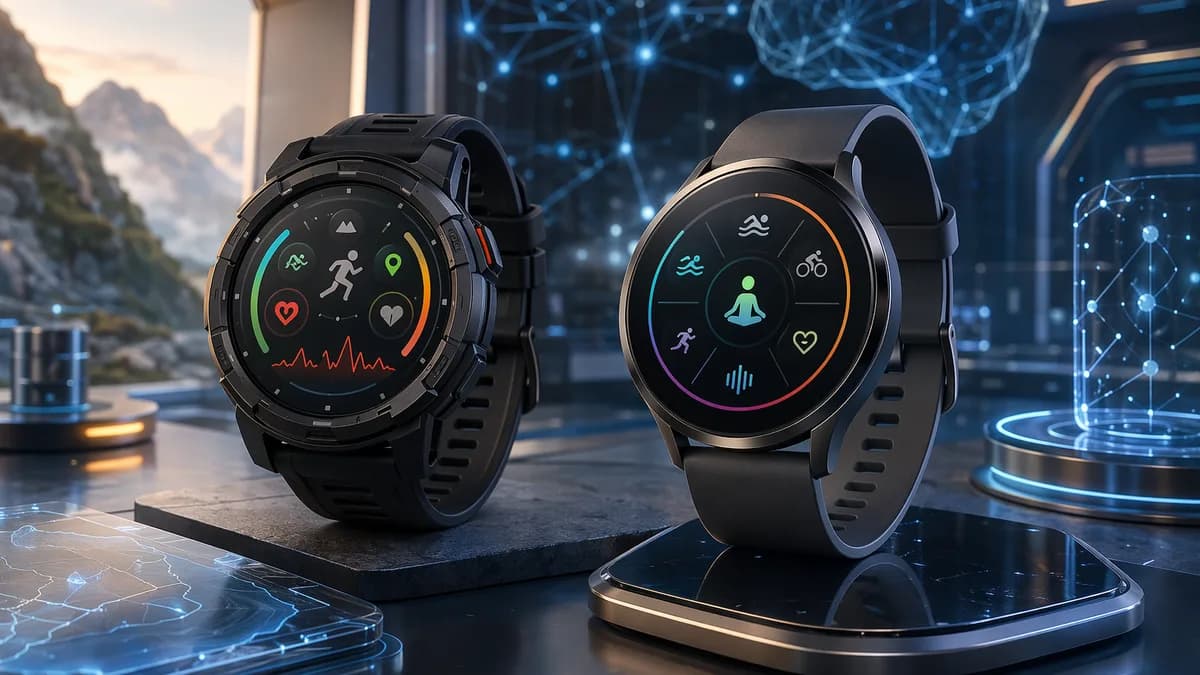
The Garmin Fenix 8 earns its roughly $250 premium only if your week is hard enough to expose the Amazfit Cheetah 2 Ultra’s limits.
TechnologyJune 27, 2026· 8 min read· By XOOMAR Insights Team
$250 Garmin Fenix 8 Premium Stings Next to Amazfit
Updated on June 27, 2026
XOOMAR Intelligence
Analyst Take
58/ 100
4 sources analyzedLow confidenceTrend10Freshness99Source Trust85Factual Grounding84Signal Cluster40
That’s the cleanest read from ZDNet’s month-long comparison of the two flagship sports watches, according to ZDNet. The Amazfit Cheetah 2 Ultra is listed at $599.99. The 47mm Garmin Fenix 8 AMOLED is listed at $849.99. On paper, that looks like Garmin asking buyers to pay more for brand gravity. In practice, the question is sharper: do you train, navigate, dive, ride, analyze, and repeat enough to make Garmin’s depth matter?
My view: Garmin is the better tool, but Amazfit is the smarter buy for most people. If you mostly track runs, workouts, sleep, notifications, and weekend hikes, don’t pay extra for features you’ll admire in menus and ignore by Wednesday.
Amazfit Cheetah 2 Ultra vs Garmin Fenix 8: the $250 gap is a habit test
The spec sheet doesn’t settle this fight. Habits do.
ZDNet’s test put both watches through a month of running, biking, hiking, and daily wear. That matters because sports watches are not judged in one dramatic workout. They win or lose in boring repetition: charging less often, showing readable data mid-run, syncing workouts without fuss, staying comfortable after hours on the wrist, and giving enough insight to change tomorrow’s session.
Here’s the core comparison from ZDNet’s listed specs:
| Feature | Amazfit Cheetah 2 Ultra | Garmin Fenix 8 |
|---|---|---|
| Display | 1.5-inch AMOLED, 480x480 pixels | 1.4-inch AMOLED, 454x454 pixels |
| Weight without strap | 52g | 59g |
| Dimensions | 47.4 x 47.4 x 15.6 mm | 47 x 47 x 13.8 mm |
| GPS battery life | 33 hours | 35 hours |
| Smartwatch battery life | 30 days | 16 days |
| Water resistance | 5 ATM | 10 ATM |
| LED flashlight | Two colors | Two colors |
| Price | $599.99 | $849.99 |
The diagnosis is simple. Garmin wins on depth. Amazfit wins on value. The underlying condition is that many buyers don’t need depth, they need consistency.
That same discipline applies across consumer tech. XOOMAR has taken the same practical view in AI Data Centers Turn RAM Prices Against Cheap New PCs and $269 Bose Prime Day Deal Beats New Ultra Hype Cold: the best buy is rarely the most impressive object in isolation. It’s the one your actual life can justify.
Amazfit Cheetah 2 Ultra delivers the daily basics without feeling like a consolation prize
The Amazfit Cheetah 2 Ultra makes its strongest argument by not feeling cheap. That’s more important than it sounds.
ZDNet notes premium materials: a titanium body, titanium buttons, fiber-reinforced polymer pieces, and a sapphire glass display. The retail package also includes both silicone and fabric watch bands, which gives buyers a practical choice between sweat-friendly structure and softer daily comfort.
Battery life is the headline. ZDNet says the Cheetah 2 Ultra lasted “a couple of weeks between charges,” even with the always-on display activated. The listed smartwatch battery life is 30 days, compared with 16 days for the Garmin Fenix 8. Garmin has the edge in continuous GPS tracking, 35 hours versus 33 hours, but Amazfit’s advantage in normal daily wear is harder to ignore for anyone who travels, forgets chargers, or hates planning life around a cable.
“However, the Cheetah 2 Ultra doubles battery performance for typical daily use, and that power sways me more than other features.”
Amazfit also isn’t just coasting on battery. The Cheetah series targets runners, while the Cheetah 2 Ultra focuses on trail runners. ZDNet highlights a trail-running mode that applies load factor calculations for gradient, terrain resistance, and vertical gain, with color-coded elevation maps for steep climbs and descents.
That’s enough for a lot of people. Casual runners, fitness-minded professionals, and weekend hikers need a watch that tracks well, lasts long, looks credible, and doesn’t turn every post-workout screen into a data interrogation. Amazfit has narrowed the perception gap in the places daily users notice first: display, battery, comfort, broad health tracking, and app usefulness through the Zepp smartphone app.
A cheaper watch doesn’t have to feel cheap. It just has to get the fundamentals right every day.
Garmin Fenix 8 separates itself with maps, training depth, and rugged confidence
The Garmin Fenix 8 justifies its premium when the watch stops being a gadget and starts becoming part coach, part navigation tool, and part outdoor safety layer.
ZDNet’s strongest Garmin case is not glamour. It’s maturity. Garmin has built a wider connected fitness stack around the watch, including Garmin Connect on the web, external Garmin sensors, Garmin bike computers, Oakley Meta sunglasses, Engo A/R glasses, bike trainers, the Index Sleep Monitor, Index Scale, and Index Blood Pressure Monitor. If your training life already runs through Garmin hardware and Garmin Connect, the Fenix 8 is less a standalone purchase than the wrist display for a larger system.
For outdoor use, Garmin pulls away. ZDNet points to 10 ATM water resistance, a 40-meter dive rating, and support for scuba and apnea dive activities. It also supports Surfline Sessions, Grit and Flow measurements for mountain biking, a rucking activity profile, and Garmin Outdoor Maps Plus for users who need more than the free maps.
Amazfit can track plenty. Garmin helps you trust the plan when the session has consequences.
That trust matters most for endurance athletes. A marathon build, long trail route, mountain bike session, or diving trip puts different pressure on a watch than a lunch run. The user needs navigation, recovery signals, route tools, activity profiles, and long-term training data that feel settled rather than merely present.
Garmin’s software depth can be overkill. It can also be the point.
The $250 premium shrinks when Garmin replaces other tools
The $250 difference between these watches looks large if the only question is, “Which one tracks my run?” It looks smaller if the Garmin replaces other gear or services.
ZDNet specifically notes Garmin’s connections with bike computers, sensors, trainers, maps, payment tools, offline music services, and third-party apps through the Garmin store. It also mentions Garmin features for diving, surfing, mountain biking, rucking, and outdoor mapping. If you use even a few of those seriously, the Fenix 8’s higher price becomes easier to defend.
Here’s the practical split:
- Training density: If you train with structure most weeks, Garmin’s deeper reporting and long-term data may earn daily use.
- Outdoor reliance: If routes, maps, water resistance, or sport-specific profiles matter, Garmin’s premium buys confidence.
- Hardware overlap: If the watch reduces dependence on separate devices, the upfront cost hurts less.
- Upgrade risk: If Amazfit becomes too shallow for your training after six months, the original savings can vanish.
That last point is the hidden cost of buying cheaper first. Amazfit is the smarter buy for most people, but not for people already pressing against its ceiling. If you know you’ll want Garmin-level navigation, connected sensors, web-based reporting, and advanced outdoor profiles, don’t pretend the cheaper path is automatically frugal.
Premium pricing is justified by usage density, not loyalty.
Amazfit still wins for buyers who want fitness data without Garmin homework
The strongest counterargument against Garmin is also the reason many people should skip it: feature depth can become homework.
A watch packed with metrics is useful only if the wearer changes behavior because of them. If you don’t train with structured goals, don’t compare blocks of performance data, don’t plan routes from the desktop, don’t pair sensors, and don’t use sport-specific modes beyond running and cycling, Garmin’s advantages start to look expensive and decorative.
Amazfit’s simpler experience can be a strength. ZDNet says the Zepp app was “a bit more useful for providing key information at a glance” for the reviewer’s current use. That’s a revealing line. Many wearable buyers say they want advanced data, but what they actually use are clear summaries, visible trends, and enough guidance to keep moving.
There’s a psychology to wearables that spec sheets miss. The best watch is the one people keep wearing. A device that feels understandable, comfortable, and low-maintenance beats a more advanced device that becomes a pricey drawer accessory.
Garmin’s platform is superior for serious athletes. That does not automatically make it better value for everyone else.
Choose Garmin Fenix 8 for commitment, choose Amazfit Cheetah 2 Ultra for value
Buy the Garmin Fenix 8 if training, navigation, rugged sports, and long-term performance data are central to your life. If you dive, mountain bike, ruck, surf, pair sensors, use Garmin Connect deeply, or treat training data as a daily input, the premium has a job.
Buy the Amazfit Cheetah 2 Ultra if you want strong fitness tracking, long battery life, a premium build, a bright AMOLED display, and a lower price that doesn’t punish casual use. It’s the better value for people who want useful health and workout data without adopting Garmin as a second dashboard for their life.
Before spending the extra $250, audit your last month. Count the workouts, routes, sensors, structured plans, outdoor sessions, and recovery decisions that would have benefited from Garmin’s depth. If the list is short, buy Amazfit and keep the savings. If the list is long, Garmin isn’t the indulgence. It’s the honest purchase.
Don’t buy the watch that wins the spec sheet. Buy the one your actual week can defend.
Key Takeaways
- Garmin’s $250 premium only makes sense for users who need deeper training, navigation, diving, and analysis tools.
- Amazfit offers stronger value for most people tracking workouts, sleep, notifications, and weekend hikes.
- Battery life, durability, and feature depth matter more than specs alone when choosing a sports watch.
Amazfit Cheetah 2 Ultra vs Garmin Fenix 8
| Feature | Amazfit Cheetah 2 Ultra | Garmin Fenix 8 |
|---|---|---|
| Price | $599.99 | $849.99 |
| Display | 1.5-inch AMOLED, 480x480 pixels | 1.4-inch AMOLED, 454x454 pixels |
| Weight without strap | 52g | 59g |
| GPS battery life | 33 hours | 35 hours |
| Smartwatch battery life | 30 days | 16 days |
| Water resistance | 5 ATM | 10 ATM |
Flagship Smartwatch Price Comparison
Amazfit Cheetah 2 Ultra
$599.99
Garmin Fenix 8
$849.99
Sources

Written by
XOOMAR Insights Team
Research and Editorial Desk
The XOOMAR Insights Team pairs automated research with human editorial judgment. We track hundreds of sources across technology, fintech, trading, SaaS, and cybersecurity, cross-check the facts, and explain what happened, why it matters, and what to watch next. We do not just rewrite headlines. Every article is fact-checked and scored for reliability before it goes live, and we link back to the original sources so you can verify anything yourself.
Explore More Topics
Related Articles
 Technology
Prime Day 2026 Deals Vanish as Apple and TV Cuts Linger
Prime Day is over, but 60 plus vetted deals are still live across TVs, Apple gear, wearables, phones and home tech. Move fast and verify prices.
Jun 28, 20268 min
 Technology
Prime Day Home Gadget Deals Slash Messes before Midnight
Late Prime Day home deals are best when they erase weekly chores, from pet stains to hard-floor messes, plus one pricey TV splurge.
Jun 28, 20268 min
 Technology
Prime Day Kitchen Deals Expose the Cheap Gear Trap
Prime Day 2026 discounts make the case for buying one kitchen tool you'll actually use instead of replacing cheap gear twice.
Jun 28, 20268 min
 Technology
Prime Day Deals Under $25 Beat the Junk Drawer Trap
Final-hour Prime Day deals under $25 reward practical fixes, from Blink and Anker to Govee, not impulse buys that become clutter.
Jun 28, 20268 min
 Technology
Oura Ring 5 vs. Oura Ring 4 Squeezes Upgraders at $399
Oura Ring 5 is slimmer and lasts longer, but Ring 4 gets key software perks, making the $399 upgrade a tougher sell.
Jun 28, 20268 min
 Cybersecurity
14.2 Million Email Accounts Exposed by KDDI Data Breach
A third-party software flaw may have exposed 14.2 million email accounts across six Japanese ISPs using KDDI's platform.
Jun 28, 20267 min
 Global Trends
Britain Loses Major Oak, Its 1,000-Year Robin Hood Relic
The Major Oak's death turns a Sherwood Forest legend into a reckoning over memory, myth, and the limits of conservation.
Jun 28, 20268 min
 Global Trends
Heidesee Lake Ban Makes German the Price of Safety
Halle's Heidesee lake barred non-German speakers over safety fears. City officials say lift the ban or risk legal action.
Jun 28, 20267 min
 Technology
AI Data Centers Send RAM Prices Into a 4X Shock for PCs
AI data centers are eating memory supply, sending 32GB DDR5 kits near $400 and making PC upgrades painfully expensive.
Jun 28, 20267 min
 Global Trends
1,300 Deaths Drag Europe Heatwave Into Health Crisis
The Europe heatwave is blamed for 1,300 excess deaths as record temperatures expose dangerous gaps in health, schools and power grids.
Jun 28, 20267 min
Don't miss the signal
Get our weekly roundup of the stories that matter across tech, fintech, and trading. No noise, just signal.
Free forever. No spam. Unsubscribe anytime.