
HBO Max Shorts will put a vertical, TikTok-like feed inside HBO Max, a clear signal that Warner Bros. Discovery wants discovery to happen before viewers hit the search bar or abandon the menu grid. The feature is being tested first with “select iOS users” in the US, according to The Verge.
TechnologyJuly 28, 2026· 8 min read· By XOOMAR Insights Team
HBO Max Shorts Swipes at Viewers Lost in the Menu Grid
Updated on July 28, 2026
XOOMAR Intelligence
Analyst Take
71/ 100
4 sources analyzedMedium confidenceTrend10Freshness100Source Trust88Factual Grounding84Signal Cluster20
That matters because HBO Max built its identity around premium programming, but its app now has to behave like a modern attention product. HBO Max Shorts is not a new content format. It is a new discovery surface, using existing trailers, clips, movie scenes, and bonus material to push viewers toward full shows and films.
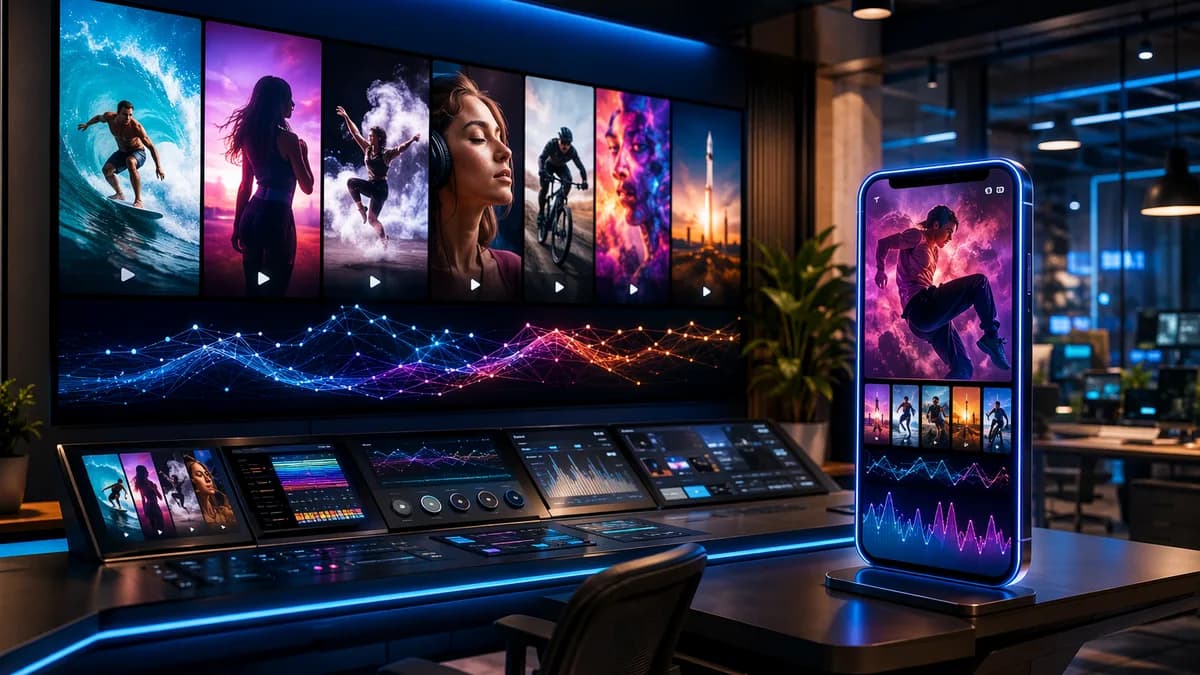
HBO Max Shorts turns prestige TV discovery into a swipe feed
The trigger is simple: Warner Bros. Discovery is adding a Shorts icon to the bottom navigation menu in HBO Max. Tap it, and users get a vertical feed of clips from the HBO Max library.
That placement is not cosmetic. Bottom navigation turns Shorts into a core app behavior, not a buried experiment. It makes discovery feel less like browsing a catalog and more like sampling a feed.
XOOMAR analysis: this is a discovery test with retention implications. If a viewer doesn’t know what to watch, HBO Max can now offer passive sampling inside the app instead of forcing that viewer through rows, genres, title pages, or search.
The company is following a path already taken by Netflix, Disney Plus, and Peacock, which The Verge says already offer TikTok-like vertical feeds to surface content. We’ve also tracked the broader pull of phone-native vertical formats in vertical video’s grip on mobile attention, though HBO Max’s version is focused on subscription content discovery rather than public creator video.
Clips, trailers, and bonus footage become the new HBO Max sales floor
HBO Max Shorts will show trailers, clips, and bonus content from the HBO Max library. The feed is personalized based on watch history, and users can either jump directly into the show or movie from a clip or add it to their list for later.
That creates a tighter path from discovery to playback. A traditional homepage row asks users to judge a title from artwork, metadata, and maybe an autoplay preview. Shorts lets the content pitch itself through a scene or trailer.
The process is partly automated and partly editorial. Warner Bros. Discovery says an in-house AI tool helps identify clips by using machine learning and scene-level metadata. Scene-level metadata means information attached to specific moments inside a title, rather than only to the title as a whole.
Human editors still make the final call on what gets surfaced. That distinction matters because a machine can find high-impact moments, but editors decide whether those moments actually represent the show or movie.
“We’re thrilled to launch this application of AI to accelerate the creation of these clips and look forward to quickly expanding to make even more of our amazing content offering discoverable through this new feature,” Deepna Devkar, HBO Max senior vice president of Machine Learning Engineering, said in the announcement, according to The Hollywood Reporter.
The risk is obvious. If the feed rewards only the most instantly clickable scenes, it could flatten HBO’s premium identity into a highlight reel. That doesn’t mean the product will fail. It means editorial judgment will matter as much as the AI pipeline.
The product test is whether clips can outperform carousels
Warner Bros. Discovery has not disclosed performance targets for HBO Max Shorts. The source material does not include engagement data, click-through rates, watchlist conversion, or churn figures.
Still, the testable product questions are clear:
- Playback conversion: Do users jump from a short clip into a full episode or movie?
- Watchlist behavior: Do clips drive more “My List” additions than static rows?
- Catalog use: Do older titles get surfaced more effectively through clips?
- Feed quality: Does personalization improve as users interact with the feature?
- Session depth: Does the feed lead to finished viewing, or just more scrolling?
The source says the feature will “refine as users interact with the feature.” It does not say which interactions HBO Max will measure. XOOMAR analysis: any serious test would likely compare clip-driven discovery against existing surfaces such as homepage rows, autoplay trailers, and search results.
That is where vertical feeds have a structural advantage. They can present more titles in less time and can adapt quickly based on user behavior. But the same design can also become noisy if every service copies the format without preserving the reason subscribers opened the app in the first place.
Netflix, Disney Plus, and Peacock gave HBO Max a map
HBO Max is not first here. The Verge reports that Netflix, Disney Plus, and Peacock already offer TikTok-like vertical video feeds.
| Platform | Vertical discovery status in source material |
|---|---|
| HBO Max | Testing HBO Max Shorts with select iOS users in the US |
| Netflix | Already offers a TikTok-like vertical feed and is testing a similar conversational search feature |
| Disney Plus | Already offers a TikTok-like vertical feed |
| Peacock | Already offers a TikTok-like vertical feed |
The competitive logic is straightforward. Streaming discovery used to lean on homepage carousels, genre rows, autoplay trailers, and “because you watched” recommendations. HBO Max Shorts moves the promotional layer inside a feed where interest can be acted on immediately.
That is the key difference from old TV promotion. A trailer on YouTube or a network promo can spark interest, but it sends viewers somewhere else to watch. A clip inside HBO Max can send the viewer straight into the title.
The company is also testing an experimental conversational search experience for HBO Max. The Verge says it lets users search with natural language queries and is available first for adult users on Android in the US. Paired with Shorts, that suggests Warner Bros. Discovery is attacking discovery from both sides: passive swipe-based sampling and active intent-based search.
Studios, subscribers, and creators won’t value the same feed
For Warner Bros. Discovery, the upside is catalog efficiency. HBO Max has thousands of hours of titles for the AI tool to scan, according to the company’s description cited by The Verge. Shorts gives more of that library a chance to appear outside the usual homepage slots.
For subscribers, the benefit is speed. A strong clip can answer the question “do I want this?” faster than a title card. The downside is another feed inside an app people may have opened to watch premium programming, not to scroll.
That tension connects to a broader user problem we’ve covered through tools designed to curb compulsive app behavior, including app-locking approaches aimed at turning attention back into work. HBO Max Shorts may be useful, but it still borrows the grammar of addictive mobile feeds.
Creators face a different trade-off. A well-chosen scene can revive interest in a series or movie. A poorly chosen one can strip context from a performance, spoil a twist, or make a slow-burn story look like a collection of isolated moments.
Advertisers are not part of the announced HBO Max Shorts rollout in the source material, so any ad use remains speculative. The confirmed near-term plan is narrower: expand to additional devices and markets, incorporate sports content, and refine the feature as users interact with it.
The next test is whether HBO Max Shorts leads to watching, not just scrolling
The practical change for viewers is clear. Choosing something on HBO Max may become less like browsing a library and more like sampling clips until one sticks.
That could help if HBO Max Shorts stays focused on useful discovery. The best version of the feature would surface a forgotten series, explain the tone of a new movie in seconds, or turn bonus material into a real path back into the catalog.
The weaker version is easy to imagine: a cluttered engagement loop that makes HBO Max feel less distinct from every other vertical feed on a phone. That would be a bad trade if scrolling rises but completed viewing does not.
The evidence to watch is not whether HBO Max expands Shorts. The company already says more devices, more markets, sports content, and refinements are coming. The real test is whether Warner Bros. Discovery can show that swipe-based discovery drives full-title viewing, not just another place to pass time inside the app.
The Bottom Line
- HBO Max is turning content discovery into a swipe-based experience instead of relying only on search and menu browsing.
- The move shows premium streamers are borrowing mobile-first habits from TikTok to keep viewers engaged.
- If the test works, clips and trailers could become a bigger part of how subscribers choose what to watch.
Streaming services using vertical discovery feeds
| Service | Vertical feed status | Purpose |
|---|---|---|
| HBO Max | Testing Shorts with select iOS users in the US | Surface trailers, clips, movie scenes, and bonus content to drive viewing |
| Netflix | Already offers a TikTok-like vertical feed | Help users discover content |
| Disney Plus | Already offers a TikTok-like vertical feed | Help users discover content |
| Peacock | Already offers a TikTok-like vertical feed | Help users discover content |
Sources

Written by
XOOMAR Insights Team
Research and Editorial Desk
The XOOMAR Insights Team pairs automated research with human editorial judgment. We track hundreds of sources across technology, fintech, trading, SaaS, and cybersecurity, cross-check the facts, and explain what happened, why it matters, and what to watch next. We do not just rewrite headlines. Every article is fact-checked and scored for reliability before it goes live, and we link back to the original sources so you can verify anything yourself.
Explore More Topics
Related Articles
 Technology
200B Shorts Views Crown Vertical Video King of Phones
YouTube Shorts' 200B daily views show vertical video has become the default interface for phone attention.
Jul 26, 20268 min
 Technology
Spotify AI Chatbot Takes Over the Premium Listening Flow
Spotify is testing Talk to Spotify, an AI chatbot for Premium users that handles music, podcasts, and audiobooks inside the app.
Jul 20, 20266 min
 Technology
Ride or Die Online Skips the Streaming Guesswork on Prime
Ride or Die streams globally on Prime Video July 15, with all eight episodes arriving at once and no country-by-country app hunt.
Jul 19, 20268 min
 Technology
5 New Netflix Movies and Shows Rescue a Thin July Week
Netflix adds 15 titles this week, but five will decide most queues: romance, music, comedy, true crime and WWE.
Jul 21, 20267 min
 Technology
Netflix Drops $587M Cash on Affleck's AI Film Startup
Netflix put $587M in cash behind Ben Affleck's AI filmmaking startup, signaling a serious move into AI-assisted production.
Jul 19, 20266 min
 Global Trends
Tariff Detours Crush the US Manufacturing Jobs Pitch
Tariffs haven't sparked a US factory jobs boom. Chinese inputs are taking longer routes, with higher costs and more automation.
Jul 27, 20268 min
 Global Trends
33,772 ZIP Codes Redraw the American Dream Index Map
Newsweek's American Dream Index ranks 33,772 ZIP codes and finds opportunity isn't dead. It's just become brutally local.
Jul 27, 20267 min
 Fintech
Musk Turns Paid X Users Into X Money App Banking Test
X Money is live for paid U.S. subscribers, turning Premium users into Musk’s first real test of banking inside X.
Jul 28, 20268 min
 Fintech
Apple Upgrade Turns iPhone Price Shock into Klarna Rent
Apple is using Klarna leases to soften iPhone, Mac and iPad price shock without cutting prices or loosening its upgrade grip.
Jul 28, 20268 min
 Technology
Cheap JisuLife Handheld Fan Shames $150 Shark Rival
The $30 JisuLife Life10 S runs for 16 hours and makes premium handheld fans look harder to justify.
Jul 28, 20267 min
Don't miss the signal
Get our weekly roundup of the stories that matter across tech, fintech, and trading. No noise, just signal.
Free forever. No spam. Unsubscribe anytime.