
If the Honor Magic V6 is already thin, powerful, water-resistant, and long-lasting, what exactly is left for foldable phone makers to compete on?
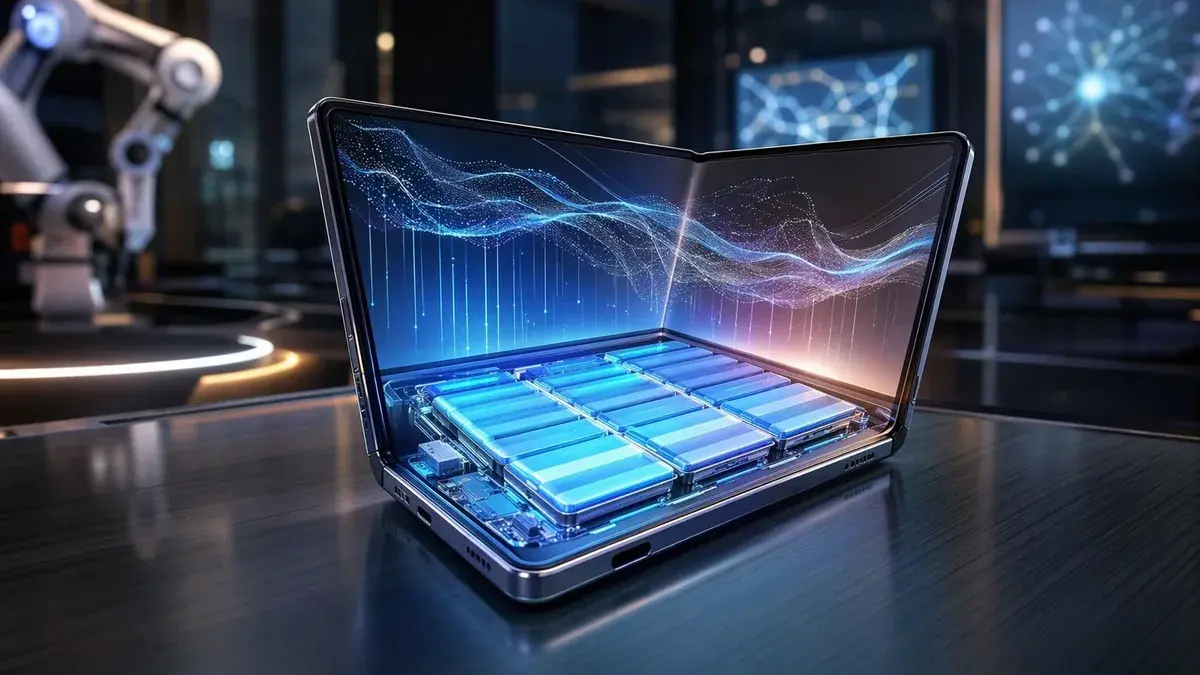
TechnologyJune 15, 2026· 12 min read· By XOOMAR Insights Team
Three Foldable Firsts Trap Honor Magic V6 in a New Fight
Updated on June 15, 2026
XOOMAR Intelligence
Analyst Take
72/ 100
4 sources analyzedMedium confidenceTrend10Freshness100Source Trust88Factual Grounding91Signal Cluster20
That is the question sitting underneath Honor’s latest book-style foldable. The Magic V6 claims three foldable firsts: the thinnest body, the largest battery, and the strongest water-resistance rating in the category, according to The Verge. Yet The Verge’s review lands on a sharper point: only the battery feels like a major daily upgrade.
That tension matters. Foldable phones used to sell progress by solving obvious flaws. They were too thick. Too fragile. Too compromised on battery. Too awkward closed. Now the best ones look less like experiments and more like flagship phones with hinges. Honor deserves credit for helping push them there, but the Honor Magic V6 also exposes the new problem: hardware progress is getting harder to feel.
“The crease isn’t quite invisible, but otherwise this feels like the complete foldable package — on the hardware side at least.”
XOOMAR analysis: this is the foldable category entering its harder phase. Once the big physical compromises shrink, differentiation moves away from spec-sheet firsts and toward battery confidence, software polish, repair trust, and reasons to open the device every day.
Does the Honor Magic V6 prove foldable hardware has hit shrinking returns?
The Honor Magic V6 sounds dramatic on paper. It is thinner than any other foldable, carries a bigger battery than rival foldables cited in the review, and reaches IP69 dust and water resistance. Those are real engineering wins.
The harder question is whether they change behavior.
Thinness is the clearest example. The Magic V6 measures 4mm open and 8.75mm folded in the white version, while other colors are 9mm folded. The Verge notes that the folded white model is no thicker than an iPhone 17 Pro Max, which is a serious milestone for a book-style foldable. But it is also only 0.05mm thinner than Honor’s previous Magic foldable. That is approximately the width of a human hair, per The Verge’s framing.
Battery is different. The global Magic V6 carries a 6,660mAh silicon-carbon battery, up from 5,820mAh in the Magic V5. The China model gets 7,150mAh. The Verge says the Magic V6 can comfortably run for two days at a time, with charging every other night. That changes how a foldable feels because foldables invite heavier use: more reading, more video, more multitasking, more navigation, more screen-on time.
Water resistance sits in the middle. IP69 is technically stronger than the Magic V5’s IP59 and beyond the IP68 cited for Google’s Pixel 10 Pro Fold. It means the phone is dust-tight and can survive exposure to high-pressure, high-temperature water jets. Most buyers won’t test that scenario. But the rating reduces anxiety around a device type still associated with fragility.
Honor’s own product page adds more hardware claims around the same thesis: 500,000 folds, a 2800 MPa steel shield structure, 80W wired charging, 66W wireless charging, and dual 1-120Hz LTPO OLED displays, according to Honor. Those numbers support the idea that Honor is not coasting. The issue is perception. The work is difficult, but the visible payoff is smaller.
Which of the Magic V6’s three foldable firsts changes daily use?
The answer is battery. The rest looks better in a launch deck than it feels in a pocket.
| Device or design direction | Verified details from supplied sources | Practical read |
|---|---|---|
| Honor Magic V6 | 4mm open, 8.75mm folded for white version, 6,660mAh global battery, IP69, RM 7,699 in Malaysia and Singapore | The battery materially changes confidence. The thinness and IP rating are impressive but more incremental. |
| Honor Magic V5 | 5,820mAh battery, IP59, only 0.05mm thicker than the Magic V6 per The Verge | Shows how narrow the physical gains have become. |
| Google Pixel 10 Pro Fold | IP68 cited by The Verge | Magic V6 has stronger rated water protection, though the everyday advantage is limited. |
| Oppo Find N6 | Nearly imperceptible crease, stronger multitasking, camera system used as a foldable benchmark in The Verge review | Highlights where Honor still trails: crease and software. |
| Huawei Pura X Max | Odd new aspect ratio, expected by The Verge to influence Samsung and Apple later this year | Suggests the next fight may be shape, not thinness. |
| Samsung, Apple, OnePlus | The supplied material does not provide comparable dimensions, battery sizes, or prices for recent models | XOOMAR is not filling gaps with outside spec sheets. The useful comparison here is strategic, not numerical. |
That table shows why the Magic V6 is both impressive and oddly familiar. The headline hardware claims are true within the supplied material, but they don’t all carry equal weight.
Battery is the most meaningful because it reduces the central foldable tax. A large inner screen encourages use cases that punish battery life. Two-day endurance, as The Verge describes it, makes the Magic V6 feel less like a device that must be managed and more like a phone that can be trusted.
Thinness matters, but it has entered diminishing returns. Getting a foldable closed to slab-phone thickness is valuable. Beating last year’s model by 0.05mm is not a new user experience.
Water-resistance helps confidence, but durability is broader than ingress protection. The Verge still flags the hinge, soft inner screen, and difficulty of fully protecting the device with a case. Long-term ownership will test what a spec rating cannot: repeated folding, drops, repair availability, charging heat, and how the phone ages after months of opening and closing.
How did foldables become almost-normal flagship phones?
Foldables used to announce their compromises the moment you picked them up. Thick bodies. Nervous hinges. Small outer screens. Cameras that felt secondary. Displays that carried a visible crease as a daily reminder of the engineering bargain.
The Magic V6 shows how much of that has changed. The review treats many high-end features as assumed: Qualcomm Snapdragon 8 Elite Gen 5, up to 512GB of storage, 16GB of RAM, fast wireless charging, dual 120Hz OLED displays, a triple rear camera, and stylus support. That says more about the category than any single spec.
The result is a tougher kind of maturity. When foldables were flawed, every fix felt obvious. Better hinge. Better outer display. Better battery. Better cameras. Now, the best book-style Android foldables can sit beside slab flagships in most areas, which means progress looks incremental even when the engineering is not.
The crease remains the symbol of the compromise. The Verge says the Magic V6 crease is subtle, but not as hard to detect as Oppo’s latest. Honor’s product page describes a “virtually invisible crease” and “SGS imperceptible crease,” but the review’s experience is more restrained. That gap matters because the crease is emotional as much as technical. It tells buyers they are still using a different kind of screen.
Cameras are the other holdout. The Verge calls the Magic V6’s triple camera system impressive and probably among the best in foldables, except Oppo’s Find N6, but says it still trails top slab phones because of smaller sensors, heavy saturation on many shots, and inconsistent color processing. Foldables are closing the gap. They haven’t erased it.
Are Huawei’s odd shapes and trifolds making the book-style formula look too safe?
Honor’s strategy is refinement. Huawei’s, at least in the example cited by The Verge, looks more exploratory.
The Verge points to Huawei’s Pura X Max as standing out because of an unusual aspect ratio, and says Samsung and Apple are expected to replicate that direction later this year. That matters because book-style foldables have converged around a familiar idea: a phone outside, a small tablet inside. The Magic V6 perfects that formula. It does not challenge it.
Trifolds are a different kind of pressure. The Verge describes them as “a separate beast entirely.” That phrase fits. A trifold does not compete by being fractionally thinner or slightly more water-resistant. It promises a bigger shift in productivity, with all the likely penalties that come from a more complex design.
XOOMAR analysis: the Magic V6 is a bet that the current book-style foldable still has enough room for polish to win. That may be right for buyers who want a thinner, longer-lasting, more normal foldable. But if Samsung, Huawei, or Apple validates wider, squarer, or more unusual formats at scale, Honor’s approach could start to look conservative.
Apple’s potential entrance matters less because of raw hardware mystery and more because of user trust. The Verge says Apple will be entering a mature foldable market. That means Apple won’t get to define the category from scratch. It will have to justify opening the device. The same software credibility question already shadows Apple’s AI push, as we covered in Apple Bets Its $3 Trillion Aura on a Siri AI Rescue and Apple AI Comeback Lives or Dies on Private Cloud Bet.
That is the bar now. The next foldable winner may not be the thinnest. It may be the one that makes the inner screen feel unavoidable.
Who actually benefits from Honor’s refinement-first foldable?
Different groups will read the Honor Magic V6 very differently.
Power users get the clearest benefit. The bigger battery pairs naturally with foldable behavior. Navigation, split-screen work, video calls, gaming, reading, and travel days all punish smaller cells. If a foldable can run for two days in real use, as The Verge reports, that removes one of the strongest reasons to stay with a slab phone.
Mainstream buyers still face blunt objections. The Magic V6 costs RM 7,699, about $1,930, in Malaysia and Singapore. More countries, including the UK and Europe, are set to follow later this month, according to The Verge. At that level, buyers will not judge only thickness. They will ask about the crease, cameras, durability, repair support, trade-in value, software quality, and whether they will open the device enough to justify the cost.
Carriers and retailers get a premium halo product, but the sales pitch is harder than “it’s thinner.” A foldable this mature needs a clearer promise: two-day battery life, long software support, and a form factor that works closed as well as open. The Verge also notes Honor cannot match Samsung’s repair and support infrastructure outside China, which matters when the device has a hinge and a soft inner display.
App developers have a separate question. Do foldable owners use the inner screen often enough to justify better layouts and multitasking ideas? The Magic V6 hardware says yes in theory. The software critique says Honor has not fully answered in practice.
That critique is sharp. The Verge praises Honor’s seven years of OS and security updates, matching Google and Samsung and exceeding Oppo’s stated support by two years. But it also calls MagicOS frustrating, noisy, packed with Honor apps, and weaker than Oppo’s multitasking. For a device built around a larger inner canvas, that is not a minor flaw. It strikes at the reason to buy the form factor.
How should buyers and rivals read the Magic V6 in 2026?
Buyers should treat foldable firsts as starting points, not verdicts.
The better checklist is practical:
- Battery confidence: The Magic V6’s 6,660mAh global battery is the standout upgrade because it changes charging behavior.
- Software quality: A foldable lives or dies by multitasking, windowing, app continuity, and whether the inner screen feels useful.
- Update policy: Honor’s seven years of OS and security support is a real strength.
- Repair reality: IP ratings help, but hinges and inner screens still raise ownership risk.
- Camera tradeoffs: The Magic V6 camera is good by foldable standards, but The Verge says slab flagships remain ahead.
- Closed-phone comfort: A foldable that feels awkward closed will be opened less, which weakens the whole purchase case.
Honor gains hardware credibility from the Magic V6. The company can argue that it competes at the top of foldable engineering, not merely on price or regional availability. Thinness, battery capacity, ingress protection, weight, display specs, and charging all support that claim.
What Honor still needs is a stronger software story. The Magic V6 has the hardware of a productivity device, but The Verge’s review suggests the software does not yet make the large screen feel as powerful or intuitive as it should. Honor also needs global distribution and support that match the confidence implied by a nearly $2,000 device.
For rivals, the lesson is uncomfortable. Foldables are becoming premium smartphones with hinges. That shifts the fight toward trust, service, software, and long-term durability. A thinner chassis may win a headline. It won’t carry a product cycle alone.
Which evidence will decide the next foldable cycle?
The next cycle will be decided by proof, not claims.
If the Magic V6’s battery performance holds across more markets, more reviewers, and months of heavy use, Honor will have turned battery capacity into a real category advantage. If the hinge, inner screen, and water-resistance claims age well, the device will also help reduce the durability fear that still trails foldables.
The thesis weakens if MagicOS remains the main complaint. Hardware maturity raises expectations for software. Once a foldable has flagship-grade chips, bright displays, strong battery life, and long update support, clumsy multitasking becomes harder to excuse.
XOOMAR scenario analysis: thinness, larger batteries, and stronger ingress ratings are likely to become baseline targets across premium foldables. The more interesting split will be shape and purpose. Wider cover screens, squarer inner displays, Huawei-style aspect-ratio experiments, and trifolds could create a more meaningful divide than another fractional reduction in thickness.
The crease will keep improving, but the Magic V6 shows why it probably won’t be enough as a main selling point. Buyers will care more about whether the phone lasts all day, survives ownership, gets repaired without drama, takes strong photos, and gives them a reason to unfold it.
Honor has built one of the most complete foldable hardware packages yet. The next winner will be the company that turns the open screen from a luxury into a habit.
The Bottom Line
- Honor’s Magic V6 shows foldables are becoming closer to mainstream flagship phones with hinges.
- The review suggests spec-sheet firsts matter less if users do not feel a major daily improvement.
- Future foldable competition may shift toward battery confidence, software polish, durability, and repair trust.
Honor Magic V6 thickness and category context
| Device or version | Measurement or rating | Why it matters |
|---|---|---|
| Honor Magic V6, open | 4mm | Shows how far book-style foldable hardware has slimmed down. |
| Honor Magic V6, folded white version | 8.75mm | The Verge notes it is no thicker than an iPhone 17 Pro Max. |
| Honor Magic V6, folded other colors | 9mm | Still extremely thin for a foldable phone. |
| Honor Magic V6 water resistance | IP69 | Claimed as the strongest water-resistance rating in the foldable category. |
Honor Magic V6 thickness
Open
mm4
Folded white version
mm8.75
Folded other colors
mm9
Sources

Written by
XOOMAR Insights Team
Research and Editorial Desk
The XOOMAR Insights Team pairs automated research with human editorial judgment. We track hundreds of sources across technology, fintech, trading, SaaS, and cybersecurity, cross-check the facts, and explain what happened, why it matters, and what to watch next. We do not just rewrite headlines. Every article is fact-checked and scored for reliability before it goes live, and we link back to the original sources so you can verify anything yourself.
Explore More Topics
Related Articles
 Technology
China Fears Push Anthropic to Kill Mythos for Users
A China-linked access fear helped turn Anthropic's Mythos fight into an export-control crisis, and the company pulled the models for everyone.
Jun 14, 20269 min
 Technology
Siri AI Finally Works, and Apple Snatches the Edge
Siri AI may finally be useful, turning Apple's biggest assistant punchline into a serious AI distribution play.
Jun 13, 20268 min
 Technology
Two Apple Intelligence Perks Lock Older iPhones Out
Older Apple Intelligence iPhones lose only two Siri features, so the iPhone 17 Pro upgrade case looks thin.
Jun 12, 20268 min
 Technology
Siri AI Clams Up as Apple Tries to Win Back Trust
Apple's new Siri AI is curt, permission-aware, and built to get out of the way. That restraint may be its sharpest AI move.
Jun 10, 20268 min
 Technology
Google’s Lyria Squeezes YouTube Musicians on Consent
Google's Lyria defense could turn YouTube uploads into unpaid AI training data unless creators get consent and compensation.
Jun 10, 20268 min
 Cybersecurity
ShinyHunters Breach Claim Jolts Council of Europe
ShinyHunters claims it stole 429,000 Council of Europe files. Officials are investigating and haven't confirmed a breach.
Jun 15, 20265 min
 Fintech
Scammers Push UK APP Fraud to £576M as Banks Lose Grip
UK APP fraud losses hit £576.4M as scammers exploit platforms and phones before banks can intervene.
Jun 15, 20267 min
 Technology
$100 Deposits Haunt Trump Phone After a Year of Doubt
A year after launch, the Trump phone still hasn't delivered a normal rollout, leaving $100 preorder buyers stuck with thin proof.
Jun 15, 20268 min
 Global Trends
Israel Defies US-Iran Deal with Lebanon Troop Pledge
Israel says troops will stay in Lebanon, challenging the US-Iran deal's call to halt military operations there.
Jun 15, 20268 min
 Trading
Bittensor TAO Steals CoinDesk 20 Spotlight With 31.9%
Bittensor TAO soared 31.9%, dwarfing CoinDesk 20's 5.9% gain as every asset in the index traded higher.
Jun 15, 20267 min
Don't miss the signal
Get our weekly roundup of the stories that matter across tech, fintech, and trading. No noise, just signal.
Free forever. No spam. Unsubscribe anytime.