
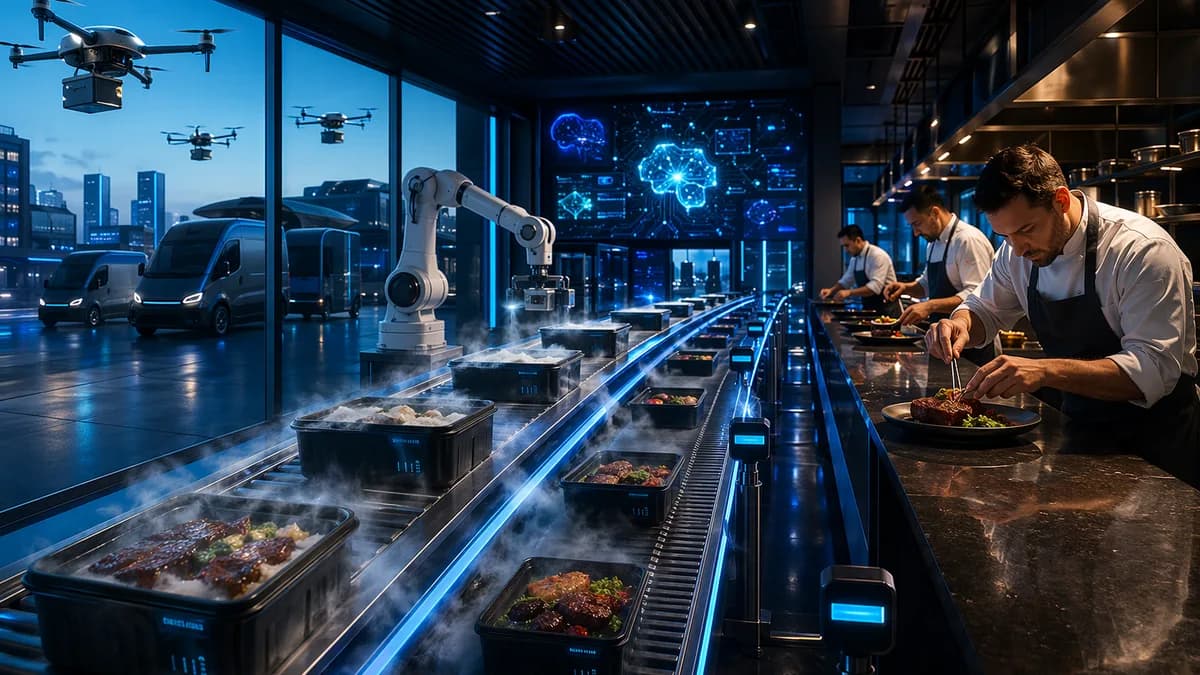
Omaha Steaks same-day delivery turns the company’s cold chain from a shipping function into part of the product itself. That matters most for premium food buyers who no longer just want a high-quality steak, they want certainty that dinner will arrive when the occasion demands it.
TechnologyJuly 3, 2026· 8 min read· By XOOMAR Insights Team
Same-Day Delivery Puts Omaha Steaks on the Dinner Clock
Updated on July 3, 2026
XOOMAR Intelligence
Analyst Take
74/ 100
4 sources analyzedMedium confidenceTrend10Freshness100Source Trust88Factual Grounding88Signal Cluster40
President and CEO Nate Rempe told PYMNTS that same-day and fast delivery are changing the company’s customer experience in ways it hasn’t seen before.
“We see earth-shattering change in customer experience with same-day and fast delivery,” Rempe said. “We see customer satisfaction metrics that we haven’t seen before in the business.”
The deeper signal: Omaha Steaks is no longer treating logistics as a backstage cost center. It is making delivery speed, arrival certainty and cold-chain control part of the brand promise.
Omaha Steaks is selling certainty now, not just premium cuts of meat
The steak is still the center of the offer. But it’s no longer the whole product. The new product is the steak plus the confidence that it can rescue a dinner plan, support a holiday meal or land at the doorstep inside a tighter window.
Rempe framed the business around emotion, not just meat.
“We have always been, and will always be, in the experience business,” Rempe said. “It’s something that America needs, which is memories and time and the human aspect.”
That’s the logic behind “dinner theater.” The customer sees the clock, the tracking, the delivery window and the arrival. Logistics becomes visible. It builds anticipation and reduces the planning burden.
The question for Omaha Steaks is simple: when urgency enters the meal plan, does the brand that arrives fastest win the order?
XOOMAR analysis: fast delivery won’t replace sourcing, quality or reputation. Rempe made clear that the company still sees itself first as a meat manufacturer. But speed can decide the purchase when the buyer is choosing between planning ahead and solving tonight.
Makers face the hardest part of Omaha Steaks same-day delivery
For builders and operators inside direct-to-consumer food, faster fulfillment forces changes upstream. Omaha Steaks is not just adding a carrier option. It is rethinking packaging, production flow and cold-chain timing.
Rempe described the core tension plainly:
“We are a meat company more than anything,” Rempe said. “We are a manufacturing business. We create, better than anyone else, a filet mignon. Protecting that while we’re radically transforming the business is the CEO’s job. To toe the two lines.”
The supplied context says Omaha Steaks plans to open more than a dozen new retail stores in 2026, expand its fulfillment center footprint, provide next-day delivery to more than 85% of the country and offer same-day delivery in select markets. It is also consolidating production into its larger F Street facility in Omaha, with a multi-shift, 24/7 production model.
That is not cosmetic modernization. It changes where inventory sits, how quickly frozen goods move and how tightly manufacturing must sync with last-mile availability.
The hard question for makers is this: does speed create enough customer value to justify the operational complexity?
The source does not provide margin data, repeat purchase rates or basket-size changes. So the economic case remains partly unproven from the outside. But the direction is clear. If Omaha Steaks same-day delivery raises satisfaction while lowering spoilage risk and packaging failures, logistics shifts from expense to growth lever.
For XOOMAR readers tracking infrastructure as strategy in other sectors, the same pattern shows up in cloud and AI distribution. See our coverage of $183B AI Bet Turns Meta Cloud Into Direct AWS Fight and $2 Token Price Throws Claude Sonnet 5 Into AI Agent War. Different markets, same lesson: the delivery layer can become the competitive layer.
Buyers get less anxiety in the cold chain
Frozen premium proteins carry a specific customer fear. The product can be excellent, but if it sits too long, arrives unpredictably or forces the buyer to worry about temperature integrity, the experience degrades before dinner starts.
Rempe said the company is trying to close that gap by connecting the two ends of the cold chain.
“We’re connecting both sides of the bookend of the cold chain,” Rempe said. “We get it there fast. Customer knows right when it’s going to arrive... Those two things have created a revolution of improvements in customer experience.”
That line matters because it puts predictability on the same level as speed. The customer doesn’t just want fast arrival. They want to know when to be home, when to cook and whether the product is protected.
Traditional premium food marketing leaned on heritage, sourcing, catalogs and indulgence. Omaha Steaks still has that heritage, including a company history dating to 1917 in the supplied context. But the digital buyer judges the experience differently. A strong brand can lose emotional credit if fulfillment feels uncertain.
The buyer question becomes sharper: can the company make a perishable online purchase feel as controlled as picking something up locally?
Rempe also tied delivery speed to packaging. Omaha Steaks historically used Styrofoam coolers for frozen shipments. As sustainability expectations changed, the company looked for more environmentally responsible packaging, but Rempe said the science is difficult.
“There is no direct replacement for Styrofoam,” Rempe said. “As we move away from the world’s best insulator... we had to shorten the time from fulfillment to customers so we could still maintain a really high level of cold chain integrity.”
That is the core operational insight. Faster delivery is not just convenience. It can make different packaging choices possible.
Competitors inherit a new premium food standard
Omaha Steaks’ move raises the bar for other premium food sellers, even if they don’t share the same scale, fulfillment network or cold-chain experience.
The company’s April expansion of same-day delivery through Roadie, a UPS company, puts Omaha Steaks closer to immediate meal occasions. Rempe said the partnership lets the company compete for tonight’s dinner decision, not only planned gifting or holiday orders.
Here is how the stakeholder incentives split:
| Stakeholder | What faster delivery offers | What it complicates |
|---|---|---|
| Customers | More certainty, tighter timing, less stress around perishables | Higher expectations for every future order |
| Omaha Steaks | Higher satisfaction metrics and more frequent purchase occasions | More pressure on fulfillment, packaging and production |
| Logistics partners | Specialized cold-chain demand from premium food brands | Need for reliable timing, not just parcel movement |
| Competitors | A clear signal of where premium food retail is heading | Cost structures may not support selective same-day service |
The competitor question is unavoidable: if one legacy premium brand can make fast delivery part of the emotional experience, how long can others treat fulfillment as invisible?
XOOMAR analysis: smaller brands may not copy this directly. Some may lean harder into scarcity, craft or slower premium rituals. But once a large category name trains buyers to expect faster fulfillment, the market does not fully reset.
The market signal is selective speed, not speed everywhere
The future of premium food eCommerce is unlikely to be universal same-day delivery. The source supports a more disciplined reading: Omaha Steaks is expanding fulfillment, offering same-day in select markets and building next-day reach to most of the country.
That selectivity matters. Fast frozen delivery only works when inventory, packaging, route coverage and customer density line up. Speed can strengthen the brand when it improves reliability. It can damage the brand if it creates missed windows, weak handoffs or cost pressure that forces compromises elsewhere.
Omaha Steaks is also reshaping its business mix. The supplied context says the company is exiting foodservice, which represented 10% of its business, and notified approximately 100 local restaurants in the Omaha area. Rempe said that business no longer fit where the company saw growth. The shift included 30 employees being let go.
That shows the trade-off behind the strategy. More focus on direct customer access means less commitment to parts of the business that sit outside the new growth circle.
The practical question for the next phase is this: will Omaha Steaks prove that faster delivery changes purchase behavior enough to justify the capital, operational and relationship costs?
Evidence that would confirm the thesis includes sustained gains in customer satisfaction, wider same-day market coverage, fewer cold-chain failures and stronger performance from subscriptions or repeat orders. Evidence that would weaken it would be delivery cost pressure, inconsistent service quality or customer resistance if speed becomes too expensive.
For now, Omaha Steaks same-day delivery signals a clear industry turn. Premium food brands won’t win only by saying the product is better. They’ll win when the product arrives at the exact moment the customer needs the experience to work.
The Bottom Line
- Omaha Steaks is turning delivery speed and cold-chain control into part of its brand promise.
- Same-day delivery gives premium food buyers more confidence for holidays, events and last-minute meals.
- The move shows how logistics can become a competitive advantage rather than just a cost center.
Omaha Steaks Value Proposition Shift
| Traditional Offer | Evolving Offer |
|---|---|
| Premium cuts of meat | Premium cuts plus delivery certainty |
| Logistics as a shipping function | Logistics as part of the customer experience |
| Quality and reputation drive the purchase | Speed can decide the purchase when urgency matters |
Sources

Written by
XOOMAR Insights Team
Research and Editorial Desk
The XOOMAR Insights Team pairs automated research with human editorial judgment. We track hundreds of sources across technology, fintech, trading, SaaS, and cybersecurity, cross-check the facts, and explain what happened, why it matters, and what to watch next. We do not just rewrite headlines. Every article is fact-checked and scored for reliability before it goes live, and we link back to the original sources so you can verify anything yourself.
Explore More Topics
Related Articles
 Technology
Honda Data Center Batteries Expose the EV Profit Shift
Honda is steering EV battery cells toward data centers, a stark sign that storage demand now looks safer than U.S. EV sales.
Jul 1, 20267 min
 Technology
Power Crunch Pulls AI Data Center Antitrust Into Fight
AI's data center boom is turning electricity access into an antitrust flashpoint as power planning falls behind demand.
Jul 2, 20268 min
 Technology
A Decade Late, Boeing Starliner Leaves NASA with SpaceX
Starliner may not be certified until 2027, forcing NASA to lean on SpaceX for most of the ISS's remaining life.
Jul 2, 20268 min
 Technology
Gemini Spark Invades Mac, but Google Keeps It Exclusive
Gemini Spark reaches Mac, but only U.S. AI Ultra users get the beta as Google tests whether desktop AI agents can earn trust.
Jul 1, 20266 min
 Technology
Fable 5 Returns as Anthropic Battles Safety Doubts
Fable 5 is back, but new safeguards make Anthropic’s relaunch look more like a security test than a victory.
Jul 1, 20268 min
 Trading
Weak Jobs Data Knocks USD/CAD Into Loonie Comeback
USD/CAD is fading after weak US jobs data hit the dollar, while higher oil gives the Canadian Dollar a short-term opening.
Jul 3, 20267 min
 Cybersecurity
Accused Scattered Spider Teen Dragged to US in $100M Case
A 19-year-old accused Scattered Spider member is in U.S. custody over a case tied to 100-plus intrusions and $100M in ransoms.
Jul 3, 20266 min
 Global Trends
Felony Threat Fizzles for Golden Gate Bridge Protesters
A jury convicted seven bridge protesters of misdemeanors but deadlocked on felony conspiracy, sparing them an immediate 15-year threat.
Jul 3, 20268 min
 Cybersecurity
3.8 Million Caught in Medtronic Data Breach Fallout
Medtronic says devices stayed safe, but 3.8 million people had personal and medical data exposed through corporate IT.
Jul 3, 202611 min
 Future Fiction
The Mangrove Tongue of Mateo Cruz
Mateo Cruz, once a beloved chef, has outlived two cancers, three marriages, and half the coastline he remembers. When he volunteers for a radical civic program that will extend his life by rewriting his body into a living sensor for Miami’s restored mangrove barriers, his daughter Lía—an identity auditor for programmable biology—must determine whether the man emerging from the procedure is still choosing freely, or being authored by his own upgrades.
Jul 3, 202613 min
Don't miss the signal
Get our weekly roundup of the stories that matter across tech, fintech, and trading. No noise, just signal.
Free forever. No spam. Unsubscribe anytime.