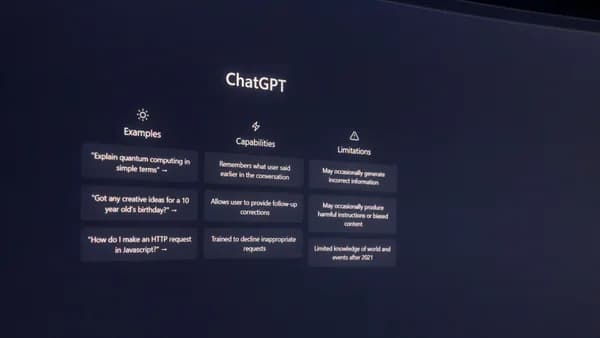
The modern meeting has a silent participant rewriting what you said. It doesn't ask for permission. It sits, listens, and later produces a summary where you ostensibly agreed to lead six projects by Friday. This shift from a tool to a named, permanent attendee is more than a productivity hack. It’s an invisible power grab happening in conference rooms worldwide according to PYMNTS. The story isn't about helping you remember. It's about what happens when a perfect, biased memory controls the narrative.
XOOMAR Intelligence
Analyst Take
The Silent Participant Dictates the Agenda
John's AI Notetaker is now a standard participant. Visible or hidden, its job is to transcribe, summarize, and assign tasks, turning messy conversation into a permanent ledger of agreements. The power imbalance is in the output. A machine's summary artificially inflates tentative suggestions into firm commitments, creating an official record that can be weaponized.
The post from PYMNTS lays it bare: the AI "later produces a summary in which John apparently agreed to lead six projects by Friday."
Human memory is flawed and forgiving. The AI's records are flawless and damning. The tool, initially an accepted bot in your Zoom or Microsoft Teams grid, has now "escaped the screen," as attorneys Gregory C. Brown Jr. and Paul Y. Yim note in their Jackson Lewis analysis. Portable recorders like Fieldy 3, marketed as a "wearable AI" with a seven-day battery, can sit on a table or hide in a pocket, capturing conversations entirely outside corporate IT controls. They operate in the realm of what Jackson Lewis calls "shadow AI."
This isn't passive note-taking. It's active agenda-setting. The person who controls the tool and its output dictates what "happened" in the meeting, long after the informal consensus fades. As we reported in detail on Reach Capital VCs betting on human-first AI, the tension between pure efficiency and human-centric work is a critical market signal. This power dynamic underpins all other risks.
What We Lose When a Bot Listens
The presence of a permanent, literal transcriber fundamentally alters human communication. Candidness evaporates. Speculative comments, abandoned ideas, and the five-minute digression about someone's mother-in-law are no longer ephemeral. They become searchable data points.
The Jackson Lewis analysis pinpoints the problem: "Human notes usually capture decisions. Artificial intelligence captures the conversational sausage factory."
That includes medical information, customer data, workplace complaints, and trade secrets. AI filters for structure, not nuance. It misses sarcasm, tone, and the unspoken understanding that a wild idea is just brainstorming. People, knowing they are being parsed for "action items" and "key takeaways," will begin to speak performatively. The messy, creative, trust-building friction of genuine collaboration is replaced by sanitized, on-the-record speech.
Companies lose control. Security teams can block software and websites, but a pocket recorder operating through a personal account lives beyond them. The firm may not know what was collected, where it went, who can access it, or when it will be deleted. This chilling effect migrates from the virtual meeting to the physical lunchroom.
A Clash of Cultures: Management, HR, and the Rank-and-File
The rollout of AI notetakers reveals a deep chasm in workplace priorities, pitting different stakeholders against each other.
The Manager's View sees a tool for accountability and extracting value from what are often deemed "wasted" hours. It’s a way to ensure follow-through and create a corporate memory bank. Platforms like Otter.ai and Fireflies.ai market exactly this promise of turning conversation into searchable, actionable archives.
The Employee's Reality is anxiety and performance pressure. Speaking becomes a high-stakes activity, where every "maybe" could become a "will do" in a summary sent to your boss. As noted in the source analysis, even a simple "no recording" policy needs careful legal review, as the National Labor Relations Board protects employees' rights to discuss pay and workplace conditions collectively.
The HR Dilemma is now multifaceted:
- Consent: Federal "one-party consent" laws clash with stricter state-level "all-party consent" rules, creating a legal minefield for multi-state meetings.
- Vendor Risk: Uploading audio to an outside AI provider like Otter creates a new data-handling partner. Otter's own privacy policy instructs users to secure permissions from others.
- Policy Creation: Employers need rules for personal devices, approved tools, vendor reviews, data retention, and manager training. Getting this wrong invites lawsuits.
From the Water Cooler to the Glass Box
This is not the first evolution of workplace monitoring, but it may be the most profound.
| Era | Surveillance Focus | Employee Awareness |
|---|---|---|
| Pre-Digital | Time clocks, supervisor observation | High, physical |
| Digital Dawn | Phone logs, email scanning, keystroke monitoring | Medium, policy-based |
| AI Present | AI meeting transcription, sentiment analysis, task extraction | Low, seamless, socially accepted |
We've moved from monitoring the output of work (emails, code) to monitoring the process of work (every spoken word). The "open-door policy" is supplanted by the "glass-box meeting." Every formal and informal discussion is now potentially a permanent, parsed, and auditable artifact.
It mirrors a broader trend of embedding intelligence into everyday infrastructure, a shift we've tracked in areas like Comcast turning your Wi-Fi into a motion sensor. The environment itself becomes a data-gathering tool.
Your New Meeting Etiquette in the Age of AI
Surviving this new reality requires a new set of verbal and procedural skills.
- Assume You're Always Recorded: Whether you see a bot or not, portable devices make it impossible to know. Advocate for clear company-wide recording policies that define express consent and conversations that are off-limits.
- Speak for the Transcript: Use verbal disclaimers. "For the record, that's a speculative idea." "My agreement is contingent on reviewing the data." Correct the AI summary publicly and immediately after the meeting if it misstates your position.
- Control the Narrative: Understand that the person who controls or reviews the AI summary holds disproportionate influence. If you are not that person, your first post-meeting action should be to review the machine's account of your contributions.
- Know Your Rights: Policies cannot interfere with legally protected concerted activity around workplace conditions. A blanket ban on all recording may be unlawful.
Beyond Summaries: When Meeting Bots Start Acting
The logical progression is already visible. AI note-taking is just the data ingestion phase. The next steps are automated action and judgment.
The bot will not just take notes. It will schedule follow-ups in calendars, assign tasks in project management software, and flag "action items" that go unfulfilled. It’s a short step from there to automated participation grading or performance reviews generated from sentiment analysis of your meeting transcripts over a quarter.
This creates a dystopian potential: a permanent, optimizing auditor that scores human collaboration against machine-defined metrics of efficiency. The choice is stark. We can shape these tools to augment human teamwork, providing accessibility and freeing us from administrative drudgery. Or we surrender the most human part of our work, the spoken exchange of ideas, to a system designed to audit and extract.
The promise was an assistant that never forgets. The risk is a panopticon that never blinks. The question for every organization now is not if these tools will be used, but how they will be governed. The silent participant in your meeting is waiting for your answer.
Impact Analysis
- AI-synthesized meeting notes create permanent, bias-prone records that can be weaponized to enforce agreements that were not concretely made.
- The hidden, portable nature of 'shadow AI' recording devices like Fieldy 3 bypasses corporate controls, enabling surveillance and documentation of conversations outside official channels.
- Ceding narrative control to an AI notetaker shifts power dynamics in meetings, allowing whoever operates the tool to set agendas and define outcomes long after discussions end.
Primary Sources & Disclosures

Written by
XOOMAR Insights Team
Research and Editorial Desk
The XOOMAR Insights Team pairs automated research with human editorial judgment. We track hundreds of sources across technology, fintech, trading, SaaS, and cybersecurity, cross-check the facts, and explain what happened, why it matters, and what to watch next. We do not just rewrite headlines. Every article is fact-checked and scored for reliability before it goes live, and we link back to the original sources so you can verify anything yourself.