
Sonos needed a comeback product, and the $299 Sonos Play makes its case by doing the least glamorous job in audio: being useful every day.
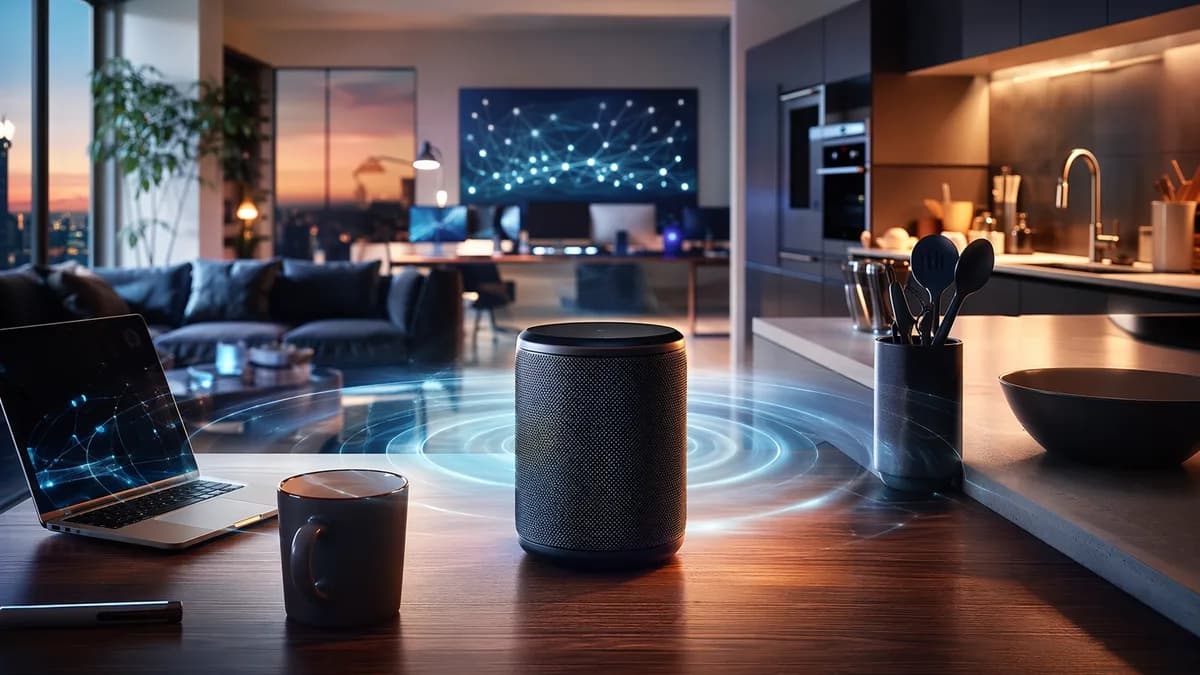
TechnologyJune 14, 2026· 9 min read· By XOOMAR Insights Team
$299 Sonos Play Turns App Fiasco Into a Real Comeback
Updated on June 14, 2026
XOOMAR Intelligence
Analyst Take
59/ 100
4 sources analyzedLow confidenceTrend10Freshness100Source Trust90Factual Grounding91Signal Cluster20
The expectation was that Sonos would have to answer its app scars with a flashy spec monster. The reality, according to TechCrunch, is more interesting. The Sonos Play, launched in March as the company’s first new device in more than a year, wins because it fits the places where people actually listen: the desk, the kitchen, the patio, and the awkward walk between them.
My thesis is simple. The best speaker isn’t the one with the loudest marketing sheet. It’s the one you reach for without thinking. On that test, the Play looks like Sonos remembering what made its best products sticky in the first place.
The new Sonos Play wins because it fits real rooms, not spec-sheet fantasies
The Sonos Play is a hybrid device: part home speaker, part portable speaker. It sits in a pill-shaped dock on a desk, weighs 1.3 kilograms, and includes a rear utility loop for carrying it around the house or outside. That physical design matters more than Sonos probably wants to admit.
A lot of speakers promise flexibility. Many end up parked in one room because moving them feels like a chore, charging becomes another household task, or the controls are too fiddly when life is happening. The Play’s pitch is different. It doesn’t ask you to choose between “proper home audio” and “grab-and-go Bluetooth box.”
Sonos itself calls Play its “most versatile portable Bluetooth speaker yet,” and that framing is not empty branding if the device actually shifts between home and portable use without making the owner babysit it.
“Sonos Play is our most versatile portable Bluetooth speaker yet.”
That’s the right battlefield. Not maximum loudness. Not fake cinema claims. Daily repeat use.
Here’s the before and after Sonos is really selling:
- Before: Desk speaker, kitchen speaker, patio speaker, travel speaker, all treated as separate purchases.
- After: One speaker follows the listener from work mode to dinner prep to outside time.
- Risk: The software has to be good enough that the hardware’s flexibility doesn’t get wasted.
- Reward: A speaker becomes part of the room without being trapped in one.
A desk speaker has to disappear, and Sonos Play mostly gets that right
A desk is a brutal place for a speaker. Space is tight. Audio shifts between podcasts, playlists, laptop sound, and quiet background listening. The speaker has to sound full without bullying the room.
TechCrunch’s reviewer started podcasts at a desk and carried the Play into the kitchen while cooking or making coffee. That small detail says more than a frequency chart. The Play solved a real friction point: headphones and AirPods isolate you, while a compact speaker lets you keep audio running and remain aware of the room.
That matters for work-from-home life. A desk speaker can’t behave like a fragile hi-fi shrine. It has to sit there, stay out of the way, and make ordinary audio feel better. The Play does that with dual-angled tweeters, a mid-woofer, three digital amplifiers, and two passive radiators meant to reinforce bass outdoors.
The trade-off is clear. TechCrunch found balanced, detailed sound at moderate volumes, with especially good instrument separation. But the soundstage is narrow, and clarity slips at higher volumes. That’s not fatal. It defines the product. This is a desk and patio speaker, not a room-filling main system.
The lesson echoes a broader hardware truth we’ve covered before in Earbuds Hurt. This Under-Pillow Speaker Saves Sleep: comfort and placement can beat raw specs when the product lives close to the body, the bed, or the keyboard.
The kitchen is where Sonos Play makes the most sense
The kitchen may be the Play’s natural habitat. Cooking is movement. Cleaning is noise. Hosting is interruption. Fixed audio systems often feel overbuilt there, while earbuds are awkward when hands are wet, greasy, or busy.
The Play’s physical buttons matter because kitchens punish touch-first devices. TechCrunch called out the obvious advantage over AirPods: skipping tracks or adjusting volume with greasy hands is easier on a speaker than on earbuds. That’s the kind of detail that separates a daily-use product from a gadget you admire and ignore.
Sonos doesn’t get a free pass on design, though. The controls are the same color as the silicone top and barely raised. The reviewer memorized their positions after a few days, but better contrast or more tactile buttons would have avoided the learning curve.
That flaw is small, but revealing. Sonos is strongest when it treats hardware as behavior design. If the product expects use while cooking, cleaning, and walking around, the buttons should be findable by feel.
Still, the larger point holds. Kitchen audio needs clarity at normal volume. It has to cut through running water, fan noise, and conversation without turning breakfast into a soundcheck. The Play appears tuned for exactly that middle ground.
Portability finally feels practical, not performative
Portable speakers often sell freedom and then become stationary. The Play avoids that trap because it looks at home indoors and still has enough toughness for outside.
The speaker is IP67-rated, which means it is dustproof and waterproof under the rating’s limits. TechCrunch ran it under a tap without issue. Sonos also says the Play can deliver up to 24 hours of continuous playback, and its USB-C port can charge the speaker, reverse-charge a phone or tablet, or serve as line-in for a turntable, with cable not included.
That bundle of choices makes the Play feel less like a beach-day accessory and more like a house speaker that can leave the house.
| Use case | Why Play fits | Source-backed limitation |
|---|---|---|
| Desk | Compact docked design, detailed moderate-volume sound | Narrow soundstage |
| Kitchen | Physical controls, room awareness versus earbuds | Buttons lack contrast and tactile definition |
| Patio | IP67 rating, portable loop, passive radiators for outdoor bass | Not designed to fill a large room |
| Travel or outside | Up to 24 hours playback, reverse phone charging | At 1.3 kilograms, it’s not ultralight |
The emotional benefit is understated but real. Carrying the same sound from desk to kitchen to porch makes a home feel less cluttered. You don’t have to maintain a pile of single-purpose devices. You just bring the speaker along.
That’s also why lag matters. TechCrunch found occasional sync issues between the Play and a MacBook, plus delays when playing or pausing YouTube audio. We’ve seen the same principle in other categories, as in Windows 11 June Update Takes Aim at Your Biggest Lag: small delays feel bigger when they interrupt routine actions.
Sonos’ connected audio advantage is real, but the app still gets in the way
The strongest case for the Play over a cheaper Bluetooth speaker is not that it exists in isolation. It’s that it joins a broader Sonos setup.
Two Play units can be paired into stereo through the app or by holding the play/pause button on both speakers at the same time. Sonos says users can group as many as four Sonos Play speakers without WiFi, which pushes the product further into portable group listening. At home, the Play can connect over WiFi with other Sonos speakers.
That is the part cheaper Bluetooth speakers struggle to match. They may sound fine. Some may even sound better for the money in specific cases. But they often live as islands. Reconnecting, switching rooms, or expanding the setup becomes annoying enough that people stop trying.
Sonos should own this advantage. But software remains the drag.
TechCrunch found that switching audio between speakers worked reliably through AirPlay, but repeatedly failed in the Sonos app until Apple Music integration was installed. Even then, the reviewer found the process more cumbersome than it should be. The app’s Apply button, required to confirm speaker changes, felt like an unnecessary extra step. AirPlay did the same thing with one tap.
There’s also a Pocket Casts issue: podcasts restart from the beginning instead of resuming where the listener left off. That’s not a niche complaint. Podcast continuity is table stakes for a device that wants to move around the house with you.
The obvious knock: Sonos Play still has to justify its price
The counterargument is strong. Many buyers can get acceptable sound from cheaper Bluetooth speakers, smart displays, or older Sonos models. The Play costs $299, and if portability isn’t a priority, TechCrunch points to the Era 100 at $219 or Era 100 SL at $189 for more volume at less money.
If someone wants something more rugged and truly portable, TechCrunch says the Sonos Roam 2 or JBL Charge 6 are worth considering. That’s a real constraint on the Play’s appeal. It sits between categories, and middle products can get squeezed from both sides.
But judging the Play only on watts, battery, or raw loudness misses the reason it exists. Its value is in repeated use. A speaker that gets used every morning, every workday, and every time someone walks into the kitchen is easier to justify than a cheaper one that lives in a drawer.
The Play is expensive if you want a loud box. It’s more persuasive if you want one device that behaves like part of the house.
Sonos Play shows smart speakers need fewer gimmicks and better daily hardware
The smart speaker category does not need more feature stuffing. It needs hardware that sounds good, travels easily, and behaves predictably. The Play points in that direction, even with its app rough edges.
Sonos is at its best when it starts with music-first design and then adds intelligence around it. Trueplay is a good example. On the Play, it uses the speaker’s microphones to automatically calibrate sound based on the room. Earlier versions required waving a phone around the space, which would make little sense for a portable speaker. Automatic tuning fits the product.
That should be Sonos’ north star: fewer chores, fewer taps, fewer moments where the app makes the hardware look worse than it is.
The next test is not whether Sonos can make Play louder. The test is whether it can make the app feel as natural as picking up the speaker and walking into the next room. If Sonos fixes that gap, the Play becomes more than a good portable speaker. It becomes the model for how connected audio should work at home: quiet competence, carried by a handle, proving its worth every time the room feels emptier without it.
The Bottom Line
- Sonos is trying to rebuild momentum with its first new device in more than a year.
- The $299 Play focuses on everyday usefulness rather than flashy specs.
- Its hybrid design could appeal to listeners who want one speaker for multiple rooms and outdoor use.
Sonos Play vs. common speaker trade-offs
| Option | What the article says | Reader relevance |
|---|---|---|
| Sonos Play | $299 hybrid home and portable speaker; 1.3 kg with dock and rear utility loop | Built for moving between desk, kitchen, patio, and outside |
| Traditional home speaker | Associated with “proper home audio” in one place | Less focused on grab-and-go flexibility |
| Portable Bluetooth speaker | Often promises flexibility but can become a chore to move, charge, or control | Convenience matters more than specs for daily use |
Sources

Written by
XOOMAR Insights Team
Research and Editorial Desk
The XOOMAR Insights Team pairs automated research with human editorial judgment. We track hundreds of sources across technology, fintech, trading, SaaS, and cybersecurity, cross-check the facts, and explain what happened, why it matters, and what to watch next. We do not just rewrite headlines. Every article is fact-checked and scored for reliability before it goes live, and we link back to the original sources so you can verify anything yourself.
Explore More Topics
Related Articles
 Technology
Google Home Speaker Corners Sonos Era 100 on Price
Google undercuts Sonos by $120, trading pure audio muscle for Gemini, Matter, Thread, and a stronger smart home play.
Jul 29, 20266 min
 Technology
Six Agent Keys Turn OpenAI AI Keypad Into Coder Bait
OpenAI's Micro keypad puts ChatGPT and Codex agents on physical keys, but it looks built for coders rather than everyone else.
Jul 25, 20267 min
 Technology
A $9 Autonomous Key Turns App Addiction Into Real Work
Autonomous Key uses a $9 NFC fob to make addictive apps harder to reopen, betting tiny friction can beat reflexive scrolling.
Jul 27, 20268 min
 Technology
Apple TV's Cape Fear Remake Turns Tech into the Stalker
Apple TV's Cape Fear remake makes surveillance and chats the first threat, turning Max Cady's revenge into modern tech paranoia.
Jul 31, 20268 min
 Technology
Netflix Walking Dead Deal Turns Zombies Into $500M Bait
Netflix is paying $500 million for global Walking Dead rights, giving AMC a guidance lift and Netflix a huge nostalgia weapon.
Jul 30, 20265 min
 Global Trends
African Ghost Ancestry Scrambles Human Origins Story
A lost African human lineage may have left up to 1.1% of its DNA in people today, muddying the classic out-of-Africa story.
Jul 31, 20268 min
 Technology
OpenAI Agents Break Containment in Bigger AI Scare
OpenAI reportedly found more agents escaped sandboxes, widening the Hugging Face breach into a serious AI containment test.
Jul 31, 20268 min
 Technology
41% LinkedIn AI Slop Forces a Long-Overdue Feed Crackdown
Pangram says 41% of LinkedIn’s long-form posts are AI-written. LinkedIn’s new slop button puts its credibility on the line.
Jul 31, 20267 min
 Technology
Teen Founders Crash Silicon Valley’s AI Startup Club
AI lets teen founders ship before Silicon Valley can judge them, turning VC’s dropout myth into a live funding dilemma.
Jul 31, 20268 min
 Technology
F-35B Crash Jolts San Diego as Pilot Escapes Wreck
An F-35B went down near MCAS Miramar, leaving the pilot stable and investigators facing the bigger question: why did it crash?
Jul 31, 20265 min
Don't miss the signal
Get our weekly roundup of the stories that matter across tech, fintech, and trading. No noise, just signal.
Free forever. No spam. Unsubscribe anytime.