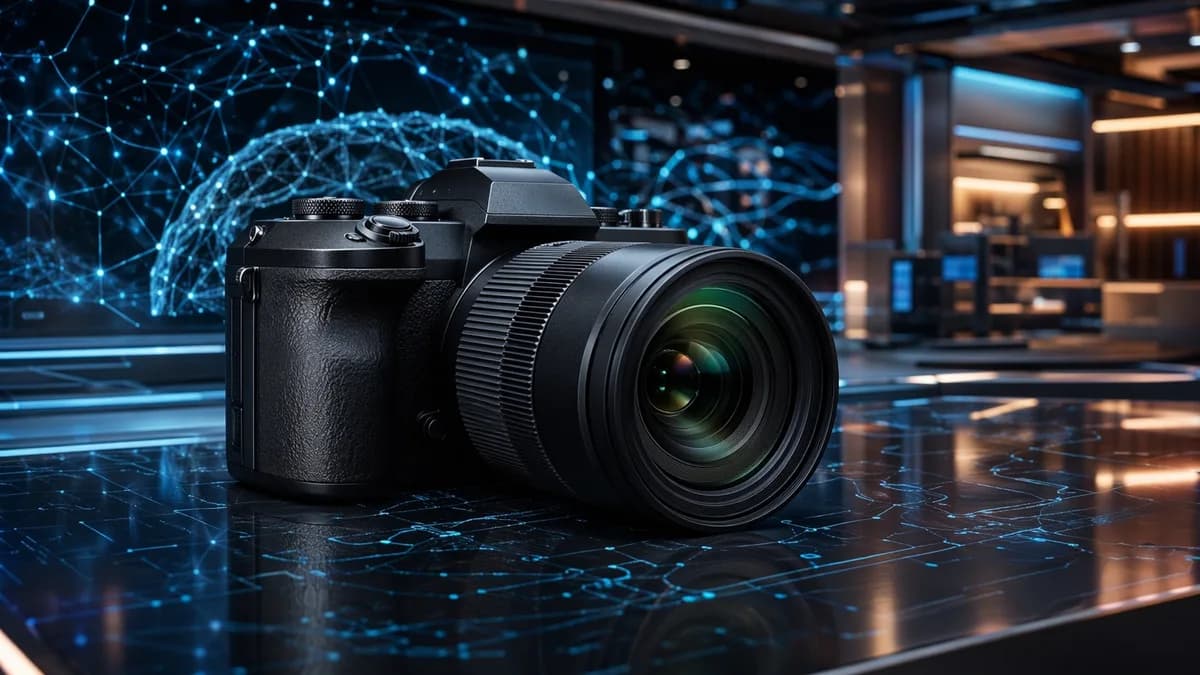
Sony RX10 V lands at $2,299.99 after a nearly nine-year gap, and that price tells you exactly who this camera is for: buyers who want 600mm-equivalent reach, fast autofocus, and one-body convenience more than they want a cheap upgrade path.
XOOMAR Intelligence
Analyst Take
The new superzoom keeps the same 24-600mm equivalent f/2.4-4 Zeiss Vario-Sonnar 25x zoom lens used by its last two predecessors, but Sony has rebuilt much of the camera around it, according to The Verge. The tension is obvious. Sony is asking premium money for a fixed-lens bridge camera whose defining lens dates back to the RX10 III era, while adding Alpha-style speed, autofocus, video, battery, and body upgrades.
Sony RX10 V buyers are paying for reach, speed, and fewer decisions
The Sony RX10 V is aimed at a narrow but real kind of photographer: someone who wants to shoot sports, wildlife, travel, kids’ games, or backyard birds without hauling a lens bag.
The core numbers explain the pitch:
| Feature | RX10 IV | RX10 V |
|---|---|---|
| Launch year | 2017 | 2026 |
| Launch price | $1,700 | $2,299.99 |
| Lens | 24-600mm equivalent f/2.4-4 | 24-600mm equivalent f/2.4-4 |
| Burst shooting | 24fps | 30fps |
| Burst view | Not described as blackout-free in the source | Blackout-free |
| Battery | Older RX10 battery system | NP-FZ100, also used in current A-series models |
| Video | Older-gen spec | 4K 60p full-width, 4K 120p cropped |
The buyer question is blunt: how much is it worth to avoid changing lenses?
Sony’s answer is nearly $2,300. That sounds steep because it is. The RX10 IV launched at $1,700 in 2017, and The Verge notes that inflation makes the new price less shocking than it first looks. Still, the sticker moves the RX10 V out of casual gadget territory and into serious camera budget territory.
XOOMAR analysis: Sony isn’t trying to win back everyone who once bought a bridge camera. It’s trying to sell a high-spec, all-in-one machine to people who already know why 600mm matters.
For broader XOOMAR coverage of premium tech pricing pressure, see Grok 4.5 Throws Frontier AI into Musk's Price Fight, Apple Broadcom Deal Pulls $30B Chip Bet Back to U.S., and Sony 1000X versus Px8 S2.
Sony’s camera team rebuilt the body around an old winning lens
The strangest thing about the RX10 V is also its clearest commercial logic: Sony kept the lens.
The 24-600mm equivalent f/2.4-4 Zeiss Vario-Sonnar remains the camera’s identity. That range lets a shooter move from wide travel scenes to distant subjects without swapping glass. For birds, field sports, airshows, motorsports, and vacations, that matters more than spec-sheet purity.
What changed is the camera around it.
The RX10 V gets a redesigned body that The Verge says looks and feels more like Sony’s larger Alpha mirrorless cameras. It uses the NP-FZ100 battery, which offers over 50 percent more battery capacity than the prior setup. It also adds an OLED electronic viewfinder, Sony’s real-time autofocus tracking system, and 575 autofocus points.
The new burst mode is the sharpest upgrade. The RX10 V can shoot up to 30fps with no blackout, compared with 24fps on the last generation. For action shooters, blackout-free shooting is not a footnote. It helps keep a moving subject in view during bursts, which is exactly when missed framing ruins the frame.
Sony also brought over the Speed Boost function from the pro A9 III, allowing faster burst rates for short stints when needed.
That Alpha trickle-down is the real story. The RX10 V may look like a superzoom revival, but Sony is packaging mirrorless-era processing and autofocus into a fixed-lens body.
End users get Alpha-style convenience, but not Alpha image latitude
The 20.1-megapixel 1-inch-type stacked sensor gives the RX10 V its speed, but it also sets the ceiling.
The Verge’s hands-on impression was positive, especially for birds and macro-style shots of bees moving between flowers. Sony’s autofocus and 30fps blackout-free bursts made those kinds of subjects easier to capture. That is exactly where this camera should shine: daylight action, unpredictable movement, and situations where a long lens is useful right now.
The tradeoff comes when expectations drift toward larger sensors. The Verge is clear that photographers used to full-frame cameras should lower expectations for sharpness and resolution when pixel-peeping. A 1-inch-type sensor can be versatile, but it doesn’t erase the physics gap against larger formats.
So who is the best fit?
- Wildlife hobbyists: Strong fit if they value reach and tracking over maximum file quality.
- Sports parents: Strong fit if they often shoot from the sidelines and don’t want lens changes.
- Travel shooters: Strong fit if one camera matters more than packing flexibility.
- Full-frame users: Mixed fit, useful as a compact long-reach companion, less convincing as a primary camera.
- Portrait-first or low-light event shooters: Weak fit, because sensor size and depth-of-field control matter more there.
The practical question: are you buying the best sensor you can afford, or the least friction between you and a distant subject?
For the RX10 V, the answer has to be the second one.
Video creators get a serious upgrade with one awkward port choice
Sony gave the RX10 V a major video lift.
The camera supports 4K 60p full-width video, 4K 120p with a crop, S-Log3, and S-Cinetone. It can also livestream at up to 4K 30p through USB-C, with simultaneous recording. That last feature matters because the RX10 IV arrived before large cameras doubling as webcams became common.
Still, one detail feels out of step with the price: the video-out port remains Micro HDMI. The Verge calls it flimsy, and at $2,299.99, that criticism lands.
Sony also removed two older conveniences:
- No built-in ND filter
- No pop-up flash
Those cuts won’t bother every buyer, but they narrow the “do everything” claim. An all-in-one camera losing all-in-one features is a real compromise.
Camera makers will read the RX10 V as a specialty product, not a mass revival
The nearly nine-year gap matters. The RX10 IV arrived in 2017, and for years the line looked frozen. Sony’s return doesn’t mean bridge cameras are suddenly a mass-market priority again. The price says the opposite.
XOOMAR analysis: The RX10 V looks like a specialty product designed for buyers who already know the pain of carrying long glass. Sony can charge more because the camera solves a specific problem: speed plus reach in one relatively compact body.
That also explains why the reused lens is not automatically a flaw. If the lens still defines the category, Sony’s job was to modernize everything else. The body, battery, autofocus, burst speed, EVF, and video pipeline all move the RX10 V closer to current Alpha expectations.
The risk is that buyers at this price compare differently. They won’t only ask whether the RX10 V beats old bridge cameras. They’ll ask whether it beats the total value of a used mirrorless body plus a telephoto setup, or whether its fixed-lens simplicity is enough to offset its limits.
The Sony RX10 V test is whether convenience can still command a premium
The Sony RX10 V should be judged against the cost, weight, and hassle of getting similar reach another way, not against the price of a camera body alone.
That makes the verdict highly personal. If you shoot action in good light, need long reach often, hate changing lenses, and want one camera that covers almost everything, the RX10 V has a clear reason to exist. If you want the cleanest files, the shallowest depth of field, or a long-term path through interchangeable lenses, it’s harder to justify.
The evidence to watch is straightforward: real-world autofocus hit rate, high-ISO image quality, battery life with heavy burst shooting, and whether the fixed 24-600mm lens still holds up under modern scrutiny. Strong results would confirm Sony found a premium niche worth reviving. Weak results would make the $2,299.99 price look less like confidence and more like overreach.
The Bottom Line
- Sony is reviving a niche fixed-lens superzoom category at a premium $2,299.99 price.
- The RX10 V targets buyers who value 600mm-equivalent reach and convenience over interchangeable-lens flexibility.
- Its faster burst shooting, upgraded autofocus-style performance, and modern video specs make it a serious tool rather than a casual upgrade.
Sony RX10 IV vs. Sony RX10 V
| Feature | RX10 IV | RX10 V |
|---|---|---|
| Launch year | 2017 | 2026 |
| Launch price | $1,700 | $2,299.99 |
| Lens | 24-600mm equivalent f/2.4-4 | 24-600mm equivalent f/2.4-4 |
| Burst shooting | 24fps | 30fps |
| Burst view | Not described as blackout-free | Blackout-free |
| Battery | Older RX10 battery system | NP-FZ100 |
| Video | Older-gen spec | 4K 60p full-width; 4K 120p cropped |
Sony RX10 Launch Price Comparison
Primary Sources & Disclosures

Written by
XOOMAR Insights Team
Research and Editorial Desk
The XOOMAR Insights Team pairs automated research with human editorial judgment. We track hundreds of sources across technology, fintech, trading, SaaS, and cybersecurity, cross-check the facts, and explain what happened, why it matters, and what to watch next. We do not just rewrite headlines. Every article is fact-checked and scored for reliability before it goes live, and we link back to the original sources so you can verify anything yourself.