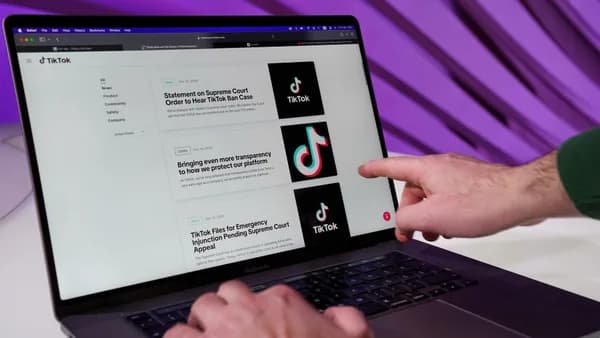
Federal employees can download TikTok on government devices again, after the Justice Department concluded that the app’s restructured U.S. version no longer falls under the 2022 federal device ban. That is the core shift behind the latest TikTok federal device ban reversal, according to TechCrunch.
XOOMAR Intelligence
Analyst Take
The move does not mean Washington has suddenly stopped worrying about TikTok. It means the legal and operational risk calculation has changed after ByteDance transferred control of TikTok’s U.S. user data and operations to TikTok USDS, a joint venture backed by Oracle, Silver Lake, and MGX.
“Employees of Executive Branch agencies may download TikTok onto their official devices, subject to the agency’s discretion and consistent with all applicable workplace policies,” the DOJ memo reportedly said.
That last clause matters. This is permission with conditions, not a blanket endorsement.
The DOJ changes the TikTok federal device ban rulebook
The TikTok federal device ban started with a 2022 law that barred federal employees from using the short-form video app on government devices. The cited concern was national security, tied to TikTok’s Chinese owner, ByteDance.
The Justice Department now says that law no longer applies to the current U.S. version of the app. The reason: TikTok’s U.S. user data and operations were moved to TikTok USDS, a joint venture completed in January, according to Reuters reporting carried by U.S. News.
The new ownership structure is central to the DOJ’s view:
| Entity | Reported role in TikTok USDS |
|---|---|
| American and global investors | Hold 80.1% of the venture |
| ByteDance | Retains a 19.9% stake |
| Oracle | Security partner and one of the main investors |
| Silver Lake | Main investor |
| MGX | Main investor |
The DOJ also said ByteDance’s minority stake “makes no practical difference,” according to the Reuters account.
XOOMAR analysis: that is the legal hinge. The government is not saying TikTok was always fine. It is saying the app available now is different enough, in ownership and control, to fall outside the earlier prohibition.
TikTok’s U.S. scale explains why access kept coming back
The policy fight never sat in a vacuum. TikTok has about 200 million Americans using it, according to Reuters. That scale makes a hard government-device ban awkward for agencies that need to understand or communicate through major public channels.
The source material does not say which agencies will allow TikTok, which staff will get access, or what device controls will apply. The DOJ memo leaves that to agency discretion and workplace policies.
That restraint is important. Federal phones are not personal phones. They sit inside managed security environments, and agencies can still decide that TikTok access is unnecessary for certain roles or devices.
XOOMAR analysis: the practical split is likely to be between legal permission and operational approval. The download button may be available again, but agency security teams still control the door.
For readers tracking the policy turn, this follows the same core issue covered in DOJ Guts TikTok Federal Device Ban After ByteDance Deal: Washington is moving from a categorical ban toward a conditional model built around U.S.-controlled operations.
ByteDance’s reduced stake is doing the political work
The DOJ’s opinion rests on the restructuring. ByteDance no longer controls TikTok’s U.S. user data and operations under the deal described in the source material. American and global investors hold 80.1%, while ByteDance owns 19.9%.
In January, TikTok said the venture would retrain, test, and update its content recommendation algorithm on U.S. user data. Reuters also reported that the algorithm would be secured in Oracle’s U.S. cloud.
That is the strongest factual support for the DOJ’s new position. The prior concern centered on foreign control. The new claim is that control has moved.
Still, the structure leaves a live tension. ByteDance remains a minority shareholder. The DOJ says that does not matter in practical terms. Critics of TikTok policy may focus on whether ownership, control, data access, and algorithm governance are truly separated in day-to-day operations.
Trump’s enforcement choices shaped the path back
The broader TikTok fight escalated after the government-device restriction. TechCrunch notes that the app was later banned more broadly across the United States, but when that law took effect early last year, TikTok only went down briefly before President Donald Trump repeatedly delayed the move and urged service providers to restore access.
Reuters adds that Trump opted not to enforce a law passed in April 2024 requiring ByteDance to sell its U.S. assets by the following January or face a ban, a measure upheld by the Supreme Court.
The result is a messy but clear sequence:
- 2022: Federal employees were banned from using TikTok on government devices.
- April 2024: Congress passed a broader divest-or-ban law.
- January: The TikTok USDS joint venture was completed, according to Reuters.
- July 2026: DOJ said federal employees may download TikTok on official devices, subject to agency discretion.
XOOMAR analysis: the U.S. government did not arrive at a stable TikTok policy through one clean rule. It moved through bans, delayed enforcement, restructuring, and now a DOJ statutory interpretation.
Agencies and TikTok will read the same memo differently
For TikTok, the DOJ opinion is useful validation. It supports the argument that the U.S. version of the app is now structurally distinct from the ByteDance-controlled service that triggered the original federal restrictions.
For federal agencies, the memo creates flexibility and burden at the same time. They can allow access where they see a work need, but they also have to decide how that fits existing workplace policies.
The source material does not report a White House or TikTok comment. Reuters said neither immediately commented.
Federal employees may also experience this unevenly. Some may see TikTok as a normal communications app returning to managed devices. Others may find that their agency still blocks it, limits it, or approves it only for specific work purposes.
This split matters beyond TikTok. As we covered in US Blocks Force South Korea to Build Security AI Model, technology policy increasingly turns on control, data access, and national security boundaries rather than product category alone.
The cybersecurity question did not disappear
The DOJ reportedly said the current version of TikTok does not pose the risks that triggered the 2022 ban. NTD’s account of the memorandum also says U.S.-based third-party cybersecurity experts are on retainer for TikTok USDS to audit and certify privacy while identifying and disclosing vulnerabilities.
That is a stronger security posture than a simple ownership reshuffle. It gives DOJ a technical basis for saying the app no longer fits the banned category.
But the move still leaves operational questions:
- Device policy: Agencies retain discretion over official-device downloads.
- Workplace rules: Access must comply with existing policies.
- Data controls: TikTok says U.S. user data, apps, and algorithms will be protected through privacy and cybersecurity measures.
- Algorithm governance: TikTok said the recommendation algorithm would be retrained, tested, and updated on U.S. user data.
XOOMAR analysis: federal access should be treated as a controlled operational tool, not casual app use. The DOJ memo reopens the door. It does not remove the need for agency-level judgment.
Official use could also raise records, archiving, and FOIA questions if agencies post, message, or manage public accounts through TikTok. The supplied reporting does not say how agencies will handle those obligations, so that remains an implementation gap.
The next TikTok fight is about conditions, not the download button
The immediate question is no longer whether federal employees can download TikTok. The DOJ says they can, subject to agency discretion and workplace policy.
The next fight is narrower and more technical: which agencies allow it, which devices qualify, what controls apply, and what evidence would change the DOJ’s view.
Three signals would strengthen the current policy shift:
- Clear agency rules showing how TikTok access is approved and managed.
- Public detail from TikTok USDS about audits, algorithm controls, and data protections.
- No new evidence contradicting DOJ’s conclusion that the current U.S. app no longer presents the same risk.
The thesis is simple. The TikTok federal device ban has not vanished because Washington fell in love with the app. It has weakened because the government accepted a new ownership and control structure as legally meaningful.
The download button is back. TikTok’s federal status is still provisional.
Impact Analysis
- Federal agencies can now allow TikTok on official devices, but only under workplace rules and agency discretion.
- The DOJ’s decision signals that TikTok’s U.S. restructuring changed the legal risk tied to the 2022 ban.
- ByteDance’s reduced stake may ease some concerns, but Washington’s national security scrutiny of TikTok is not over.
TikTok USDS ownership and roles
| Entity | Reported role | Stake |
|---|---|---|
| American and global investors | Majority owners of TikTok USDS | 80.1% |
| ByteDance | Minority stakeholder after restructuring | 19.9% |
| Oracle | Security partner and main investor | Not specified |
| Silver Lake | Main investor | Not specified |
| MGX | Main investor | Not specified |
TikTok USDS ownership stakes
Primary Sources & Disclosures

Written by
XOOMAR Insights Team
Research and Editorial Desk
The XOOMAR Insights Team pairs automated research with human editorial judgment. We track hundreds of sources across technology, fintech, trading, SaaS, and cybersecurity, cross-check the facts, and explain what happened, why it matters, and what to watch next. We do not just rewrite headlines. Every article is fact-checked and scored for reliability before it goes live, and we link back to the original sources so you can verify anything yourself.