The Justice Department has turned the TikTok federal device ban from a hard legal prohibition into an agency-by-agency judgment call, a shift that matters most to federal IT teams, communications offices, and lawmakers who spent years treating the app as a national security risk.
XOOMAR Intelligence
Analyst Take
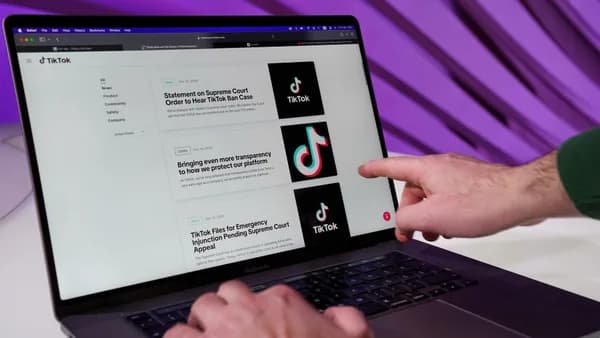
Federal employees can now download and install TikTok on government-issued electronics, according to Engadget, after the DOJ said the current U.S. version of the app no longer falls under the 2022 federal device ban. The reason is not a sudden declaration that TikTok is risk-free. It is a legal and technical finding tied to TikTok USDS Joint Venture, the U.S.-based entity created after ByteDance’s divestiture deal was finalized in January 2026.
That distinction is the whole story. Washington is not saying the old concerns were imaginary. It is saying the app now available in the U.S. is sufficiently different, in ownership, algorithm controls, and cybersecurity structure, that the old ban no longer fits.
Washington’s TikTok reversal turns a security red line into a policy retreat
The TikTok federal device ban began as a blunt national security measure. In 2022, TikTok was outlawed on almost all U.S. federal government-issued devices after officials raised concerns about ByteDance, the Beijing-based parent company that previously controlled the app.
Chris Wray, then FBI director, warned that China could use TikTok to collect user data through ByteDance. In 2024, the House went further, passing a bill that would ban TikTok in the U.S. unless ByteDance sold it.
Now the DOJ says the legal trigger has changed.
“The version of TikTok operated by the TikTok US Data Security Joint Venture does not fall within this prohibition because the Joint Venture functions independently of ByteDance, is majority-owned by American investors, and has revised the content recommendation algorithm and cybersecurity program originally developed by ByteDance to insulate federal government information against the concerning security features that initially motivated the prohibition.”
The political risk is obvious: if TikTok was too dangerous for federal phones before, what exactly made it acceptable now?
The DOJ’s answer is structural. ByteDance retained an almost 20 percent stake, while the rest is controlled by non-Chinese investors, including Oracle. Reuters reported the split as 19.9% for ByteDance and 80.1% for American and global investors.
The numbers behind the TikTok federal device ban and the U.S. risk debate
TikTok’s consumer footprint makes this more than a workplace app decision. Reuters reported that about 200 million Americans use TikTok. That scale helps explain why the U.S. government spent years pressing for ownership changes rather than simply treating TikTok as another social app.
Federal phones are a narrower environment. But they are more sensitive. A small number of exposed government devices can matter if they hold contacts, location signals, communications patterns, or other operational traces.
The sources do not provide federal device counts, compliance costs, or agency cybersecurity spending tied to the ban. That matters. Without those figures, it is impossible to quantify how expensive the 2022 restriction was or how many employees will realistically install TikTok now.
Still, the risk categories behind the original ban are clear from the official rationale:
- Ownership risk: ByteDance’s prior control raised national security concerns.
- Data risk: Officials worried user information could be exposed through the app.
- Algorithm risk: TikTok’s recommendation system drew scrutiny because it shapes what users see.
- Device risk: Government-issued phones and tablets carry higher sensitivity than personal devices.
The DOJ is effectively saying those risks were tied to the old ownership and technical setup. The hard question is whether the revised setup is enough.
How TikTok went from banned app to tolerated tool on federal phones
The path from prohibition to permission runs through corporate restructuring.
A deal for TikTok’s U.S. business was finalized in January 2026, creating TikTok USDS Joint Venture. TikTok said the venture would protect American users’ data through Oracle’s secure U.S. cloud environment. It also said the U.S. entity would train TikTok’s algorithm on data from people in the U.S., while still giving users international content.
The DOJ’s Office of Legal Counsel concluded that the current U.S. version of TikTok no longer matches the banned category. CBS News reported the opinion was 12 pages and addressed to the deputy counsel to the president.
Here is the practical difference:
| Issue | Before the deal | After the DOJ opinion |
|---|---|---|
| Federal device status | Banned under 2022 law | Allowed subject to agency discretion |
| ByteDance role | Prior ownership drew national security concern | Minority stake of 19.9% reported by Reuters |
| U.S. operation | TikTok tied to ByteDance control concerns | Operated by TikTok USDS Joint Venture |
| Algorithm control | Originally developed by ByteDance | Revised and trained on U.S. user data, per TikTok and DOJ |
| Agency choice | Broad federal prohibition | Agencies can still block downloads |
One point should not get lost: allowing TikTok on federal devices is not the same as declaring the platform safe for every purpose. Agencies still control their own workplace policies.
Security officials, creators, agencies, and China hawks won’t read this the same way
Security-focused critics are likely to zero in on ByteDance’s remaining stake. The DOJ says ByteDance’s minority position “makes no practical difference,” according to Reuters’ account of the department’s opinion. Skeptics will ask whether ownership percentage alone captures influence, code provenance, or operational dependency.
Civil liberties and tech policy supporters may read the same decision differently. Their strongest argument is that a broad app ban should not outlive the facts that justified it. If ownership, data controls, and algorithm management changed, the legal treatment should change too.
For federal agencies, the question is operational: who actually needs TikTok on a government phone?
Communications teams may see value in reaching the public where attention already sits. Other offices may decide the productivity and risk tradeoff is not worth it. The DOJ explicitly preserved that discretion, writing that agencies may ban TikTok for “workforce management reasons, such as promoting employee productivity.”
This policy reversal also does not resolve every TikTok governance issue. XOOMAR readers tracking separate platform-accountability questions can compare this with TikTok Blackout Challenge Evidence Forces New Inquest. For a separate national-security technology case, see US Blocks Force South Korea to Build Security AI Model.
TikTok’s U.S. fight is now about control, not just ownership
The DOJ opinion signals a narrower test than the political debate often suggests. Washington is not only asking who owns an app. It is asking who controls data, who operates the algorithm, who reviews source code, and which legal jurisdiction governs the system.
That is why Oracle matters in this case. TikTok said Oracle’s U.S. cloud would secure the algorithm, and Reuters reported Oracle is one of the venture’s three main investors. CBS News also reported that Oracle would “review and validate source code on an ongoing basis.”
The new entity’s managing investors are reported to include Silver Lake, Oracle, and MGX, with a cumulative 45 percent ownership stake, according to supplied source material.
The unresolved question is whether these safeguards can be independently verified in a way that satisfies Congress, courts, and federal cybersecurity officials. The sources say lawsuits related to the deal are still pending, including a case brought by two investors in competing tech firms Alphabet and Meta, with the federal government seeking dismissal.
The lifted ban gives agencies access, but it also raises the compliance burden
Federal employees may now be able to download TikTok onto official devices, but that does not mean every agency will allow it.
The DOJ’s memo says downloads remain “subject to the agency’s discretion and consistent with all applicable workplace policies.” That puts the next decision in the hands of agency heads, IT administrators, legal teams, and security officers.
XOOMAR analysis: the likely result is not a free-for-all. Agencies that permit TikTok may still use managed-device controls, app permission limits, logging, network restrictions, or role-based approval. The supplied sources do not say which controls will be required, so those remain implementation questions rather than reported facts.
For vendors, the broader signal is clear. If a company wants to escape a politically charged tech restriction, ownership changes alone may not be enough. The DOJ focused on independence from ByteDance, majority ownership by American investors, algorithm revisions, and cybersecurity changes.
For users, government acceptance may improve TikTok’s perceived legitimacy. But the DOJ opinion does not erase the platform’s past scrutiny, nor does it settle whether every agency should trust it on every device.
TikTok’s return to federal devices won’t end Washington’s fight over data power
The TikTok federal device ban may be lifted in legal effect, but the fight now moves into a more technical phase.
The next pressure points are straightforward. Congress may demand more evidence that TikTok USDS truly operates independently. Agencies may issue different rules, creating a patchwork across the federal government. Courts may still shape how the divestiture deal is judged.
Evidence that would strengthen the DOJ’s position includes clear audit results, durable agency adoption, and no new security controversy tied to federal device use. Evidence that would weaken it includes disputes over ByteDance influence, source-code review gaps, or agency-level refusals to approve TikTok despite the DOJ opinion.
The ban is no longer the main instrument. Control is. The fight now turns on who can prove, not merely promise, that American data, algorithms, and government devices are insulated from the risks that triggered the original prohibition.
Impact Analysis
- Federal agencies now have to make their own risk decisions instead of relying on a blanket TikTok ban.
- The shift signals that Washington views TikTok’s U.S. restructuring as legally meaningful, even if security concerns remain.
- Lawmakers and federal IT teams may face new pressure to explain when TikTok is acceptable on government devices.
TikTok Federal Device Policy: Before vs. Now
| Policy Area | Previous Status | Current Status |
|---|---|---|
| Federal device access | TikTok was broadly banned on U.S. government-issued devices under the 2022 prohibition. | Federal employees can download and install the current U.S. version, subject to agency judgment. |
| Legal basis | The ban targeted TikTok as an app controlled by ByteDance. | The DOJ says the TikTok USDS Joint Venture version no longer falls under the 2022 ban. |
| Security concern | Officials cited risks tied to ByteDance and potential Chinese government access to data. | The DOJ points to changed ownership, algorithm controls, and cybersecurity structure. |
Primary Sources & Disclosures

Written by
XOOMAR Insights Team
Research and Editorial Desk
The XOOMAR Insights Team pairs automated research with human editorial judgment. We track hundreds of sources across technology, fintech, trading, SaaS, and cybersecurity, cross-check the facts, and explain what happened, why it matters, and what to watch next. We do not just rewrite headlines. Every article is fact-checked and scored for reliability before it goes live, and we link back to the original sources so you can verify anything yourself.