Bitcoin's $59,000 rebound deserves respect, but declaring crypto winter over needs a harder case
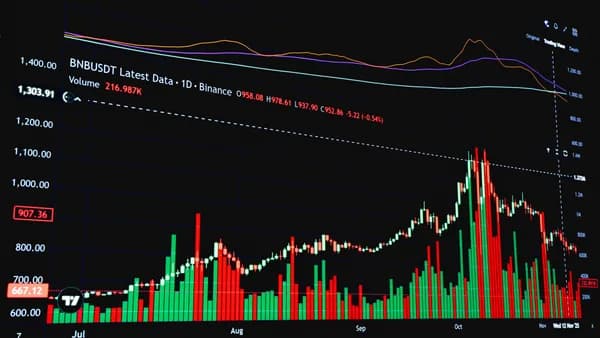
Bitcoin's rebound from roughly $59,000 is a credible bottom signal, but Geoffrey Kendrick's "crypto Spring" call still rests on catalysts that need proof, not applause. The Standard Chartered analyst said bitcoin has likely locked in its cycle low at $59,000, after a 53% slide from its Oct. 6 all-time high of $126,000, according to CoinDesk.
XOOMAR Intelligence
Analyst Take
Kendrick's line is memorable because it is clean, confident, and exactly what bruised crypto investors want to hear.
"Winter is over. Welcome back to crypto Spring,"
That may be right. It is also not enough. A bottom call built around the SpaceX IPO, Bitcoin ETF selling exhaustion, and a possible U.S.-Iran peace deal deserves attention, but investors should treat it as a working thesis. The serious case now depends on flows, macro pressure, and whether the buyers who showed up near $59,000 keep showing up when the next headline turns against risk assets.
The $59,000 Bitcoin floor shows buyers are stronger than the last crypto selloff suggested
Bitcoin fell to roughly $59,000, CoinDesk reported, before recovering from that zone. That is not a full recovery. It is not a new mania. But after a drawdown of more than half from the October peak, holding that area matters.
The floor matters because panic usually reveals itself fast in crypto. When forced selling, ETF redemptions, and macro fear collide, weak support levels don't last long. Kendrick is arguing that $59,000 was where the market finally found buyers with enough conviction to absorb the selloff. That is a defensible read.
Still, a Bitcoin crash signal is a reminder that a bottom is not the same thing as a bull market. A bottom says sellers may have exhausted themselves. A bull market requires new demand. The distinction matters because Kendrick is also carrying a $100,000 bitcoin target by the end of this year. That target needs more than a bounce. It needs persistent capital.
Here is the cleanest version of the setup:
| Signal | What Kendrick sees | What investors still need |
|---|---|---|
| Bitcoin price | Low near $59,000 | Sustained recovery beyond relief buying |
| ETF flows | Heavy recent outflows, including reported June redemptions above $2 billion | Return to net-positive daily inflows |
| Macro pressure | Oil easing on peace-deal hopes | Durable decline in oil and Treasury-yield pressure |
| Corporate demand | Watch for Strategy (MSTR) buying | Fresh treasury accumulation, not just talk |
That table is the whole debate. The floor looks real. The regime change is still pending.
A SpaceX IPO could ignite risk appetite, but it won't rescue every crypto token
Kendrick's most interesting argument is that recent spot bitcoin ETF selling may have been tied, at least anecdotally, to investors freeing cash for the SpaceX initial public offering. Reported ETF outflows have been heavy in June, and Kendrick's view is that an anticipated SpaceX listing could ease that specific pressure if capital has been waiting for the deal.
The timing is important, but it should be framed carefully. The source context points to the SpaceX IPO as an upcoming or potential catalyst, not a completed Nasdaq listing. Demand has also appeared in digital-asset venues, with SpaceX-linked crypto contracts drawing speculative volume as traders try to position around the possible offering.
That supports Kendrick's point, but only to a point. If some investors dumped bitcoin ETFs to chase SpaceX exposure, then a completed or imminent IPO could remove a temporary drain. That helps bitcoin. It does not magically reprice every smaller token with weak usage, thin liquidity, or no clear institutional buyer base.
Bitcoin is the asset most likely to benefit from a risk-appetite reset because it remains the cleanest institutional crypto instrument. The broader market has to earn its rebound token by token. SpaceX excitement can lift sentiment, but sentiment is not cash flow, and it is not proof of durable crypto demand.
For readers tracking the SpaceX side of the trade, XOOMAR's related coverage includes $1.2B Quantum Space SPAC Chases SpaceX IPO Cash Wave and SpaceX Pre-IPO Hype Cracks as SPCX Dumps 27% in 3 Weeks. Treat those as context for how much gravity the SpaceX listing narrative has had around speculative capital, not as evidence that bitcoin must move in one direction.
A U.S.-Iran peace deal would help Bitcoin by lowering oil shocks and rate fears
The second pillar of Kendrick's call is macro. A possible G7-related peace deal between the U.S. and Iran, if real, could cap oil prices. CoinDesk reported oil was in focus as U.S. President Donald Trump spoke of a likely deal with Iran.
The logic is straightforward. Lower oil pressure can cool inflation anxiety. Cooler inflation anxiety can ease pressure on U.S. Treasury yields. Less yield pressure can support risk assets, including bitcoin. That is a plausible chain.
But the chain has weak links. CoinDesk also reported that the political messaging around the possible deal later became less clear, underscoring how quickly diplomacy can shift. That matters. A peace-deal catalyst is only useful if the deal survives contact with politics.
Even if oil keeps falling, peace does not create on-chain demand by itself. It removes a headwind. That is valuable, especially after a 53% bitcoin drawdown, but it is not the same as a new wave of buying. Kendrick's macro argument is plausible because oil and yields have been central to risk appetite. It remains incomplete because bitcoin still needs ETF inflows and corporate treasury demand to confirm the turn.
The bearish case still has teeth if rates stay high and ETF flows cool
The strongest counterargument is simple: bitcoin can retest $59,000 if the confirmation signals fail. Kendrick himself is watching for a return to net-positive daily inflows for U.S. spot bitcoin ETFs, fresh Strategy (MSTR) bitcoin purchases, and continued oil-price weakness. That is not a victory lap. It is a checklist.
Crypto also has a bad habit of confusing relief rallies with cycle turns. A rebound from near $59,000 is meaningful, but it does not erase recent heavy spot bitcoin ETF redemptions. If those flows stay negative, the bottom call loses one of its strongest supports.
There are other risks investors still need to model, including regulation, miner economics, profit-taking by long-term holders, and dollar strength. The source material here does not provide fresh evidence on those variables, so they should not be used to overstate either the bull or bear case. Their absence is exactly the point: Kendrick's call is focused on ETF flows, SpaceX-related selling pressure, oil, Treasury yields, and corporate treasury buying.
That makes the thesis clean, but narrow. Clean theses are useful. Narrow theses break when the market starts asking different questions.
Bitcoin investors should treat $59,000 as a test passed, not a permission slip
$59,000 should now be treated as a serious level. Bitcoin absorbed a brutal selloff there, recovered from that zone, and attracted a bold bottom call from a major bank analyst with explicit signals to verify the move. That is enough to respect the rebound.
It is not enough to chase every green candle. The smarter read is that bitcoin passed a stress test, while the market still has to prove that the selloff's fuel has run out. Watch the ETF flow data. Watch whether Strategy (MSTR) buys. Watch oil. Watch whether the SpaceX cash drain really fades if the IPO proceeds.
Kendrick may be early, but he is not making a lazy call. He has tied the bottom thesis to observable triggers. That is exactly how investors should handle it too.
If $59,000 was the bottom, the best response is not celebration. It is patience with a plan, because the next leg of bitcoin's cycle will be earned by capital flows and sustained demand, not by a catchy declaration that winter is over.
Disclaimer: This XOOMAR analysis is for informational and educational purposes only. It is not financial, investment, legal, tax, or professional advice. It does not provide buy, sell, hold, price-target, portfolio, or personalized recommendations. Verify information independently and consult qualified professionals before making decisions.
The Bottom Line
- A rebound from $59,000 suggests buyers may have absorbed the worst of the recent crypto selloff.
- Bitcoin remains far below its $126,000 all-time high, so a confirmed bull market still requires stronger demand.
- Standard Chartered’s bullish call depends on catalysts like ETF flow stabilization, macro conditions, and geopolitical developments.
Bitcoin Price Levels Cited
Primary Sources & Disclosures
Disclaimer: Content on XOOMAR is produced using AI-assisted research, drafting, and verification workflows and is intended for informational and educational purposes only. It does not constitute financial, investment, legal, tax, medical, or professional advice of any kind. All analysis reflects available information at the time of publication and may not be current. Verify information independently and consult qualified professionals before making decisions. Editorial policy

Written by
XOOMAR
Data desk
XOOMAR is a capital markets software and data company. Every brief on this site starts from a dataset the company collects itself from primary sources (CFTC, SEC EDGAR, FINRA, the Federal Reserve, exchange APIs) and names the numbers it is built on, with a link to the data page so you can check them. Briefs are reviewed before they go out and corrected in place when the data is revised.