Choosing between envelope vs zero based budgeting is less about finding the “best” method and more about matching a system to your money habits. Both approaches ask you to be intentional with every dollar, but they solve different problems: zero-based budgeting gives you a complete plan, while envelope budgeting adds spending limits that can change behavior in the moment.
If you are trying to pay off debt, stop impulse spending, manage shared expenses, or finally understand where your paycheck goes, the difference matters. Here’s how the two systems work, where budgeting apps fit in, and how to choose without restarting your financial life from scratch.
1. How Envelope Budgeting Works
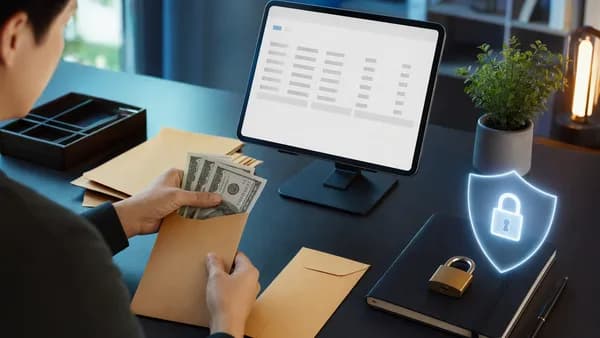
Envelope budgeting divides your money into specific spending categories, traditionally using physical cash envelopes. Each envelope is labeled for a category such as groceries, gas, dining out, entertainment, or miscellaneous spending.
Once an envelope is empty, spending in that category stops until the next budget cycle unless you deliberately move money from another envelope.
The core idea of envelope budgeting is not just planning. It is creating a spending boundary you can see — or, in digital apps, check before you buy.
Experian describes the envelope budget, also called cash stuffing, as an old-fashioned system that relies on assigning cash to labeled envelopes. It has remained popular because it can be effective at reining in impulse spending.
Physical envelopes vs digital envelopes
The original method used cash. For example:
- Groceries: $500
- Dining out: $150
- Entertainment: $100
- Gas: $200
If the dining out envelope reaches $0, you stop eating out or move money from another category.
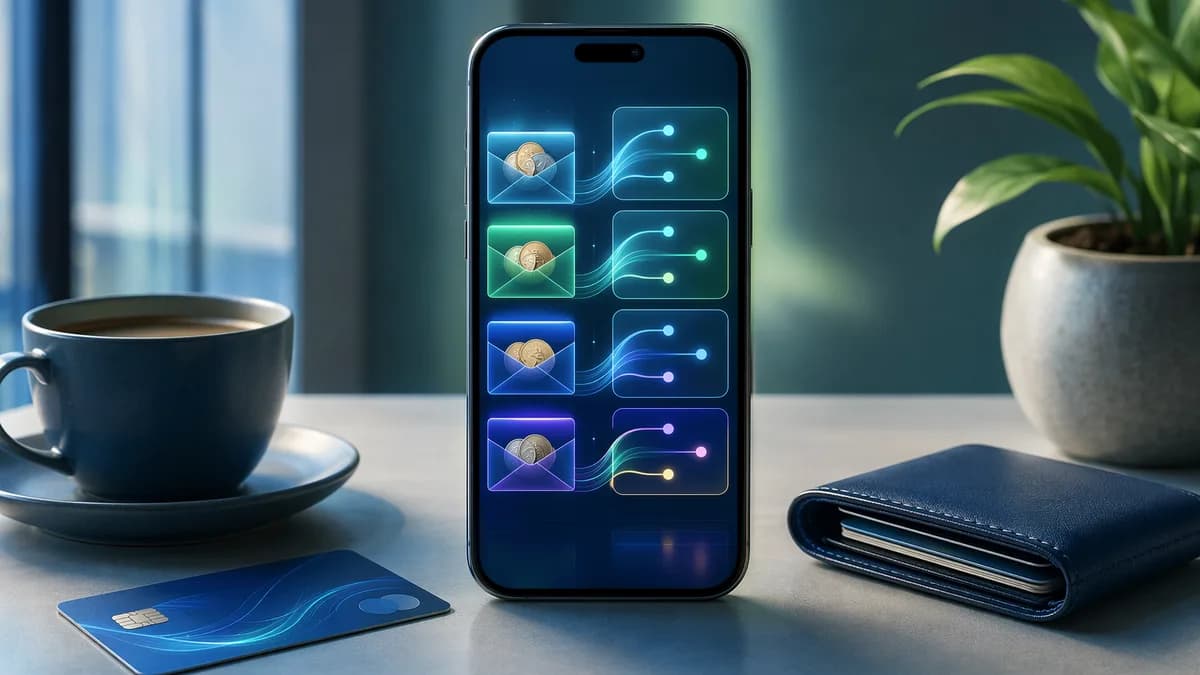
In 2026, physical cash envelopes may be inconvenient for people who use debit cards, credit cards, online bill pay, or digital wallets. That is why several budgeting apps recreate the envelope system digitally.
Sources specifically mention these envelope-style tools:
| App or Tool | Envelope Budgeting Feature Mentioned in Source Data |
|---|---|
| EnvelopeBudget | Creates digital envelopes that work with debit and credit cards; combines envelope limits with bank connection |
| Goodbudget | Lets users manually allot income to digital “envelopes” without relying on physical cash |
| Mvelopes | Mentioned as a digital envelope system that replicates envelope budgeting |
| Physical cash envelopes | Traditional method where money is divided into labeled envelopes |
What envelope budgeting is best at
Envelope budgeting works especially well when the problem is not that you lack information, but that information alone does not change your spending.
Based on the source data, envelope budgeting is a strong fit if:
- Impulse spending: You overspend in specific categories like dining out, groceries, coffee, or entertainment.
- Visual control: You prefer seeing how much is left in a category.
- Strict limits: You want spending to stop when a category is empty.
- Shared boundaries: You budget with a partner and need clear category limits.
- Cash comfort: You prefer cash or like the discipline of cash-style limits.
The EnvelopeBudget source describes envelope budgeting as a behavioral tool because it creates real-time friction. You do not simply discover later that you overspent; the system tells you the category is out of money before or during the spending decision.
2. How Zero-Based Budgeting Works
Zero-based budgeting means every dollar of income gets assigned a job until there is nothing left unassigned.
The basic formula is:
Income - All Assigned Categories = $0
This does not mean you spend all your money. It means you plan for all of it, including bills, savings, investments, emergency funds, and debt payments.
For example, the EnvelopeBudget source gives a $5,000 monthly income example:
| Category | Assigned Amount |
|---|---|
| Rent | $1,400 |
| Groceries | $500 |
| Car payment + insurance | $400 |
| Utilities | $200 |
| Dining out | $150 |
| Entertainment | $100 |
| Savings | $600 |
| Student loans, extra payment | $400 |
| Miscellaneous | $250 |
| Total Assigned | $5,000 |
The result is zero dollars left unassigned.
Zero-based budgeting is a planning system
Experian describes zero-based budgeting as a method where you give every dollar you earn a purpose. Your monthly expenses should equal your monthly income, but savings and debt payments count as planned uses of money.
This method usually involves more categories than simpler systems like the 50/30/20 budget. It is detailed by design.
Zero-based budgeting is commonly supported by:
| Tool Type | How It Supports Zero-Based Budgeting |
|---|---|
| Spreadsheets | Manual category planning and tracking |
| YNAB | Lets users create categories and links to financial accounts to help track transactions |
| EveryDollar | Mentioned as a zero-based budgeting app; source data notes a free tier |
| Budgeting software | Used for category tracking, reporting, and regular updates |
The source data also mentions YNAB pricing at $14.99 per month or $99 per year. No other app pricing is provided in the research data, so this article does not compare costs beyond that confirmed information.
What zero-based budgeting is best at
Zero-based budgeting is a strong fit when you need full visibility over your money.
It is especially useful if:
- Debt payoff: You want to assign a specific monthly amount to debt repayment.
- Savings goals: You want to fund an emergency fund, house fund, or other goal intentionally.
- Irregular income: You need to rebuild the plan each cycle based on what you actually earned.
- Multiple goals: You are balancing bills, debt, savings, investing, and discretionary spending.
- Detail orientation: You like tracking categories and making deliberate trade-offs.
SmartInvestIQ describes zero-based budgeting as best for people who want control over every dollar, are goal-oriented, or are trying to break the paycheck-to-paycheck cycle.
3. Key Differences Between the Two Methods
At first glance, envelope vs zero based budgeting can feel like a distinction without a difference. Both systems assign money to categories. Both require planning before spending. Both are more structured than informal budgeting.
The key difference is this:
Zero-based budgeting is mainly a planning framework. Envelope budgeting is mainly a spending-control framework.
Head-to-head comparison
| Feature | Zero-Based Budgeting | Envelope Budgeting |
|---|---|---|
| Core rule | Assign every dollar a job until income minus assigned categories equals zero | Put money into category envelopes and stop spending when an envelope is empty |
| Primary strength | Full financial visibility | Category-level spending control |
| Best for | Goal-oriented planners, debt payoff, savings goals, irregular income | Visual budgeters, impulse spenders, couples needing shared limits |
| Flexibility | More flexible by default | More restrictive unless money is moved between envelopes |
| Spending friction | Tracks overspending after or during the month | Creates a hard category limit |
| Common tools | Spreadsheets, YNAB, EveryDollar | Cash envelopes, Goodbudget, EnvelopeBudget, Mvelopes |
| Cash required? | No | Traditional version yes; digital version no |
| Typical setup time from source data | 30–60 minutes per month | 10–20 minutes per month in one source; other sources note similar or lighter day-to-day use |
| Savings integration | Built in as a line item | Requires a savings envelope or category |
Planning vs enforcement
Zero-based budgeting tells you where every dollar should go. But if you overspend, the method itself does not necessarily stop the purchase. You must notice the overage and adjust.
Envelope budgeting creates a stronger limit. If the grocery envelope has $0, you either stop spending or make a conscious decision to move money from another category.
That extra step matters because it forces a trade-off. If dining out needs another $50, where will the $50 come from — entertainment, clothing, savings, or something else?
Granularity
Zero-based budgets can be broad or detailed. You might use a category like “Food: $700.”
Envelope budgeting often works better with narrower categories:
- Groceries: $500
- Dining out: $150
- Coffee: $50
The narrower categories make it easier to identify the exact spending habit that needs limits.
Flexibility
Zero-based budgeting is more flexible. If your priorities change mid-month, you can update categories.
Envelope budgeting is more rigid by default. That rigidity is not always a downside. For people who struggle with overspending, the limit is the point.
4. Best App Features for Envelope Budgeting
The best envelope budgeting apps support real-time spending awareness. The app should help you answer one question before buying: “How much is left in this category?”
Because the source data only names certain apps and features, this section focuses on confirmed capabilities.
Must-have envelope app features
- Digital envelopes: The app should let you create category-based envelopes for groceries, gas, dining out, entertainment, and other spending areas.
- Real-time category balances: You should be able to check what remains before spending.
- Manual allocation: Goodbudget is specifically described by Experian as allowing users to manually allot income to digital envelopes.
- Card compatibility: EnvelopeBudget is described as creating digital envelopes that work with debit and credit cards.
- Bank connection: EnvelopeBudget’s source data states that users can connect a bank.
- Money movement between envelopes: Envelope budgeting should allow deliberate transfers between categories when priorities change.
- Shared boundaries: Envelope budgeting is described as working exceptionally well for couples who need shared limits.
Envelope app examples from the source data
| App | Envelope-Supporting Details Confirmed in Source Data |
|---|---|
| EnvelopeBudget | Digital envelopes; works with debit and credit cards; bank connection; combines zero-based planning with envelope spending limits |
| Goodbudget | Digital envelopes; manual income allocation; no need to rely on ATM cash withdrawals |
| Mvelopes | Mentioned as a digital envelope system for pre-loading virtual envelopes and tracking spending |
| Cash envelopes | Strong tactile spending control, but less practical for digital purchases and some bills |
When envelope app features matter most
Envelope app features are most useful when you repeatedly overspend in variable categories.
For example, if your rent and utilities are stable but dining out keeps blowing up your month, a full financial dashboard may not be enough. A digital dining-out envelope with a visible balance gives you a practical spending checkpoint.
Envelope budgeting is strongest when your issue is behavioral: “I know the limit, but I keep crossing it.”
5. Best App Features for Zero-Based Budgeting
Zero-based budgeting apps need to support the full monthly plan. Instead of only asking “How much is left for dining out?” they should help you answer “What is every dollar doing this month?”
Must-have zero-based app features
- Every-dollar assignment: The app should let you allocate all income to bills, savings, debt, investing, and spending categories.
- Custom categories: YNAB is described as allowing users to create categories for everything.
- Account linking: Experian notes that YNAB links to financial accounts to help track important transactions.
- Debt and savings lines: Zero-based budgeting works well when debt repayment and savings are explicit categories.
- Monthly reset: The method requires you to build each budget period intentionally rather than blindly copying last month.
- Check-ins and updates: Source data describes zero-based budgeting as requiring consistent tracking, updates, and regular check-ins.
- Spreadsheet compatibility: Multiple sources mention spreadsheets as a common zero-based budgeting tool.
Zero-based app examples from the source data
| App or Tool | Zero-Based Budgeting Details Confirmed in Source Data |
|---|---|
| YNAB | Built around zero-based budgeting; creates categories; links to financial accounts; source data lists $14.99/month or $99/year |
| EveryDollar | Mentioned as a zero-based budgeting app; source data notes a free tier |
| Spreadsheets | Free or manual option for people who prefer control |
| EnvelopeBudget | Combines zero-based planning with envelope-style limits |
Best fit for zero-based apps
Zero-based app features are most helpful when you need to coordinate multiple priorities at once.
For example, you may need to cover:
- Fixed bills: Rent, utilities, insurance, transportation
- Variable spending: Groceries, gas, dining, entertainment
- Debt payoff: Credit cards, student loans, car loans
- Savings: Emergency fund, home repair fund, travel fund
- Irregular expenses: Annual premiums, subscriptions, seasonal costs
Zero-based budgeting makes those categories visible before money disappears into unplanned spending.
6. Which Method Works Better for Debt Payoff?
For debt payoff, the source data leans toward zero-based budgeting as the stronger primary system.
The reason is simple: debt repayment becomes a specific line item. You assign money to minimum payments, extra payments, or both before the month begins.
The EnvelopeBudget example includes $400 to student loans as an extra payment inside a zero-based budget. That illustrates why the method works well for payoff plans: debt is not handled with whatever is left over. It is planned.
Why zero-based budgeting supports debt payoff
- Specific allocation: You decide exactly how much goes to debt.
- Full-income view: You can see where to cut to increase payments.
- Goal alignment: Savings, bills, and debt can be balanced in one plan.
- Monthly accountability: Each budget cycle starts with intentional choices.
SmartInvestIQ also identifies zero-based budgeting as especially useful for people trying to pay off debt or meet specific financial objectives.
Where envelope budgeting helps debt payoff
Envelope budgeting can still support debt payoff, especially if overspending is the reason extra payments never happen.
For example, if your debt plan fails because dining out, groceries, or shopping eats the money first, envelopes can protect your debt payment indirectly.
A hybrid setup may look like this:
| Budget Area | Recommended Method |
|---|---|
| Debt payoff amount | Zero-based budgeting line item |
| Groceries | Envelope limit |
| Dining out | Envelope limit |
| Entertainment | Envelope limit |
| Emergency fund | Zero-based savings category |
For debt payoff, zero-based budgeting usually builds the plan. Envelope budgeting can protect the plan from discretionary overspending.
7. Which Method Works Better for Families and Shared Expenses?
For families and shared expenses, the better method depends on the household’s main pain point.
If the issue is coordinating many bills, goals, and responsibilities, zero-based budgeting provides a complete household map. If the issue is staying within shared spending boundaries, envelope budgeting may be easier to follow day to day.
Envelope budgeting for couples and families
The EnvelopeBudget source specifically says envelope budgeting works exceptionally well for couples who need shared boundaries.
That makes sense because shared category limits reduce ambiguity. Instead of one person thinking “we still have money” and the other thinking “we’re over budget,” both can look at the same category balance.
Envelope budgeting can work well for shared categories like:
- Groceries
- Dining out
- Kids’ activities
- Household supplies
- Entertainment
- Gas or transportation
- Miscellaneous family spending
Zero-based budgeting for household planning
Zero-based budgeting is useful when families need to manage the entire picture:
- Mortgage or rent
- Utilities
- Insurance
- Debt payments
- Savings goals
- School costs
- Irregular annual expenses
- Shared subscriptions
- Emergency fund contributions
Experian identifies zero-based budgeting as a good option for people who want a detailed approach and want to know exactly where all their money goes.
Family budgeting comparison
| Household Need | Better Fit | Why |
|---|---|---|
| Clear shared spending limits | Envelope budgeting | Category balances create shared boundaries |
| Debt payoff plus savings goals | Zero-based budgeting | Every dollar is assigned across priorities |
| Managing many bills | Zero-based budgeting | Better full-picture planning |
| Reducing impulse purchases | Envelope budgeting | Hard limits create friction |
| Using cards instead of cash | Zero-based budgeting or digital envelopes | Both can work without physical cash if app-supported |
| Variable income household | Zero-based budgeting | Source data describes it as better for irregular income |
Families do not have to choose only one system. A zero-based monthly plan with envelope limits for groceries, dining out, and entertainment may be the most practical combination.
8. Pros and Cons for Beginners
Beginners often ask which method is easier. The answer depends on what kind of beginner you are.
If you are new to budgeting and want a simple visual system, envelope budgeting may feel more intuitive. If you want a complete plan for debt, bills, and savings, zero-based budgeting gives more structure but may require more setup.
Beginner pros and cons
| Method | Pros for Beginners | Cons for Beginners |
|---|---|---|
| Envelope Budgeting | Simple, visual, clear category limits, helps curb impulse spending | Can feel restrictive, physical cash can be impractical, digital purchases may require an app |
| Zero-Based Budgeting | Complete financial clarity, supports goals, works for savings and debt planning | Can feel overwhelming, requires consistent tracking and updates, relies more on follow-through |
Envelope budgeting beginner profile
Envelope budgeting may be better if you say:
- “I need limits I can see.”
- “I overspend in the same categories every month.”
- “Tracking alone has not changed my behavior.”
- “I want a simple system for daily spending.”
Sources describe envelope budgeting as strong for visual learners, cash spenders, couples sharing budgets, and people trying to curb impulse spending.
Zero-based budgeting beginner profile
Zero-based budgeting may be better if you say:
- “I want to know where every dollar goes.”
- “I have debt and savings goals.”
- “I can follow a plan if I create one.”
- “I am comfortable checking and updating categories.”
Sources describe zero-based budgeting as a good fit for detail-oriented budgeters, goal-oriented people, and those wanting full visibility.
The beginner trap to avoid
The biggest beginner mistake is choosing the system that sounds impressive instead of the one you will use.
A detailed zero-based budget is not useful if you stop updating it after one week. Envelope budgeting is not useful if the limits are so tight that you abandon them immediately.
Start with a realistic version. Then adjust after one or two budget cycles.
9. How to Switch Methods Without Losing Momentum
Switching budgeting systems can help, but restarting too often can become its own problem. The goal is to preserve what is already working while changing the part that is failing.
Step 1: Identify the real problem
Before switching, ask what is not working.
| If Your Problem Is… | Consider Switching Toward… |
|---|---|
| You do not know where money is going | Zero-based budgeting |
| You know where it goes but cannot stop overspending | Envelope budgeting |
| Debt payoff is inconsistent | Zero-based budgeting |
| Groceries or dining out keep exceeding the plan | Envelope budgeting |
| You have too many goals and no prioritization | Zero-based budgeting |
| You and a partner need shared limits | Envelope budgeting |
Step 2: Keep your existing categories at first
Do not rebuild everything immediately. If your current budget has categories for rent, groceries, gas, dining, debt, and savings, keep them.
Switch the method, not the entire financial language.
For example:
- Moving from zero-based to envelopes: Keep your zero-based plan, but turn two or three problem categories into envelopes.
- Moving from envelopes to zero-based: Keep your envelope categories, but add bills, savings, debt, and irregular expenses until every dollar has a job.
Step 3: Use a hybrid approach
Several sources note that the two methods can be combined. Envelope budgeting can function as zero-based budgeting with enforcement if every dollar is assigned to envelopes or categories.
A practical hybrid system:
- Plan with zero-based budgeting: Assign every dollar to bills, savings, debt, and spending.
- Control spending with envelopes: Use envelopes for variable categories like groceries, dining out, entertainment, or coffee.
- Review weekly: Check whether the envelopes are protecting the larger plan.
- Adjust intentionally: Move money only when you understand the trade-off.
Step 4: Give the new system enough time
The EnvelopeBudget source recommends picking a method, giving it three months, and adjusting from there.
That is practical because the first month often reveals missing categories. The second month is usually more realistic. By the third month, you can see whether the method fits your behavior.
Switching methods should not feel like financial failure. It is a sign that you are matching the tool to the problem.
Bottom Line
The envelope vs zero based budgeting choice comes down to planning versus enforcement.
Choose zero-based budgeting if you want full visibility, are paying off debt, have multiple goals, manage irregular income, or want every dollar assigned before the month begins. It is more comprehensive, but it requires consistent tracking and follow-through.
Choose envelope budgeting if your biggest issue is overspending in specific categories. It is more restrictive, but that restriction is useful when you need real-time spending boundaries.
For many households, the best answer is both: use zero-based budgeting for the full monthly plan, then use envelope-style limits for the categories most likely to break that plan.
FAQ
Is envelope budgeting the same as zero-based budgeting?
No. They overlap, but they are not identical. Zero-based budgeting assigns every dollar of income to a purpose until nothing is unassigned, while envelope budgeting divides money into category envelopes and stops spending when a category is empty.
Which is better for paying off debt?
Based on the source data, zero-based budgeting is generally better for debt payoff because debt repayment can be assigned as a specific monthly line item. Envelope budgeting can help if discretionary overspending is preventing you from making extra debt payments.
Can I use envelope budgeting without cash?
Yes. Sources mention digital envelope tools such as Goodbudget, EnvelopeBudget, and Mvelopes. Goodbudget lets users manually allot income to digital envelopes, while EnvelopeBudget is described as creating digital envelopes that work with debit and credit cards.
Which method is better for beginners?
Envelope budgeting may be easier for beginners who want visual limits and help controlling impulse spending. Zero-based budgeting may be better for beginners who want a complete plan for income, bills, savings, and debt.
Which method works better for irregular income?
The source data points to zero-based budgeting as a better fit for irregular income because you can rebuild the budget each cycle based on what you actually earned. Envelope budgeting can still work, but it may require more careful category adjustments.
Do I need a budgeting app?
Not always. Zero-based budgeting can be done with spreadsheets, and envelope budgeting can be done with physical cash. However, apps can make both systems easier, especially if you use cards, share expenses, or want digital category tracking.