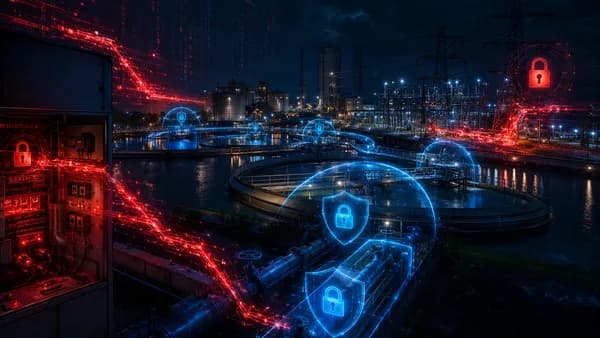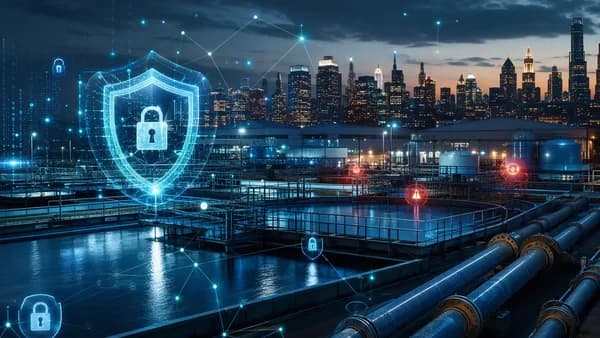
More than 100 US water systems reported direct cyberattacks targeting exposed industrial hardware in a single month, according to a federal advisory released in 2026. This isn't a scatter-shot crime wave. It’s a coordinated assault revealing a fundamental weakness in the backbone of US critical infrastructure.
XOOMAR Intelligence
Analyst Take
The data from CISA, detailed in TechRadar Pro, shows a deliberate focus on programmable logic controllers (PLCs). These are the industrial computers that control physical processes like opening valves or regulating chemical flow in water treatment plants. When attackers lock operators out by changing passwords or disconnect these systems by altering IP addresses, the result is immediate, tangible disruption: boil water notices and sustained manual operations. The scale of this cyberattack on water systems isn't random chaos. It signals an adversary that has correctly identified a sector where digital security was an afterthought on newly internet-connected legacy hardware.
PLC Patching Proves Bleakly Inadequate Against Relentless Water Attacks
The CISA data for July 2026 reveals a specific, brutal concentration on programmable logic controllers. These aren't servers holding sensitive data. They are basic, often decades-old, hardware running the physical processes that keep water safe. Targeting them means the goal isn't espionage; it's disruption.
These attacks aren't subtle, theoretical breaches. They target the foundational hardware of critical services. As CISA noted, the activity has directly resulted in service interruptions. The reported use of AI-generated exploitation scripts to target vulnerable Siemens PLCs, mentioned in related reporting, suggests an alarming efficiency. Attackers are automating the discovery and compromise of these exposed systems.
The jump in attacks to over 100 incidents in a month signals a shift in attacker assumptions. Sectors with aging, but newly connected, infrastructure are seen as soft, high-impact targets. Patching individual vulnerabilities, a standard IT defense, is a losing strategy here. Many of these systems lack the capability for easy updates, and their continuous operation is considered more critical than their security posture. The attack surface isn't a software bug; it's the very decision to connect these industrial control systems to the public internet.
A Public Internet Hangover Hits Water Treatment Infrastructure
CISA's urgent, repeated call for organizations to remove publicly exposed PLCs from the internet is a damning indictment of current practices. It exposes a legacy problem born of convenience: equipment designed for isolated, physically secure control rooms was plugged into cellular modems or direct internet links for remote monitoring and management. This created a massive, low-defense surface overnight.
“CISA urges critical infrastructure owners, operators, and integrators to remove publicly exposed PLCs and other operational technology (OT) from the internet as soon as possible.”
This guidance highlights a painful but basic security step. As former CISA official Matt Hartman told The Register, much of this infrastructure “was never designed with the assumption that it would be reachable from the open internet.” Taking these systems offline isn't just a best practice; it's a survival tactic when the pace of attacks outstrips the ability to patch. It’s the digital equivalent of locking a door that was left wide open. The recommendation extends to using VPNs or secure gateways for any necessary remote access, a fundamental shift from the direct connectivity that enabled this wave of attacks.
The problem is compounded by the targets. Many of the affected facilities are in rural or isolated areas, where a single system serves a large region and IT resources are stretched thin. A successful attack there can affect a disproportionate number of people, making these utilities attractive targets for actors seeking widespread impact.
Why Hackers Find Water Systems an Irresistible Target
Beyond their obvious criticality, water infrastructure offers a unique blend of tangible impact and operational fragility. Disrupting water services bypasses abstract financial losses and strikes directly at public health and confidence. A boil water notice resonates more viscerally with the public and regulators than a data breach, achieving a psychological impact far beyond the technical difficulty of the intrusion.
The mix of legacy OT with new IT connections creates security gaps that are trivial for attackers to exploit. These systems often run on specialized, outdated software and lack basic security features like strong, unique passwords or multi-factor authentication. As we've seen in other critical flaws, like the Critical Gitea Bug Hijacks Systems for Crypto Mining, attackers are adept at finding and weaponizing the simplest points of failure.
This campaign, widely suspected by analysts to be linked to Iranian state-sponsored actors, isn't cybercrime for financial gain. It signals a trend of targeting national resilience to sow chaos, demonstrate capability, or potentially lay groundwork for larger-scale disruption. John Gallagher of Viakoo framed the July attacks as “test runs for a larger-scale attack.” The objective may be to map vulnerabilities, test response protocols, and prove that critical civilian infrastructure is within reach.
The Next Wave of Critical Infrastructure Defense Demands a Rethink
The cyberattack on water systems in July 2026 is a canary in the coal mine for other sectors using similar industrial control systems, like energy, manufacturing, and transportation. The same model of PLCs targeted in water plants controls valves in oil refineries, conveyor belts in factories, and switches in power grids. The attacker's playbook is now public.
XOOMAR Analysis: The focus on low-tech, high-impact attacks suggests a strategic shift. Nation-state actors are moving beyond stealthy espionage towards demonstrations of disruptive power. The use of AI to generate exploitation scripts, as confirmed by CISA regarding Siemens PLCs, means the technical barrier to launching these attacks is falling, enabling more frequent and widespread testing.
Defense can no longer be bolted on after procurement. Security must be a non-negotiable requirement built into the design phase of new industrial hardware and the retrofit plans for legacy systems. This evolution moves the goalposts. Resilience isn't just about stopping every attack. It's about designing systems that can fail safely and recover quickly when a breach is inevitable. This means architectural changes: segmented networks, robust manual overrides, and rapid restoration capabilities that don't rely on the compromised digital system.
The forward look is stark. As long as thousands of critical industrial devices remain directly accessible from the internet, these attacks will continue and likely escalate. The CISA advisory is a fire alarm. The sector's response over the next few months will show whether it is heard. Watch for two things: a measurable drop in reports of internet-exposed PLCs as utilities comply with the order to disconnect them, and whether attackers, frustrated by that hardening, pivot to more sophisticated supply-chain or zero-day attacks against these same sectors. The era of assuming industrial infrastructure was obscure or too complex to hit is definitively over.
Impact Analysis
- These attacks directly caused boil water notices and service interruptions, threatening public health and safety.
- The targeting of programmable logic controllers (PLCs) exposes critical infrastructure weakness, risking physical disruption to essential services.
- The use of AI-generated exploitation scripts suggests attacks are becoming more efficient and scalable, increasing future threat levels.
US Water Systems Cyberattacked in July 2026
Primary Sources & Disclosures

Written by
XOOMAR Insights Team
Research and Editorial Desk
The XOOMAR Insights Team pairs automated research with human editorial judgment. We track hundreds of sources across technology, fintech, trading, SaaS, and cybersecurity, cross-check the facts, and explain what happened, why it matters, and what to watch next. We do not just rewrite headlines. Every article is fact-checked and scored for reliability before it goes live, and we link back to the original sources so you can verify anything yourself.