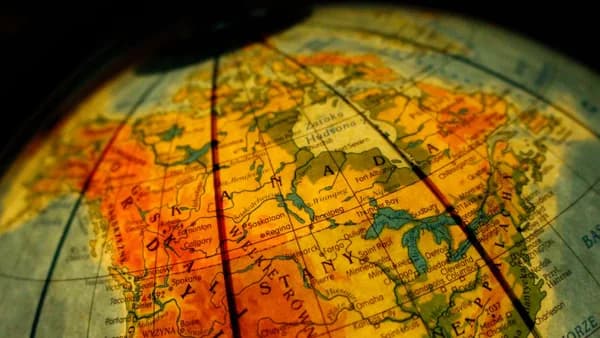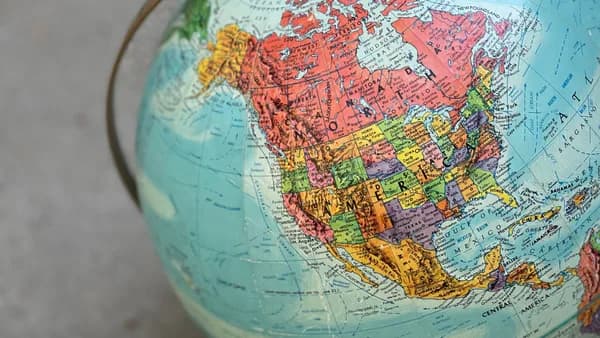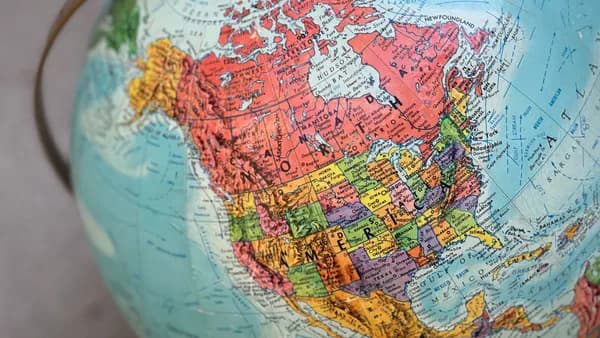
When a sitting president threatens to rename a Great Lake because a trade negotiation went sideways, you are no longer witnessing policy. You are watching the final stage of a political bankruptcy sale, where the only assets left are spectacle and spite.
XOOMAR Intelligence
Analyst Take
According to Independent World, President Donald Trump declared on Truth Social that the United States was “giving serious consideration to changing the name of Lake Ontario to Lake America.” His stated logic? “We don’t expect to doing much business with Ontario any longer.” This came after the collapse of trade talks and the imposition of 50 percent tariffs on $20 billion in Canadian goods, a move Canada matched “dollar for dollar.” But the most telling reaction wasn't from Ottawa. It was from Michigan Representative Debbie Dingell, who fired back with a surgical strike that exposed the entire charisma: “Let’s just call it Lake Natalie so we know you’ll start protecting our Great Lakes.”
That quip, a Natalie Harp reference that immediately went viral, is more than a clever insult. It is a diagnostic tool. It reveals a governing philosophy where personal loyalty and theatrical grievance have wholly supplanted substance. Threatening to rewrite a map is not a serious diplomatic tool. It is the logical endpoint of a politics built on spectacle over solution, a flashing billboard announcing there is nothing left of value in the policy cupboard.
From "America First" to Cartography as a Campaign Tool
The Lake Ontario threat does not exist in a vacuum. It is the latest, most absurd iteration of a long standing strategy: reducing complex international relations into simple, nationalist symbols. When tangible achievements are elusive, the stagecraft becomes the achievement itself.
This playbook is familiar. Manufacture or inflate a crisis (here, a trade negotiation breakdown), frame it as a zero sum battle of "us versus them," and then propose a symbolic, visually potent act of dominance. Renaming a shared body of water the United States does not own fits perfectly. It requires no complex legislation, no international consensus, and no measurable improvement for American workers. It merely creates a powerful image for the base a map where "America" has visibly conquered foreign terrain.
The tactic is designed to dominate news cycles, not to address any real world problem. As this trade war escalated, the focus shifted from the economic impact of 50 percent tariffs on American steel and aluminum to a farcical debate over a lake's name. Ontario Premier Doug Ford told Trump to "kiss my ass." Trump retorted by insulting Ford's charisma compared to his late brother. The substance the damage to cross border supply chains, the increased costs for manufacturers, the potential retaliatory tariffs on key exports from states like Maine was drowned out by the noise. This is not a bug in the system. It is the core feature.
The Natalie Harp Playbook: Personalizing Political Theater
Representative Dingell's "Lake Natalie" dig works because it exploits a vulnerability the administration itself has created. By allowing, or encouraging, the personal dynamic between Trump and aide Natalie Harp to become a central media narrative, they opened the door to this kind of critique.
The relationship, highlighted by Senator Jon Ossoff's jab that Trump wants to "travel with Natalie," and by Harp's own published letters declaring Trump her "Guardian and Protector," has turned a staffer into a symbol. She represents the prioritization of personal devotion over professional governance. Dingell's comment brilliantly weaponizes that symbol. She implies that the only way to secure Trump's attention on a critical regional issue like Great Lakes protection is to tether it to a person he favors. It reduces governance to a pet project, contingent on personal affinity, not national interest.
This creates a vicious cycle. The more political energy is spent on these personal dramas, the less is available for substantive work. The aggressive White House reaction to Ossoff's initial comments, which insiders admit "inflamed what could have been a fairly fleeting comment into a much bigger story," proves the point. They are playing the game on the opposition's field, focused on managing a personal narrative while trade wars simmer. The media, predictably, follows the hotter story. The result is a political ecosystem where loyalty performances and theatrical feuds are the currency, and actual results are a distant afterthought. For a deeper look at the economic stakes being overshadowed, see our report on how Canada Retaliates With Dollar‑for‑Dollar Tariffs On US.
But Doesn't This Show He's Fighting for America?
A supporter might argue that this is exactly the point. The Lake America threat is a bold, symbolic stand. It shows a president unwilling to be disrespected, putting "America First" in the most literal, cartographic sense. In a political landscape hungry for fighters, this kind of unambiguous, us versus them posture resonates powerfully.
That resonance is real, and it is potent. The problem is it is also entirely hollow. Symbolism is not a substitute for strategy. It does not negotiate a better deal, protect a single job, or lower a single price. It simply changes the subject.
Ask a simple question: what tangible American problem does renaming Lake Ontario solve? Does it rebuild infrastructure, secure the border, or lower inflation? No. It is an emotional salve, a piece of political performance art designed to make supporters feel victorious while the underlying issues fester. The trade war that prompted this stunt risks real economic harm in key battleground states. As we've seen before, these Trump Halts $20 Billion 50% Tariff Hours From Deadline. Voters should ask if their concerns are being addressed, or merely entertained.
Why This Stunt Fails the Great Lakes States Test
The practical absurdity of the threat is most acute for the very Americans it supposedly champions. For a congresswoman from Michigan like Debbie Dingell, this isn't abstract political theater. It is a direct insult to her constituents and a profound misunderstanding of their world.
The Great Lakes are a shared economic and ecological lifeline for multiple states Michigan, Ohio, New York, Pennsylvania, and Wisconsin. Their health and management require constant, cooperative diplomacy with Canada, not childish name calling. The region's industries, from manufacturing to tourism, are deeply integrated with the Canadian economy. Threatening to rename a lake you share with your largest trading partner isn't tough. It is stupid. It jeopardizes the cooperative frameworks that protect water quality, manage invasive species, and facilitate billions in commerce.
This is the ultimate case study in how performative politics actively contradicts the interests of the people it claims to champion. It is a spectacle staged for a national audience that alienates the specific, regional constituencies who live with the consequences. Ontario's Premier Ford may have used crude language, but his sentiment that "we'll fight with everything we have" reflects a regional reality Trump's gesture ignores: these states need Canada as a partner, not a prop in a political feud. The interdependence is precisely why past administrations have worked to de-escalate tensions, as seen when Trump Spares Canada $20bn in Tariffs for Keystone Deal.
Demand a Politics Measured in Results, Not Renaming Ceremonies
The path forward is clear, but it requires a collective shift in focus. Voters, and crucially, the media, must stop rewarding empty spectacle with attention and validation. Every news cycle consumed by a lake's name is a cycle not spent examining the fallout of tariffs, the status of key legislation, or the details of a foreign policy decision.
The metric for evaluating leaders must revert to concrete outcomes. Did the trade negotiation achieve its stated goals? Are the Great Lakes better protected today than four years ago? Are the nation's infrastructure, economic, and diplomatic positions stronger? These are the questions that matter. The skill at crafting a distracting personal feud or a symbolic threat is not a governing competency. It is a reality TV tactic.
The map of America is not drawn by the capricious sharpie of a social media post. It is drawn by its infrastructure, its economic ties, its treaties, and the quiet, complex work of governance that happens far from the Truth Social feed. The moment we accept a debate over "Lake America" as a substitute for that work is the moment we concede that the spectacle has won. The bankruptcy is then complete, and we are all left holding the worthless paper.
Impact Analysis
- It highlights a shift in governance from policy substance to symbolic spectacle, compromising America's diplomatic credibility.
- The proposal—and the viral political response—reveals how political discourse is becoming unmoored from tangible solutions to national issues.
- It signals to allies and citizens that international relations may be governed by personal pique rather than strategic national interest, potentially destabilizing long-standing partnerships.
Primary Sources & Disclosures

Written by
XOOMAR Insights Team
Research and Editorial Desk
The XOOMAR Insights Team pairs automated research with human editorial judgment. We track hundreds of sources across technology, fintech, trading, SaaS, and cybersecurity, cross-check the facts, and explain what happened, why it matters, and what to watch next. We do not just rewrite headlines. Every article is fact-checked and scored for reliability before it goes live, and we link back to the original sources so you can verify anything yourself.