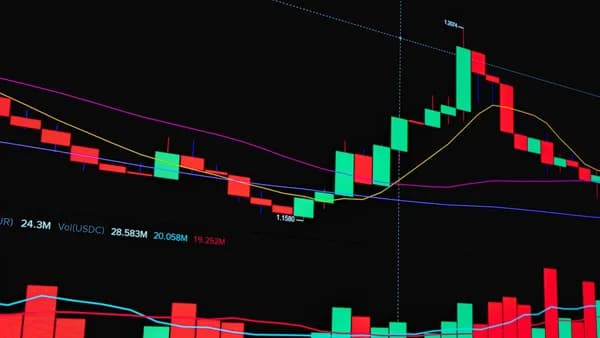
The EUR/USD pair held near 1.1680 during Asian trading on Monday, marking its fourth consecutive day of gains according to FXStreet. The advance is being driven not by a surge in euro strength, but by an unexpected US fiscal maneuver that is draining momentum from the dollar.
XOOMAR Intelligence
Analyst Take
The US Treasury Department announced a direct effort to curb rising bond yields by pledging to at least double its buybacks of longer-dated government debt. Treasury Secretary Scott Bessent stated buybacks could expand beyond $4 billion, framing the strategy as a signal that elevated yields are out of sync with economic fundamentals. By absorbing this supply, the Treasury effectively reduces the pressure on the market to finance US debt, which traditionally supports dollar strength.
Treasury Secretary Scott Bessent noted that buybacks could expand beyond $4 billion, a strategic effort aimed at signaling that elevated yields do not accurately align with underlying economic fundamentals.
This comes after the dollar faced significant pressure, similar to periods highlighted in our coverage of the Dollar Stagnates Against Treasury's $1B Bond Rescue Plan.
Treasury Buybacks Put a Ceiling on Dollar Strength
The mechanics here are crucial. The US Treasury's debt buyback plan functions as a monetary intervention, albeit a fiscal one. By committing to purchase its own longer-dated debt, the Treasury directly injects dollar liquidity into the financial system. This increased supply of dollars, relative to other currencies, exerts downward pressure on the USD.
This pressure arrives in a global market already wrestling with significant crosscurrents.
- Geopolitical Support for USD: Safe-haven demand is propping the dollar up, fueled by Middle East tensions and growing doubts over U.S. fiscal credibility. After new US sanctions, Iranian officials have warned of "earthquake-like" retaliation, reinforcing a risk-off mood. This acts as a countervailing force, capping the euro's upside.
- Eurozone's Sticky Support: The euro lacks a single, powerful driver but is drawing baseline support from two persistent factors: inflation above the ECB's 2% target and market expectations for further monetary tightening following June’s rate hike. Eurozone consumer inflation expectations for the next year are still sticky at 2.9%.
The net effect is a stalemate. The Treasury's action is actively weakening the dollar, but broader fear and a relatively passive European Central Bank are preventing the euro from making a decisive, fundamental breakout.
Technical Breakout Hinges on US Inflation Print
The stalemate leaves EUR/USD in a narrow range, with traders looking for the catalyst that will trigger the next major move. For the moment, policy direction from Europe is on autopilot. Analysts at ING note the ECB has given markets "a quasi-commitment to a September hike," effectively taking fresh eurozone policy surprises off the table in the near term.
This means the immediate fate of the pair is dominated by the US side of the equation. All eyes are now on the upcoming US Consumer Price Index (CPI) data. According to the additional market analysis, a softer-than-expected inflation reading could further reduce expectations for a Federal Reserve rate hike in September, removing a key pillar of dollar support.
ING argues that "that leaves EUR/USD firmly dominated by the USD side of the equation."
The technical levels to watch are clear. A break above the recent highs could propel the pair toward 1.1630, where the 200-day moving average presents the next significant resistance. Conversely, if the CPI reading is hot and geopolitical tensions escalate, the safe-haven dollar could strengthen, pushing EUR/USD back down toward support near 1.1600.
The Forward Look: A Market-Sensitive ECB
Looking beyond the immediate price action, a secondary narrative is developing for the euro. While the ECB may be quiet now, it is preparing tools for a less predictable future. Analysts at Rabobank expect the ECB to begin designing a new framework for structural Longer-term Refinancing Operations (LTROs) later this year, as excess bank liquidity declines.
This shift would be significant. Instead of the fixed-rate, full-allotment procedures of the past, Rabobank suggests the ECB may issue LTROs by auction. This more market-driven approach, potentially with 12-month maturities, aligns with a central bank that is transitioning from crisis-era controls to a more normalized operational framework.
The immediate battle for EUR/USD will be decided by US data and Treasury flows. But the euro's medium-term trajectory could increasingly depend on the ECB's ability to navigate this technical liquidity transition without roiling markets, a challenge akin to the delicate balance being managed elsewhere, such as the potential Betting On a Bank of Japan Exit From Zero Rates.
Disclaimer: This XOOMAR analysis is for informational and educational purposes only. It is not financial, investment, legal, tax, or professional advice. It does not provide buy, sell, hold, price-target, portfolio, or personalized recommendations. Verify information independently and consult qualified professionals before making decisions.
Impact Analysis
- The US Treasury's debt buyback strategy directly influences global currency valuations and investment flows.
- A weaker dollar driven by this policy can impact international trade costs and corporate earnings for US multinationals.
- The intervention highlights how fiscal policy is being used to manage market perceptions of debt sustainability and interest rates.
EUR/USD Exchange Rate Stability
Primary Sources & Disclosures
Disclaimer: Content on XOOMAR is produced using AI-assisted research, drafting, and verification workflows and is intended for informational and educational purposes only. It does not constitute financial, investment, legal, tax, medical, or professional advice of any kind. All analysis reflects available information at the time of publication and may not be current. Verify information independently and consult qualified professionals before making decisions. Editorial policy

Written by
XOOMAR Insights Team
Research and Editorial Desk
The XOOMAR Insights Team pairs automated research with human editorial judgment. We track hundreds of sources across technology, fintech, trading, SaaS, and cybersecurity, cross-check the facts, and explain what happened, why it matters, and what to watch next. We do not just rewrite headlines. Every article is fact-checked and scored for reliability before it goes live, and we link back to the original sources so you can verify anything yourself.