
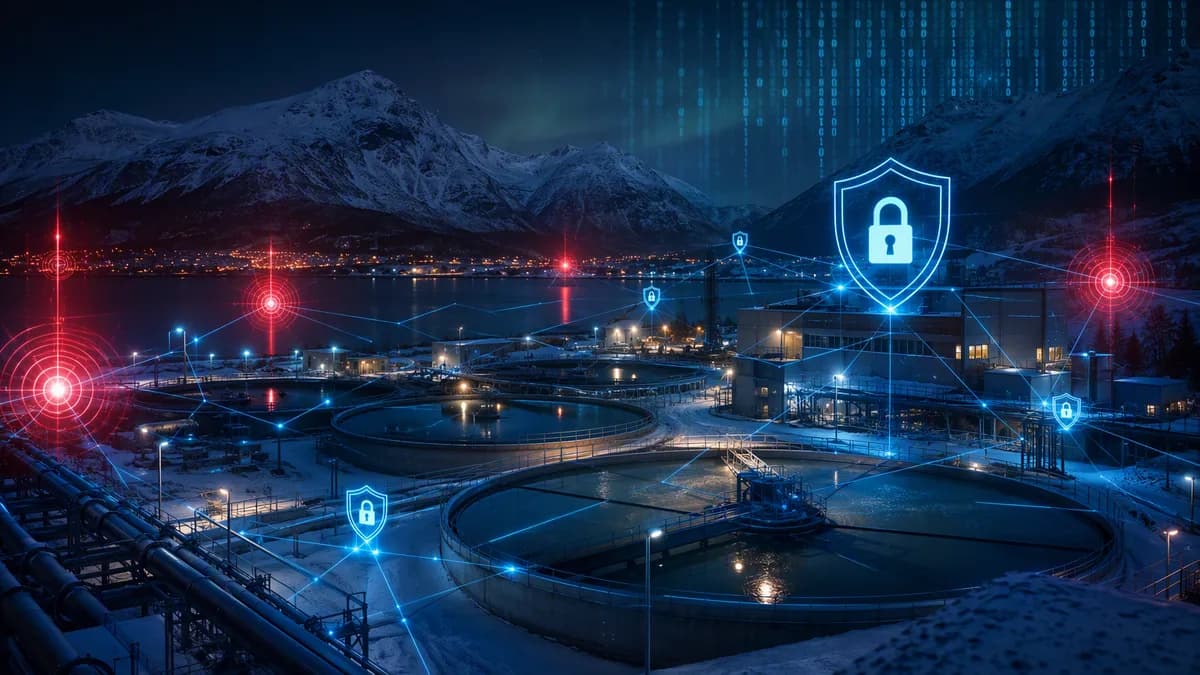
More than 30 Minnesota water systems were targeted in cyberattacks over two days, a scale that turns a local utility incident into a national infrastructure warning.
CybersecurityAugust 1, 2026· 11 min read· By XOOMAR Insights Team
30 Minnesota Water Systems Rattled by Cyberattacks
Updated on August 1, 2026
XOOMAR Intelligence
Analyst Take
76/ 100
3 sources analyzedLow confidenceTrend20Freshness88Source Trust85Factual Grounding92Signal Cluster60
The Minnesota water cyberattacks took place Sunday and Monday, with state officials still working Thursday to identify who was behind them, according to SecurityWeek. The FBI is investigating, but it has not publicly named a culprit. The timing matters because the FBI, CISA, and other agencies warned last week that Iranian hackers have been targeting water and wastewater systems, along with operational controls used in other critical infrastructure sectors.
Treat these attacks as infrastructure security failures, not isolated IT problems. Small water utilities were built to move and treat water safely. Many were not built to absorb cyber pressure from foreign-linked actors looking for disruption, public anxiety, and political signaling.
Minnesota water cyberattacks turned small utilities into pressure points
The first lesson from Minnesota is blunt: attackers do not need to poison water or shut down a major city to create national concern. They can target the technology that lets local systems remotely monitor and control equipment, then force officials, operators, and residents into a defensive scramble.
Minnesota IT Services said being “impacted” meant investigators confirmed malicious activity involving a system’s technology. It did not mean every affected community saw water service disrupted. That distinction matters because it separates technical compromise from public harm, but it should not comfort operators too much.
The attacks reached systems that sit close to physical operations. In water utilities, that’s the line between a nuisance and a public safety problem.
The state said there were no reports that residents had been impacted. Still, Braham, a city of about 1,700 people roughly 70 miles (113 kilometers) north of Minneapolis, asked residents for a few hours Monday to minimize water use while officials tried to determine why the water plant was offline. The city later said the outage was due to a cyberattack and that water quality was not affected.
That is the modern utility risk in miniature. The public may still get safe water, but operators lose confidence in control systems, residents receive urgent instructions, and federal investigators are pulled in.
The numbers show a narrow miss, not a harmless incident
The strongest numbers in the source are local, but they carry national weight.
| Location or agency | Reported detail | Operational meaning |
|---|---|---|
| Minnesota statewide | Over 30 water systems targeted | Attackers hit multiple utilities in a short window |
| Braham | About 1,700 people | A small city had to ask residents to conserve water |
| Braham | Water plant offline for a few hours | The city relied for a time on water in its tower |
| Plymouth | About 80,000 people | A larger suburb reported restored water infrastructure communications |
| Minnesota IT Services | No active Thursday requests to modify drinking water usage | Immediate public restrictions had ended, based on state reporting |
The national exposure problem is not fully quantified in the supplied reporting. The source does not give a count of U.S. community water systems, budget ranges, or staffing levels. So the sharper point is the one Minnesota actually proves: a coordinated or clustered set of intrusions can hit many local operators before the public even understands who is responsible.
Programmable logic controllers, or PLCs, sit at the center of the warning. These industrial devices help control equipment such as pumps, wells, valves, and treatment processes. ABC News reported that CISA said cyber threat actors are targeting PLCs and modifying passwords “to lock out operators.” ABC also reported CISA’s warning that this activity has resulted in boil water notices and sustained manual operations, though the Minnesota reporting says no water quality issue was reported in Braham and Plymouth said there was no impact on water levels or quality.
That split is important. A cyberattack can fail to harm residents and still expose a dangerous operating model.
Our earlier coverage of Exposed PLCs Trigger CISA Water Systems Attack Alarm fits directly into this pattern. The weak point is often not some cinematic breach of a hardened control room. It is remote access, exposed equipment, passwords, and operational technology that was never meant to sit in the path of geopolitical cyber conflict.
Why Iran is central to the warning, even without confirmed attribution
Officials have not attributed the Minnesota attacks to Iran. That has to remain clear.
The FBI declined to say Thursday who it believed might be responsible. Minnesota officials said investigators had not determined whether the same culprit was behind each incident. ABC News reported that multiple U.S. officials said the Minnesota systems may have been linked to Iran, but also stressed the analysis was preliminary and that the U.S. had made no formal determination.
Risk-based warning is different from confirmed attribution. Investigators typically look at targeting patterns, infrastructure, tools, timing, and forensic traces. The public does not have that evidence yet.
Still, the Iranian angle is not random. Cynthia Kaiser, former deputy assistant director of the FBI’s cyber division and now senior vice president of Halcyon’s Ransomware Research Center, told SecurityWeek that Iran has the “geopolitical motivations” and a recent history of targeting water systems.
“I think most credible researchers and responders would be right to treat it like it’s Iran until proven otherwise,” Kaiser said. “When it walks like a duck and talks like a duck, it’s really important to call it out.”
The source also points to a longer record. In 2016, the Justice Department charged a group of Iranian hackers in connection with a cyberattack targeting a small dam near New York City.
XOOMAR analysis: the key issue is not whether every incident gets pinned to a named group quickly. The operational risk is that water systems now sit inside geopolitical signaling. A small town’s plant can become a pressure point because it is essential, visible, and often less defended than national-level infrastructure.
That context also connects to broader pressure around Iran that XOOMAR has tracked in Bread and Fear Push Iran Internal Crises to the Brink. The Minnesota reporting does not prove a direct link to that wider context, but it does show why U.S. officials are treating water infrastructure as a live target set.
The repeat playbook is exposed control equipment and operator lockout
The most useful comparison is not between Minnesota and a single past breach. It is between Minnesota and the recurring method described in federal warnings: attackers seek out operational controls, exploit weak remote access, and interfere with the systems operators use to manage physical equipment.
Minnesota IT Services said most confirmed attacks involved technology water systems use to remotely monitor and control equipment. ABC News reported that MNIT identified PLCs as part of the targeted systems.
In Braham, the city said attackers shut down operating controls that shut down the well and water treatment plant. That left the city, for a time, able to provide residents only with water held in the water tower. The city said there was no issue with water quality.
In Plymouth, officials said on social media that water infrastructure communications had been restored by Tuesday afternoon after a cyberattack. Crews continued operating the system during the outage, and the city said there was no impact on water levels or quality.
That contrast matters. One small city had to ask for conservation. One larger suburb kept operating through a communications outage. Both scenarios show why cyber resilience in water systems has to include manual operations, recovery plans, and clear public communication.
Mark Rorabaugh, CEO of InfraShield, told ABC News that critical infrastructure facilities such as water and wastewater systems are increasingly pulled into broader geopolitical cyber conflicts. He said much of the operational technology supporting these utilities “was never designed with today's rapidly evolving cyber threats in mind.”
XOOMAR analysis: the likely attacker advantage is repeatability. If one class of remote monitoring setup, exposed PLC, or password practice works in one small utility, the same tactic may work elsewhere unless operators close the gap quickly.
City managers, federal agencies, vendors, and residents are solving different problems
The Minnesota attacks look different depending on where you sit.
| Stakeholder | Immediate priority | Pressure created by the attacks |
|---|---|---|
| Utility operators | Keep water flowing and preserve safety | Fix systems without losing visibility or control |
| City managers | Avoid panic and communicate clearly | Explain uncertainty before attribution is known |
| Federal agencies | Investigate, warn, coordinate | Push utilities toward basic controls faster |
| Technology vendors | Secure remote access and control equipment | Prove their products can be defended in small municipal settings |
| Residents | Know whether water is safe | Attribution matters less than reliability |
For utility operators, the nightmare is not a press release about a cyberattack. It is losing control during a physical process while residents still expect taps to work.
For federal agencies, Minnesota offers a live case for pushing water systems to reduce internet exposure, improve reporting, and treat operational technology as critical infrastructure rather than back-office equipment. ABC reported that CISA urged water utilities to disconnect PLCs from the internet and use a VPN or gateway device if remote access is needed.
Vendors sit in the middle. Industrial control manufacturers, remote monitoring providers, and managed security firms all shape the attack surface. XOOMAR analysis: future contracts should be judged not only on uptime and cost, but also on credential controls, logging, patch support, and recovery options after a lockout.
Residents will judge the outcome more simply. Was the water safe? Did service continue? Did officials communicate fast enough? Braham and Plymouth both said water quality was not affected, but the fact that those assurances had to be made shows the reputational damage these attacks can create even without confirmed public harm.
Utilities that still treat cybersecurity as optional are out of excuses
The practical response starts with inventory. Utilities need to know every internet-connected device, every remote access path, every vendor account, and every PLC reachable from outside the plant environment.
Then comes reduction. Remove unnecessary remote access. Rotate credentials. Kill shared passwords. Put remote access behind controlled gateways. Monitor operational networks for changes that should never happen without operator approval.
None of that is exotic. The hard part is governance and money.
Cyber resilience now belongs in rate planning, insurance decisions, vendor contracts, and emergency drills. A small utility that cannot afford a dedicated cyber team still has to plan for lockout, communications failure, manual operation, and public messaging.
There is a policy tension here. Federal agencies can warn, advise, and investigate, but many local systems operate with thin budgets and aging technology. The source material says local water plants and healthcare facilities often lack the funds and know-how to install the latest software patches or take other security steps. Voluntary security has left too much room for attackers.
That does not mean every small town can instantly rebuild its systems. It does mean cybersecurity can no longer be treated as an optional IT upgrade. In water, cyber risk has become operating risk.
Expect pressure to shift from cleanup to continuous defense
The Minnesota water cyberattacks should push utilities toward a new operating assumption: small public infrastructure is already inside the national security perimeter.
The evidence that would strengthen the Iran-linked thesis is straightforward. Investigators would need to find technical overlap with known Iranian-linked activity, reused infrastructure, matching tactics, or other forensic clues that connect the Minnesota intrusions to the broader federal warning. Evidence that would weaken it would include unrelated criminal infrastructure, distinct tools, or proof that multiple unconnected actors exploited similar exposed systems at the same time.
Either way, the defensive lesson does not change much.
Water systems, rural utilities, and local government networks offer attackers visible disruption at relatively low cost when controls are exposed. Federal pressure is likely to keep building through advisories, incident coordination, grant conditions, and stronger expectations around operational technology security. The supplied sources do not establish new mandates, but the direction of travel is clear from the urgency of the warnings.
The next meaningful defense will not be a single product. It will be boring discipline applied everywhere: fewer exposed control systems, better credentials, monitored operational networks, tested manual fallbacks, and vendor contracts that make security performance measurable.
Minnesota avoided reported water quality harm this time. That is good news. It is not a strategy.
Impact Analysis
- The attacks show small water utilities can become national infrastructure weak points.
- Federal warnings about Iranian hackers raise concern that local systems may be targeted for geopolitical disruption.
- Even without reported service impacts, cyber activity near operational controls creates public safety risk.
Sources

Written by
XOOMAR Insights Team
Research and Editorial Desk
The XOOMAR Insights Team pairs automated research with human editorial judgment. We track hundreds of sources across technology, fintech, trading, SaaS, and cybersecurity, cross-check the facts, and explain what happened, why it matters, and what to watch next. We do not just rewrite headlines. Every article is fact-checked and scored for reliability before it goes live, and we link back to the original sources so you can verify anything yourself.
Explore More Topics
Related Articles
 Cybersecurity
Iran-Linked Hackers Breach U.S. Water, Energy Controls
U.S. agencies say Iran-linked hackers are breaching exposed utility controls, turning water and energy networks into pressure points.
Jul 23, 20267 min
 Cybersecurity
Exposed PLCs Trigger CISA Water Systems Attack Alarm
CISA says exposed PLCs are letting attackers lock out water operators, with Minnesota incidents and boil water notices raising the stakes.
Aug 1, 20266 min
 Cybersecurity
Iran Turns US Military Phones Into Tracking Beacons
Iran-linked tracking of US military phones shows commercial data is now a battlefield risk, with macOS malware and vendor breaches piling on.
Jul 17, 20267 min
 Cybersecurity
Steam Malware Hidden in Games Stole $220K, Feds Say
Feds say malware-laced Steam games infected 8,000 users, compromised 80 crypto wallets and stole at least $220,000.
Jul 18, 20266 min
 Cybersecurity
Hackers Exploit SharePoint Server Flaws, CISA Warns
CISA says three SharePoint flaws are under attack, with two critical bugs waiting to widen the blast radius for unpatched servers.
Jul 15, 20267 min
 Global Trends
US-Escorted Tankers Hit as Strait of Hormuz Shuts Down
Iran says it struck two US-escorted tankers, nearly closing Hormuz and forcing Trump to weigh war strategy as energy prices jump.
Jul 31, 20267 min
 Fintech
Bitcoin Insurance Trap Lands Iran-Linked Firms on Blacklist
Treasury says Iran-linked firms used Hormuz shipping risks to collect crypto payments, turning maritime insurance into a sanctions case.
Jul 31, 20265 min
 Global Trends
Bill Shock Sends Great Britain Solar Installations Flying
Great Britain’s solar rush hit a 15-year high as fossil fuel costs scared households into putting energy security on their roofs.
Jul 31, 20268 min
 Technology
Reddit Video Audio Feed Pulls Viral Stories Back Home
Reddit is testing a video and audio feed that turns viral posts into passive media, pulling attention back into its own app.
Aug 1, 20268 min
 Technology
Human-Sounding Voice AI Pulls Smallest.ai Into $13M Race
Smallest.ai raised $13M to make voice agents respond with near-zero lag, betting small models can out-talk giant LLMs.
Aug 1, 20266 min
Don't miss the signal
Get our weekly roundup of the stories that matter across tech, fintech, and trading. No noise, just signal.
Free forever. No spam. Unsubscribe anytime.