
More than 30 municipal water and wastewater systems in Minnesota were targeted in cyber intrusions, and a leaked industry memo now ties the campaign to Iran-affiliated hackers.
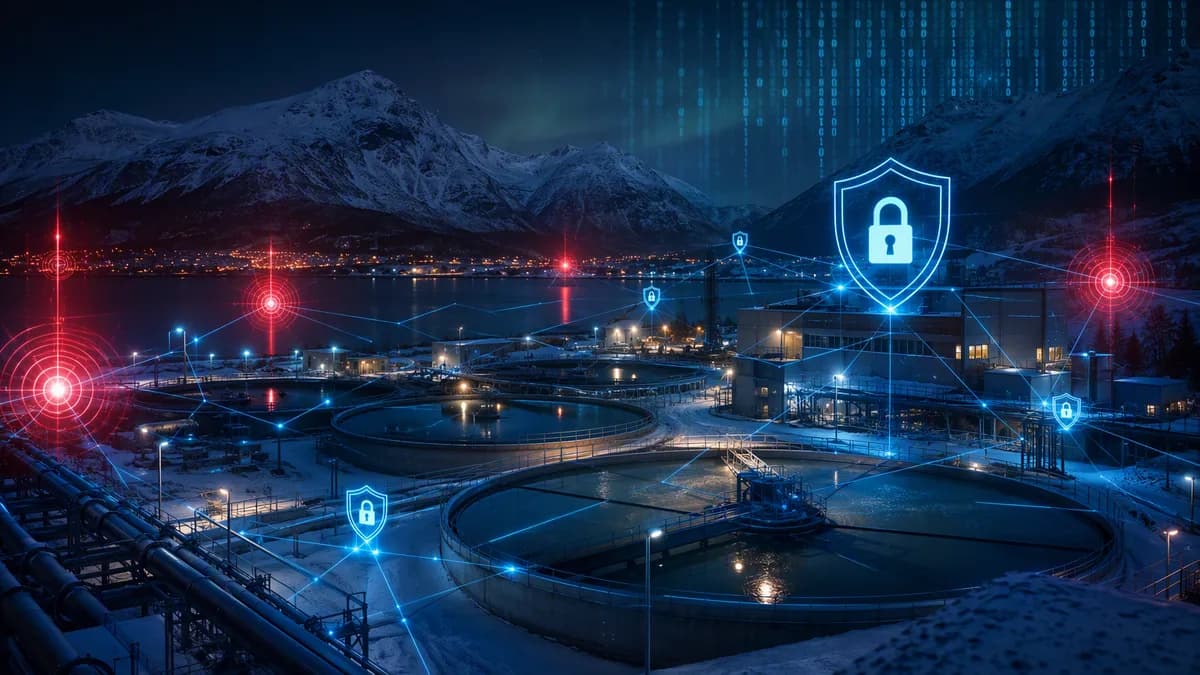
CybersecurityAugust 2, 2026· 8 min read· By XOOMAR Insights Team
Iran Shadow Looms Over Minnesota Water Cyberattacks
Updated on August 2, 2026
XOOMAR Intelligence
Analyst Take
58/ 100
4 sources analyzedLow confidenceTrend10Freshness97Source Trust88Factual Grounding92Signal Cluster20
That makes the Minnesota water cyberattacks more than a state-level utility scare. The deeper signal is sharper: foreign-linked operators are probing basic civilian services where even limited disruption can force emergency procedures, public reassurance, and federal warnings. The memo, obtained by Wired, links the Minnesota incidents to a prior campaign described by CISA as carried out by “Iran-affiliated” hackers.
Water is a uniquely sensitive target. A breach doesn’t need to poison a supply or shut down a city to create pressure. If automated controls fail, if plant staff must switch to manual operations, or if residents hear “boil-water notice,” trust takes the hit before the technical picture is complete.
The leaked WaterISAC memo turns Minnesota water cyberattacks into a national warning
The memo was sent to members of the Water Information Sharing and Analysis Center, or WaterISAC, an industry group that shares security information with water utilities. According to Wired, the WaterISAC communication referenced a Minnesota Fusion Center alert about “ongoing malicious cyber activity impacting public drinking water systems across Minnesota.”
The key phrase is attribution-adjacent, not courtroom proof. The memo said the Minnesota Fusion Center found the activity was “aligned” with a campaign CISA first described in April as involving Iran-affiliated hackers.
That distinction matters. Cyber attribution often rests on patterns: targeted equipment, tactics, infrastructure, timing, and overlap with known campaigns. The WaterISAC memo appears to connect the Minnesota attacks to an existing federal warning, but WaterISAC later pushed back on the idea that it made its own attribution call.
Jennifer Lyn Walker, WaterISAC’s director of infrastructure cyber defense, told Wired the organization had not provided the leaked memo and did not “assess attribution at any time.”
For readers tracking the incident sequence, XOOMAR’s related coverage of 30 Minnesota Water Systems Rattled by Cyberattacks gives the operational context behind the state’s disclosures.
PLCs are the pressure point in the Minnesota campaign
The technical center of the case is the programmable logic controller, or PLC, the industrial device used to automate and coordinate equipment inside critical infrastructure.
The WaterISAC memo said the attackers compromised remotely accessible PLCs, matching the earlier CISA-described campaign. It also said the “likely desired impact” was to cause loss of system pressure and potential contamination of the water supply. The facilities “were able to mitigate further compromise, but the full impact is still being assessed,” according to the memo cited by Wired.
CISA’s newer advisory warned that “these threat actors are targeting water entities of all sizes” and urged utilities to disconnect PLCs from the internet, use strong password protection, and “allow-list” only trusted devices.
That advice is basic, but the fact CISA had to repeat it in this context is the point. If internet-reachable industrial controls remain exposed, attackers don’t need a cinematic cyber weapon. They need access, weak controls, and enough understanding to disrupt operations.
For the technical warning behind that risk, see XOOMAR’s related analysis of Exposed PLCs Trigger CISA Water Systems Attack Alarm.
Braham shows how limited disruption can still force a crisis posture
Minnesota officials said more than 30 municipal water and wastewater systems were targeted. In some cases, intrusions disabled telecommunications between industrial control systems and water utility equipment.
The clearest local disruption reported so far was in Braham, a city of 1,700 people, where hacking reportedly caused a brief outage at the city’s water plant. Wired reports there is not yet evidence of water shortages or a threat to Minnesota’s water supply.
CISA’s advisory, however, said the attacks have “resulted in boil-water notices” and “sustained manual operations.” That’s a serious operational consequence even without confirmed contamination.
“Now we have documented disruption and even modification of safety and protection parameters in critical infrastructure,” Joe Slowik told Wired. “Seeing this sort of tradecraft expand to Iran, and seeing it across multiple sites, it should really be making people concerned right now.”
XOOMAR analysis: The strategic value here is not mass destruction. It is forced uncertainty. When a utility has to prove that water remains safe after attackers reached control systems, the attacker has already created a public-management problem.
CyberAv3ngers, Handala, and the attribution gap
Two Iran-linked names sit around the Minnesota case, but neither has been publicly confirmed as the operator.
Tenable said signs suggested CyberAv3ngers, an Iranian hacker group tied to the Islamic Revolutionary Guard Corps, may be responsible. The firm wrote that “the operational pattern is consistent with” CyberAv3ngers or related groups.
Separately, Claroty researcher Yhonatan Harari told Wired there was evidence the attacks might have been carried out by Handala, another group that claimed responsibility for the Stryker attack in March and the compromise of FBI director Kash Patel’s personal email later that month.
| Suspected actor | Source-backed link to the story | What remains unresolved |
|---|---|---|
| CyberAv3ngers | Tenable said the operational pattern fits the group or associated groups. CISA has previously cited similar PLC targeting by CyberAv3ngers. | No public claim of responsibility for Minnesota is cited. |
| Handala | Claroty said it found evidence suggesting Handala could be involved. | Wired reports uncertainty over whether Handala or CyberAv3ngers was responsible. |
Harari’s assessment was blunt: “We’re not sure yet if it’s CyberAv3ngers or Handala,” he said, “but in a very high likelihood we can say it’s Iranian actors.”
That is the current attribution line: strong suspicion around Iranian actors, unresolved group identity, and no public Iranian hacker claim cited in the reporting.
Iran’s earlier water-system playbook matters because Minnesota fits the pattern
CyberAv3ngers first drew attention in late 2023 after targeting Unitronics industrial control devices, which are commonly used in water and wastewater facilities. Those attacks set devices to display “Gaza” and the CyberAv3ngers logo.
At first glance, that looked like vandalism. Cybersecurity firms including Dragos and Claroty told Wired the hackers had rewritten device code, causing disruption of water-related services from Israel to Ireland to a facility in Pittsburgh, Pennsylvania.
Since then, according to Wired, CyberAv3ngers activity continued despite a $10 million State Department bounty and Treasury sanctions against six IRGC officials alleged to be linked to the group. Dragos said the group later breached a US oil and gas company in 2024 and carried out a broader campaign infecting industrial control and internet-of-things devices with malware known as IOControl.
XOOMAR analysis: Minnesota matters because it suggests the same operational theme may be moving from display defacement and limited disruption toward broader pressure on municipal infrastructure. The target is water. The access path is exposed control technology. The payoff is public anxiety.
Utilities, agencies, and residents will read the same memo differently
Utility operators will see a practical problem first: exposed equipment, remote access, passwords, manual fallback, and incident response. The reporting does not quantify staffing or budgets, so claims about underfunding should stay cautious. But the technical burden is clear from CISA’s own mitigation list.
Federal agencies will read the memo as another warning that water systems remain reachable by foreign-linked actors. The advisory was issued with agencies including the FBI, NSA, Cyber Command, EPA, and Department of Energy, which shows the concern is not confined to one regulator.
State and local officials face the hardest communications task. Minnesota officials said all drinking water remained safe. South St. Paul officials said contingency procedures allowed staff to maintain normal water and wastewater operations after automated controls were affected.
Residents care about one question: is the water safe? If officials answer too slowly or too vaguely, communications become the second failure.
The next water cyber story may be many small intrusions, not one spectacular hack
The most important line from Slowik may be his warning that the activity does not have to stop in Minnesota.
“There are plenty of other sites that have the same targeted technology,” he told Wired. “There’s plenty of areas for this to still be executed by an adversary that has shown a willingness to do so.”
That is the watch item. If more utilities report PLC compromise, manual operations, boil-water notices, or similar operational disruption, the thesis hardens: Iran-linked actors are treating local water infrastructure as a repeatable pressure point.
If, instead, investigations show narrow access, limited overlap with the earlier CISA campaign, or no further spread beyond Minnesota, the attribution and escalation story weakens.
For now, voluntary guidance looks too thin for the threat described. The water sector needs money, mandates, and technical help in the same package. Otherwise the next major Minnesota water cyberattacks story may not be a dramatic takedown. It may be the accumulation of small intrusions that finally forces the US to treat local utility security as national security infrastructure.
Impact Analysis
- Foreign-linked cyber activity against water systems raises concerns about the security of basic civilian infrastructure.
- Even limited disruptions can force manual operations, emergency notices, and public reassurance from local officials.
- The leaked memo suggests Minnesota incidents may fit a broader federal warning about Iran-affiliated hacking campaigns.
Sources
- [1] Wired
- [2] Leaked Memo Links Iran to Minnesota Water Utility Cyberattacks. Dozens of Systems Were Targeted in Escalating Campaign.
- [3] A leaked memo ties cyberattacks on Minnesota water utilities to Iran - Attention to the Unseen
- [4] A Leaked Memo Ties Cyberattacks on Minnesota Water Utilities to Iran

Written by
XOOMAR Insights Team
Research and Editorial Desk
The XOOMAR Insights Team pairs automated research with human editorial judgment. We track hundreds of sources across technology, fintech, trading, SaaS, and cybersecurity, cross-check the facts, and explain what happened, why it matters, and what to watch next. We do not just rewrite headlines. Every article is fact-checked and scored for reliability before it goes live, and we link back to the original sources so you can verify anything yourself.
Explore More Topics
Related Articles
 Cybersecurity
30 Minnesota Water Systems Rattled by Cyberattacks
More than 30 Minnesota water systems were hit in two days, exposing weak utility defenses as officials warn about Iranian hackers.
Aug 1, 202611 min
 Cybersecurity
Iran-Linked Hackers Breach U.S. Water, Energy Controls
U.S. agencies say Iran-linked hackers are breaching exposed utility controls, turning water and energy networks into pressure points.
Jul 23, 20267 min
 Cybersecurity
Exposed PLCs Trigger CISA Water Systems Attack Alarm
CISA says exposed PLCs are letting attackers lock out water operators, with Minnesota incidents and boil water notices raising the stakes.
Aug 1, 20266 min
 Cybersecurity
Iran Turns US Military Phones Into Tracking Beacons
Iran-linked tracking of US military phones shows commercial data is now a battlefield risk, with macOS malware and vendor breaches piling on.
Jul 17, 20267 min
 Cybersecurity
Hackers Exploit SharePoint Server Flaws, CISA Warns
CISA says three SharePoint flaws are under attack, with two critical bugs waiting to widen the blast radius for unpatched servers.
Jul 15, 20267 min
 Global Trends
Trump Shelves Iran Strikes Unless a Deal Lands Fast
Trump says Iran strikes are shelved only if a rapid deal opens Hormuz and ends the nuclear threat. The pressure hasn't vanished.
Aug 2, 20265 min
 Technology
Minnesota Nudify App Ban Survives xAI's Court Blitz
Minnesota's nudify app ban can take effect after xAI lost its emergency bid, leaving big fines and a speech fight ahead.
Aug 1, 20266 min
 Trading
WTI Crude Snaps Back 5% as Iran Conflict Jolts Oil
WTI’s 5% rebound shows traders are pricing a pause in the Iran conflict, not peace. One headline can reload the oil premium.
Aug 1, 20268 min
 Global Trends
Heatwave Squeezes Crews at France and Spain Wildfires
Crews in France and Spain have a shrinking window to contain massive fires before heat and wind threaten new flare-ups.
Aug 2, 20267 min
 Global Trends
Israeli Strikes Rattle Hamas Disarmament Deal as 8 Die
Israeli strikes killed at least eight in Gaza, putting Hamas’s new disarmament pledge under immediate pressure.
Aug 2, 20268 min
Don't miss the signal
Get our weekly roundup of the stories that matter across tech, fintech, and trading. No noise, just signal.
Free forever. No spam. Unsubscribe anytime.