
If Stadler ransomware attackers never touched Stadler's own IT systems, why did they think supplier technical files were worth CHF 10 million ($12.3 million)?
CybersecurityJuly 26, 2026· 13 min read· By XOOMAR Insights Team
$12M Ransom Flops as Stadler Ransomware Hit Stays Contained
Updated on July 26, 2026
XOOMAR Intelligence
Analyst Take
70/ 100
2 sources analyzedMedium confidenceTrend10Freshness99Source Trust85Factual Grounding86Signal Cluster20
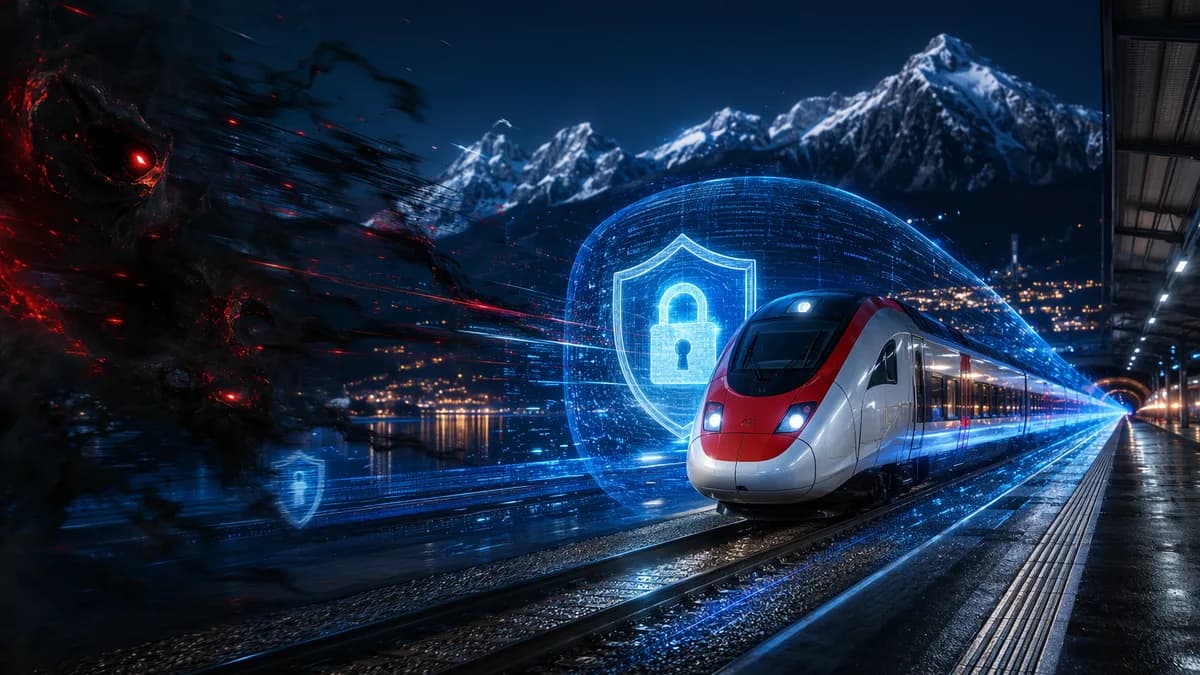
That is the question beneath the headline. Stadler Rail, the Swiss train manufacturer, refused the ransom after the Everest ransomware gang accessed technical information through a supplier data exchange platform, according to The Register Security. Stadler said its internal systems “were not compromised and remained intact,” and that the incident had no effect on rolling stock or global production lines.
The Stadler ransomware case is not a classic factory shutdown story. It is a cleaner, colder version of industrial extortion: steal enough technical data through a partner channel, demand a large payment, then test whether fear of disclosure is stronger than the victim’s confidence in its controls.
“Stadler's IT systems were not compromised and remained intact,” the company said, according to The Register Security.
Did Stadler get lucky, or did Everest overplay the Stadler ransomware demand?
Stadler says the stolen material was limited to “technical information from a supplier.” It also said “no security-relevant data [was] affected,” “no relevant personal data was stolen,” and there was no impact on train and tram carriages or production lines.
That matters. A ransomware crew can cause very different kinds of harm depending on what it reaches. Locked production systems create downtime. Stolen HR data creates privacy fallout. Stolen engineering material creates a slower, murkier problem: design exposure, supplier trust, contract questions, and possible pressure on customers who depend on the manufacturer’s systems.
In this case, Stadler’s public line is unusually firm. The company refused the CHF 10 million ($12.3 million) demand. Based on its account, that decision rests on three claims:
- Containment: The access came through a “data exchange platform” used with an unnamed supplier.
- System integrity: Stadler says its IT systems were not breached.
- Operational stability: Stadler says its rolling stock and global production lines were unaffected.
XOOMAR analysis: refusing to pay is the right instinct only when a company can back it up. The company needs evidence that the stolen files are limited, that production environments are separate, and that affected stakeholders can be briefed without creating fresh uncertainty. Stadler’s statement points in that direction, but the outside world has not seen the underlying forensic detail.
That is the hard part of supplier-driven extortion. The victim may be telling the truth and still face weeks of doubt because the breach happened in a shared environment, not behind the corporate front door.
Why would technical supplier data carry a $12.3 million price tag?
The ransom figure tells us how Everest framed the value of the stolen data. CHF 10 million ($12.3 million) is not a demand built around disrupted payroll or encrypted laptops. It suggests the attackers believed the technical files could embarrass Stadler, unsettle partners, or create commercial pressure.
The source material does not specify what the technical information contained. That boundary is important. There is no verified evidence here of stolen train control documents, maintenance records, safety-critical files, procurement records, or customer fleet data. Stadler’s statement says the opposite on the most sensitive point: no “security-relevant” data was affected.
Still, technical supplier data can carry pressure even when it is not safety-sensitive. Engineering-heavy firms do not operate from one sealed vault. They work across suppliers, component makers, project teams, maintenance partners, and customers. A shared platform can hold drawings, specifications, test documents, configuration notes, or supplier correspondence. The public record here confirms only “technical information,” but the category itself explains why the attackers tried for a large number.
The extortion model also explains the demand. Everest did not need to paralyze Stadler’s factories if it could threaten disclosure. The Register notes the usual cyber extortion playbook: criminals notify victims that data has been stolen or encrypted, issue a demand, threaten a leak, then add the victim to a data leak site if the deadline passes.
Stadler’s case is strange because that visible escalation had not happened at the time of reporting. The company did not appear on Everest’s data leak site, and the stolen technical data had not been leaked.
That gap cuts both ways.
| Fact from the incident | What it suggests | What it does not prove |
|---|---|---|
| Stadler refused the ransom | The company believes payment is unnecessary or too risky | That the attackers cannot leak anything |
| Stadler says its IT systems stayed intact | The compromise appears limited to the supplier platform | That every shared file was low-value |
| Stadler is absent from Everest’s leak site | Everest may be holding back, negotiating, or changing tactics | That the extortion attempt is over |
| No leak was reported at the time | Public harm had not escalated | That no future leak can occur |
XOOMAR analysis: the strongest economic argument for refusing payment is simple. Payment may not guarantee deletion, may mark the company as profitable to revisit, and may create legal or compliance complications depending on the criminal group and jurisdictional exposure. None of those risks vanish because the stolen data is technical rather than personal.
This is the same logic behind our prior analysis of why paying can trap victims into repeated pressure, as covered in Ransomware Payment Trap Pulls Victims Back for More.
How did a supplier platform become the weakest carriage in Stadler’s cyber chain?
Everest did not need to break into Stadler’s core systems, based on the company’s account. The attackers authenticated into the data exchange platform using compromised login credentials.
That is the whole problem.
A supplier platform exists to lower friction between companies. Engineers, project managers, procurement staff, and vendors need to exchange files quickly. The same convenience gives attackers a quieter route into sensitive material if account controls fail.
The source does not name the supplier, the platform, or how the credentials were obtained. It confirms only the access path: a data exchange platform used by Stadler and the supplier, entered with compromised login credentials.
That leaves decision-makers with a better question than “Was Stadler hacked?” The better question is: why did this shared environment contain enough useful technical information to support a $12.3 million extortion attempt?
XOOMAR analysis: every supplier portal should be treated as a high-value system if it holds technical files. That means the same discipline companies reserve for core networks should extend to collaboration spaces:
- Identity controls: Strong authentication for supplier and internal users.
- Least-privilege access: Suppliers should see only what their role requires.
- Expiry rules: Project access should die when the project phase ends.
- Logging: Downloads, unusual locations, and bulk access should trigger review.
- Revocation paths: Compromised accounts must be cut off fast.
- Data minimization: Shared platforms should not become long-term archives by default.
Manufacturers have a tougher problem than software-only firms because their technical data travels through long supplier chains and long-life projects. Rail assets can remain in service for years, and projects often involve public transport operators, component suppliers, integrators, and maintenance relationships. The source does not provide the age or type of Stadler files taken, but the industry structure makes old technical data harder to dismiss than ordinary corporate paperwork.
The breach boundary is no longer the firewall. It is every account that can touch the files.
Why does this case show ransomware drifting from disruption to disclosure pressure?
The Stadler incident shows a quieter version of ransomware pressure. The company says its trains, trams, production lines, and IT systems kept functioning. Yet Everest still demanded CHF 10 million ($12.3 million).
That tells us the asset being monetized was not downtime. It was uncertainty.
The Register describes Everest as a Russian-speaking cybercrime group operating since circa December 2020. It has claimed attacks on Under Armour, Mailchimp, AT&T, and Collins Aerospace, and has used both encryptionless extortion and double extortion. It has also branched into initial access brokering and recruiting corporate insiders.
Those details matter because they show a group willing to vary its pressure tactics. Encryptionless extortion skips the file-locking step and relies on stolen data. Double extortion combines theft with encryption or the threat of disclosure. Initial access brokering turns compromised access into a saleable asset.
Stadler’s case fits the disclosure-pressure model more than the shutdown model, at least from the public facts. The attackers allegedly stole technical information, issued a ransom demand, and had not posted Stadler on the data leak site at the time of writing.
That last detail is the odd one. The usual playbook would punish refusal by naming the victim publicly and starting another countdown toward disclosure. Stadler refused, yet it had not appeared on Everest’s site when The Register reported the story.
XOOMAR analysis: that absence weakens Everest’s pressure, at least temporarily. A data leak site listing is a public theater of coercion. Without it, the attacker has less visible force. But it also leaves ambiguity. Everest could be delaying, could lack confidence in the stolen material, could be negotiating privately, or could be using a different pressure route. The available evidence does not settle which.
Who will judge Stadler hardest after the refusal to pay?
Stadler has already answered the first question for the public: no payment. The next judgments will come from customers, suppliers, regulators, insurers, and auditors.
Each group will care about a different slice of the same incident.
| Stakeholder | Their central question | Why Stadler’s disclosures matter |
|---|---|---|
| Customers | Were fleet, maintenance, operational, or safety-related files exposed? | Stadler says no “security-relevant” data was affected, but customers may seek project-specific assurance |
| Suppliers | Did the breach come from one partner, one platform, or a wider access model? | The unnamed supplier and credential path will drive contract and access reviews |
| Regulators | Did any personal, critical infrastructure, export-controlled, or safety-relevant material leave the platform? | Stadler says no relevant personal data and no security-relevant data were stolen |
| Insurers and auditors | Were logs, access controls, and vendor risk processes strong enough? | The compromise through valid credentials will put identity governance under scrutiny |
| Attackers | Can public uncertainty force a payment after refusal? | Clear, specific updates reduce the room for coercion |
The criminal perspective should not be overstated. There is no verified leak at the time of reporting. Stadler was not listed on Everest’s data leak site. But extortion groups feed on silence, embarrassment, and vague corporate statements. The less a company can say with confidence, the more space the attacker has to imply the worst.
Stadler’s strongest line is operational: production and rolling stock were not affected. Its second strongest line is data classification: no security-relevant data and no relevant personal data. The missing detail is scope. What categories of technical information were accessed? Which projects? Which supplier functions? How long did the compromised credentials remain valid?
Those answers may not be public immediately, and some may never be public. But customers and auditors will ask them.
The dynamic echoes other cyber incidents where the downstream audience matters as much as the breached company. In Nearly 5 Million Brace for Origin Energy Data Breach, the concern centered on exposed people and notification. Stadler’s case is different because the pressure point is technical data, but the communication challenge is similar: affected parties need enough detail to act, not just reassurance.
Should train makers now treat shared technical platforms as crown-jewel systems?
Yes. That is the clearest lesson from the Stadler ransomware case.
A supplier exchange platform is not administrative plumbing when it holds engineering material. It is part of the crown-jewel perimeter. Treating it as a convenience layer creates exactly the gap Everest appears to have used.
XOOMAR analysis: industrial companies should respond to this type of incident by tightening the systems where technical collaboration happens, not only the systems where production runs. Factory networks matter. Corporate IT matters. Cloud systems matter. But shared technical workspaces are where sensitive knowledge often spreads beyond the company’s direct control.
The practical controls are not exotic:
- Map sensitive data: Know which platforms hold technical files, not just which business unit owns them.
- Classify files before sharing: “Technical information” should not be one bucket.
- Require strong authentication: Compromised login credentials should not be enough to open sensitive project folders.
- Restrict by project and role: Supplier access should be narrow, temporary, and reviewed.
- Watermark sensitive documents: Traceability can change attacker and insider calculations.
- Monitor bulk downloads: A valid login does not make mass access normal.
- Revoke fast: Supplier credentials need rapid disablement when compromise is suspected.
- Audit shared workspaces: Vendor portals should face the same scrutiny as internal repositories.
Board oversight also has to widen. Many boards ask about ransomware recovery, backup quality, incident response plans, and production resilience. Those are essential. But supplier-facing systems need the same attention because they can create ransom exposure without touching internal networks.
The lesson is blunt. If a partner account can download sensitive files, that account is part of your attack surface.
Can Stadler’s ransom standoff reshape cyber clauses in rail manufacturing contracts?
Stadler may win this standoff if operations remain stable, no meaningful leak appears, and its statements hold up under customer and auditor review. That is the company-specific scenario.
The industry-level warning is broader. Ransomware groups will keep looking for supplier platforms because they can be cheaper to enter and harder for victims to explain. A company can truthfully say “our IT systems were not compromised” and still face a serious extortion event because sensitive files sat in a shared environment.
XOOMAR analysis: transport and industrial contracts are likely to get tougher around supplier cyber controls after incidents like this. The source does not report new contract changes at Stadler, so this is a forward-looking inference, not a reported fact. The clauses to watch would include:
- Audit rights for customer review of supplier security controls.
- Breach notification timelines tied to credential compromise and data access, not only confirmed leaks.
- Access control standards for data exchange platforms.
- Financial responsibility when a supplier account exposes technical material.
- Data minimization rules limiting what suppliers can store or retain.
- Segmented workspaces for sensitive engineering collaboration.
The evidence that would confirm this thesis is specific: Stadler or its customers announcing tighter supplier access rules, Everest posting or not posting the stolen data, regulators asking about the nature of the technical files, or insurers pressing for stronger vendor portal controls.
The evidence that would weaken it is also clear. If the stolen material proves trivial, if no stakeholders demand changes, and if the supplier platform access was a narrow one-off event, the incident may remain a contained extortion failure.
For now, Stadler has done the one thing ransomware crews hate most: it said no and kept operating. But the rail industry has already received the signal. The next supplier-platform breach will be judged less as a surprise and more as a failure to protect the places where industrial data actually moves.
The Stakes
- The case shows how ransomware groups can pressure manufacturers through supplier systems without breaching core networks.
- Stadler’s refusal suggests confidence that the stolen technical files were not critical enough to justify payment.
- The incident highlights supply-chain data exchanges as a major exposure point for industrial companies.
What Everest Reached vs What Stadler Says Stayed Protected
| Area | Status |
|---|---|
| Supplier data exchange platform | Accessed by Everest attackers |
| Stadler internal IT systems | Not compromised and remained intact |
| Stolen material | Limited to technical information from a supplier |
| Security-relevant and personal data | Stadler says none was affected or stolen |
| Rolling stock and production lines | No reported impact |
Everest Ransom Demand to Stadler
Ransom demand
$ million12.3
Sources

Written by
XOOMAR Insights Team
Research and Editorial Desk
The XOOMAR Insights Team pairs automated research with human editorial judgment. We track hundreds of sources across technology, fintech, trading, SaaS, and cybersecurity, cross-check the facts, and explain what happened, why it matters, and what to watch next. We do not just rewrite headlines. Every article is fact-checked and scored for reliability before it goes live, and we link back to the original sources so you can verify anything yourself.
Explore More Topics
Related Articles
 Cybersecurity
Klue Supply Chain Hack Spirals After Hackers Rob Icarus
Klue's breach has morphed into a thief-robs-thief extortion fight, with customers stuck between Icarus and a second hacker group.
Jun 28, 20269 min
 Cybersecurity
Ransomware Payment Trap Pulls Victims Back for More
Proofpoint says over a third of companies that paid a ransom faced another demand. Payment buys time, not control.
Jul 22, 20267 min
 Cybersecurity
Fairlife Cyberattack Turns Coke Unit Into 17th US Cyber Hit
Fairlife shut U.S. production after ransomware hit key systems, making Coca-Cola's dairy unit the 17th U.S. cyber incident this year.
Jul 17, 20265 min
 Cybersecurity
Fairlife Ransomware Attack Freezes Coca-Cola Dairy Lines
A ransomware attack halted Fairlife's US production, turning Coca-Cola's cyber incident into an investor-visible operations risk.
Jul 17, 20267 min
CybersecurityFairlife Ransomware Attack Freezes US Dairy Production
A ransomware attack forced Coca-Cola to halt Fairlife's U.S. dairy production, with no restart date and Canada spared so far.
Jul 16, 20265 min
 Trading
Oil Drop Checks USD/CHF Rally Just Below June 2025 Peak
USD/CHF stalled near a June 2025 high as cheaper oil cooled Dollar demand, but Fed bets and Middle East risk kept the pullback shallow.
Jul 25, 20266 min
 Trading
186.32 Breakout Puts EUR/JPY Price Forecast on ECB Watch
EUR/JPY is clinging to 186.32 after trimming gains, keeping bulls alive before the ECB decision.
Jul 26, 20265 min
 Technology
200B Shorts Views Crown Vertical Video King of Phones
YouTube Shorts' 200B daily views show vertical video has become the default interface for phone attention.
Jul 26, 20268 min
 Fintech
Goldman CEO Defies Banks to Back Clarity Act Fight
Goldman's CEO backed the Clarity Act, arguing imperfect crypto rules beat another year of regulatory guesswork.
Jul 26, 20267 min
 Global Trends
Migrant Attacks Ignite South Africa ICC Petition Fight
Pretoria calls a Ghanaian ICC filing opportunistic, but anti-migrant violence in South Africa is now a global legal fight.
Jul 26, 20268 min
Don't miss the signal
Get our weekly roundup of the stories that matter across tech, fintech, and trading. No noise, just signal.
Free forever. No spam. Unsubscribe anytime.