
Can South Africa ICC petition pressure force Pretoria to confront anti-migrant violence, even if the International Criminal Court never opens a case?

Global TrendsJuly 26, 2026· 8 min read· By XOOMAR Insights Team
Migrant Attacks Ignite South Africa ICC Petition Fight
Updated on July 26, 2026
XOOMAR Intelligence
Analyst Take
58/ 100
1 source analyzedLow confidenceTrend10Freshness95Source Trust92Factual Grounding91Signal Cluster20
South Africa has rejected as “opportunistic” a petition filed at the ICC by two Ghanaians who want the court to investigate attacks on foreigners, according to BBC World. The petition argues that violence against migrants in South Africa could amount to crimes against humanity and accuses the government of failing to prevent and punish those responsible.
The legal outcome is uncertain. The political signal is not. Migrant violence in South Africa has moved from street intimidation and repatriation flights into an international legal forum.
Can Pretoria's “opportunistic” attack shrink the South Africa ICC petition before The Hague acts?
Pretoria is not just disputing the petition. It is attacking its credibility.
South Africa’s foreign ministry says the filing falls short of the ICC’s legal threshold and argues that the country’s own legal system can handle the allegations. That response matters because it frames the South Africa ICC petition as unnecessary, premature, and politically loaded before the ICC has even said whether it will consider it.
The petition was filed by Palgrave Boakye-Danquah, a former Ghanaian government spokesperson on governance and security, and Emmanuel Kotin, a counter-terrorism and security analyst. They allege a “pattern of widespread and systematic attacks” against migrants in South Africa.
“For years, African brothers and sisters have been killed, beaten and driven from their homes in South Africa,” the two Ghanaian nationals said.
They added:
“While we commend individuals in South Africa who have condemned these acts, the pattern, scale and recurrence of the violence raise serious questions about the failure of state authorities to prevent, investigate, and punish these crimes.”
XOOMAR analysis: Pretoria’s choice of the word “opportunistic” is doing heavy work. It does not merely say the filing is legally weak. It questions the intent behind it. That is a classic government response when a domestic security failure becomes an international reputational problem.
Is the ICC route stronger than the evidence now in public view?
The petitioners’ claim is morally explosive. The public evidence, as reported, still leaves legal gaps.
The BBC report says the filing argues the violence could amount to crimes against humanity. South Africa says it does not meet the ICC’s threshold. The ICC has not publicly commented on whether it will consider the petition.
That leaves a crucial distinction. Brutal attacks, intimidation, forced flight, and vigilante checks on migrants can be grave abuses without automatically becoming an ICC case. The source material does not provide the legal test the ICC would apply, and it does not show what evidence was attached to the petition beyond the petitioners’ public allegations.
The hard question is not whether migrants have been attacked. The report shows enough to establish fear, displacement, and diplomatic alarm. The harder question is whether the petitioners can show a pattern that the ICC would treat as falling within its mandate, rather than as criminal violence that South African institutions should handle.
Pretoria’s counter is clear. It says it remains “steadfast in maintaining the rule of law” and will ensure that “those who perpetrate violence or unlawful acts are held fully accountable under our judicial system”.
That is now the state’s burden in the public debate. If South Africa says domestic institutions are enough, it must show prosecutions, protection, and deterrence that are visible to migrant communities and foreign governments.
What do the numbers say about the scale of migrant pressure?
The figures in the BBC report show a fast-moving displacement crisis.
Anti-migrant groups set 30 June as the deadline for undocumented migrants to leave South Africa. Since then, many foreigners have fled violence and intimidation, the report says.
| Measure | Figure or claim in source | Why it matters |
|---|---|---|
| South African government count | More than 53,000 foreign nationals recently deported or voluntarily repatriated | Pretoria’s official measure of departures |
| AFP tally from home governments | More than 160,000 people left South Africa over the past two months | Suggests a far larger regional movement |
| Documented foreign nationals | More than three million in South Africa | Shows the size of the legally documented migrant population |
| Deadline set by anti-migrant groups | 30 June | Signals organized pressure beyond ordinary protest |
The gap between 53,000 and 160,000 is striking. It may reflect different counting methods, but the source does not explain the discrepancy. That uncertainty matters because migration numbers are politically combustible. Inflated figures can feed panic. Undercounts can hide harm.
Protesters are demanding tighter border controls and mass deportations. They accuse migrants of contributing to high unemployment, rising crime rates, and collapsing public services. The BBC report does not provide data proving those claims.
The UN has warned against using migrants as scapegoats for South Africa’s socioeconomic challenges. That warning cuts to the center of the dispute: whether migrants are being blamed for pressures the state has failed to manage.
For XOOMAR readers tracking how mobility crises become governance crises, this case sits beside our coverage of Texas migrant deaths and institutional failure and climate stress breaking desert livelihoods. Different regions, same pressure point: vulnerable people move, systems strain, and politics hardens.
Are repeated attacks becoming the pattern the petitioners want the ICC to see?
The petitioners are betting on recurrence.
Their argument, based on the BBC report, is that attacks on migrants are not isolated incidents but part of a “pattern” with enough scale and repetition to raise international criminal questions. The report also says protesters have gone door-to-door checking people’s legal status, while anti-migrant groups set a deadline for undocumented migrants to leave.
That behavior matters because it suggests intimidation is not confined to spontaneous clashes. It includes organized pressure, public deadlines, and targeted identity checks by protesters.
Still, the source does not establish who directs these groups, how coordinated they are, or whether state officials encouraged them. Those facts would matter in any serious international assessment. Without them, the petition’s public case rests heavily on visible recurrence, fear, displacement, and alleged failure to punish attackers.
The diplomatic damage is already real. Ghana was one of the first African countries to repatriate citizens from South Africa after the latest protests. Ghana says one of its citizens was killed in related violence. South African authorities deny this.
Other countries, including Kenya, Malawi, Nigeria, and Uganda, have also been arranging flights or buses for citizens to return home in recent weeks.
Who is fighting over the facts: petitioners, Pretoria, Ecowas, or migrants themselves?
The dispute is not just legal. It is a contest over whose version of safety counts.
| Actor | Position in the BBC report | Strategic meaning |
|---|---|---|
| Petitioners | Violence shows a “pattern” and state failure to prevent, investigate, and punish | Pushes the issue beyond domestic politics |
| South Africa | Rejects the petition as “opportunistic” and legally insufficient | Defends sovereignty and domestic institutions |
| Ghana | Repatriated citizens and says one Ghanaian was killed | Raises bilateral pressure |
| South African authorities | Deny the claimed Ghanaian death | Challenges a core allegation |
| Ecowas | Condemns reported attacks, especially “despicable treatment of West African citizens” | Turns the issue into a regional African concern |
| UN | Warns against scapegoating migrants | Challenges the protest narrative |
South Africa has also said it “categorically reject[s] xenophobia, racism, homophobia, and intolerance and discrimination in all their manifestations”. President Cyril Ramaphosa has acknowledged public concerns about migration but condemned attacks against migrants, warning citizens not to take the law into their own hands.
That public position gives Pretoria little room to minimize the violence. It can reject the ICC petition, but it cannot dismiss the underlying problem without contradicting its own statements.
Will African governments now treat migrant violence as a regional liability?
The South Africa ICC petition raises the cost of silence for African governments.
For Ghana, the issue is consular protection and national dignity. For South Africa, it is rule of law and continental credibility. For Ecowas, it is whether West African citizens can be threatened abroad without a coordinated regional response.
South Africa’s foreign ministry has called for broader African Union talks on the root causes of migration across the continent. That is a useful frame, but it does not answer the immediate charge: people are leaving now because they fear violence and intimidation.
XOOMAR analysis: Pretoria’s best defense is not a sharper press statement. It is evidence. Arrests, prosecutions, protection for threatened communities, and clear action against vigilante groups would do more to weaken the petition than calling it opportunistic.
The ICC may move slowly, or not at all. The court has not said whether it will consider the filing. But the near-term pressure is already shifting from The Hague back to Johannesburg and Pretoria.
Watch for three signals: whether more African governments repatriate citizens, whether South Africa produces visible accountability for attacks, and whether anti-migrant groups keep setting deadlines or conducting street-level checks. Those facts will determine whether the petition fades as a diplomatic tactic or becomes a standing indictment of South Africa’s handling of migrant violence.
Impact Analysis
- The petition pushes South Africa’s anti-migrant violence into an international legal spotlight.
- Pretoria’s response signals it will defend domestic institutions against outside legal scrutiny.
- Even without an ICC case, the filing could increase pressure for accountability over attacks on foreigners.
Competing Positions on the ICC Petition
| Petitioners | South Africa |
|---|---|
| Argue attacks on migrants could amount to crimes against humanity. | Says the petition falls short of the ICC’s legal threshold. |
| Accuse authorities of failing to prevent, investigate, and punish violence. | Argues South Africa’s own legal system can handle the allegations. |
| Frame the violence as widespread, systematic, and recurring. | Calls the filing opportunistic and politically loaded. |
Sources

Written by
XOOMAR Insights Team
Research and Editorial Desk
The XOOMAR Insights Team pairs automated research with human editorial judgment. We track hundreds of sources across technology, fintech, trading, SaaS, and cybersecurity, cross-check the facts, and explain what happened, why it matters, and what to watch next. We do not just rewrite headlines. Every article is fact-checked and scored for reliability before it goes live, and we link back to the original sources so you can verify anything yourself.
Explore More Topics
Related Articles
 Global Trends
Mamdani Netanyahu Arrest Vow Crashes Into Legal Wall
Mamdani conceded New York City can’t execute the ICC warrant against Netanyahu, undercutting a campaign promise before a possible UN visit.
Jul 22, 202612 min
 Global Trends
Red Sea Tanker Attacks Drag Saudi Oil Into Iran Fight
Two Saudi tankers turned a Houthi claim into a shipping risk, with US strikes on Iran adding pressure on oil routes.
Jul 23, 20267 min
 Technology
200B Shorts Views Crown Vertical Video King of Phones
YouTube Shorts' 200B daily views show vertical video has become the default interface for phone attention.
Jul 26, 20268 min
 Fintech
Goldman CEO Defies Banks to Back Clarity Act Fight
Goldman's CEO backed the Clarity Act, arguing imperfect crypto rules beat another year of regulatory guesswork.
Jul 26, 20267 min
 Global Trends
Pakistan Judge Ambush Kills Kakar and Guard in Mastung
District judge Abdul Hakim Kakar and his guard were killed in Mastung, putting Balochistan's courts in the militants' crosshairs.
Jul 26, 20264 min
 Technology
MacBook OLED Risks Apple's Touch Bar Mistake Again
MacBook OLED could headline Apple's next Pro laptops, but a rumored touchscreen may turn a clean upgrade into another Touch Bar fight.
Jul 26, 20268 min
 Global Trends
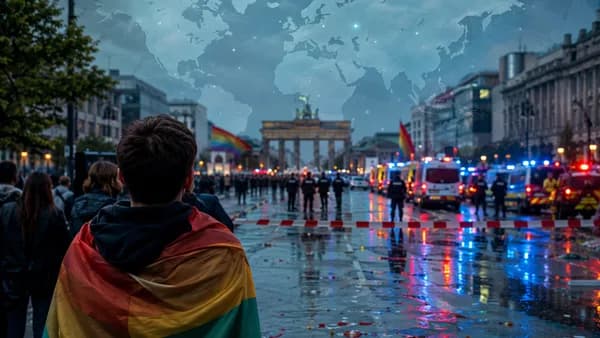
1 Dead as Berlin Pride Ramming Attack Triggers Manhunt
One woman is dead, 16 are injured, and Berlin police are searching for a 21-year-old suspect after the Pride ramming.
Jul 26, 20268 min
 Future Fiction
The Night the Grid Became Weather
In 2047, orbital microwave relays and compact fusion plants make clean energy abundant enough to beam across continents like a public forecast. Laleh Nouri, once a negotiator for a petrostate, is sent to a coastal city in Kenya where free power has transformed daily life—but also upended old alliances, cultural rhythms, and the meaning of sovereignty.
Jul 26, 202613 min
 Technology
Console-Free Amazon Luna Hits Prime Video on Fire TV
Amazon is folding Luna into Prime Video, betting Fire TV users will try console-free games beside shows, movies, and sports.
Jul 26, 20268 min
 SaaS & Tools
Tiny Missions Attack Doomscrolling Inside MeBeMe App
MeBeMe tries to beat doomscrolling with identity-based missions, not lockouts. Timing will decide if the idea sticks.
Jul 26, 20266 min
Don't miss the signal
Get our weekly roundup of the stories that matter across tech, fintech, and trading. No noise, just signal.
Free forever. No spam. Unsubscribe anytime.