The Ink of Ceres
A data-trader on the rim of the solar system finds the lost meaning of "home" in forgotten transmission archives.
Archive Run
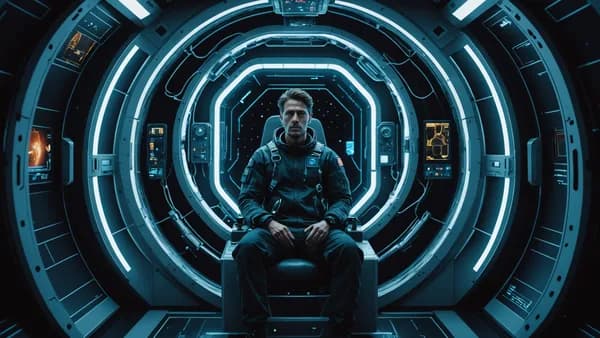
Corbin floats, a pale fish suspended in the silent, liquid darkness of the Massive Archive. His fingers dance across the haptic interface, scrolling through a river of light. On the curved screen before him, a century-old Earth sunset bleeds orange and purple over a city of glass and steel, the feed glitched with the digital cancers of time. The audio whispers fragmented pop songs and the roar of combustion engines. He tags the file: *SUNSET_DRIVE_META_ERA. High emotional resonance. 87% salable.*
This is his trade. He is a Depth-Scroller. The massive spindles of the Ceres Archival Vaults, kilometers long and humming with coolant, hold the digital corpse of Old Earth. Corbin’s job is the autopsy, extracting marrow, the nostalgia, to sell. Belt miners pay a premium for campfire cooking ASMR. Martian socialites, three generations removed from any real dirt, buy datasets of birdsong and rain on leaves for their meditation pods.
He’s the best at it. He has a feel for the ache. But the taste of his own recycled air, tinged with the ever-present tang of machine oil and hydroponic greens, feels especially thin tonight. These fragments of a living world are just data, a commodity. His life is corridors, bulkheads, and the faint, constant vibration of Ceres Station's rotation. He harvests ghosts for a living, and their vivid, chaotic hauntings only deepen the quiet void within his own chest.
"Another 20th-century sports riot, Corbin?" A voice crackles in his earpiece. It’s Lira, his channel manager. "The terraforming consortium on Titan wants more ‘primordial vigor’ imagery. They want to feel like pioneers."
Corbin mutes the feed. The riot’s roar dies. "I’ll package the aggression," he says, his voice flat. "Add some commentary on tribal unity. They’ll eat it up."
He drifts back to the console. *So efficient*, he thinks, not with pride, but with a cold, familiar cynicism. He is the ultimate middleman, selling a sanitized, consumable past to a present that has no past of its own. Just a long, pragmatic chain of survival, extending out here into the cold. He pulls the next data-skein, a stream of forgotten social media. Happy faces, pet photos, petty dramas. All dead. All for sale.
The Verity Cache
It starts as a statistical blip, a tiny stutter in his scavenger algorithms. A data-packet, buried under layers of defunct telecommunications protocols from the early Mars missions. Its encryption is archaic, but intact. The registry is blank. No owner-ID, no mission label. Just a timestamp screaming with the static of a dying signal: *Sol date: 15.08.2042.*
Intrigued, not by profit but by professional annoyance at the anomaly, Corbin coaxes the packet into his decryption sandbox. The files are badly corrupted, webbed with data-rot. He has to rebuild them frame by agonizing frame. What emerges is not mission telemetry or a captain’s log.
It’s a face. A woman, her skin leached of color by harsh LED lighting, her hair floating in the microgravity of a hab module. She isn’t speaking to history. She’s speaking to a screen, her eyes tired, her smile fragile.
"...Jiaxing managed to get a potato to flower today. A flower, Can you believe it? We put it in the center of the mess. It’s stupid, I know. But we had a little party. We sang... badly." She laughs, a soft, wet sound. The timestamp on her feed places this three weeks before the official "catastrophic, unforeseen system cascade" that silenced the Ares-1 colony forever.

Corbin’s breath stills. He scrolls. Another file: a man, younger, his hands trembling slightly. "The CO2 scrubbers are singing a new tune. A high-pitched whine. Engineering says it’s within parameters. They always say that." He looks over his shoulder, then leans closer. "Lydia thinks we should... we should start recording. For after. But there is no ‘after’ here. Only now."
*For after.* Corbin feels a chill that has nothing to do with the vault’s temperature. The official histories, the corporate-sponsored documentaries, they speak of "tragic accident," "heroic sacrifice," "the price of progress." This is none of those things. This is the sound of people, not pioneers, feeling the air grow thin around them. This is the quiet desperation in a joke about bad singing. This is a truth, raw and unvarnished, bleeding through the static of a hundred years.
Unsanctioned Broadcasts
The voices follow Corbin out of the vaults. He hears them in the hiss of the air-scrubbers, sees their faces in the condensation on his cabin’s cold viewport. He starts curating them in secret, late-cycle, fueled by cheap station synth-caf and a strange, gnawing sense of duty. He anonymizes the source, calls the feed "Ghosts of Ares," and begins leaking snippets onto the system-wide data-nets. A thirty-second clip of the woman, Lydia, describing the Martian sunrise as a "dull, dusty pink, like a sick rose." A ten-second audio fragment of the man, Jiaxing, humming to his potato plant.
He expects a flicker of historical interest, maybe a footnote on a specialist forum.
He unleashes a storm.
The response is not measured. It is visceral. On the Belt comm-channels, miners in their rugged crawlers replay the clip of Lydia’s laugh. "She sounds like my aunt," one writes, a message tagged from the Pallas orbital smelter. "Stubborn. Loving something that’s dying." On Mars, in the gleaming bio-domes of New Shanghai, students project Jiaxing’s potato flower onto public walls, surrounding it with real, living blossoms. The "Ghosts" resonate because they are not heroes on a pedestal. They are people who were scared, who made bad jokes, who found beauty in a sterile environment. They are every Belter counting down their air, every Martian feeling the psychic weight of an entire world’s sky.
A movement congeals around the leaks. They call themselves "Verity-touched." They aren’t just consuming history; they are conversing with it. Art blooms: symphonies incorporating the whine of the failing scrubbers, holosculptures of the Ares-1 hab rendered not as a museum piece, but as a lived-in, cluttered home. Corbin watches it all from the shadows, his heart pounding with a rhythm he doesn’t recognize. It feels like connection. It feels like absolution. For the first time, he is not selling nostalgia. He is sharing a heartbeat.
Vaults of Living Memory
The corporate summons is not a request. The office of the Archival Overseer is all sleek titanium and silent gravity, a stark contrast to the chaotic, emotional tide Corbin has helped release.
Overseer Valerius does not float. She sits, anchored to her desk by Ceres-standard gravity, a woman carved from ice and pragmatism. "The ‘Ghosts of Ares,’" she states, her voice devoid of the static that made Lydia’s so human. "A fascinating cultural phenomenon. And a problem. The Ares-1 narrative is a cornerstone of modern foundation mythos. It is a controlled burn. What you have exhumed... is a wildfire."
She offers him a deal. A transaction. He surrenders the complete, uncorrupted Verity Cache. In return, he receives a staggering sum in credit-scrip and a one-way ticket to the luxury resorts of the Saturnian Torus. A life of curated comfort, far from the grit of the archives.
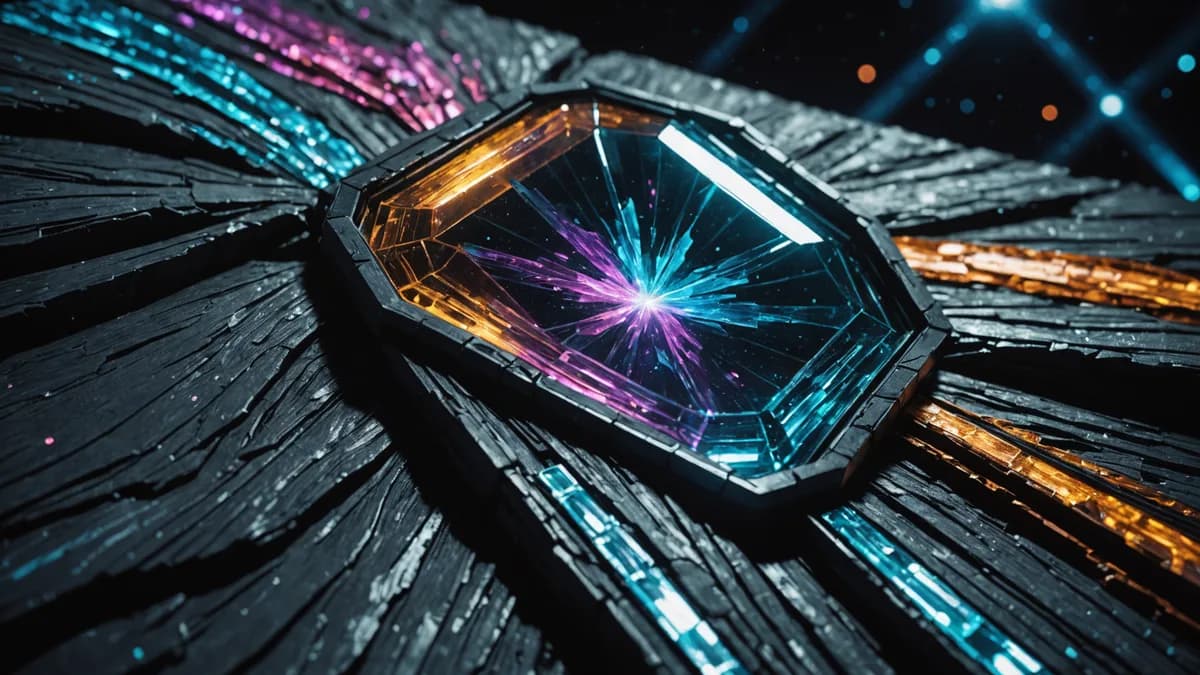
"The truth is messy, Corbin," Valerius says, not unkindly. "It is inefficient. Our society is built on efficiency. On the orderly progression from Old Earth, to the Stations, to the system-wide now. These... frightened whispers. They disrupt the narrative. They make people question." She leans forward. "Sell us the cache. Let us quietly integrate what is useful, bury what is not. You retire a wealthy man. Everyone wins."
Corbin looks past her, through the viewport, to the star-dusted blackness. He thinks of Lydia’s determined smile, of the high-pitched whine in the recording that wasn’t just a machine sound, but the sound of hope’s thin edge fraying. He thinks of the Belters who heard their own families in those voices, of the Martians who saw real pioneers, not polished statues.
A fortune, or a truth. A private paradise, or a shared, fractured, beautiful heritage. He has spent his life trading in dead memories. Now he holds living ones in his hand. To sell them would be the final, most hollow transaction of his career. He would be turning a home into a hotel suite.
Ink Stains the Stars
Three solar days later, a priority alert shivers through every connected device in the Ceres quadrant, then ripples outward to Mars, the Belt, and beyond. It is a simple data-burst, origin point masked by a labyrinth of relays deep in the asteroid belt. It contains one file: **VERITY_CACHE_COMPLETE.**
With it is a plaintext message: *"History is not a product. It is a bloodstream. Here is ours. Unfiltered. Use it well."*
Corbin watches the unleashing from the cramped cabin of a stolen maintenance skiff, drifting in the blind spot of a nickel-iron asteroid. He sees the cache propagate, a virus of truth against the firewalls of sanctioned history. He knows Valerius’s people are scrambling to contain it, to copyright-strike it into oblivion. But it is too late. The ink is already spilled.
The impact is slow, then seismic. The "Verity Transcripts" cease to be a clandestine feed and become a public text, a new Old Testament for a people of the void. On Ceres itself, the Archive workers stage a slow-down, demanding the Vaults be renamed the "Halls of Testimony." On Mars, the anniversary of the Ares-1 silence is no longer a Day of Somber Reflection, but a Festival of Echoes, where people read the colonists’ last messages aloud under the rusty sky.
Corbin, the outlaw-curator, will never walk in a real forest, or feel planetary rain. His home is the fugitive’s path, a succession of false IDs and damp hideouts in the rocks. But he is not hollow. He listens to the new music composed from his ghosts, reads the poetry seeded by their fear and their love of a single flower. He sees a generation, born among stars and steel, finally learning to mourn not just a tragedy, but a family they never knew they had.
He does not give them a neat heritage. He gives them a real one, with blood under the nails and whispers in the ductwork. He is no longer a Depth-Scroller mining for saleable artifacts. He has become something else: the keeper of a fragile, beautiful, and profoundly human flame, burning now in the dark heart of a thousand stations, a reminder that before we built futures, we were simply people, trying to breathe, trying to love, leaving messy, indelible stains across the silent stars. The story isn't over. It has just begun to be told truthfully.