The Orchard That Voted Back
In 2068, a refugee agronomist joins a borderless digital nation where trees earn income, citizens are temporary, and the budget has a conscience.
1. A Passport Made of Commitments
Mina Sayegh keeps her old Lebanese orchard key on a blue string around her neck, though there is no door left for it to open. The coastal province where her family grew citrus is now a shallow, glittering extension of the sea. On calm days, satellite images show the tops of drowned windbreaks beneath the water like dark ribs.
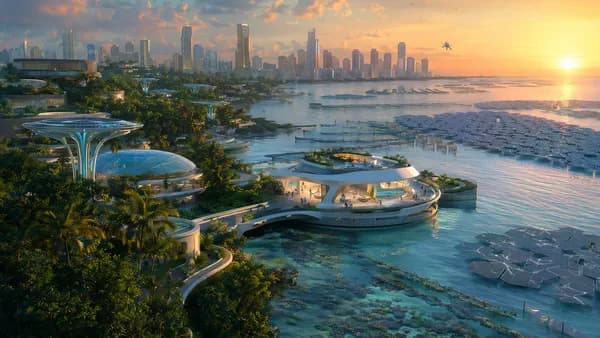
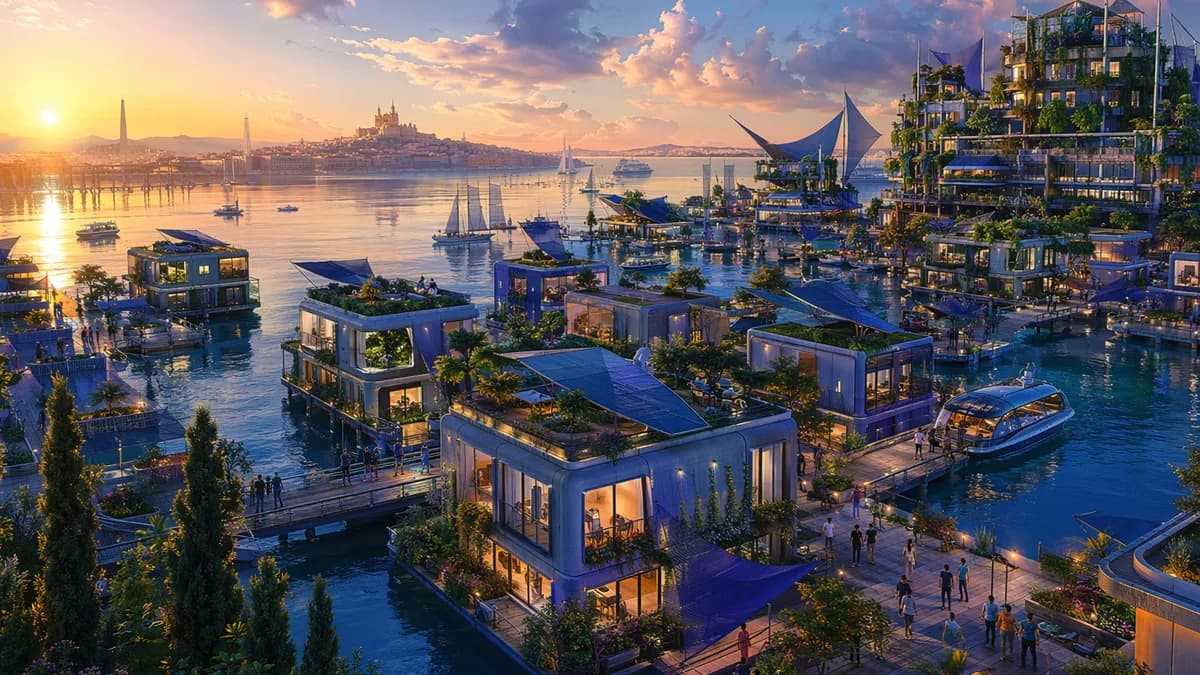
She lives in Relocation Raft 17, outside Marseille, a floating district of white composite decks, algae glass, rain nets, and gardens stacked in towers. In the mornings, municipal kitchens breathe out the smell of lentils, basil, yeast bread, and synthetic coffee. Children run barefoot over warm planks, their school slates flashing with lessons in six languages. No one goes hungry here. Water arrives clean from the desalination spine. Shelter expands when families do. Clinics hum through the night.
Survival, Mina learns, is no longer the prize.
People compete for invitations to build things that matter. A berth on a canal restoration crew. A voice in harbor design. A place in the memory archives. A square meter of real soil. Influence moves through the district like weather, felt in who gets asked to join, who gets heard, who is trusted with tools.
At forty-nine, Mina has food, a sleeping pod with a round window, and access to every course the city offers. Still, she feels like a ghost at the edge of other people’s futures.
One evening, while gulls scream over the waste-heat chimneys, her neighbor Tomas leans over the railing with a bowl of figs.
“You’re staring at that application again,” he says.
Mina looks down at the slate in her hands. Root’s symbol pulses there, not a flag, not a crest, just branching lines like veins or rivers.
“It asks for promises,” she says.
“Most nations ask for obedience.”
“This one asks what damage I can repair.”
Root is a borderless digital nation, if nation is still the right word. Citizenship is not inherited or bought. It is leased through contribution, renewed through proof. Plant wetlands, audit public code, host refugees, restore coral, teach soil chemistry, resolve disputes. Root does not ask where Mina is from. It asks what she has cared for, what she has lost, and what she is willing to be accountable to.
She uploads old orchard maps, agronomy certificates, flood records, the seed catalog she saved when her brother told her to pack only medicine and papers. Last, she records a commitment in her own voice.
“I know trees,” she says, hearing the tremor in it. “I know patience. I know what happens when water rises slowly and everyone calls it temporary. I offer my labor to systems that remember longer than governments.”
The application absorbs her words. Outside, the raft rocks gently on black water. Somewhere below, fish gather around the artificial reef bolted to the city’s underside.
By morning, Root answers with a provisional passport made not of paper, but obligations.
2. The Treasury Under the Trees
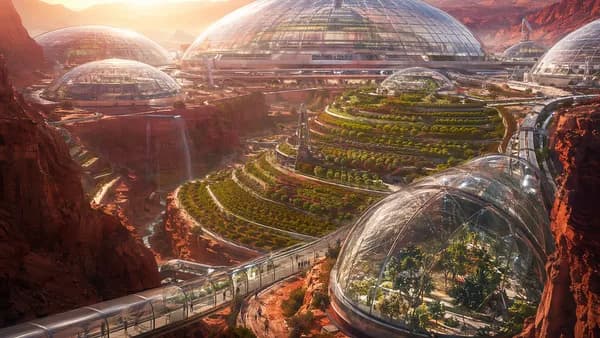
Lattice Orchard grows where factories once stamped car doors and battery casings in the dry interior of Spain. Mina arrives by solar tram at dawn, stepping into air that smells of clay dust, rosemary, wet bark, and something metallic left over from the old century. The factory shells remain beyond the terraces, their roofs opened to sky, their walls furred with moss and swallow nests.
The orchard is not rows. It is a woven thing. Chestnut, plum, almond, fig, carob, and nitrogen-fixing acacia grow in linked bands along contour ridges. Beneath them spread herbs, mushrooms, berry thickets, water channels, and mycelial mats seeded with sensors fine as eyelashes. Pollinator drones drift between blossoms with the lazy grace of bees, their wings making a soft glassy buzz. Real bees work beside them, thick and golden in the morning light.
Root assigns Mina a caretaker contract for one growing cycle. The contract glows on her wrist cuff, translating the orchard into obligations, access rights, and warnings. Soil moisture. Carbon capture. Fruit forecasts. Nesting activity. Fungal density. Local employment. Treaty obligations to the nearby village of San Rui. Seed library tithe. Disaster reserve.
An orchard child appears beside her, though he is probably twenty-two, with silver rings in both ears and dirt under his nails.
“You’re Mina Sayegh,” he says. “The citrus woman.”
“I was,” she says.
“I’m Iker. The trees have been expecting you.”
She laughs because she thinks he is joking. Then he points to a public ledger pillar beside the path. Its surface shimmers with live entries.
A storm in April has increased water debt to the lower terraces. A hoopoe nesting pair has shifted the pesticide prohibition index. Plum futures from the eastern slope have funded three roof repairs in San Rui. Excess carbon credits have flowed into a firebreak cooperative in Greece. A rare fungal bloom has released a bonus payment to the regional seed library. Every line is visible. Every line can be challenged.
Mina touches the pillar. It is warm from the sun.
“Who owns the yield?” she asks.
Iker shrugs. “Depends what you mean by own.”
The orchard sells fruit, shade rights, carbon sequestration, climate data, medicinal compounds, compost cultures, and resilience insurance. But the income does not climb toward a distant shareholder. It branches. Caretakers receive enough to live with dignity. Neighboring communities receive claims because the aquifer and pollinators cross human boundaries. Seed libraries receive tithes because ancestry has value. Disaster funds receive a share because the future is always present in Root’s accounting.
That afternoon, Mina picks a plum from a low branch. Its skin is dusky purple, cool under her thumb. When she bites, juice runs down her wrist, and somewhere in the ledger a tiny transaction clears.
She stares at the fruit, unsettled.
In the old economy, numbers had floated above life like smoke. Here, the budget has pulp, birdsong, rot, thirst. A plum is not just a plum. It is a vote of rain, labor, fungal appetite, and sunlight.
Mina wipes juice from her palm and feels, for the first time in years, that money might be made to kneel.
3. Citizens for a Season
Root does not give Mina one vote. It gives her a changing weather of votes.
For orchard matters, her lived expertise grants weight. For local housing near San Rui, her voice counts less than the residents who hear the trucks at night and smell the compost vats in summer. For seed preservation, her saved citrus catalog strengthens her claim. For budget ethics, she is only one citizen among many, temporary as a leaf.
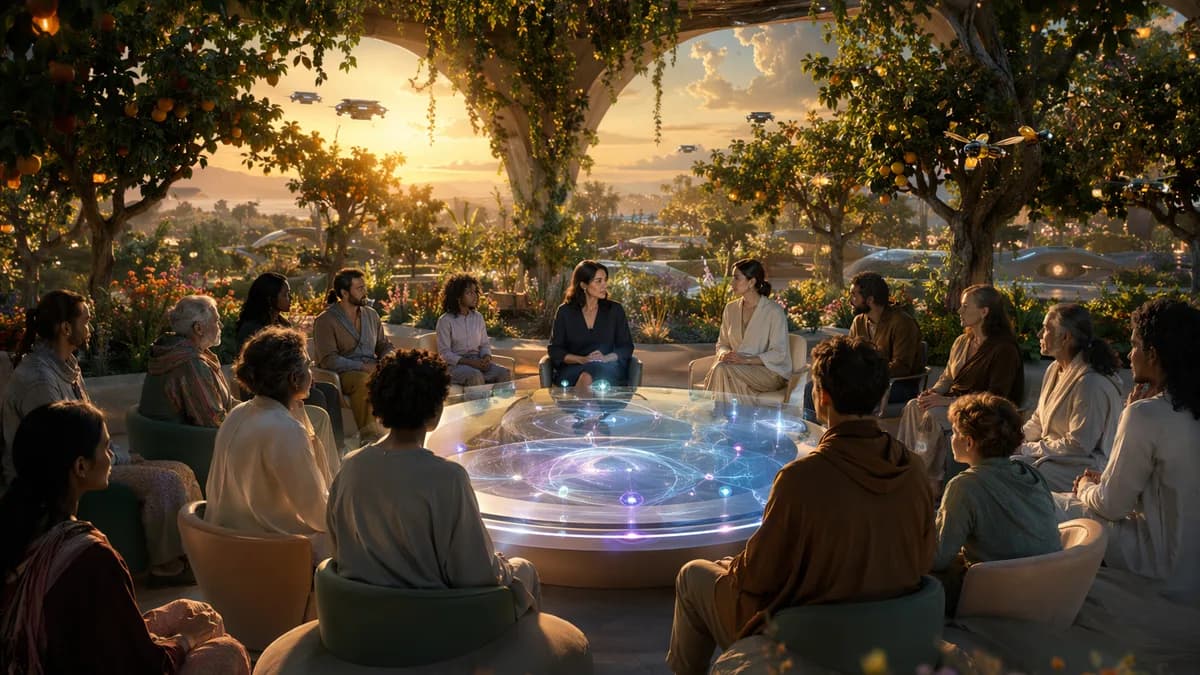
The deliberation circle meets inside the old factory canteen, where vines crawl through broken roof beams and sunlight falls in green squares across the floor. A translation mesh hangs in the air, murmuring softly as people speak.
There is Laleh, sixteen, born during the evacuation of Basra, hair shaved close except for a blue braid at her temple. She represents mobile youth apprentices in Root.
“If surplus always goes into land,” Laleh says, tapping her knuckles on the table, “people like me are told to wait forever. We need purpose stipends now. Care work, language work, grief work. Not everything is a seed vault.”
Opposite her sits Jun Valdez, once a banker in Manila, now a ritual facilitator who opens budget meetings by asking participants to name the dead affected by their decisions. He wears a linen jacket patched at the elbows.
“I spent thirty years making harm look profitable,” Jun says. “I support the stipend. But only if it is tied to witnessed care, not performance theater.”
An AI auditor speaks through a ceramic speaker shaped like a small owl. Its name is Cato, and it is trained on failed constitutions, collapsed cooperatives, corrupted land trusts, and budget frauds from four continents.
“Warning,” Cato says in a calm voice. “All three proposals contain historical failure patterns.”
The village elder, Pilar Navas of San Rui, snorts. Her hands are broad, brown, and swollen at the joints.
“The owl insults everyone equally. Very democratic.”
Mina smiles despite herself.
Pilar wants the surplus for housing. San Rui’s young people live three families to a building while international caretakers arrive with stipends and sleeping pods. Laleh wants a universal purpose stipend for unpriced care. Jun wants grief workers, translators, hospice companions, and conflict mediators funded before another vault is dug into a mountain. Others argue for global seed banks after last year’s fungal blight in North Africa.
Mina listens until her throat tightens. Each argument is right. That is the cruelty of abundance. No one in the room is choosing between bread and medicine. They are choosing which future deserves shape first.
Cato projects the budget above the table. Lines of light branch, recombine, narrow.
“Lattice Orchard surplus exceeds forecasts by thirty-two percent,” it says. “Human allocation pathways viable. Moral consensus unlikely but possible.”
Pilar leans toward Mina. “You know trees. Tell us. What would you feed first?”
Mina thinks of drowned roots. Of oranges splitting under saltwater. Of children on the raft learning to graft tomatoes before they learn old national anthems.
“I would feed what feeds the rest,” she says.
“Convenient,” Laleh says. “That sounds like everyone’s slogan.”
Before Mina can answer, the factory lights dim. Outside, the orchard’s sensor bells begin to chime, one after another, delicate and cold.
4. When the Grove Objects
The first chime comes from the mycelial grid beneath the chestnuts. The second from the western water channels. The third from pollinator traffic, nesting density, soil carbon volatility, root stress, leaf sugar imbalance. On the public wall, the orchard’s ecological oracle opens like a red flower.
CONSTITUTIONAL PAUSE TRIGGERED.
No one speaks for several seconds. Rain begins, sudden and hard, drumming on the broken roof panels. The smell of wet dust rises through the canteen.
Cato’s ceramic owl eyes glow blue.
“Lattice Orchard indicates proposed surplus extraction scenarios reduce soil resilience probability by eighteen percent within seven years,” it says. “Primary risks, drought clustering, overharvest incentives, fungal network thinning, pollinator displacement. Ecosystem stakeholder representation activated.”
Pilar stands so fast her chair scrapes the floor. “We have families in moldy rooms.”
Laleh folds her arms. “And care workers burning out.”
Jun closes his eyes. “And the grove says, not like this.”
“The grove does not say,” Pilar snaps. “Machines say.”
Mina looks through the open wall at the trees bending under rain. Drops bead along branches. Drone wings tuck themselves into charging alcoves. Real bees vanish into bark hives. The orchard seems silent, but the ledger is racing, millions of small readings pouring into public view.
Root recognizes ecosystems as represented stakeholders, not as romantic spirits but as living infrastructures with claims against human appetite. Rivers can trigger audits. Wetlands can block development. Forests can demand rest through advocates trained to translate data into legal pressure.
A planetary mediation market opens within minutes. Advocates appear on the wall from Quito, Lagos, Jakarta, Helsinki. They do not bid money. Money is too easy. They bid binding restoration commitments.
A soil cooperative in Morocco offers drought modeling in exchange for reduced plum extraction. A housing guild in Naples offers to build San Rui homes using low-surplus materials if the orchard funds only foundations this year. A seed vault network offers to delay its claim and send disease-resistant rootstock. Care circles across Root pledge hours to Laleh’s stipend network if the cash draw is lowered.
The room fills with voices, rain, translation whispers, and the faint hum of servers under the floor.
Mina feels anger rise in her, surprising and hot. Must even generosity pass through another gate? Must every human wound wait for soil charts?
Then she remembers the old coast. The meetings where men in pressed shirts called salinity manageable. The loans taken against future harvests. The pumps installed too late. The way the trees died from the roots up, leaves still shining green while the underground world failed.
Post-scarcity, she thinks, has not ended scarcity. It has made the remaining scarcities harder to touch. Attention. Patience. Responsibility. The willingness to let a good plan become smaller because the living ground cannot carry it yet.
Pilar sits down slowly. Her eyes shine, though whether from rage or grief Mina cannot tell.
“So,” the elder says, voice rough. “The orchard gets a lawyer.”
Mina watches rain run down the ledger wall.
“No,” she says. “The orchard gets a memory longer than ours.”
5. The Dividend of Refusal
The proposal comes to Mina before dawn, while she is walking the lower terraces with mud sucking at her boots. The rain has passed. Mist hangs among the trees, thick and silver. Somewhere a hoopoe calls, hollow and fluting. The soil smells alive, fungal and dark, like bread before baking.
She stops beside a young carob tree and says aloud, “What if not taking is also work?”
Her wrist cuff records the sentence. By breakfast, it becomes a draft. By noon, it becomes a joke.
“A refusal dividend?” Laleh says, laughing through a mouthful of flatbread. “So we pay people for doing nothing?”
“Not nothing,” Mina says. “For restraint. For leaving yield unclaimed when claiming it weakens the system.”
Pilar shakes her head. “Try telling a family in one room that restraint is wealth.”
“I will,” Mina says softly. “If the alternative is giving them a house built on the next collapse.”
The circle reconvenes under the factory vines. Mina’s proposal is simple enough for a child and dangerous enough to disturb everyone. Lattice Orchard will calculate a sustainable surplus band. Any productive capacity above immediate need but below ecological risk can be deliberately left unused. The value of that refusal is not erased. It becomes a dividend paid to the communities that accept delay, redesign, smaller harvests, slower housing, fewer exports, less prestige.
Refusal earns income because it preserves future abundance.
Jun leans back, eyes narrowed. “A ritual for saying enough.”
“A financial instrument,” Mina says. “With teeth.”
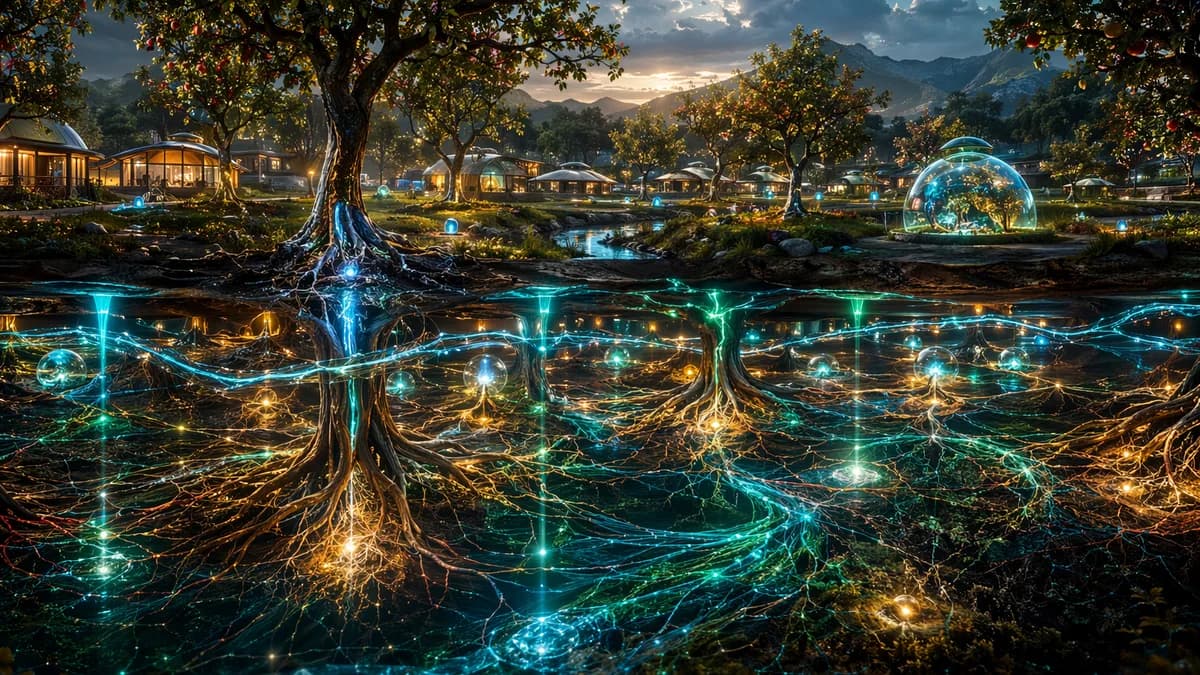
Cato processes the model in silence. On the wall, old graphs bloom, fisheries, forests, aquifers, housing bubbles, carbon markets, sovereign debt.
“Historical analysis supports premise,” the AI says at last. “Previous economic failures frequently priced extraction, acceleration, and conversion. They failed to price wise abstention except through moral language, which proved vulnerable under stress.”
Laleh stops smiling.
Cato continues. “A refusal dividend may reduce false urgency, compensate delayed beneficiaries, and create reputational advantage for restraint. Risks include fraudulent underproduction, elite capture of patience narratives, and romanticization of poverty.”
“Always with the poison in the honey,” Jun murmurs.
“Accuracy is not poison,” Cato says.
The debate lasts three days. People argue under solar lamps, over lentil stew, beside irrigation channels. San Rui demands guaranteed housing phases. Care workers demand that delayed money not become invisible again. Seed libraries demand minimum protection. The orchard advocates demand soil resilience thresholds written into code, not poetry.
Mina barely sleeps. Her hands ache for pruning she is too tired to do.
At the final vote, Root’s temporary citizens cast signals from rafts, villages, trains, clinics, repair ships, and forest camps. The orchard’s data stream stands beside them, not above them, not beneath them. A hybrid budget emerges.
People receive claims. Places receive claims. Ecological systems receive claims. Some surplus flows now to housing foundations, care stipends, and seed protection. Some becomes refusal dividend, paid because Lattice Orchard is allowed to keep strength in its roots.
When approval passes, there is no cheering at first. Only exhalation.
Pilar finds Mina outside among the wet trees.
“My granddaughter may wait another year for her own room,” she says.
Mina lowers her eyes. “I know.”
Pilar takes Mina’s muddy hand. Her grip is fierce.
“Then you come help build it,” she says. “Slowly, if your trees insist.”
6. A Nation Without a Flagpole
Years later, Mina returns to Relocation Raft 17 with gray in her hair, soil in the cracks of her palms, and no passport anyone can stamp.
The raft has grown into a floating archipelago. Bridges flex between platforms. Kelp farms sway in the green water below. Laundry snaps from balcony rails. The air smells of salt, frying garlic, ozone from the tram lines, and the sweet rot of compost digesters. The municipal abundance systems still provide food, water, shelter, clinics, lessons. Children still run barefoot over warm planks.
But the questions have changed.
In the learning dome, Mina watches a class of ten-year-olds read a public ledger projected across the ceiling. It looks like weather, bands of color moving over maps of orchards, reefs, housing cooperatives, care networks, flood barriers, seed vaults.
A boy with missing front teeth points up. “Why did the Marseille roof guild refuse the extra polymer credits?”
His teacher smiles. “Ask the ledger.”
A girl answers before the system can. “Because the heat island index rose. If they built faster, the district would need more cooling later.”
“So what did they receive?”
“A refusal dividend,” the class chants, bored and proud.
Mina laughs, and the sound catches in her throat.
Tomas, older now, thinner, still leaning on railings as if born there, brings her figs in a chipped bowl.
“You joined a nation made of chores,” he says.
“I joined three times,” Mina says. “Left twice. Returned once.”
“Do you belong to it?”
She looks at her wrist, where Root’s current commitments glow faintly. Orchard mentor. Soil witness. Mediation juror. Flood archive contributor. None are permanent. All can be lost. All must be renewed.
“I belong with it,” she says. “That is harder.”
She has no conventional bank account. Her income arrives as caretaker shares, teaching credits, elder stipends, and dividends from refusals she helped negotiate years ago. She has no fixed citizenship, only civic seasons. Yet she carries more belonging than she ever felt under the flag that failed to hold back the sea.
At sunset, the children gather around her on the deck and ask about Lattice Orchard.
“Are the trees rich?” one asks.
Mina considers the word. On her slate, a live image opens from Spain. The orchard is in bloom. Almond flowers blush white and pink against dark branches. Pollinator drones drift like sparks. Bees thicken the air. The old factory walls are almost hidden by green. Beneath the soil, unseen fungi trade sugars and warnings. On the ledger, the orchard’s surplus glows modestly, deliberately smaller than it could be.
“Yes,” Mina says. “But not because they produce endlessly.”
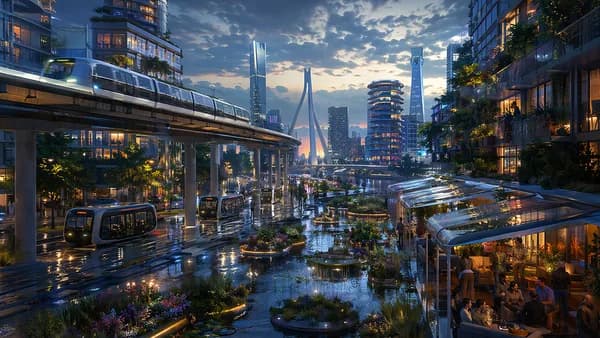
The children wait. Waves slap softly against the raft. Far off, Marseille shines on the horizon, its towers mirrored in the black water.
“They are rich because they know what to keep.”
No one speaks for a while. Above them, the public ledger shifts like cloud cover, showing debts paid, promises pending, harvests delayed, care witnessed, extraction refused. Mina feels the old key against her chest, warmed by her skin, useless and beloved.
In Spain, petals loosen from Lattice Orchard and fall onto soil that has been allowed to rest. Somewhere in Root’s budget, nothing happens, and that nothing begins to earn.