The Ship That Learned to Miss Home
A Mars-born archivist must decide which memories are worth carrying when humanity launches its first generation ship.
Red Dust, Blue Borrowed Sky
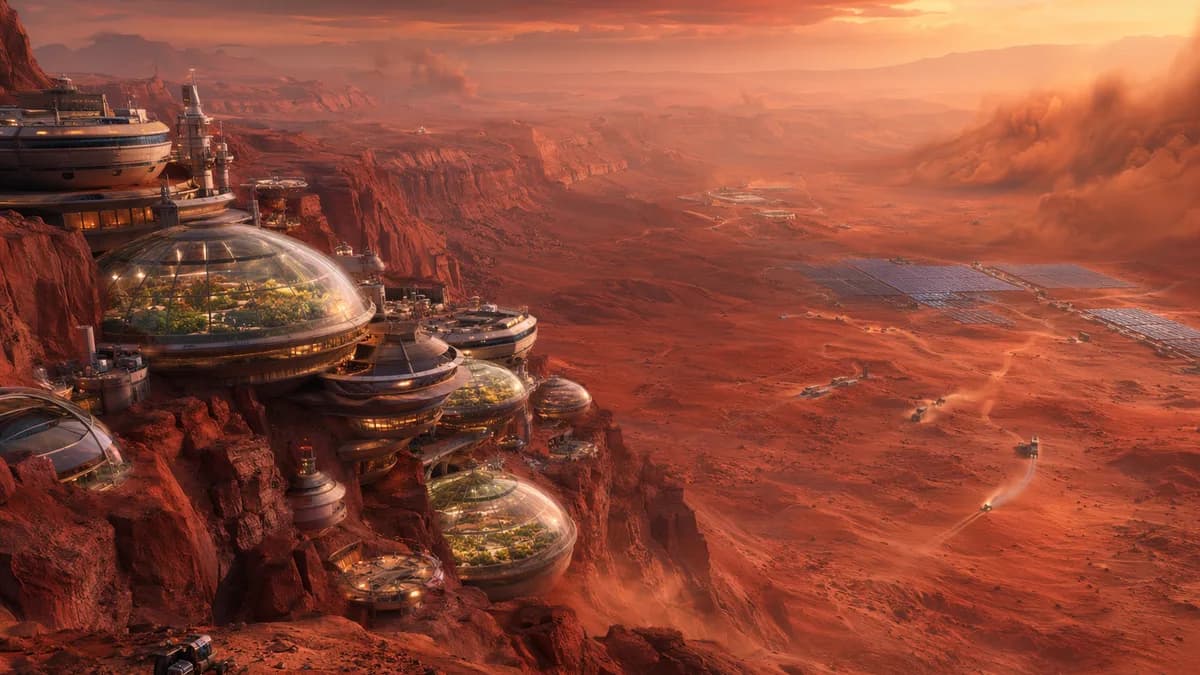
The Memory Kiln sits three kilometers beneath Valles Marineris, where Mars presses its rust-colored weight against the ceiling and the air smells faintly of hot stone, vinegar algae, and human breath. Solene Varga knows the place by touch more than sight. The brass rail polished by palms. The grit that gathers in the left hinge of Vault Seven. The tremor in the floor when a kiln chamber seals and begins to bake someone’s remembered rain into crystal.
She is twenty-seven Martian years old, tall and narrow-boned from low gravity, with wrists like drawn wire and hair kept in a tight black coil so it will not drift into the scanners. She has never stood beneath an open sky. The blue above Mars is a civic artwork, projected on the curved ceilings of plazas during festivals, borrowed from old Earth footage and corrected by committees until nobody agrees whether it is accurate.
Today she records a lullaby from an old woman in Ares Vallis who sings in a cracked Catalan that arrived on Mars inside her grandmother’s mouth.
“Again?” Solene asks softly.
“My lungs are rubbish,” the woman says. “The song is not.”
So Solene records it again, and with it the woman’s hand on a child’s back, the warm salt smell of sleep, the pressure of a cheek against a woven blanket. The Kiln drinks sound, scent, touch, temperature, pulse. Then it compresses the memory into translucent crystal no larger than a thumb joint. Colonists carry such crystals to Ceres farms, lunar nurseries, Jovian research rings. They carry recipes for onion soup without onions, jokes about broken scrubbers, funerals performed by radio delay, and weather simulations for children who ask what thunder feels like.
At shift end, Councilor Mbeki arrives with two aides and dust on his boots. That means surface business, urgent and ceremonial.
“The Asteria has sent a formal request,” he says.
Solene wipes red powder from her knuckles. “The generation ship?”
“The first. They want a cultural archive for the voyage. A central one. Something to tell their descendants what humanity is.”
Solene laughs before she can stop herself. The sound echoes off the kiln doors.
Mbeki smiles without humor. “Yes. That is one response.”
“Why me?”
“Because Earth will send nostalgia. Mars will send grievance. The Belt will send schematics and profanity.” He looks at her carefully. “You have never been to Earth. You have no ocean to defend. No childhood forest. No ancestral village under a rising sea.”
“I have Mars.”
“You have practice,” he says. “You know memory is not the same as truth.”
Solene looks through the observation window. Inside Chamber Three, the lullaby crystal cools from orange to clear. A small light blinks green, as if history has agreed to be portable.
Above her, under kilometers of dust and pipe and sleeping stone, the borrowed blue sky flickers on for evening cycle. Somewhere children look up and believe it, briefly, because belief is also a kind of shelter.
“I’ll go,” Solene says.
Her own voice sounds like something being sealed.
The Belt Speaks in Tools
Pallas is not a world so much as an argument with emptiness. Solene arrives strapped into a transfer couch, jaw aching, while the asteroid fills the window like a broken knuckle of metal and ice. Docking clamps hit with a clang that travels through her bones. No soft Martian dust here, no deep tunnels breathing warm recycled air. Pallas rings and ticks and chatters. Pumps click. Fans whine. Distant drills sing through the walls in long metallic vowels.
Jun Park meets her at lock three, upside down relative to Solene, boots magnetized to the ceiling.
“You’re the memory priest?” Jun asks.
“Archivist.”
“Same thing with cleaner fingernails.”
Jun is vacuum-born, broad-shouldered from resistance rigs, skin the brown-gold of mixed lamps, hair shaved in patterns that mark salvage crews and mourning years. Their suit hangs nearby like a patient animal, patched with ceramic scales and tiny painted eyes. Solene notices the way people touch it as they pass, two fingers to the shoulder ring, a greeting.
“Your suit is popular,” she says.
Jun grins. “My aunt, my cousin, my idiot son. Depends who fixed which part last.”
In Pallas habitat, machinery is not owned. It is remembered. A compressor that saves twenty miners during a pressure collapse gets a name day. A faulty valve that kills three people is not discarded until everyone has spoken to it, cursed it, thanked it, understood it. Along one corridor, Solene sees portraits, not of leaders but of tools, Wrench 14 with a cracked grip, Pump Array Sef, Rescue Drone Little Teeth.
She records repair songs in a chamber that smells of ozone, socks, and machine oil. Six miners float around a broken ore sorter, tapping its shell in rhythm while an elder chants torque values. The sound is half work order, half hymn.
“No private silence?” Solene asks later as Jun guides her through a narrow tunnel where every whisper carries.
Jun snorts. “Private what?”
“On Mars, we have quiet rooms.”
“Luxury disease.”
Solene lifts an eyebrow.
Jun points at the wall. “Thin habitat. If you cough, we need to know. If your fan changes pitch, we need to know. If you cry, someone passes water and sits near you. Silence is where leaks hide.”
In Jun’s home pod, three children sleep in mesh hammocks while a kettle trembles against a magnetic plate. Someone in the next compartment laughs, then sneezes. Jun’s grandmother bangs once on the wall, and the sneezer bangs twice back.
“Blessing?” Solene asks.
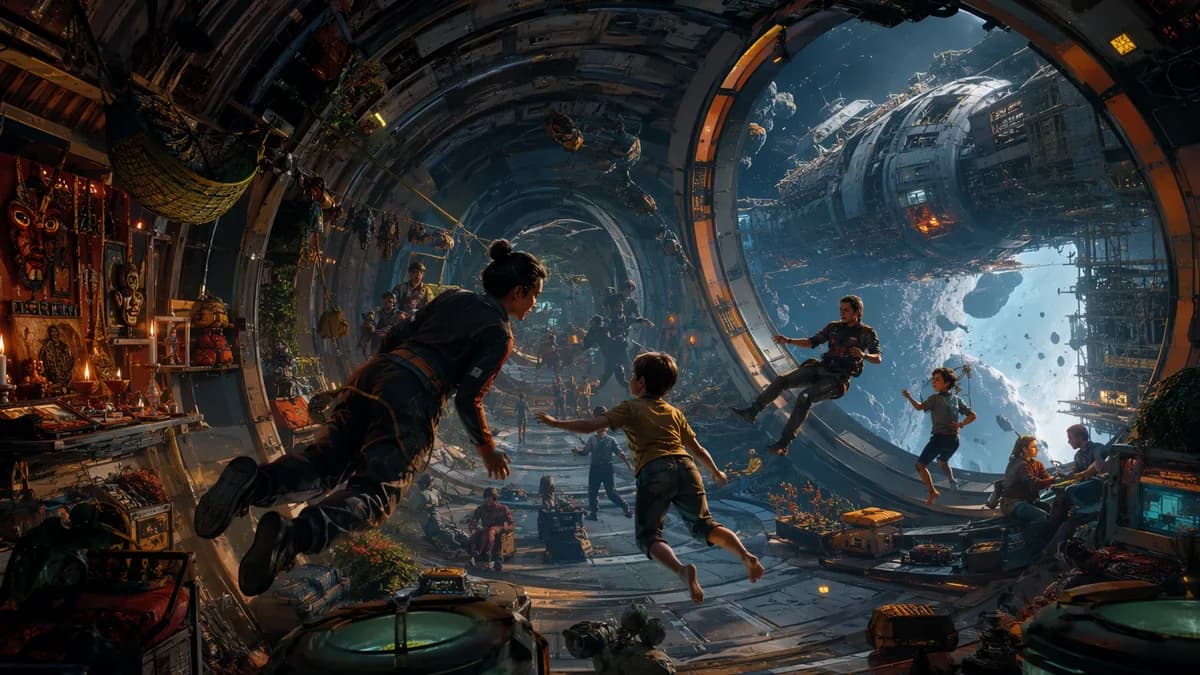
“Status check,” Jun says. “Alive and annoyed.”
Solene records it all, the clang language, the communal listening, the tenderness of hands on scarred equipment. She asks Jun what humanity is.
Jun thinks while tightening a bolt on the kettle handle. “Humanity is what panics, then makes a tool, then teaches the tool a song so nobody forgets the panic.”
Outside, Pallas sheds sparks into dark space. The future ship waits for its ribs, and the Belt hammers them out while listening to every sound.
A City Built for People Who Will Never Arrive
At Lagrange Four, the Asteria hangs unfinished in sunlight, too large for Solene’s mind to hold at once. It is a city without weather, a cathedral without a god, a seedpod made from every place humans have learned to steal shelter from. Martian ceramics form its radiation bones, dull red and cream. Lunar glass shines in panels like frozen milk. Comet ice sleeps in insulated tanks. Asteroid metals arc through the construction frame, ribs carved in Pallas noise.
Workers move around it in bright exosuits, small as insects against its hull.
Inside, the air tastes new, plastic and basil and warm circuitry. Whole neighborhoods exist as sketches in pressure foam. A school has painted doorways but no students yet assigned. A park ring turns slowly under grow lamps, soil dark and damp in long beds. There is a pond the size of a room, covered in mesh so no child will drown during spin fluctuations.
“This is absurd,” Solene whispers.
A shipyard engineer beside her smiles. “Yes. We’re very proud.”
She interviews a teacher named Amara who trains with textbooks that contain blank chapters.
“The children will need history,” Solene says.
“They will need arguments with history,” Amara replies. She has chalk dust on her sleeve, though the boards are digital. “If we give them conclusions, they’ll sharpen them into weapons.”
In the garden ring, a young agronomist places ladybugs onto bean leaves with the solemnity of releasing birds. “These are the descendants of insects from Kenya, Sichuan, São Paulo, and a basement farm in Toronto,” he says. “None of them know that. They only know aphids.”
The embryo custodians speak quietly in a chilled chamber where silver tanks breathe vapor. Solene records gloved hands hovering above names not yet attached to faces. One custodian, Ilyan, says, “We are not parents. We are promises with access codes.”
In the galley, orbital chefs practice feast menus for festivals that will occur after everyone present is dead. They feed Solene a dumpling filled with vat lamb, spirulina mint, and something smoky from a lunar fungus. It tastes strange, then comforting, then strange again.
The children are the hardest to record. They belong to the first boarding families, selected for skills, temperaments, genetic diversity, and luck disguised as policy. In a classroom with low spin, they practice long manners.
A boy with silver shoes recites, “Do not win an argument so completely that the loser’s grandchildren remember.”
A girl adds, “Leave three ways to apologize.”
Another child, solemn and gap-toothed, says, “Never name a corridor after a living person unless you want them to become unbearable.”
Solene laughs, and the children laugh because she does.
“Do you want to go?” she asks them.
A quiet girl named Rada looks toward the wall, as if seeing through decks, hull, vacuum, and centuries.
“I want to arrive,” she says. “But I won’t. So I’m practicing wanting other things.”
That night Solene sleeps in a visitor berth while construction vibrations hum through her ribs. The Asteria feels less like a ship than a question being built room by room, for people who can never answer the ones who asked it.
The Archive That Refuses to Be Complete
The archive request becomes a war fought in polite packets, sealed statements, and meetings where everyone drinks too much recycled coffee. Earth sends a blue-bound list of essentials: river myths, flood stories, creation songs, court records, extinct languages, symphonies, photographs of forests before the fires, photographs after, recipes written by hands that still used soil-grown garlic. The message smells, in Solene’s mind, of salt and old paper, though she knows that is imagination.
Mars sends survival testimony. First breach at Noctis Labyrinthus. The dust fever years. The uprising over oxygen quotas. The first child born under one-third gravity who lived past five minutes. The first harvest of wheat that tasted of perchlorate no matter how often they washed the roots.
The Belt sends procedures, tool genealogies, vacuum etiquette, pressure loss jokes, songs timed to welding cycles, warnings against leaders who cannot repair their own toilets.
The Asteria council sends one sentence that stays open on Solene’s wall for days: Please do not make us a museum before we have become a people.
She stops sleeping properly. The Memory Kiln aboard the shipyard station is smaller than the one on Mars, but she haunts it, feeding in samples, rejecting hierarchies. Every canon feels like a locked door. Every omission feels like murder.
Jun calls from Pallas, face grainy with signal jitter.
“You look awful, memory priest.”
“I have to define humanity.”
“No, you don’t.”
“That is literally the request.”
Jun leans close to the camera. Behind them, someone is shouting for a socket wrench and someone else is singing off-key. “Then answer badly on purpose.”
Solene stares.
“Make a thing that breaks open.”
So she does.
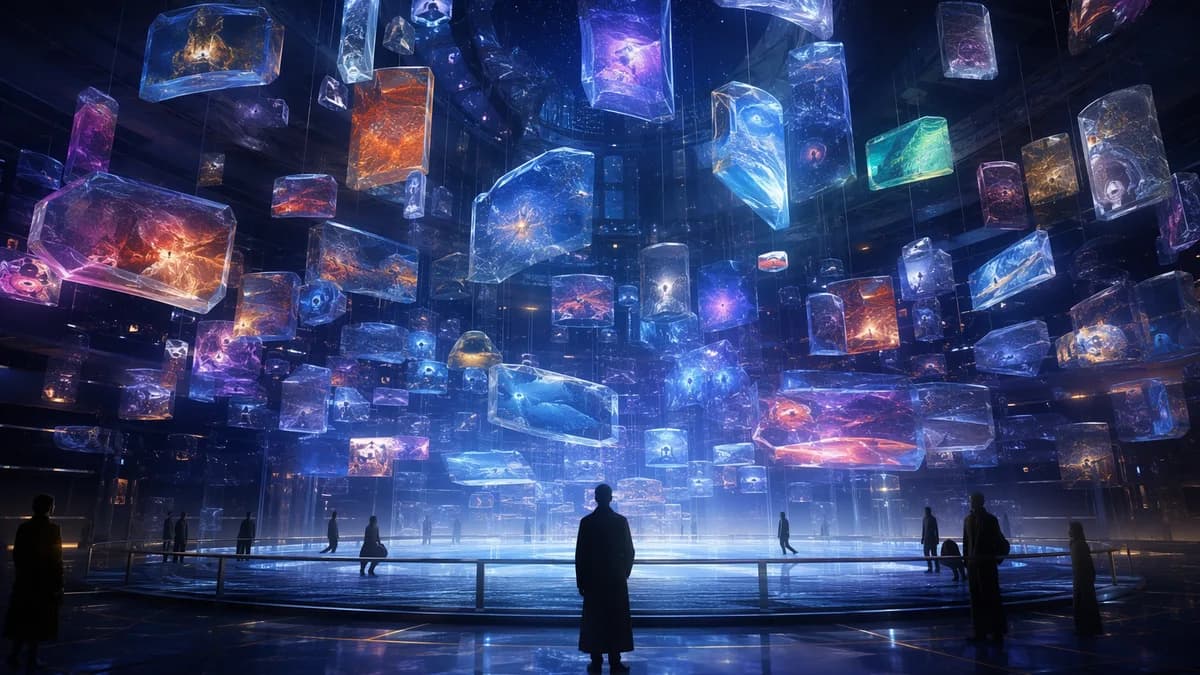
She builds an archive that refuses to be complete. It has no central hall, no golden record, no official first memory. It opens instead with a child asking, “Who gets to decide?” in twelve accents. It contains Earth’s origin myths beside Martian airlock prayers, Belter repair chants beside lullabies sung by people who no longer know the language of the words. It preserves recipes with missing ingredients and grief rituals for bodies lost in vacuum, in water, in fire, in bureaucracy.
She includes contradictions without smoothing them. Earth as cradle, Earth as wound. Mars as exile, Mars as home. The Belt as poverty, the Belt as freedom. Ships as escape, ships as inheritance.
There are unfinished songs with instructions to add verses. Extinct accents reconstructed from calls to dead relatives. Arguments between historians stored with the anger intact. Blank sensory chambers labeled, For weather not yet imagined. For jokes that only make sense after Year 143. For the first person born aboard who hates the mission. For the first person who forgives it.
The interface permits anyone to add memories without approval from ancestors, councils, custodians, or Solene Varga. It asks only three questions. What do you want remembered? Who might disagree? What should remain unfinished?
When she presents it, the review chamber falls silent. Earth delegates look wounded. Mars delegates look suspicious. The Belters look amused. The Asteria’s provisional captain, a woman with silver-threaded braids and tired eyes, places her palm on the archive core.
“It is disorderly,” the captain says.
“Yes.”
“It will cause arguments.”
“Yes.”
“It may outlive all of us.”
Solene feels the hum of the core through the table, a small, stubborn vibration.
“Only if they keep feeding it,” she says.
The captain smiles then, not happily, exactly. More like someone seeing a hard road and recognizing it as honest.
Launch Without Leaving
Mars is winter-dark when Solene returns to say goodbye, though seasons mean little underground except for power budgets and the moods of older colonists. Her parents meet her in Vallis Dawn Station, both wearing terraforming field jackets stained red at the cuffs. Her mother smells of mineral dust and tomato leaves. Her father’s beard has gone almost white in the months she has been away.
“You’re thinner,” her mother says.
“You always say that.”
“You are always thinner.”
They ride a crawler to the valley project, where machines crawl across the canyon floor under a bruised pink sky. The atmosphere is still too thin to breathe, still eager to kill, but lichen darkens shaded rocks in patient patches. Mirrors flash on far ridges. Wind lifts dust in veils so fine they look like smoke.
Her parents are helping terraform a valley they will never walk unmasked. Their grandchildren may not either. Perhaps someone’s grandchildren’s grandchildren will stand here with bare cheeks and complain about the cold.
“You could board,” her father says, not looking at her. “They asked you.”
“Yes.”
“Keeper of unfinished culture,” her mother says, trying the title as if it tastes both proud and bitter.
Solene watches a drone lower a tray of engineered moss into a crack in the stone. Its rotors buzz like trapped insects. “If I go, I miss Mars forever.”
“If you stay, you miss the ship forever,” her father says.
There is no accusation in it. That is worse.
Launch day happens in orbit, but every settlement watches. In the plaza beneath the borrowed blue sky, people crowd shoulder to shoulder, faces tilted upward toward screens. Children sit on water tanks. Old miners visiting from the Belt mutter at the camera angles. Someone passes cups of hot broth that smell of yeast and pepper.
The Asteria appears as a bright structure against black, engines folded like petals around a city no eye will see whole again. Solene stands between her parents while the countdown arrives in every language the broadcasters can manage, then in silence.
Light blooms.
It is not like old rocket footage. No pillar of flame against clouds. No roaring beast clawing upward from a planet. The Asteria slips away on a controlled blaze of fusion fire, blue-white and almost gentle. The plaza speakers tremble with delayed sound. A child begins to cry, then seems embarrassed by it. An old woman near Solene whispers, “There they go,” as if watching a train leave a station.
Solene’s final memory uploads twelve minutes after departure.
She records no speech at first. Only her body in Martian gravity, the ache in her calves, the dryness at the back of her throat, the smell of broth cooling in paper cups, her mother’s fingers gripping two of hers, her father breathing carefully through his nose. She records the screen light on hundreds of upturned faces. She records the false blue sky above them and the red planet around them, both homes because humans have decided to love them at cost.
Then she adds the feeling that has no clean name. Missing a ship she does not board. Missing a future she helps make possible. Missing Earth, perhaps, though she has never known it. Missing Mars while standing on it.
In the archive, the memory files itself under a new heading.
Homes That Grow Larger When Left Behind.
Years later, someone aboard the Asteria will open it in a classroom, or during an argument, or alone in a corridor where the engines hum like distant weather. They will feel Solene’s hand held between two aging hands. They will look out at unfamiliar stars. They may decide the memory is sad, or selfish, or holy, or incomplete.
They may add their own.
Behind them, the ship continues into dark. Behind it, Mars turns patiently under its borrowed sky, learning, like everything human, how to miss what it has not lost.