
Can the world still contain Ebola when the virus reaches places responders cannot reliably access?

Global TrendsAugust 1, 2026· 8 min read· By XOOMAR Insights Team
No Vaccine Leaves DR Congo Ebola Outbreak Racing Ahead
Updated on August 1, 2026
XOOMAR Intelligence
Analyst Take
58/ 100
1 source analyzedLow confidenceTrend10Freshness96Source Trust92Factual Grounding90Signal Cluster20
Can DR Congo’s Ebola outbreak be controlled if access keeps breaking down?
The DR Congo Ebola outbreak is now the biggest in the country’s history, and the deeper warning is not just the case count. It is that modern outbreak control still depends on physical access, local cooperation, and speed, all of which the World Health Organization says are under strain.
The outbreak had reached 3,605 confirmed cases and 1,587 deaths as of 30 July, a 44% fatality rate, according to BBC World. The current outbreak was declared on 15 May 2026 and is caused by the Bundibugyo strain of Ebola.
The crucial detail is that there is currently no approved vaccine or treatment for this strain. That changes the risk profile. When medicine has no approved front-line tool, containment leans harder on everything around medicine: detection, isolation, reporting, safe movement, and the ability of health teams to operate where transmission is happening.
The WHO said the outbreak was “intensifying, with sustained transmission and continued increases in reported cases and deaths”.
XOOMAR analysis: this is a stress test for epidemic response in a conflict-affected setting. The virus matters. So do roads, borders, armed groups, displaced families, and whether local communities accept the response.
What do the numbers show when the biggest outbreak is not yet the deadliest?
The current outbreak has surpassed DR Congo’s previous biggest Ebola outbreak by recorded cases. The earlier outbreak, between 2018 and 2020, had nearly 3,500 recorded cases, with almost 2,300 deaths.
That comparison matters. The current outbreak is the country’s biggest by confirmed case count, based on the WHO’s statement reported by BBC World. It is not yet described in the supplied source as the deadliest, because the 2018 to 2020 outbreak killed more people.
| DR Congo Ebola outbreak | Recorded cases | Deaths | Notes |
|---|---|---|---|
| Current outbreak, declared 15 May 2026 | 3,605 confirmed cases as of 30 July | 1,587 deaths | 44% fatality rate, Bundibugyo strain |
| Previous biggest outbreak, 2018 to 2020 | Nearly 3,500 recorded cases | Almost 2,300 deaths | Now surpassed by current outbreak in reported cases |
The pace is the alarm. The WHO said the past week produced the highest weekly total so far, with 567 cases and 296 deaths. It said those figures underscored “the exceptional pace of transmission”.
Reported numbers are also not the same as transmission reality. The source does not provide suspected-case totals or surveillance-gap estimates, so the true scale cannot be quantified from the available material. But the WHO’s own warning points to conditions that can distort official counts: insecurity, displacement, mobility, and cross-border movement.
Why does the Bundibugyo strain raise the stakes?
The current Bundibugyo strain is the medical bottleneck in this crisis. There is no approved vaccine or treatment for it, while vaccines are being developed in the UK and Singapore.
On 30 July, the WHO said the “most promising” vaccine would be developed in Singapore, while the trial of a separate jab has begun in the UK. That is forward motion, but it is not the same as having approved tools already available at scale.
XOOMAR analysis: without an approved vaccine or treatment, the response has less margin for delay. Every missed chain of transmission can matter more when the response cannot rely on a ready medical backstop. That does not mean containment is impossible. It means logistics become part of the clinical response.
What happens when Ebola spreads across borders and conflict lines?
The centre of the outbreak is Ituri province in northeastern DR Congo, which borders South Sudan and Uganda. The outbreak has also spread to North Kivu and South Kivu, where large areas are controlled by the Rwanda-backed M23 armed group.
That geography is not a footnote. It is the operating environment.
“Factors like insecurity, population displacement, and cross-border movement continue to hamper response efforts and increase the risk of further spread,” the WHO said.
The same dynamic shows up in the cross-border figures. During the current outbreak, 20 cases have been reported in Uganda, along with one in France. Two cases diagnosed in DR Congo were later treated in Germany.
XOOMAR analysis: this does not mean a broad international outbreak is underway. The source does not support that claim. It does show that Ebola containment is already a regional and international coordination problem, not only a domestic DR Congo emergency.
Where does trust fit if the source points mainly to insecurity and movement?
The supplied source does not document misinformation, local rumors, or specific resistance to health teams in this outbreak. Those details should not be invented.
But trust still sits inside the operational problem the WHO describes. If communities are displaced, mobile, or living under insecurity, response teams need cooperation to identify cases, trace contacts, and reduce exposure to bodily fluids. Ebola spreads through contact with bodily fluids, so behavior and access are not soft variables. They are part of transmission control.
The WHO’s wording is direct:
“The convergence of insecurity, population displacement and mobility, and cross-border movements complicate response operations and increase the risk of further geographical spread.”
XOOMAR analysis: the practical question is whether public health teams can move faster than people and the virus. In stable settings, that is hard. In areas shaped by armed control, displacement, and border movement, it becomes harder to sustain week after week.
How does this compare with DR Congo’s earlier Ebola emergencies?
The cleanest comparison available in the source is the 2018 to 2020 DR Congo outbreak. That outbreak had nearly 3,500 recorded cases and almost 2,300 deaths. The current outbreak has now exceeded it in recorded cases, while its reported death toll remains lower.
The difference is not just arithmetic. The current outbreak combines scale with a strain that lacks approved vaccine and treatment options. It is also centered in an area linked to border movement and has spread to provinces where the source says large areas are controlled by the Rwanda-backed M23 armed group.
The source also states that Ebola has killed 15,000 people across Africa over the last 50 years. That number gives the current outbreak a harsher frame: this is not an isolated statistical spike. It is a major event inside a long-running pattern of lethal flare-ups.
XOOMAR analysis: previous outbreaks show that case counts and death counts can tell different stories. A lower fatality total today does not mean lower risk tomorrow, especially when weekly cases and deaths are still rising.
Who is being forced to make decisions before the science catches up?
Patients, health workers, governments, and international agencies are all operating inside the same constraint: the outbreak is moving now, while vaccines for the current strain are still in development or trial.
For patients and families, the source does not provide direct testimony, so their choices cannot be described in personal terms. What can be said is narrower and more important: Ebola spreads through bodily fluids, and the lack of approved treatment makes early reporting and safe care pathways more consequential.
For health workers, the source does not list staffing levels, protective-equipment shortages, or infection rates. The supported point is that response operations are being hampered by insecurity, displacement, and cross-border movement.
Governments and international agencies face the hardest coordination problem. They must contain transmission in DR Congo while monitoring cases already reported in Uganda, France, and Germany-linked treatment pathways.
Donors are not discussed in the source, so funding fatigue cannot be asserted as fact. The better analysis is this: if the outbreak keeps accelerating, financing, access, and vaccine development will become linked pressure points. Weakness in one can undermine the others.
Which signals will decide whether the DR Congo Ebola outbreak escalates or slows?
The next phase of the DR Congo Ebola outbreak will hinge on three observable signals.
- Weekly trajectory: If reported weekly cases and deaths fall from the latest 567 cases and 296 deaths, that would support a containment scenario.
- Geographic spread: New clusters beyond Ituri, North Kivu, South Kivu, Uganda, France, and the Germany-treated cases would weaken confidence that movement controls are holding.
- Medical progress: Evidence from the Singapore vaccine development effort and the UK jab trial will matter because the Bundibugyo strain currently has no approved vaccine or treatment.
XOOMAR analysis: the strongest containment scenario requires access to affected areas, community cooperation, and faster interruption of transmission chains. The weaker scenario is prolonged spread in which insecurity and displacement keep response teams behind the outbreak. The regional-risk scenario becomes more plausible if cross-border surveillance fails to catch cases quickly.
The central watch item is simple: whether the response can reduce weekly transmission before the lack of approved medical tools becomes the defining feature of the crisis. In this outbreak, politics and logistics may decide as much as virology.
Impact Analysis
- The outbreak is now the largest in DR Congo’s history by confirmed case count.
- No approved vaccine or treatment for the Bundibugyo strain makes containment more dependent on access, isolation, and reporting.
- Conflict and unreliable access could slow response efforts and allow sustained transmission to continue.
Current DR Congo Ebola Outbreak vs 2018-2020 Outbreak
| Metric | Current outbreak | 2018-2020 outbreak |
|---|---|---|
| Recorded cases | 3,605 confirmed cases as of 30 July | Nearly 3,500 recorded cases |
| Deaths | 1,587 deaths | Almost 2,300 deaths |
| Fatality rate | 44% | Not stated |
| Strain | Bundibugyo | Not stated |
| Approved vaccine or treatment | None approved for this strain | Not stated |
DR Congo Ebola Outbreaks by Recorded Cases
Current outbreak
cases3,605
2018-2020 outbreak
cases3,500
Sources

Written by
XOOMAR Insights Team
Research and Editorial Desk
The XOOMAR Insights Team pairs automated research with human editorial judgment. We track hundreds of sources across technology, fintech, trading, SaaS, and cybersecurity, cross-check the facts, and explain what happened, why it matters, and what to watch next. We do not just rewrite headlines. Every article is fact-checked and scored for reliability before it goes live, and we link back to the original sources so you can verify anything yourself.
Explore More Topics
Related Articles
 Global Trends
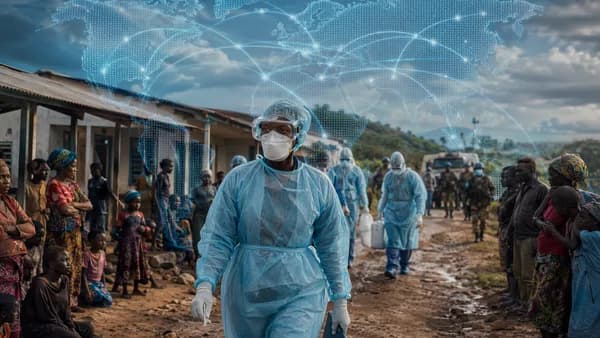
10-Week Congo Ebola Outbreak Races Toward Worst-Ever Record
Congo’s Ebola outbreak hit 3,262 cases in 10 weeks, exposing a response strained by violence, unpaid workers and mistrust.
Jul 28, 20267 min
 Global Trends
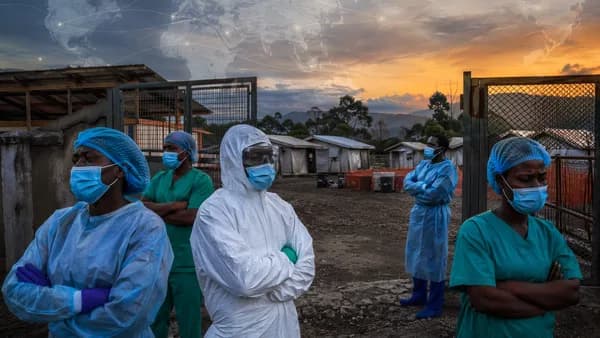
Strike Freezes Congo Ebola Care as Deaths Top 1,300
A strike has frozen Ebola care in Bunia as Congo's outbreak nears 3,000 cases and tops 1,300 deaths.
Jul 25, 20265 min
 Global Trends
35-Year High in Measles Cases Exposes Vaccine Trust Crisis
U.S. measles cases hit 2,318, the worst total in 35 years, exposing vaccine trust gaps and new pressure on outbreak control.
Jul 28, 20267 min
 Global Trends
Wildfire Smoke Kills 1.5 Million as Fire Plans Fail
Wildfire smoke kills far more people than flames, and hotter, drier weather is making suppression-only playbooks dangerously obsolete.
Jul 25, 20268 min
 Global Trends
15 Amboseli Elephant Deaths Force Kenya Wildlife Probe
Fifteen elephants died near Amboseli in a month, forcing Kenya to hunt for disease, poisoning or another hidden cause.
Aug 1, 20268 min
 Trading
Yen Intervention Shock Knocks USD/JPY Into BOJ Test
A five-yen USD/JPY plunge put intervention risk back on the table and left the BOJ one night to make the yen bounce stick.
Aug 1, 20268 min
 Trading
One QQQ Token Hijacks Tokenized Stock Trading Boom
Tokenized stock trading hit $11.3B in July, but QQQB supplied 82%, turning the boom into a concentration warning.
Aug 1, 20267 min
 Trading
CME Freezes Nasdaq Bitcoin Options in SEC Turf Fight
CME’s challenge has halted Nasdaq’s QBTC launch and forced the SEC to revisit who gets to police bitcoin options.
Aug 1, 20267 min
 Technology
$9 Autonomous Key Turns App Addiction Into an Errand
$9 Autonomous Key makes app access physically annoying, turning compulsive scrolling into a deliberate choice.
Aug 1, 20268 min
 Technology
Wahoo Kickr Core 2 Deal Knocks $150 Off Winter Rides
Wahoo’s Kickr Core 2 drops to $399.99, making smart indoor cycling the standout bargain in this week’s gadget deals.
Aug 1, 20266 min
Don't miss the signal
Get our weekly roundup of the stories that matter across tech, fintech, and trading. No noise, just signal.
Free forever. No spam. Unsubscribe anytime.