
Congo’s Ebola outbreak has crossed from emergency into a test of whether epidemic control can survive violence, unpaid health workers, and community mistrust. Confirmed cases have reached 3,262, with 1,437 deaths, nearly matching the country’s worst recorded Ebola outbreak after only 10 weeks, according to ABC International.
Global TrendsJuly 28, 2026· 7 min read· By XOOMAR Insights Team
10-Week Congo Ebola Outbreak Races Toward Worst-Ever Record
Updated on July 28, 2026
XOOMAR Intelligence
Analyst Take
57/ 100
4 sources analyzedLow confidenceTrend10Freshness99Source Trust85Factual Grounding91Signal Cluster20
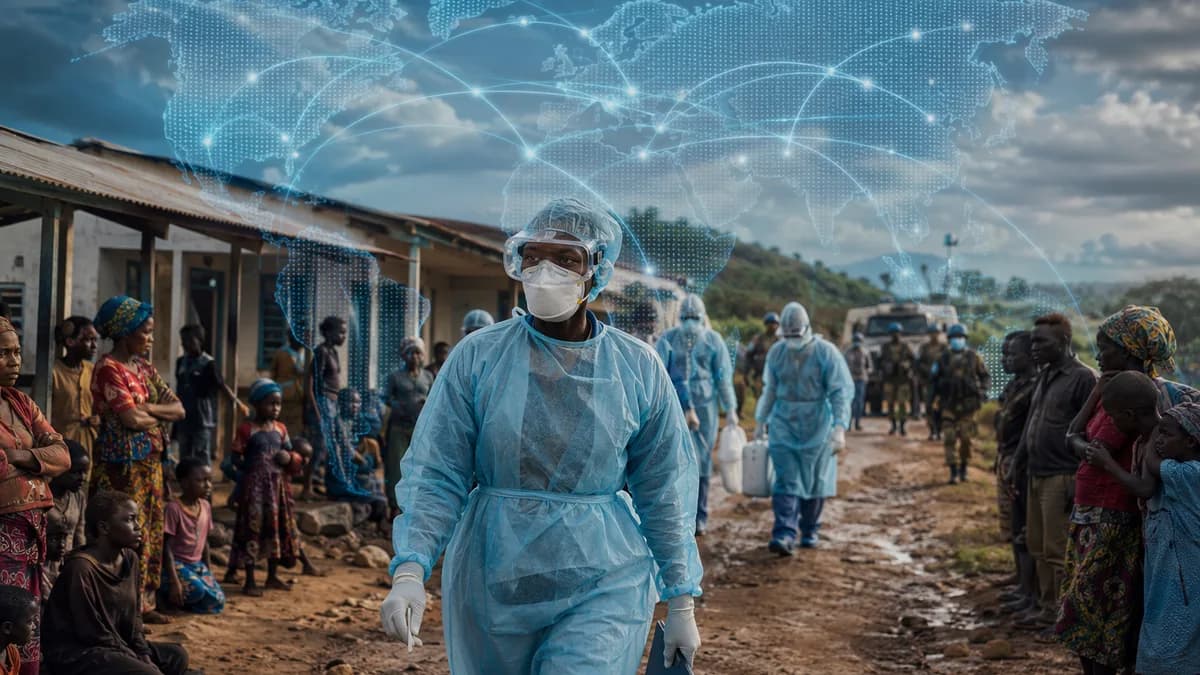
That speed is the core signal. The Congo Ebola outbreak is not simply growing because Ebola is dangerous. It is growing because the response system is being forced to operate in eastern Congo’s Ituri province, where residents say some communities have become unreachable or abandoned by responders because of attacks from angry residents and rebels. Health workers are also striking over unpaid wages, compounding the operational drag.
Congo’s Ebola count shows how outbreak control breaks under pressure
The blunt read: standard containment tools are losing time. The outbreak, declared on May 15, has reached almost the same case count as the 2018-2020 outbreak, which lasted roughly two years and remains Congo’s largest ever recorded outbreak.
“The fact that, in just 10 weeks, we have reached nearly the same number of cases recorded over an almost two-year outbreak is alarming and should stop us in our tracks,” Onesphore Bangenza, Mercy Corps response team lead in Bunia, said Tuesday.
Bangenza’s second line is even sharper.
“There is no doubt that the virus is moving faster than we can contain it,” Bangenza added.
That is not a failure of one hospital or one agency. It is a systems problem. Ebola control depends on fast detection, safe isolation, contact tracing, burial management, lab confirmation, and trust. In Ituri, those steps are being disrupted by rebel violence, attacks from residents, displacement from armed conflict, illegal mining, and strikes by health workers demanding unpaid wages.
The strongest counterpoint is that response capacity is expanding, and there are signs of local attitudes shifting. Fabrice Mumbesa, a resident of Mongbwalu, said his community now sees fighting Ebola as a shared interest after earlier hostility toward responders. That matters. But the case curve still says containment is lagging.
The numbers point to a fast, uneven epidemic in Ituri
The headline figure in the Congo Ebola outbreak is 3,262 confirmed cases. The death toll, 1,437, implies a fatality ratio of roughly 44% based on the reported figures. The source material does not provide recoveries or active case counts, so any clean split between survivors and current patients would be speculative.
The comparison is stark:
| Outbreak | Reported cases | Reported deaths | Duration or timing |
|---|---|---|---|
| Current Congo outbreak | 3,262 confirmed cases | 1,437 deaths | Declared May 15, reached this level in about 10 weeks |
| Congo and Uganda, 2018-2020 | More than 3,400 | Over 2,200 | Roughly two years |
| West Africa, 2014-2016 | 28,000 | More than 11,000 | Worst in history |
The current outbreak is still far below West Africa’s toll. But that is not the relevant operational comparison. The more useful benchmark is velocity. Reaching more than 3,200 cases in about 10 weeks means responders are chasing transmission rather than boxing it in.
There are also meaningful data gaps. Officials have not identified patient zero. Thousands of contacts are difficult to trace because displacement and illegal mining move people through the region. Cases outside known contact lists would weaken the response further because they suggest hidden chains of transmission. The reported total is important, but the more dangerous number may be the one officials cannot yet see.
Bundibugyo changes the medical equation, but access is still the bigger constraint
This outbreak is caused by the Bundibugyo virus, and ABC reports that it has no approved vaccines or treatments. That separates it from outbreaks where approved medical tools can be deployed around known contacts and early patients.
Al Jazeera, citing government data and health agencies, reported that scientists are racing to develop vaccines and treatments for the Bundibugyo strain, with Oxford University saying the first volunteer group had received an experimental vaccine targeting the strain. That is a sign of scientific movement, not a near-term guarantee for communities already facing transmission.
Even if experimental tools advance, they don’t solve the hardest part of this outbreak: getting to people in time. Contacts have to be identified. Teams have to move safely. Samples have to reach labs. Communities have to accept responders rather than attack them. Treatment centers have to be seen as places of care, not as symbols of outside control.
That is why our earlier reporting on Congo Ebola care disruptions during health worker strikes remains central to this story. A response can expand on paper while still failing at the point of contact if workers are unpaid, facilities are threatened, or residents refuse cooperation.
The historical comparison is brutal because this outbreak is moving faster
Congo’s 2018-2020 Ebola outbreak and the 2014-2016 West Africa epidemic give the current crisis its scale. The West Africa outbreak remains the worst in history, with 28,000 cases and more than 11,000 deaths. Congo’s largest outbreak, spanning Congo and neighboring Uganda from 2018 to 2020, recorded more than 3,400 cases and over 2,200 deaths, according to the U.S. Centers for Disease Control as cited by ABC.
The current outbreak has not exceeded those totals. But it is closing in on Congo’s record case count in a fraction of the time. That is the analytical warning.
A fair counterpoint is that better detection and testing can raise reported case numbers. Al Jazeera reported that authorities said improved detection and testing helped identify more infections. That could make the outbreak look worse on paper while also reflecting a stronger surveillance push.
Still, the thesis holds because the sources also describe failures of access and tracking. The virus is spreading faster than officials can trace. Some areas are difficult to reach. Health workers have protested nonpayment. Those are not artifacts of better testing. They are constraints on containment.
Communities and responders are not facing the same crisis
For residents, the crisis includes fear, grief, and distrust. ABC reports that Mongbwalu, a mining town at the center of the outbreak, previously saw residents burn down several treatment centers. That is not just “misinformation” in the abstract. It shows a rupture between public health responders and the communities they need most.
Mumbesa’s quote shows a possible turn.
“We can never again wage war against the Ebola teams. We have lost members of our families. As a community, we have a vested interest in fighting Ebola to return to normal life,” Fabrice Mumbesa said.
For health workers, the crisis is also labor and security. They are working amid infection risk, community anger, rebel violence, and wage disputes. For global agencies, the crisis is logistical. The outbreak is concentrated in eastern Ituri, but Al Jazeera reported the virus is in five provinces, with nearly 90 percent of cases in Ituri. The longer hidden transmission persists, the harder it becomes to keep the response geographically contained.
This trust dynamic echoes a broader public health challenge we’ve covered in the 35-year high in measles cases and the vaccine trust crisis. The diseases are different. The shared lesson is narrow but important: medical capacity loses force when communities stop believing institutions are acting with them, not on them.
The next phase will be decided by access, wages, and hidden transmission
The practical implication is clear. The Congo Ebola outbreak cannot be treated as a short medical deployment separated from security, labor, and local legitimacy. Funding beds and protective gear matters. So does paying workers, protecting teams without turning care into a military operation, and rebuilding enough trust for contact tracing to function.
The evidence that would confirm a better trajectory is specific: fewer cases outside known contact lists, safer access to unreachable communities, progress in identifying transmission chains, reduced disruption from strikes, and sustained cooperation in places like Mongbwalu. Evidence that would weaken the thesis would be equally clear: new provinces reporting cases, more attacks on responders, continued inability to identify patient zero, and rising deaths despite an expanding response.
Science may still improve the response to Bundibugyo. Experimental vaccines and treatments could change future outbreaks. But this surge shows the harder truth first: Ebola spreads fastest where institutions are weakest, responders can’t safely reach patients, and communities feel abandoned.
Impact Analysis
- The outbreak is spreading at a pace that suggests containment systems are failing under conflict conditions.
- Violence, mistrust, displacement, and unpaid health workers are disrupting core Ebola controls like tracing, isolation, and safe burials.
- A worsening outbreak in eastern Congo raises the risk of broader regional health and humanitarian consequences.
Congo Ebola Outbreak Pace Compared With 2018-2020 Outbreak
| Metric | Current outbreak | 2018-2020 outbreak |
|---|---|---|
| Confirmed cases | 3,262 | Nearly the same case count |
| Duration | 10 weeks | Roughly two years |
| Significance | Nearing Congo's worst recorded outbreak | Congo's largest recorded outbreak |
Current Congo Ebola Outbreak
Confirmed cases
people3,262
Deaths
people1,437
Sources

Written by
XOOMAR Insights Team
Research and Editorial Desk
The XOOMAR Insights Team pairs automated research with human editorial judgment. We track hundreds of sources across technology, fintech, trading, SaaS, and cybersecurity, cross-check the facts, and explain what happened, why it matters, and what to watch next. We do not just rewrite headlines. Every article is fact-checked and scored for reliability before it goes live, and we link back to the original sources so you can verify anything yourself.
Explore More Topics
Related Articles
 Global Trends
Strike Freezes Congo Ebola Care as Deaths Top 1,300
A strike has frozen Ebola care in Bunia as Congo's outbreak nears 3,000 cases and tops 1,300 deaths.
Jul 25, 20265 min
 Global Trends
930 Dead as Congo Ebola Outbreak Sends Clinics Reeling
Congo's Ebola death toll has hit at least 930 as attacks, walkouts and no approved vaccine leave responders losing ground.
Jul 20, 20268 min
 Global Trends
Five Deaths Jolt NYC Legionnaires' Outbreak Tower Hunt
Five people have died in the NYC Legionnaires' outbreak tied to Upper East Side cooling towers, though officials say exposure has stopped.
Jul 22, 20268 min
 Global Trends
35-Year High in Measles Cases Exposes Vaccine Trust Crisis
U.S. measles cases hit 2,318, the worst total in 35 years, exposing vaccine trust gaps and new pressure on outbreak control.
Jul 28, 20267 min
 Global Trends
Wildfire Smoke Kills 1.5 Million as Fire Plans Fail
Wildfire smoke kills far more people than flames, and hotter, drier weather is making suppression-only playbooks dangerously obsolete.
Jul 25, 20268 min
 Technology
Samsung Chip Workers Plot Exit as SK Hynix Pays $476K
Samsung's foundry talent problem is now a pay war, with SK Hynix bonuses making its HBM gap harder to close.
Jul 28, 20268 min
 Global Trends
150,000 Told to Evacuate as Japan Earthquake Injures Dozens
A 7.1 Japan earthquake injured dozens, triggered brief tsunami fears, and pushed 150,000 people toward shelters.
Jul 28, 20265 min
 Future Fiction
The Ceasefire Engineer of Lagrange Market
In 2069, nations no longer send armies across borders; they release swarms, exploits, orbital shields, and autonomous legal agents into a constantly contested battlespace called the Quiet Front. Naya Voss, a civilian conflict-auditor stationed at a neutral space-based defense hub, discovers that an escalating machine-to-machine war over water rights is being driven not by hatred, but by incompatible definitions of surrender.
Jul 28, 202615 min
 Trading
Safe-Haven Premium Cracks as Silver Price Slides Before Fed
Silver fell near $57.55 as geopolitical fear cooled, but the Fed decision and a stronger dollar keep XAG/USD exposed.
Jul 28, 20266 min
 Technology
RT6 Fleet Storms London Robotaxi Race for Lyft, Baidu
Baidu's RT6 test cars put Lyft into London's robotaxi fight, turning a 2027 launch plan into a regulatory and trust test.
Jul 28, 202611 min
Don't miss the signal
Get our weekly roundup of the stories that matter across tech, fintech, and trading. No noise, just signal.
Free forever. No spam. Unsubscribe anytime.