
A strike by health workers at an Ebola treatment center in eastern Congo has largely paralyzed care in Bunia as the Congo Ebola outbreak reached 2,973 confirmed cases and 1,309 deaths.
Global TrendsJuly 25, 2026· 5 min read· By XOOMAR Insights Team
Strike Freezes Congo Ebola Care as Deaths Top 1,300
Updated on July 25, 2026
XOOMAR Intelligence
Analyst Take
58/ 100
4 sources analyzedLow confidenceTrend10Freshness100Source Trust85Factual Grounding93Signal Cluster20
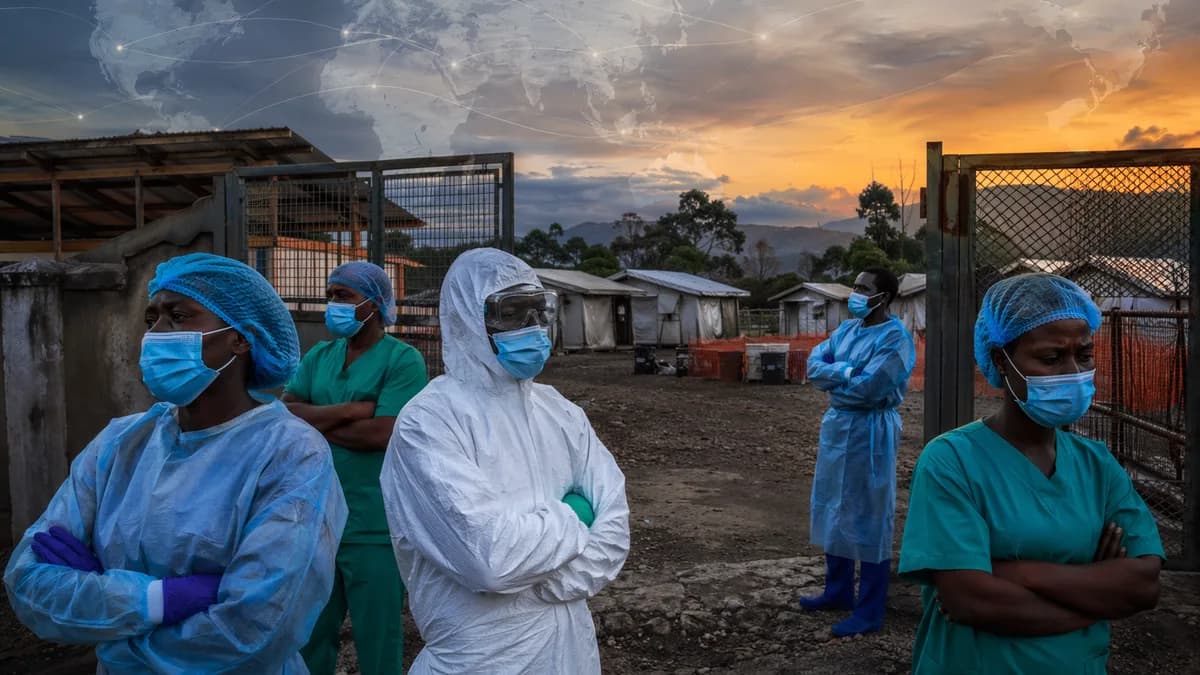
The walkout at the Elikya Ebola Treatment Center in Ituri province began Saturday over unpaid bonuses, disrupting care in the outbreak’s epicenter, according to ABC International. Doctors, nurses and security staff stopped work, and about a hundred workers protested outside the center.
Congo Ebola outbreak hit by health worker strike as cases near 3,000
The immediate pressure falls on patients already inside the response system. Government data released Friday put the outbreak at 2,973 confirmed Ebola cases, including 1,309 deaths, in what authorities call the fastest growing outbreak on record.
Activities at Elikya were “largely paralyzed” after staff stopped work. That matters because the center sits in Bunia, the capital of Ituri, which accounts for nearly 90% of confirmed cases.
The staff dispute is specific. Workers say unpaid bonuses are damaging morale and patient care.
Staff said they had unanimously voted to strike from Saturday until “concrete solutions” were found to resolve “two months of unpaid performance bonuses.”
The question for patients is blunt: how long can a treatment center in the outbreak’s core operate with doctors, nurses and security staff off the job?
This is not the first labor disruption in Bunia’s Ebola response. Last week, workers at Bunia General Hospital, the region’s largest medical center, also went on strike over unpaid salaries. Some told The Associated Press they had not received any payment since starting work at the onset of the outbreak.
Payment dispute raises patient care risk at Bunia's Ebola center
The source confirms care was disrupted at Elikya. It does not specify which services stopped or slowed. That distinction matters.
XOOMAR analysis: in an Ebola treatment center, staffing gaps carry more risk than a normal hospital slowdown because care, isolation and infection prevention depend on continuous routines. If those routines thin out, the outbreak response loses time exactly where speed matters most.
The available facts show why workers are angry. They are operating in a high risk environment while payment delays mount. The World Health Organization says more than 100 healthcare workers have been infected since the beginning of the outbreak.
The labor pressure also arrives while 766 patients remain in isolation or hospitals, according to Congo’s Ministry of Health. Another 540 have recovered.
Known from the source:
- Strike site: Elikya Ebola Treatment Center in Bunia, Ituri province.
- Workers involved: doctors, nurses and security staff.
- Dispute: two months of unpaid performance bonuses.
- Scale: 2,973 confirmed cases and 1,309 deaths.
- Healthcare worker risk: more than 100 infected since the outbreak began.
The operational question now is whether the payment dispute stays contained to Elikya or spreads across other response teams.
Broader emergency systems can fracture when frontline staffing, logistics and public trust fail at the same time. XOOMAR has tracked those pressures in other crises, including Five Deaths Jolt NYC Legionnaires' Outbreak Tower Hunt and 140,000 Flee as Madrid Wildfires Outrun Fire Crews. The Congo case is different, but the lesson is familiar: response capacity can become the story.
Violence, mistrust and access gaps are already straining Congo's Ebola response
The Congo Ebola outbreak has been running since May 15 and is caused by the rare Bundibugyo virus. That detail is crucial because response teams do not have approved vaccines or treatments for Bundibugyo, unlike the more common Zaire virus.
| Ebola strain | Source reported response issue |
|---|---|
| Bundibugyo virus | Current Congo outbreak since May 15. No approved vaccines or treatments reported. |
| Zaire virus | More common strain. A vaccine exists. It caused most of Congo’s past 16 outbreaks. |
Enrollment recently began in Ituri for a study of two possible Ebola treatments. The source does not say the strike has affected that study.
The wider response is already under strain. Authorities have not identified the outbreak’s patient zero, and displacement from armed conflict plus mining related movements have made it difficult to trace thousands of contacts.
The source also cites a funding gap, attacks on health centers, conflict in eastern Congo and mistrust among local communities. Each of those weakens the same chain: find cases, isolate patients, monitor contacts and keep communities cooperating.
The question for responders is not only medical: can Congo keep enough money, security, trust and logistics moving at the same time?
WHO says the global risk of spread outside Central Africa is low. Ebola spreads through direct contact with bodily fluids of an infected person rather than through the air, making it harder to spread than respiratory viruses.
Negotiations and new case counts will set the next phase
The immediate test is whether Congolese authorities can settle the arrears quickly enough to restore normal operations at Elikya. Workers have tied their return to “concrete solutions,” not a vague promise.
The next risk is contagion inside the workforce, not the virus itself but the strike. Bunia General Hospital already saw a walkout last week. If more teams stop work, the response could lose capacity while cases are still rising.
The question over the next several days: do new government figures show the outbreak stabilizing, or does the case count keep climbing while labor disputes drag on?
Watch four markers closely:
- Staffing: whether Elikya resumes full operations.
- Payments: whether unpaid bonuses and salaries are settled.
- Transmission: whether officials identify more known chains of infection.
- Clinical data: updates on deaths, recoveries, isolation numbers and treatment study enrollment.
The Congo Ebola outbreak is already closing in on 3,000 confirmed cases. If patient care and surveillance falter during a payment fight, Congo risks losing ground in an outbreak that authorities already describe as the fastest growing on record.
Impact Analysis
- The strike is disrupting Ebola care in Bunia, where the outbreak is heavily concentrated.
- Unpaid health workers could weaken response capacity as confirmed cases approach 3,000.
- Delays in treatment and containment raise the risk of further spread and preventable deaths.
Labor Disruptions in Bunia Ebola Response
| Facility | Workers involved | Reported payment issue | Impact |
|---|---|---|---|
| Elikya Ebola Treatment Center | Doctors, nurses and security staff | Two months of unpaid performance bonuses | Care largely paralyzed |
| Bunia General Hospital | Health workers | Unpaid salaries; some said they had received no payment since starting outbreak work | Workers went on strike last week |
Congo Ebola Outbreak Totals
Confirmed cases
people2,973
Deaths
people1,309
Sources

Written by
XOOMAR Insights Team
Research and Editorial Desk
The XOOMAR Insights Team pairs automated research with human editorial judgment. We track hundreds of sources across technology, fintech, trading, SaaS, and cybersecurity, cross-check the facts, and explain what happened, why it matters, and what to watch next. We do not just rewrite headlines. Every article is fact-checked and scored for reliability before it goes live, and we link back to the original sources so you can verify anything yourself.
Explore More Topics
Related Articles
 Global Trends
930 Dead as Congo Ebola Outbreak Sends Clinics Reeling
Congo's Ebola death toll has hit at least 930 as attacks, walkouts and no approved vaccine leave responders losing ground.
Jul 20, 20268 min
 Global Trends
US Aid Workers Turn Kenya Ebola Quarantine Into Flashpoint
Seven asymptomatic US aid workers are quarantining in Kenya, turning Ebola controls into a fight over risk, consent, and sovereignty.
Jul 18, 20267 min
 Global Trends
Five Deaths Jolt NYC Legionnaires' Outbreak Tower Hunt
Five people have died in the NYC Legionnaires' outbreak tied to Upper East Side cooling towers, though officials say exposure has stopped.
Jul 22, 20268 min
 Global Trends
Wildfire Smoke Kills 1.5 Million as Fire Plans Fail
Wildfire smoke kills far more people than flames, and hotter, drier weather is making suppression-only playbooks dangerously obsolete.
Jul 25, 20268 min
 Global Trends
858 Canadian Wildfires Choke Chicago, Detroit and NYC
858 Canadian wildfires are sending hazardous smoke into major US cities, turning a remote fire season into a cross-border health crisis.
Jul 18, 20268 min
 Global Trends
Lamp-Post Crash Kills Four Young Men in Huyton Seat Cupra
Four men in their 20s died after a black Seat Cupra hit a lamp-post in Huyton. A 27-year-old survivor is stable in hospital.
Jul 25, 20265 min
 Trading
DXY 101.80 Target Puts US Dollar Bears in the Crosshairs
DXY 101.80 is back in play as higher yields, Fed risk and oil pressure keep the US Dollar's upside alive.
Jul 25, 20268 min
 Technology
Rivian Drags Trump Tariffs Back to Court for Cash Refund
Rivian wants a full refund on Trump-era tariffs, turning a Supreme Court win into a cash fight as its R2 spending climbs.
Jul 25, 20267 min
 Trading
Oil Drop Checks USD/CHF Rally Just Below June 2025 Peak
USD/CHF stalled near a June 2025 high as cheaper oil cooled Dollar demand, but Fed bets and Middle East risk kept the pullback shallow.
Jul 25, 20266 min
 Global Trends
Arkady Dvorkovich Sanctions Drag FIDE Into Governance Crisis
EU sanctions sidelined Arkady Dvorkovich but didn't force him out, leaving FIDE trapped in a governance crisis over Russia and Ukraine.
Jul 25, 20267 min
Don't miss the signal
Get our weekly roundup of the stories that matter across tech, fintech, and trading. No noise, just signal.
Free forever. No spam. Unsubscribe anytime.