
Frank Wills did not set out to save American democracy. That is precisely why his story still cuts so sharply. On June 17, 1972, a 24-year-old Black security guard noticed tape on a door latch at the Watergate Hotel, removed it, found it replaced, and called police, according to Time. That ordinary act helped expose one of the largest abuses of power in American history.
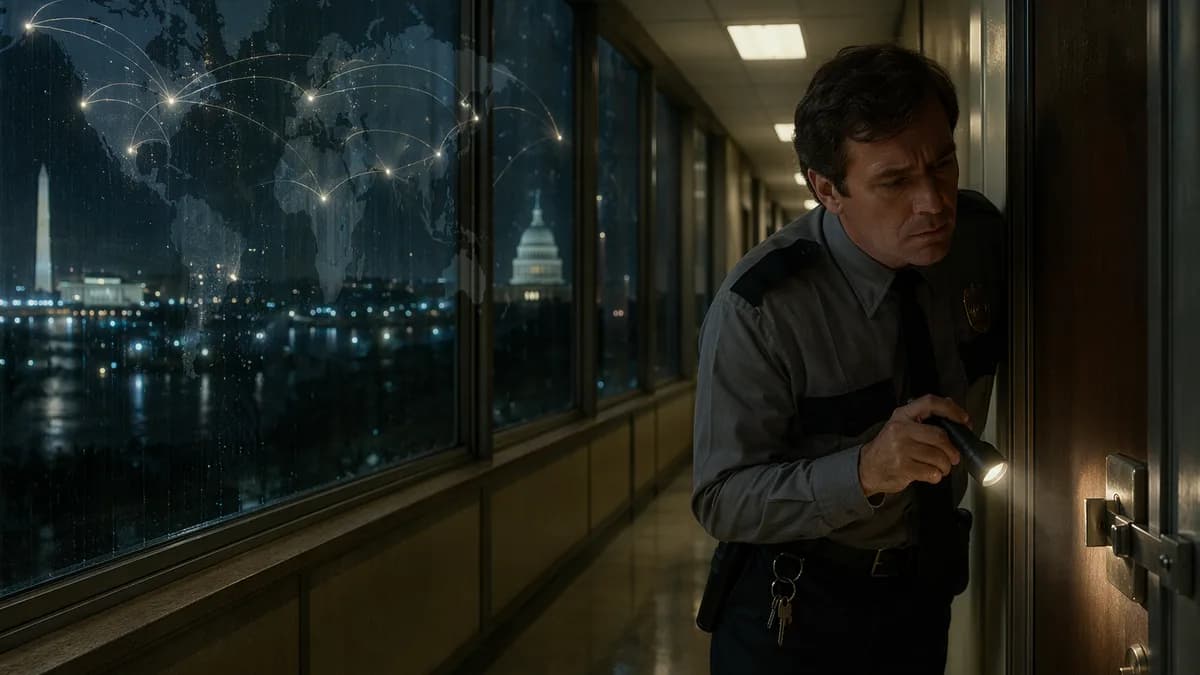
Global TrendsJune 20, 2026· 7 min read· By XOOMAR Insights Team
A Night Guard Cracked Watergate, Then Frank Wills Paid
Updated on June 20, 2026
XOOMAR Intelligence
Analyst Take
72/ 100
4 sources analyzedMedium confidenceTrend10Freshness98Source Trust88Factual Grounding94Signal Cluster20
The lesson is not sentimental. It is civic. Frank Wills belongs at the center of the Watergate story because democracy often depends first on people with no title, no protection, and no guarantee of reward. The country likes to imagine accountability as something delivered by senators, judges, prosecutors, and famous reporters. Sometimes it begins with a worker on the night shift who refuses to explain away what looks wrong.
Frank Wills made democracy real by refusing to look away
Wills was not looking for history. He was doing his job carefully.
That matters because democratic failure rarely announces itself with a brass band. It hides in procedural corners, office locks, paperwork, whispered orders, and small violations that people are trained to ignore. Wills saw something that did not belong and treated it as a warning rather than an inconvenience.
Analysis: That is the civic model here. Not hero worship. Not nostalgia. The Watergate anniversary should not only remind Americans that powerful people can abuse power. It should remind them that abuse often survives because ordinary people decide the risk of acting is greater than the shame of staying quiet.
Time frames Wills as an “ordinary American,” and that phrase can sound modest to the point of insult. In truth, it is the whole point. A republic cannot run on celebrity courage. It needs routine courage, practiced by people who may never be thanked.
The Watergate break-in became history because suspicious tape was treated as evidence
The core facts are almost absurdly small. Wills noticed a piece of tape on a door lock leading to the offices of the headquarters of the National Democratic Committee. He removed it. Later, he returned and saw another piece of tape holding open the latch. He called the police.
That call led to the arrest of five men for burglary. Time notes that the call “set in motion events that led to the prosecution of several men in the administration of Richard Nixon and ultimately the end of his Presidency.”
The sequence is worth slowing down. Tape. Removal. Return. Recognition. Phone call. Police. Arrests. Scandal. Resignation. Wills did not know he was standing at the edge of a presidential crisis. He knew a door had been tampered with.
That is why his action has such force. Corruption at the top often depends on people at the bottom accepting oddities as normal. Wills broke that chain. He did not need access to classified files or a congressional subpoena. He needed enough discipline to trust what he saw.
America remembers Watergate’s institutions while sidelining the worker who triggered them
The Watergate memory machine has been generous to institutions. Reporters get remembered. Congressional hearings get remembered. Courts, prosecutors, and Nixon’s resignation get remembered. Wills too often appears as the opening detail, the man who found the tape before the “real” story begins.
That hierarchy is morally wrong.
| Watergate memory usually centers on | Wills’s role forces us to remember |
|---|---|
| Richard Nixon and executive abuse | Frank Wills and ground-level vigilance |
| Bob Woodward and Carl Bernstein | The worker whose call made the arrests possible |
| Congress, courts, and prosecutors | The first honest act that activated accountability |
| Institutional drama | The personal cost borne by an ordinary citizen |
Time’s account makes the imbalance harder to defend. Wills played himself in the 1976 movie “All the President’s Men,” while Woodward and Bernstein earned lasting acclaim for uncovering the scandal. Wills did not receive anything close to comparable recognition. The Watergate building offered him a raise from $80 to $82.50 per week. He later left for another Washington building, where he earned $85 per week, about $638 in 2026, and struggled to find stable employment later in life.
That is the uncomfortable truth. America benefited from Wills’s vigilance, then failed to build a civic memory worthy of it. Honoring Frank Wills means more than inserting his name into anniversary coverage. It means expanding the story of democracy beyond elite rooms and famous bylines.
Frank Wills destroys the excuse that one person can’t change anything
The laziest civic excuse is also the most popular: one person can’t change anything. Against money, polarization, entrenched institutions, and organized deception, the individual is supposedly powerless.
Wills proves that excuse is false, or at least incomplete. One person cannot do everything. One person can do the thing directly in front of him. Sometimes that is enough to make the rest of the system move.
“There is a breakdown in the political system,” Wills told TIME in 1973. “The American people are not aware of what is really happening. I’ve seen it firsthand, and it’s opened my eyes real wide. I feel sorry for the people who look at Watergate and say it’s just politics.”
That quote lands because Wills understood Watergate not as partisan theater, but as a civic rupture. “Just politics” is how citizens excuse cynicism. It is also how wrongdoing protects itself.
Today’s equivalent duties are not mysterious. Report misconduct. Protect election workers from intimidation. Serve honestly on juries. Tell the truth inside organizations. Preserve records. Refuse to falsify what happened. Don’t shrug when pressure comes from above.
Analysis: The health of a democracy depends less on soaring speeches than on boring honesty repeated under stress. That is not romantic. It is harder than romance. It asks people to act before applause, before certainty, and sometimes before protection.
Watergate required institutions, but Wills made those institutions matter
The strongest counterargument deserves respect: Watergate was not solved by Frank Wills alone. Police made arrests. Journalists investigated. Courts and Congress mattered. Public pressure mattered. The scandal did not unfold because one guard made one call and history automatically corrected itself.
That is true. Democracy requires systems. Individual virtue is not a substitute for functioning institutions, independent investigators, credible courts, a free press, and lawmakers willing to confront executive abuse.
But the counterargument fails if it treats institutions as self-starting machines. Institutions often need a first honest act. Wills supplied one. Without the call, the burglars may not have been arrested that night. Without the arrests, the chain of accountability described by Time may have looked very different.
The real lesson is partnership. Individual courage without institutions can be crushed. Institutions without individual courage can sit idle while misconduct passes through unnoticed. Wills’s story matters because it joins the two: a person acted, then systems had something to act on.
Remembering Frank Wills means building a democracy worthy of its ordinary guardians
A serious civic memory would teach Frank Wills alongside the better-known names of Watergate. Not as a trivia answer. Not as a footnote. As the person whose ordinary vigilance opened the door to extraordinary accountability.
That memory should change behavior. Respect workers who see what executives, politicians, and professionals miss. Protect whistleblowers and witnesses from retaliation. Stop treating vigilance as somebody else’s job. The next democratic stress test may not begin in a televised hearing. It may begin with a clerk, guard, aide, technician, driver, election worker, or junior employee deciding whether to report what looks wrong.
What would prove this argument wrong? A country that consistently rewards ordinary integrity, protects those who speak up, and remembers the workers who make accountability possible. That is not the country Wills experienced after Watergate.
So the call to action is plain: remember him by copying the part of his life that mattered most. Notice. Verify. Act. Democracy is not saved only in marble buildings. Sometimes it is saved by a tired guard, a strip of tape, and the decision to do the right thing.
Why It Matters
- Frank Wills’ actions show how democratic accountability can begin with ordinary people doing their jobs carefully.
- The Watergate story underscores that abuses of power often depend on small violations being ignored.
- Wills’ legacy highlights the civic courage required from people who may receive little protection or reward.
Sources

Written by
XOOMAR Insights Team
Research and Editorial Desk
The XOOMAR Insights Team pairs automated research with human editorial judgment. We track hundreds of sources across technology, fintech, trading, SaaS, and cybersecurity, cross-check the facts, and explain what happened, why it matters, and what to watch next. We do not just rewrite headlines. Every article is fact-checked and scored for reliability before it goes live, and we link back to the original sources so you can verify anything yourself.
Explore More Topics
Related Articles
 Global Trends
4 States Drag FIFA World Cup Ticketing Into Legal Fire
Four state AGs are probing FIFA ticket sales, putting seat maps, pricing and checkout claims under U.S. consumer law scrutiny.
Jun 19, 202611 min
 Global Trends
Reflecting Pool Algae Turns Trump's Iran Boast Green
Green water at the Lincoln Memorial is turning Trump's $14.2m blue-pool promise into a very public credibility test.
Jun 19, 20267 min
 Global Trends
New Strikes Shake Israel Hezbollah Ceasefire Claim
Washington says a truce exists, but reported Israeli strikes in Lebanon are already testing the Israel Hezbollah ceasefire.
Jun 19, 20266 min
 Global Trends
Obama Says Iran War Burned Billions and Left US Worse Off
Obama says the Iran war spent billions, strained the military and left the US no better off, with a fragile ceasefire now carrying the damage.
Jun 19, 20268 min
 Global Trends
No Intel Experience, Bill Pulte Lands Top Spy Post
Trump put Bill Pulte atop 18 spy agencies despite no intel background, turning a vacancy into a loyalty test.
Jun 19, 20266 min
 Technology
AI Data Centers Grab a Federal Fast Lane to the Grid
FERC wants faster grid access for AI data centers, but it won't create new power. Prices and reliability are the next fight.
Jun 20, 20268 min
 Technology
Retail Data War Pits Amazon Against Walmart for Ad Cash
Amazon and Walmart are racing to turn shopper data into retail’s new power center, where ads, AI and grocery habits decide who wins.
Jun 20, 20268 min
 Technology
Cheaper Chinese AI Models Steal Enterprise AI Spend
Enterprises are routing AI workloads to cheaper Chinese models as token billing turns agent workflows into a budget problem.
Jun 19, 20268 min
 Global Trends
Settlement Sales Furor Hits London Israeli Real Estate Event
A London property event reportedly marketed settlement-linked projects, escalating pressure on UK officials to act.
Jun 20, 202611 min
 Global Trends
Three Words Rescue the Mood When Someone's Team Loses
The best first move after a fan's crushing loss is validation, not a pep talk. Say "That really sucks," then wait.
Jun 20, 202610 min
Don't miss the signal
Get our weekly roundup of the stories that matter across tech, fintech, and trading. No noise, just signal.
Free forever. No spam. Unsubscribe anytime.