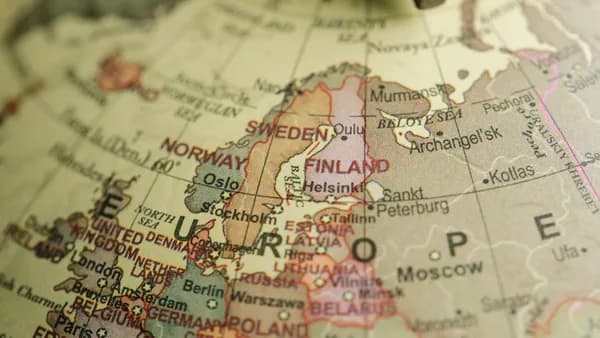
The Greenland government cannot conclude whether the Danish state committed genocide against the Inuit through a forced contraception program in the 1960s and 70s, according to two conflicting expert reports released this week according to BBC World. For the 4,500 women and girls affected, this non-conclusion is itself a form of ongoing harm.
XOOMAR Intelligence
Analyst Take
A Demographic Intervention Dressed as Care
The undisputed facts are staggering in their clinical precision. Between 1966 and 1970, Danish doctors working under a state-sanctioned birth-control program implanted intra-uterine devices (IUDs) in 4,500 Greenlandic women and girls. Some were as young as 13. The campaign was deemed a "success" by 1970; fertility rates plummeted from seven children per woman to just 2.3 by 1974. As we reported in Starcloud Raises $250 Million to Lock Down Final Rocket Seats, large-scale projects need clear objectives. Denmark had a brutally clear one: to control the population growth of its autonomous territory.
The official narrative was one of modernization and welfare. The Inuit population had grown rapidly since the 1950s, aided by better Danish healthcare, and rising teenage pregnancies caused bureaucratic alarm.
The lived reality, as dozens of women have testified, was a violation of bodily autonomy and informed consent. Many never knew the devices were implanted. One woman, Inger Platou, 70, told Reuters she woke from what she was told was a "minor operation" to discover an IUD had been inserted.
“It turns out we were treated like animals," she said. "Without consent, they just wanted to stop women from giving birth or having children. It was a very inhumane act.”
The demographic impact was undeniable: a population's natural growth was deliberately and systematically stunted by its colonial administrator.
The Legal Hurdle of Proving Intent
The core conflict now is not about the wrong, but about its legal categorization. The territory tasked a panel of four experts to determine if the human rights violations met the UN genocide definition, specifically the clause on "imposing measures intended to prevent births" within a group. The panel fractured, producing two contradictory reports.
| Report A (Dorough & Cullen) | Report B (Christoffersen & Nedergaard) |
|---|---|
| Found human rights violations. | Accepted women were wronged. |
| Could not conclude genocide "on the basis of contraceptive practices alone." | Found no evidence authorities "had any intention of destroying the Greenlandic population." |
| Said genocidal intent remained a "possible inference" a court might establish with broader evidence. | Concluded there was "no genocide at all." |
This split reveals the central tension. Genocide requires specific intent to destroy, in whole or in part, a national or ethnic group. The 4,500 IUD insertions constitute a massive, systemic act. But was the intent to destroy the Inuit people, or to manage a colonized population for economic and social convenience? As Greenlandic Justice Minister Marianne Paviasen stated, "We cannot say, on behalf of the government, whether there was genocide. This is something we can continue to debate."
The dissenting report by Dorough and Cullen is crucial. They point to evidence outside their mandate, like the removal of Inuit children to Danish families, that could help a court establish the required genocidal intent. They frame the contraception campaign not as an isolated incident, but as one thread in a broader fabric of colonial control.
For Survivors, a Political Process Reopens Old Wounds
For the women affected, the expert disagreement and government hesitation are another chapter in their disempowerment. Denmark has already passed a compensation law, offering 300,000 Danish crowns (about $46,800) to each affected woman. Prime Minister Mette Frederiksen issued an apology last year for "systematic discrimination." But the search for legal and historical closure continues.
“For me, this is not just about history or politics. It's my body, my life and my right to self-determination,” survivor Henriette Berthelsen told AFP. “And once again, I see that it is others who will investigate and define what was done to me and to other Inuit women.”
Her statement cuts to the heart of the issue. The process remains owned by the authorities, both Danish and Greenlandic, rather than the victims. The announcement of a new "reconciliation commission" and promises from leaders to "find the right path together" are political mechanisms. As seen in the careful management of legacy in Dolly Parton's Death Executed as Final Brand Act, controlling the narrative is a powerful final act. Here, the narrative of whether this was genocide remains frustratingly out of the survivors' hands.
What the Genocide Question Means for Greenland's Future
The unresolved genocide allegation hangs over the evolving relationship between Nuuk and Copenhagen. Greenland, a former colony, gained home rule in 1979, but Denmark controlled its healthcare until 1992. Today, the Inuit and mixed Danish-Inuit make up nearly 90% of the island's 56,000 people, and moves toward greater independence are a constant political undercurrent.
XOOMAR Analysis: The government's inability to reach a conclusion is politically telling. A formal finding of genocide would be a seismic event, fundamentally recasting the modern Danish-Greenlandic relationship as one between perpetrator and victim of an international crime. It would demand more than compensation and apology; it would require a wholesale re-evaluation of history with potential legal ramifications.
It also sets a global precedent. If a systematic, decades-long campaign of imposed birth control on an entire indigenous population, slowing its growth as intended, does not meet the legal threshold, what does? This case tests the limits of the 1948 Genocide Convention in the post-colonial context.
What to watch: The work of the newly proposed "reconciliation commission" will be critical. Will it be empowered to examine the totality of Denmark's colonial policies, from contraception to child removals? Or will it be constrained? The answer will show whether this process seeks true historical reckoning or political manageability. The women waiting for a final answer, now in their 60s and 70s, deserve the former.
Impact Analysis
- This case establishes a critical international precedent on what constitutes genocide in colonial contexts, potentially reshaping global human rights law.
- Thousands of Inuit women and girls still face unresolved trauma from non-consensual medical procedures, demanding justice and recognition.
- The ongoing uncertainty in findings reinforces how historical injustices can perpetuate harm across generations, impacting reconciliation and trust.
Contradicting Expert Reports on Genocide Allegations
| Report Source | Findings | Key Implications |
|---|---|---|
| First expert report | Evidence indicates potential genocide | Supports formal charges |
| Second expert report | Insufficient evidence for genocide conclusion | Contradicts formal charges |
Primary Sources & Disclosures

Written by
XOOMAR Insights Team
Research and Editorial Desk
The XOOMAR Insights Team pairs automated research with human editorial judgment. We track hundreds of sources across technology, fintech, trading, SaaS, and cybersecurity, cross-check the facts, and explain what happened, why it matters, and what to watch next. We do not just rewrite headlines. Every article is fact-checked and scored for reliability before it goes live, and we link back to the original sources so you can verify anything yourself.