Starcloud just placed a $250 million bet that it can buy its way into orbit before the rocket door slams shut. The Redmond-based orbital data center startup announced on August 21, 2026, that it has raised a massive series A extension, valuing the company at $2.3 billion and bringing its total capital to $450 million according to TechCrunch. The fresh cash is earmarked for construction and advance payments for one thing above all: launch capacity.
XOOMAR Intelligence
Analyst Take
“We can see what’s coming, we’re going to need to book an enormous amount of launch,” CEO Philip Johnston told TechCrunch.
Cash Is a Ticket to Space
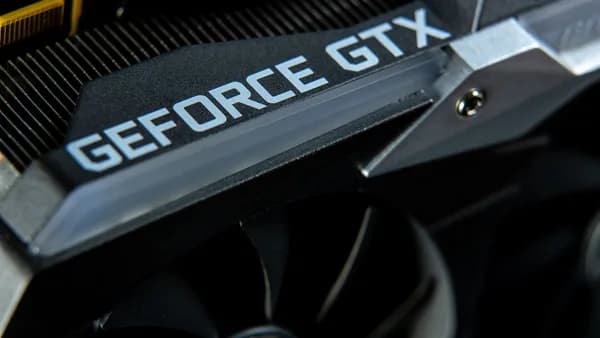
The $250 million extension, led by Manhattan West Ventures with participation from Nvidia and Cisco, more than doubles the company’s valuation from its $170 million Series A in March. Nvidia contributed $25 million, a strategic validation of Starcloud’s technical edge. The company is currently the only one operating an Nvidia H100 terrestrial data center GPU in orbit, and it has already trained a model there.
The funds have three explicit purposes. They will scale up a 100,000-square-foot manufacturing facility in Woodinville, Washington. They will advance development of the massive Starcloud-3 spacecraft, a platform designed for SpaceX’s Starship. And, critically, they will be used to secure future launch allocations.
This move mirrors a growing theme in high-stakes infrastructure: control your destiny. Just as the FBI invested $88 million in dedicated AI hardware to reduce cloud dependence, Starcloud is using capital to lock down the physical access its business model requires. Johnston is converting venture dollars into what may soon be a scarce commodity: a confirmed spot on a rocket.
“One of the biggest costs is now on securing your launch capacity...launch is pretty constrained right now because [SpaceX’s] Falcon 9 program is scheduled to end in 2028.”
The Coming Rocket Bottleneck
Starcloud’s entire economic thesis hinges on the falling cost-per-kilogram of launch, a promise tied directly to the success and reusability of SpaceX’s Starship. But a transition is coming, and for satellite operators, it looks more like a cliff.
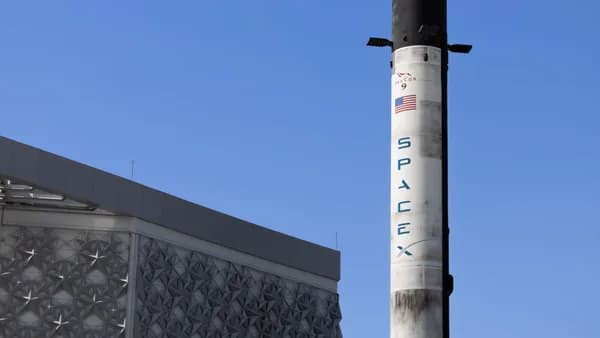
SpaceX plans to phase out its reliable Falcon 9 workhorse by 2028. Its replacement, the colossal Starship, remains in testing. Meanwhile, other heavy-lift vehicles are not yet reliable alternatives. Blue Origin’s New Glenn and ULA’s Vulcan are not flying regularly. Rocket Lab’s Neutron is not yet on the pad.
For a company that has filed with the FCC to operate 88,000 spacecraft, this creates a massive planning risk. Starcloud’s near-term plan is to launch two of its new 8 kW Starcloud-2 satellites on rideshare flights in 2027. But its grand vision needs a fleet.
“As soon as we can, we want to get under contract with things like Starship,” Johnston said. He remains confident in SpaceX’s execution but acknowledges the stakes: “Obviously if we can’t book any SpaceX launch capacity in 2029, that will be challenging for us.”
Nvidia’s Vote of Confidence in Space Compute
The Nvidia investment is more than just money. It cements a technical partnership. Starcloud has been sharing data from its orbital H100 experiment with Nvidia as the chipmaker develops its first purpose-built space GPU, the Vera Rubin Space-1 chip.
“The reason they’ve chosen to do this investment now is because of all of this data that we got from Starcloud One,” Johnston said. “They, more than any other VC, did way more technical duty on this than anybody else.”
The collaboration focuses on three core challenges for running data center hardware in space:
- Thermal Management: The relationship between chip temperature and the size of radiators needed to dissipate heat.
- Radiation Hardening: Shielding placement to protect sensitive electronics.
- Launch Survival: Ruggedizing components to withstand the intense vibrations and g-forces of a rocket launch.
Starcloud hopes to fly the new Nvidia space chip in late 2028.
From Woodinville to Low Earth Orbit
The immediate path is clear. The company, now with 25 employees, is building production lines in Washington. Its focus is getting the Starcloud-2 satellites built and launched on schedule next year to serve initial customers, including U.S. government agencies.
But the horizon is defined by a single, external variable: rocket readiness. The $250 million war chest gives Starcloud the down payment needed to get in line for Starship launches. It cannot, however, guarantee that the rockets will fly on time, be reusable as promised, or drive costs down enough to make orbital inference competitive with terrestrial data centers.
This funding round is a hedge against uncertainty. Starcloud has bought itself a ticket. The industry will now watch to see if the launch vehicle shows up on schedule. As other sectors see massive bets placed on foundational AI infrastructure, like the Reach Capital VCs' $265 million bet on human-first AI, the orbital data center race is proving that the most ambitious bets require securing the most fundamental layers first. For Starcloud, that layer is 100 kilometers straight up.
Impact Analysis
- A $2.3 billion startup is aggressively funding orbital infrastructure, signaling a major shift of critical computing and AI into space.
- The capital is specifically aimed at securing scarce launch capacity, indicating a new bottleneck for companies needing space-based assets.
- It validates a high-stakes business model of operating advanced AI hardware in orbit, which could redefine data sovereignty and cloud computing.
Starcloud Funding & Valuation
Primary Sources & Disclosures

Written by
XOOMAR Insights Team
Research and Editorial Desk
The XOOMAR Insights Team pairs automated research with human editorial judgment. We track hundreds of sources across technology, fintech, trading, SaaS, and cybersecurity, cross-check the facts, and explain what happened, why it matters, and what to watch next. We do not just rewrite headlines. Every article is fact-checked and scored for reliability before it goes live, and we link back to the original sources so you can verify anything yourself.