
ITV says its World Cup advertising revenue is running about 30% higher than Euro 2024, turning the expanded tournament into the broadcaster’s biggest sports ad payday yet.
Global TrendsJune 11, 2026· 9 min read· By XOOMAR Insights Team
30% Ad Surge Turns ITV World Cup Into Super Bowl Bet
Updated on June 12, 2026
XOOMAR Intelligence
Analyst Take
79/ 100
4 sources analyzedMedium confidenceTrend10Freshness95Source Trust90Factual Grounding91Signal Cluster80
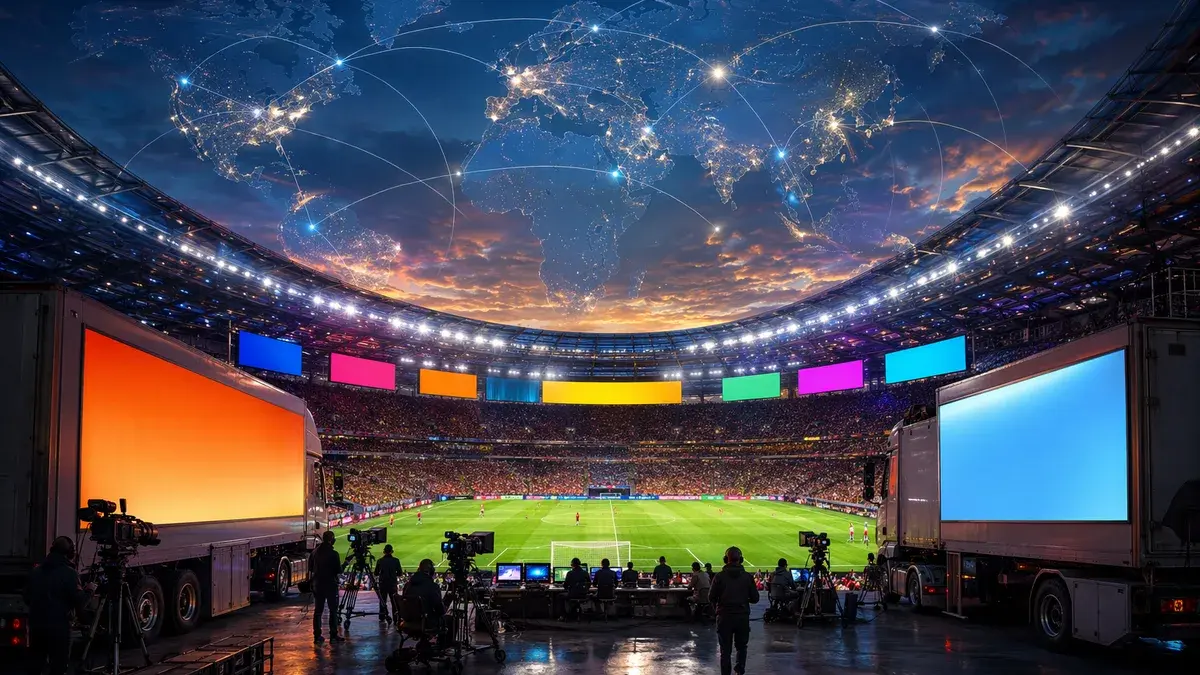
That number is the real story. ITV isn’t treating the 2026 men’s World Cup as another summer football schedule. It is pricing and packaging it as a rare mass-audience asset in a fragmented viewing market, according to Guardian World. The broadcaster has 51 matches, a bigger tournament format, late-stage premium inventory, and advertisers willing to pay for live attention that streaming and social platforms can’t easily replicate.
“This will be our most commercially successful tournament ever,” said Kelly Williams, managing director of commercial at ITV. “It is not just one game but six weeks of really big TV audiences. It is effectively our six-week summer Super Bowl moment.”
ITV is pricing the 48-team World Cup as a rare audience machine
The phrase “six-week summer Super Bowl moment” does a lot of work. ITV is not saying the World Cup has the same ad structure as the NFL’s championship game. It is saying the tournament creates repeated moments of national attention, and those moments are scarce.
That matters because the tournament has expanded from 32 teams to 48 teams, with 104 matches across the event. ITV will air 51 of them. More matches mean more ad inventory, but inventory alone doesn’t create pricing power. The value comes when advertisers believe those slots will gather viewers who are watching live, in large numbers, and in a context where ads still carry cultural weight, from marquee broadcasts to a USA vs Paraguay free stream.
That is ITV’s bet. Expanded football can either dilute attention or multiply commercial moments. ITV’s early revenue figure suggests advertisers are buying the second version.
The North American setting also gives the tournament a different feel from recent European competitions. It is co-hosted by the US, Mexico and Canada, and for a venue-level view of how that World Cup reset in Mexico is playing out, XOOMAR has covered Azteca Stadium’s World Cup reboot. The UK advertising story is narrower, but the geography still shapes timing, presentation, and the tournament’s global commercial pitch.
The numbers behind ITV’s ad boom are unusually clean
ITV says World Cup revenues are running about 30% above Euro 2024, despite Euro 2024 ending with England in the final. That is a high bar. It tells media buyers that the expanded World Cup is not being treated as surplus football, at least not by the advertisers ITV has already signed.
The broadcaster began selling commercial packages last autumn. Google has taken the headline sponsorship to promote Gemini and Pixel. ITV has also held back prime slots around later-stage matches, where prices can rise sharply if England progress.
The Guardian reports that ITV does not disclose individual ad prices, but media industry sources estimate a 30-second commercial in an England game can cost as much as £300,000.
| Commercial factor | ITV’s position in the source | XOOMAR analysis |
|---|---|---|
| Match inventory | 51 of 104 matches | More sellable windows than previous 64-match tournaments |
| Revenue run-rate | About 30% above Euro 2024 | Advertiser demand is stronger than a simple comparison with England’s Euro final run might suggest |
| England games | Past peaks of 20-25 million viewers | ITV can price scarcity if England advance |
| Typical World Cup game last time | About 6 million viewers | Non-England matches still carry meaningful reach |
| Premium inventory | Later slots being held back | ITV is preserving upside rather than selling everything early |
Williams said that at the last World Cup, when the tournament had 64 matches, a typical game averaged 6 million viewers, while England fixtures peaked at 20-25 million, depending on the stage.
Those numbers explain the commercial logic. ITV can sell broad tournament packages, then keep its most valuable late-stage supply in reserve. The upside depends on the draw, England’s progress, kick-off times, and which matches ITV controls.
Live football still gives advertisers something streaming can’t guarantee
Williams framed ITV’s sales pitch in blunt terms: live, free-to-air football still gathers audiences that advertisers struggle to find elsewhere.
“In a world where viewing habits have changed and audiences have fragmented I think these kind of shared cultural moments are more important and valued by advertisers,” said Williams. “They are just unique audiences. You can’t get them on streaming services, or social media, or YouTube. It is live and free to air.”
That is the strongest part of ITV’s argument. Digital platforms can offer targeting and measurement, but ITV is selling reach around shared attention. A major England match is easy for a brand to understand. People watch it live. They discuss it before and after. They know where and when it happens.
The source gives no evidence about ad fraud, brand safety, or digital pricing, so the point should stay narrower. ITV’s claim is not that digital advertising is weak. It is that the World Cup delivers a kind of mass viewing that online platforms do not replicate in the same way.
That distinction matters for AI and tech advertisers. Williams said one thing that “stood out” was the number of AI and technology companies booking slots. Alongside Google, the advertiser list includes Amazon Web Services, Apple, Dell, Microsoft’s Copilot, and Meta.
These companies don’t lack digital channels. Their presence on ITV suggests they want the authority of live mass media, not only targeted impressions.
Nike’s six-minute ad shows how far brands will stretch the format
The most striking campaign is Nike’s World Cup ad, which the Guardian says will be the longest commercial ever aired on TV in the UK at six minutes. It will air for the first time during England’s opening match against Croatia and features superstar footballers, including Cole Palmer, who did not make the squad.
That slot creates a useful test case. Ofcom limits the number of ad minutes a broadcaster can air in an hour, but the rule works on an average. ITV can adjust its total ad allocation to run the full Nike commercial.
This is where the Super Bowl comparison becomes more than a slogan. Super Bowl ads are treated as content in their own right. ITV appears to be pushing the World Cup in that direction, at least for the largest advertisers.
The advertiser base is also broader than the headline names. ITV has sold packages to 220 different advertisers, with 70 running TV ads in football coverage for the first time. About eight advertisers are new to TV advertising. One is Jeremy Clarkson’s Hawkstone lager brand, which booked slots after the media coverage around the Hawkstone Farmers’ Choir winning Britain’s Got Talent last month.
That mix matters. The tournament is attracting global tech names, sportswear giants, consumer brands, and first-time football advertisers. ITV’s commercial department will read that as proof that live football can still pull new money into television.
North American kick-off times create both upside and friction
The World Cup’s North American location helps ITV in one obvious way: England’s first games kick off at 9pm or 10pm UK time. Those are attractive windows for advertisers compared with afternoon matches in European tournaments.
Scotland’s group matches are more difficult. ITV expects a boost from Scotland’s progress, but the group-stage kick-off times are 11pm or 2am. That limits the audience shape, even if national interest is strong.
This is the tournament’s commercial tension in miniature. Expansion creates more games. North America creates global spectacle. But UK ad value still depends on the precise hour a match lands and whether the national teams keep viewers watching.
The tournament is not only a fight for advertising slots. It is also a fight for presentation. ITV has built a studio in Brooklyn, with views of the Manhattan skyline. The BBC, which has the rights to the remaining UK World Cup matches, will broadcast from its studios in Salford, Manchester. Gary Lineker has a reported £14m deal with Netflix to stream daily versions of The Rest Is Football podcast from downtown New York.
For readers tracking the Canadian side of the North American host mix, XOOMAR’s markets desk has separately followed Canada through pieces such as BoC Leaves Canadian Dollar Bulls Begging for a USD Drop. That macro story does not explain ITV’s ad surge, but it underlines how this World Cup sits across sport, media, and national-market narratives at once.
Advertisers and viewers will not experience the windfall the same way
Advertisers with large budgets get the cleanest benefit. They can buy high-attention slots, attach themselves to national matches, and build campaigns around fixtures people will plan to watch.
Smaller advertisers face a tougher trade-off. The source does not say they are being priced out, but a reported £300,000 estimate for a 30-second England-game spot shows why the best inventory will not be accessible to every brand.
Viewers get free-to-air access to a huge tournament. That remains the public bargain behind ITV and BBC coverage. The risk is irritation if ad formats feel too heavy, especially when six-minute branded spots enter the schedule.
For ITV, the prize is bigger than one tournament. A record World Cup would strengthen its case that linear TV still has premium value when it controls live sport. It also gives ITV more evidence for selling future football around scarcity, not just audience size.
The next rights fight will hinge on whether expansion really pays
The forward test is simple. If England progress, if enough major matches land in accessible UK windows, and if advertisers keep paying premiums for late-stage inventory, ITV’s “six-week Super Bowl” line will look commercially justified.
If the expanded format produces too many low-attention matches, awkward kick-off times, or early exits for home nations, the revenue headline may prove harder to repeat. More football is only more valuable when the audience stays emotionally invested.
For UK media buyers, the signal is already clear: major live football still commands pricing power. For rights holders, ITV’s 30% revenue uplift will be useful evidence in future negotiations. For broadcasters, it is a warning too. Strong ad sales can support free-to-air sport, but bigger tournaments also invite bigger rights expectations.
The World Cup will not rescue all of linear television. It does show that live football remains the strongest bargaining chip free-to-air broadcasters have.
The Bottom Line
- ITV is turning live football into premium ad inventory as audiences fragment across streaming and social platforms.
- The expanded 48-team World Cup gives broadcasters more matches and more chances to sell high-value advertising slots.
- Advertisers appear willing to pay more for live, mass-audience events that still command national attention.
ITV's 2026 World Cup Opportunity vs Euro 2024
| Metric | Euro 2024 | 2026 Men's World Cup |
|---|---|---|
| ITV ad revenue | Baseline | About 30% higher |
| Tournament scale | Smaller than 2026 World Cup | 48 teams and 104 matches |
| ITV match inventory | Not specified | 51 matches |
ITV Ad Revenue: 2026 World Cup vs Euro 2024
Euro 2024
index100
2026 World Cup
index130
Sources

Written by
XOOMAR Insights Team
Research and Editorial Desk
The XOOMAR Insights Team pairs automated research with human editorial judgment. We track hundreds of sources across technology, fintech, trading, SaaS, and cybersecurity, cross-check the facts, and explain what happened, why it matters, and what to watch next. We do not just rewrite headlines. Every article is fact-checked and scored for reliability before it goes live, and we link back to the original sources so you can verify anything yourself.
Explore More Topics
Related Articles
 Global Trends
FIFA Stake Sale Ignites Fight for World Cup Control
FIFA’s stake sale plan has turned World Cup funding into a control fight, with the FA alarmed and UEFA rushing into emergency talks.
Jul 29, 20268 min
 Global Trends
Trump's Press Jabs Chill White House Correspondents' Dinner
Trump's jokes landed in a shaken room, turning a press dinner into a sharper test of respect for scrutiny.
Jul 25, 20267 min
 Global Trends
Gillard Turns Jacinta Allan Ouster into Sexism Fight
Gillard says Allan faced vile sexism, complicating Carroll's reset and Victorian Labor's construction crackdown.
Jul 29, 20267 min
 Global Trends
Jail Time Records Turns New Bell Prison Into a Stage
Jail Time Records turned New Bell prison into a global stage, exposing fame, money and power inside one of Cameroon’s most crowded jails.
Jul 26, 20268 min
 Technology
Fast Metals Mines Toxic Red Mud for Critical Minerals
Fast Metals raised $4.3M to mine critical minerals from red mud. Now it has to prove the leftover waste is safer.
Jul 29, 202612 min
 SaaS & Tools
Nearly 60 Webinar Tools Expose the Best Webinar Software
Webinar platforms are now judged by pipeline, not polish. Zapier’s 2026 picks show marketers which tools turn attendance into action.
Jul 29, 20268 min
 Trading
$83 Oil Traps USD/CAD Before Pivotal Fed Rate Call
USD/CAD is boxed near 1.4093 as oil supports the loonie, but Fed risk keeps traders from calling a breakout.
Jul 29, 20265 min
 Technology
DoorDash Drone Delivery Seizes FAA Clearance to Fly
DoorDash won FAA clearance for DoorDash Air, signaling a bigger bet on owning delivery from couriers to bots to drones.
Jul 29, 20269 min
 Trading
Swiss Franc Slips as Inflation Math Frees SNB's Hand
Moderate inflation pass-through gives the SNB room to tolerate a weaker franc, sharpening the bull case for EUR/CHF.
Jul 29, 20268 min
 Global Trends
100 Aftershocks Turn Japan Earthquake Into Rescue Race
More than 100 aftershocks hit Kyushu after a 6.8 quake killed 13, turning rescue work into a race against time.
Jul 29, 20265 min
Don't miss the signal
Get our weekly roundup of the stories that matter across tech, fintech, and trading. No noise, just signal.
Free forever. No spam. Unsubscribe anytime.