Spanish officials identify all 13 victims after Los Gallardos fire hits southern expat community
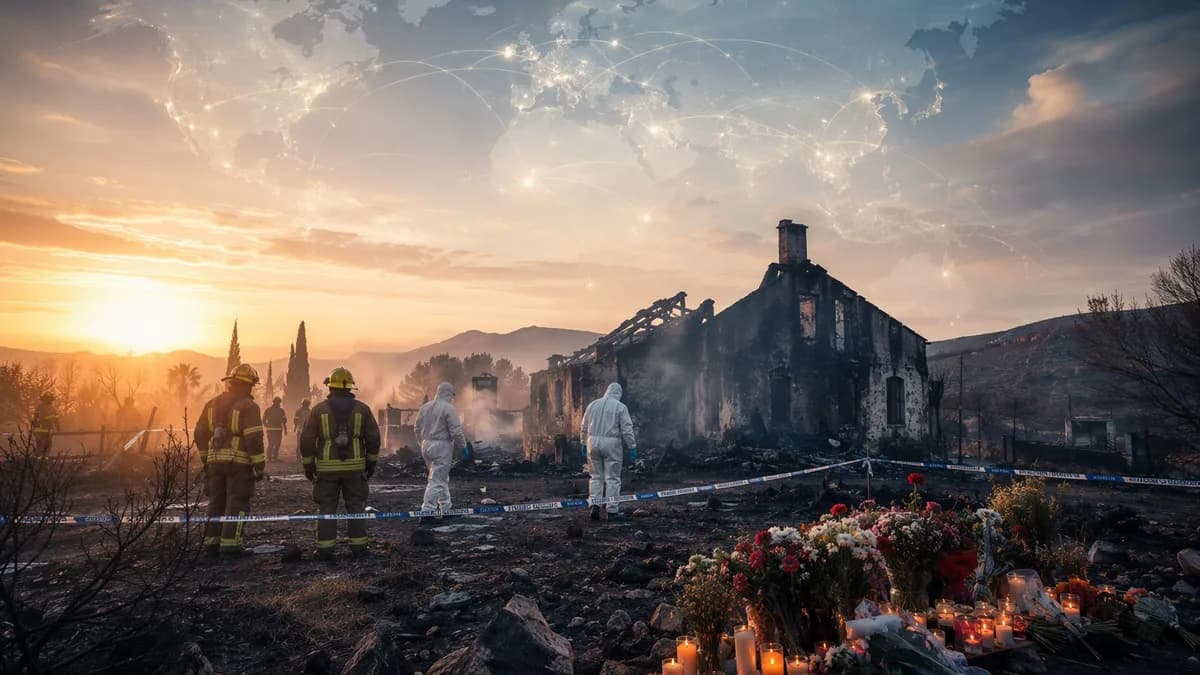
The missing-person count looked worse at first, but Spanish authorities now say all 13 people killed in the Los Gallardos fire have been identified. The victims were confirmed five days after the blaze tore through a remote expatriate community in southern Spain, according to ABC International.
XOOMAR Intelligence
Analyst Take
Authorities identified the fatalities late Tuesday using biological samples, after regional officials had initially believed 23 people were missing. All have now been accounted for.
The deaths make the Los Gallardos fire one of Spain’s deadliest blazes in years. It affected about 70 square kilometers (27 square miles) of forest and farmland, according to the Associated Press report carried by ABC International.
The victim profile underscores why the identification process carried international weight. Judicial authorities said 12 of the 13 victims were foreign nationals.
The dead included seven British citizens, among them a 93 year-old woman who died in the hospital, three Belgian nationals, a French woman, an American and a Spanish national, judicial authorities said.
All victims were adults. Authorities said eight were women and five were men.
That turns a local wildfire into a cross-border tragedy, but the source material does not report consular steps, family notifications, repatriation plans or funeral arrangements. Those remain outside the confirmed public record for now.
Before vs. after the identification update:
- Initial count: Regional authorities believed 23 people were missing.
- Current status: All missing people have been accounted for after investigators identified the 13 fatalities.
- Known toll: 13 adults died, including 12 foreign nationals and one Spanish national.
- Known scale: The fire affected 70 square kilometers (27 square miles) of forest and farmland.
Remote expat setting turned the Spain wildfire into an identification crisis
The expectation after a fast-moving wildfire is often a quick casualty count. The reality in Los Gallardos was slower and grimmer: bodies had to be identified through biological samples before authorities could close the missing-person gap.
The source reports the fire struck a remote expat community in southern Spain. It does not give details on damaged homes, evacuation routes, road access or the precise layout of the settlement. That matters because those details would explain how the fire became so deadly, but they have not been established in the supplied reporting.
What is clear is the environmental pressure around the blaze. Spain is facing extreme heat, and the AP report says heat, wind and little rainfall are creating conditions in which small wildfires can grow unchecked.
That combination helps explain the scale of the Los Gallardos fire without requiring speculation about individual decisions on the ground. Heat dries vegetation. Wind accelerates spread. Low rainfall leaves less natural resistance. The result can turn forest and farmland into a broad fire zone fast.
Euronews separately reported that flames were fanned by high winds and moved through forests and scrubland made dry by extreme temperatures. It also reported that the fire broke out in the southeastern province of Almería, near the Mediterranean coast.
The supplied reports differ on one important point: ABC International’s AP report says the fire affected 70 square kilometers, while Euronews reported about 7 square kilometers. XOOMAR is relying on the ABC International figure for the main scale reference because it is the required primary source for this article.
For readers following disaster response across XOOMAR’s global coverage, this update sits beside other recent emergency stories where the first public count did not settle the hardest questions, including Girl Airlift Exposes Texas Floods' Deadly Last Resort and 11 Children Die as Algeria Orphanage Fire Erupts Before Dawn. The common thread is not the cause. It is the lag between the event and a reliable human accounting.
Heat across Europe adds pressure as Fontainebleau fire comes under control
The Los Gallardos update landed as another major fire in Europe moved into a different phase. French firefighters brought a blaze in the historic Fontainebleau forest south of Paris under control, though local authorities said crews were still tackling small flare-ups.
France was still dealing with exceptional heat on Wednesday. Temperatures locally reached 39 degrees Celsius (102 Fahrenheit), and Météo-France warned that extreme heat and dry soil conditions continued to create significant wildfire risk across the country.
The broader climate signal is already visible in the source material. Europe is the world’s fastest-warming continent, with temperatures increasing twice as fast as the global average since the 1980s, according to the European Union’s Copernicus Climate Change Service.
That does not prove the cause of the Los Gallardos fire. It does explain why fire-prone regions are facing harsher baseline conditions when a blaze starts.
A simple comparison shows the two European fire situations now moving on different tracks:
| Fire location | Current reported status | Confirmed human toll | Reported risk factor |
|---|---|---|---|
| Los Gallardos, southern Spain | Victims identified after deadly fire | 13 dead | Extreme heat, wind, little rainfall |
| Fontainebleau, south of Paris | Fire under control, flare-ups remain | No deaths reported in source | Extreme heat and dry soil conditions |
Spain’s case is now about accountability and clarification. France’s is about containment holding under continued heat.
The next official updates need to close the gap on cause and safety conditions
The identification of all 13 Los Gallardos fire victims settles the casualty list, but it doesn’t answer how the blaze began, how fast it moved through the affected area or whether any safety failures contributed to the toll.
ABC International’s AP report does not state a cause. It also does not report whether investigators have opened a criminal or negligence inquiry. Those are the next hard facts to watch for.
Euronews reported that the fire was caused by an electrical cable falling on a road, but that detail does not appear in the primary ABC International account. Until Spanish authorities issue fuller findings, the cause should be treated carefully.
The most useful next updates would be specific and official:
- Cause: Whether authorities confirm an ignition source.
- Timeline: When the fire started, when warnings went out and when the danger peaked.
- Damage: How many homes, structures or farms were destroyed or damaged.
- Support: What aid is being offered to survivors and affected residents.
- Inquiry: Whether investigators find negligence, infrastructure failure or other safety issues.
For now, the confirmed reality is stark enough: the Los Gallardos fire killed 13 adults, most of them foreign residents or visitors, and forced authorities to use biological samples to identify every victim. The next phase will test whether officials can explain not just who died, but why this fire became one of Spain’s deadliest in years.
Impact Analysis
- The fire is one of Spain’s deadliest blazes in years, with 13 confirmed deaths.
- Most victims were foreign nationals, making the disaster a cross-border tragedy.
- Authorities have resolved the initial uncertainty by accounting for all people previously believed missing.
Los Gallardos Fire: Initial Report vs. Confirmed Update
| Category | Initial Report | Confirmed Update |
|---|---|---|
| Missing people | 23 believed missing | All accounted for |
| Fatalities | Not fully confirmed | 13 adults killed |
| Identification status | Pending | All victims identified using biological samples |
Victims by Nationality
Primary Sources & Disclosures

Written by
XOOMAR Insights Team
Research and Editorial Desk
The XOOMAR Insights Team pairs automated research with human editorial judgment. We track hundreds of sources across technology, fintech, trading, SaaS, and cybersecurity, cross-check the facts, and explain what happened, why it matters, and what to watch next. We do not just rewrite headlines. Every article is fact-checked and scored for reliability before it goes live, and we link back to the original sources so you can verify anything yourself.