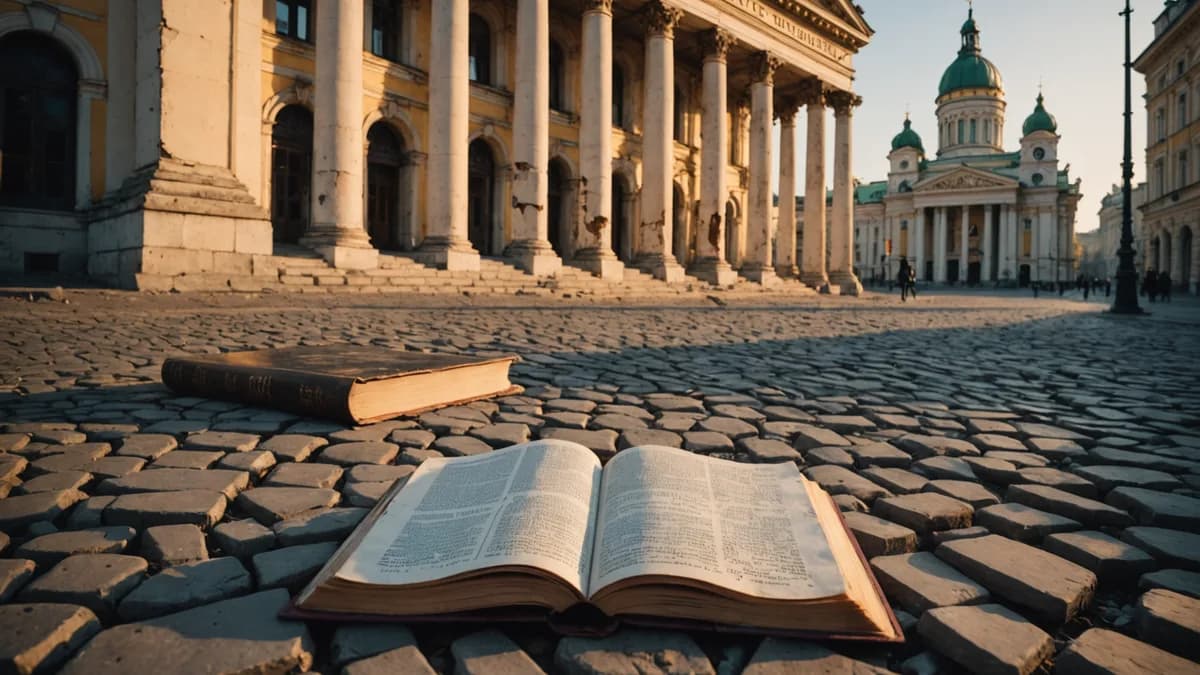
Russian is the cultural oxygen of Odesa, and this week the city council could vote to suffocate it.
XOOMAR Intelligence
Analyst Take
According to a report from BBC World, councillors in Ukraine's third-largest city will decide whether to enact one of the country's most aggressive local language bans. The proposal calls for a complete halt to Russian-language content in music and literature in public spaces. This extends beyond existing national laws, seeking to scrub Russian from streets, parks, institutions, and state-run venues. For a metropolis where Russian is the primary tongue and the historic language of its artistic soul, this is not a minor regulatory update. It is an attempt to surgically remove the cultural heart of a living city in the name of national survival.
A Test Case in Linguistic Self-Amputation
The proposal's radical nature stems from its target. This isn't just about blocking new Russian pop music. It aims to erase a foundational layer of Odesa's identity. The ban would extend to "old Odesa songs almost universally known throughout the former Soviet Union" and mandate the removal of all Russian-language books from display in public libraries, according to the BBC.
The logic, articulated by lawyer Artem Kartashov, is that the Russian language itself is "a weapon of Russia" used to "deconstruct Ukrainian identity." In a city targeted daily by Russian missiles, this argument carries the weight of an existential threat. It frames the measure as a critical defense of the nation's future.
"We must understand we were a colony," said photographer Natalia Mykhailenko, who supports the laws. "And these [language] laws are very important. I understand it's maybe sometimes not democratic. But without it, there will be no normal Ukraine in the future."
Yet the move directly confronts daily reality. The BBC notes that for millions of Ukrainians, Russian is their first language, including troops defending the country. In Odesa, a city famous for Russian-language writers and musicians, the plan has "provoked strong passions."
The Enforcement Mechanism: Pressure Over Punishment
Unlike national law, this local proposal would not directly sanction private businesses. Its power lies in influence. Odesa's state-appointed language ombudswoman, Anna Nerush, explained the mechanism to the BBC. "All businesses interact in one way or another with local government," she said. "They rent premises, they need advertising permits, and so on. So for many entities it's important to comply with a council decision, even if doesn't provide for sanctions for non-compliance."
This creates a powerful, informal compliance network. A shop or cafe might not be fined for playing Russian-language music, but it could suddenly find its rental agreement under review or its expansion permits delayed.
The national legal landscape already sets a strict stage. A 2019 law requires Ukrainian in public and professional contexts. Public-facing workers must initiate service in Ukrainian. Comic actor Borys Barsky's Mask Theatre has been fined for violations like using Russian in publicity and a cafe sign. His view is stark: "This isn't even like Orwell or Kafka, it's just madness."
The Core Conflict: Weapon vs. Heritage
The debate in Odesa fractures along a painful line. Is the Russian language solely a weapon of a genocidal regime, or is it also an inseparable part of Ukrainian cultural heritage?
Pro-ban view: The language is an active vector for Russian influence, especially on the young. Removing it from public life is a necessary act of "decolonization" and national defense, particularly for those traumatized by war. Anna Nerush noted that hearing Russian on the street "can be a real trigger" for former prisoners of war.
Anti-ban view: The ban alienates loyal Ukrainian citizens, plays into Vladimir Putin's narrative of oppression, and destroys a shared cultural legacy. "Russian isn't [only] the language of Putin, it's the language of Dostoyevsky and Bulgakov," argues Barsky. "Who benefits from setting people against other people who love Ukraine just as deeply, only love it in a different language? Only Putin benefits from this."
Anthropologist Anastasia Piliavsky frames this as a crisis of liberty. "Ukraine has been fighting for freedom. The point of this war is not to be under authoritarian rule... So when fines, or the threat of being fired arrives, then people start wondering: what are we fighting for?"
A City's Identity At A Forced Crossroads
The outcome will test whether forced cultural change can forge unity or deepen fissures. Odesa's demographic reality makes it a unique battleground. While hard data on current language use is scarce, physics teacher Pavlo Viktor estimates "about 10% of the Odesa population spoke Ukrainian in the street." He advocates for a gradual shift: "Ukrainianisation must be polite and soft… to make an atmosphere when they want to do this."
The proposal’s supporters are betting that in a time of war, atmosphere is a luxury. The drive is toward a deliberate, accelerated rewiring of the public sphere, as seen in the removal of Catherine the Great's statue and street renamings. This follows a pattern of cultural de-Russification as a parallel front in the war, similar to the aftermath of deadly Russian strikes that have devastated other Ukrainian cities.
What remains unclear is the proposal's political support. The BBC notes it is opposed by an influential group linked to a former mayor. A 2022 national poll showed 80% backing for Ukrainian dominating public life, but a Kyiv student survey found 82% choosing Russian during breaks.
XOOMAR Analysis: The Odesa language ban vote is a high-stakes experiment in whether a society can be rapidly remade from above during total war. The immediate consequences are predictable: a further bifurcation between public compliance and private practice, and heightened social tension.
The long-term gamble is profound. If passed, the measure may succeed in accelerating the public use of Ukrainian, achieving a key wartime political goal. But the risk is creating a permanent cultural grievance, a sense among Russian-speaking Ukrainians that their identity is being surgically removed by their own state. This internal strain unfolds as Ukraine's leadership fights for the nation's very survival, a struggle highlighted when CIA Chief Warns Russia Against NATO Attack in Moscow.
Watch the council vote. Then, watch the streets, cafes, and theaters of Odesa. The real verdict will not be in a legislative tally, but in whether a city can mourn the loss of its cultural language without losing its soul.
Impact Analysis
- A ban would sever Odesa residents from Russian-language art and books that are central to their cultural identity, including historic songs known across the former Soviet Union.
- The proposal frames the Russian language as a weapon of war and colonial control, making language policy a direct part of Ukraine's national defense strategy, during a conflict where even British nationals have been killed fighting for Russia.
- The decision tests how far a democratic nation is willing to go in restricting cultural expression to secure its sovereignty during an ongoing invasion.
Primary Sources & Disclosures

Written by
XOOMAR Insights Team
Research and Editorial Desk
The XOOMAR Insights Team pairs automated research with human editorial judgment. We track hundreds of sources across technology, fintech, trading, SaaS, and cybersecurity, cross-check the facts, and explain what happened, why it matters, and what to watch next. We do not just rewrite headlines. Every article is fact-checked and scored for reliability before it goes live, and we link back to the original sources so you can verify anything yourself.