
Twenty-seven states now have a clearer path to bar transgender girls and women from girls’ and women’s school sports after the US Supreme Court upheld bans in West Virginia and Idaho on Tuesday. The trans athletes Supreme Court ruling landed as transgender youth athletes told Guardian World they would keep playing where they can and keep fighting for access to teams that match their gender identity.

Global TrendsJune 30, 2026· 6 min read· By XOOMAR Insights Team
27 States Win Power in Trans Athletes Supreme Court Ruling
Updated on June 30, 2026
XOOMAR Intelligence
Analyst Take
73/ 100
4 sources analyzedMedium confidenceTrend20Freshness90Source Trust90Factual Grounding94Signal Cluster40
The court’s conservative supermajority found the West Virginia and Idaho laws constitutional, according to the Guardian, giving a major win to states and advocacy groups pushing restrictions on transgender youth participation in school athletics. LGBTQ+ advocates said the ruling’s immediate legal effect is narrower than a national ban, since more than 20 states still have inclusive policies.
“We’re not backing down,” said Nereyda Hernandez, a California trans rights advocate and mother of AB Hernandez, a 17-year-old track-and-field athlete from Jurupa Valley.
Supreme Court trans athletes ruling upholds West Virginia and Idaho sports bans
The ruling centers on whether states can exclude transgender girls from girls’ and women’s teams in publicly funded schools. The cases came from Little v Hecox, challenging Idaho’s law, and West Virginia v BPJ, brought by Becky Pepper-Jackson, a trans girl and track athlete.
Idaho passed the first categorical state ban on trans women and girls in women’s sports teams in 2020. West Virginia later enacted its own restriction, which Becky challenged after being barred from competing on the team that matched her gender.
The court’s majority sided with the states. Justice Brett Kavanaugh, writing for the majority in related reporting supplied to XOOMAR, said:
“The Constitution and Title IX do not require an overhaul of women’s and girls’ sports throughout America.”
Justice Sonia Sotomayor dissented, writing that the court “inflicts a hardship on those it disfavors without giving them the fair and full opportunity the Constitution requires to litigate their contentions.”
The ruling hits a small group of athletes with outsized political visibility. The NCAA president said in 2024 there were fewer than 10 trans athletes in college sports, according to the supplied source material. Advocates cited by the Guardian said more than 110,000 trans youth ages 13 to 17 live in states with sports bans.
25 other states get a boost, but no national ban exists
The Supreme Court decision strengthens similar restrictions in 25 other states, the Guardian reported. That does not mean every state must adopt a ban. It means states that already passed one now have stronger legal footing after the court found the West Virginia and Idaho laws constitutional.
Supporters of the bans frame them as protections for fairness in girls’ sports. Opponents argue the laws single out vulnerable students and deny them equal treatment in one of the most ordinary parts of school life: joining a team.
| State case | Athlete involved | Core issue |
|---|---|---|
| Little v Hecox | Lindsay Hecox | Idaho’s ban blocked a trans college student from women’s track |
| West Virginia v BPJ | Becky Pepper-Jackson | West Virginia’s law barred a trans girl from school sports matching her gender |
The practical effect will vary by state. The Guardian notes that more than 20 states have inclusive policies allowing trans students to play on teams that match their gender. The ruling does not erase those policies by itself.
XOOMAR analysis: The legal center of gravity has moved. Before Tuesday, opponents of state bans could point to lower court wins and unresolved federal claims. After Tuesday, state officials defending bans can cite the Supreme Court’s approval of two leading laws. But the source material does not show immediate enforcement changes by specific districts, leagues, or athletic associations.
For readers tracking the court’s broader docket, XOOMAR has also covered other Supreme Court flashpoints, including Supreme Court Throws Assault Weapons Bans Into Peril and $5M Carroll Verdict Sticks as Supreme Court Spurns Trump.
Young athletes say they’ll keep playing where they can
The human response came quickly from trans athletes and their families. AB Hernandez, who competed in three qualifying events at the CIF state track championship in Clovis, California, on 30 May 2026, said sports remain central to her life.
“Sports have just meant the absolute world to me,” AB said. “If I had been forced to join the boys’ team, it would just be so uncomfortable for all of us.”
She added: “They’re failing to see on my girls’ team, everyone is super happy and super nice and no one cares. We’re just high school girls trying to have fun and play a sport we all love.”
Lina Haaga, a 15-year-old track athlete in Pasadena, California, said sports helped her find community, friends and connection. She said she plans to continue athletics in the fall despite online attacks and the Supreme Court decision.
“We need to stay strong and continue fighting,” Lina said.
Her mother, Catalina Haaga, put the family’s position in sharper terms: “We’re prioritizing competition over inclusion, tolerance, belonging. We need to zoom out as a nation and ask, what is the greater value at stake? In our home, the answer is belonging is more important than a trophy.”
Civil rights groups now face a narrower but still active fight
Civil rights advocates said the trans athletes Supreme Court ruling does not end the fight over school sports access. The New York Civil Liberties Union said the ruling does not affect existing civil rights protections for trans youth in New York, while warning it could “embolden more transphobic policies in an attempt to erase trans kids and their existence from daily life.”
New York attorney general Letitia James said she would continue opposing discriminatory policies. Other elected Democrats named in the Guardian’s report, including officials from Washington state, Virginia, Massachusetts and Minnesota, criticized the ruling and reiterated support for trans youth and adults.
The unresolved questions now matter. Supplied reporting from NPR said Tuesday’s decision leaves open issues involving younger students, club sports, recreational leagues and the line between varsity competition and other school athletics. Those questions could shape the next wave of disputes.
Lily Norcross, a 17-year-old track athlete from California’s Central Coast, said she would keep competing in her final year of high school, while worrying about the ruling’s ripple effects.
“I will not back down from this fight,” Lily said.
The Supreme Court has settled a major constitutional question for now: states may defend bans like those in West Virginia and Idaho. The next test is practical and local: how schools apply those laws, how inclusive states preserve their own rules, and how families respond when the national fight lands on a student’s team roster.
Impact Analysis
- The ruling strengthens states’ ability to restrict transgender students’ participation in school sports.
- Trans youth athletes may face uneven access depending on where they live.
- The decision intensifies the national legal and political fight over Title IX, gender identity, and school athletics.
State Policy Landscape After the Supreme Court Ruling
| Policy category | Status |
|---|---|
| States with a clearer path to bar transgender girls and women from girls’ and women’s school sports | 27 states |
| States still described as having inclusive policies | More than 20 states |
Sources

Written by
XOOMAR Insights Team
Research and Editorial Desk
The XOOMAR Insights Team pairs automated research with human editorial judgment. We track hundreds of sources across technology, fintech, trading, SaaS, and cybersecurity, cross-check the facts, and explain what happened, why it matters, and what to watch next. We do not just rewrite headlines. Every article is fact-checked and scored for reliability before it goes live, and we link back to the original sources so you can verify anything yourself.
Explore More Topics
Related Articles
 Global Trends
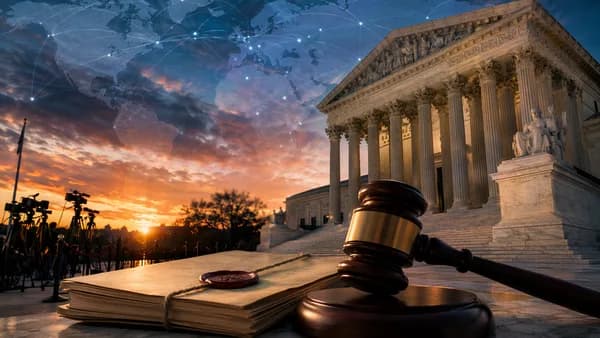
Supreme Court Throws Assault Weapons Bans Into Peril
The Supreme Court will test whether AR-15-style rifle bans in about a dozen states can survive the Second Amendment.
Jun 30, 20268 min
 Global Trends
$5M Carroll Verdict Sticks as Supreme Court Spurns Trump
The Supreme Court let Trump’s $5m Carroll verdict stand, ending his bid to reopen the civil sexual abuse and defamation case.
Jun 29, 20268 min
 Global Trends
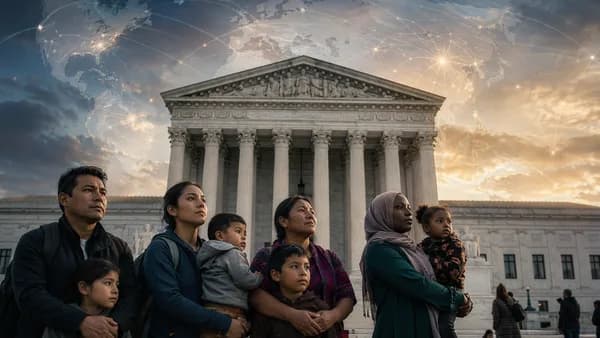
356,000 TPS Holders Face Deportation After Trump Win
The Supreme Court let Trump end TPS for Haitians and Syrians, putting 356,000-plus legal residents at risk of removal.
Jun 27, 20268 min
 Global Trends
Supreme Court Immigration Rulings Let Trump Strip TPS
The court's conservative bloc gave Trump officials new power over TPS and asylum, triggering fury from immigrant rights groups.
Jun 26, 20269 min
 Global Trends
Supreme Court Locks RLUIPA Damages Door for Prisoners
The Supreme Court said RLUIPA doesn't let prisoners seek damages from individual guards, narrowing remedies for faith violations.
Jun 23, 20269 min
 Technology
$249 Flipper Busy Bar Bets Hacker Cred Can Win Desks
Flipper Devices is selling Busy Bar for $249, testing whether its hacker-tool fanbase can follow it into premium desk productivity gear.
Jun 29, 20266 min
 Trading
AUD/USD Bulls Grab 0.6915 as RBA Keeps Hike Threat Alive
AUD/USD climbed near 0.6915 as hawkish RBA minutes kept rate hikes on the table and US confidence failed to lift the dollar.
Jun 30, 20265 min
 Technology
Trump’s 2028 Quantum Computer Bet Crashes Into Reality
Washington wants a breakthrough quantum computer by 2028, but today's machines still haven't shown they can do useful work.
Jun 30, 20267 min
 Technology
Morgan Stanley FIXR Halves P&L Work by Caging AI Agents
Morgan Stanley cut a six-hour P&L reconciliation job in half by boxing its AI agents into tighter human-controlled workflows.
Jun 30, 20269 min
 Global Trends
Qatar Knocks Down Direct US-Iran Talks Claim in Doha
Qatar says Witkoff and Kushner are in Doha to meet mediators, not Iranians, cooling direct US-Iran talks speculation.
Jun 30, 20266 min
Don't miss the signal
Get our weekly roundup of the stories that matter across tech, fintech, and trading. No noise, just signal.
Free forever. No spam. Unsubscribe anytime.