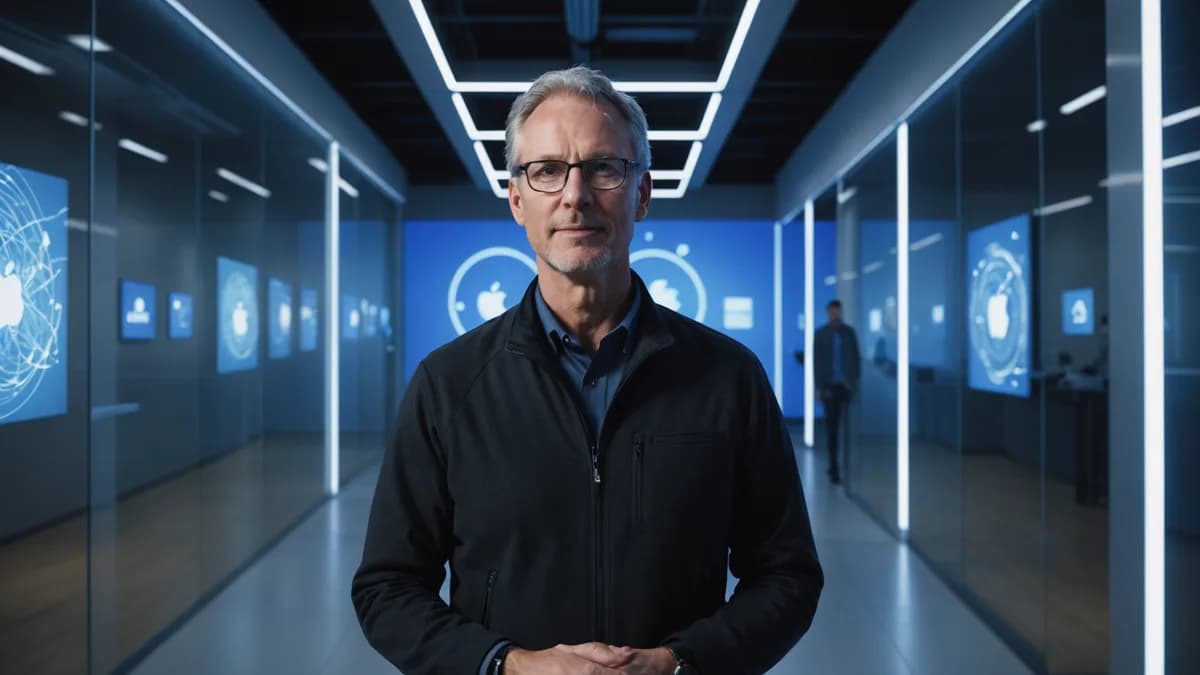
On September 1, 2024, John Ternus succeeded Tim Cook as CEO of the world's most valuable public company, a $4.5 trillion hardware empire that now prints over $100 billion in yearly profit. His first day wasn't about a new vision, but a quiet affirmation of the old one. Ternus is a 23-year company veteran, a hardware engineer whose most celebrated wins include the Mac's silicon transition and the AirPods franchise. As Guardian World reports, his ascension signals Apple will "stay the course" that built this profit machine. The central question for investors and the industry is blunt: in an era dominated by AI and software talk, has Apple just made a masterstroke by betting on a hardware boss, or is it risking strategic myopia?
XOOMAR Intelligence
Analyst Take
Ternus and the Cult of the Hardware Man
Apple’s choice of Ternus is a statement carved in aluminum. It rejects the notion that a services czar or an AI evangelist should helm the company. Instead, it places ultimate power with the executive responsible for the physical object, the chip, the hinge, the finish. His resume is a map of Apple’s modern hardware triumphs: he started in 2001, rose to vice-president of hardware engineering in 2013, and led the division from 2021. His team shipped the M-series chips that re-energized the Mac, the Apple Watch that created a category, and the AirPods that became a cultural fixture.
This appointment underlines a product-first philosophy that prioritizes evolutionary refinement over radical, untested pivots. Contrast this with other potential internal successors, like services chief Eddy Cue. Promoting Ternus says Apple believes its future is won not in cloud servers or AI models alone, but in the precise integration of silicon, software, and steel that customers are willing to pay a premium to hold.
“Having spent almost my entire career at Apple, I have been lucky to have worked under Steve Jobs and to have had Tim Cook as my mentor,” Ternus said in the company’s press release.
The Wall Street Journal describes him as “an affable mechanical engineer” with a management style closer to the calm Cook than the volatile Jobs. He is not a charismatic showman, but a operator entrusted with the crown jewels. The bet is clear: in a world chasing the next big software thing, Apple is doubling down on being the world’s best thing-maker.
Deconstructing the $100 Billion Profit Machine
Ternus isn’t inheriting a startup. He’s taking the helm of a financial galleon laden with gold. Under Cook, Apple’s profit soared past $100 billion annually. This isn't magic; it's a machine with distinct, interlocking parts Ternus must now maintain.
The Core Engine: iPhone The prompt notes "record revenue from its iPhones this year, boosted by renewed demand in China." This single line reveals the iPhone's enduring, staggering power. Despite saturation talk, it remains the profit fountain.
The High-Margin Orbit: Services While not detailed in the source, Services (App Store, subscriptions, licensing) is the high-profit growth layer built atop the hardware base. It's the annuity model Cook perfected.
The Accessory Empire: Wearables Ternus’s own hardware division hatched the Apple Watch and AirPods, which the source confirms "both grew into major lines of business." These are not gadgets; they are multi-billion dollar businesses that deepen ecosystem lock-in.
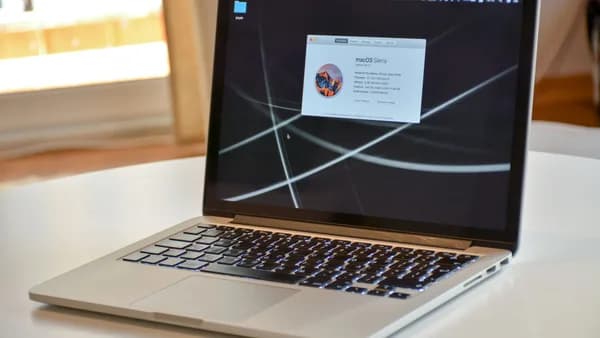
The Resurgent Workhorse: Mac The source specifically credits Ternus with the development of Apple's proprietary silicon for Macs, which "saw sales soar after swapping out Intel chips in 2020." He turned a stagnating line into a showcase of vertical integration.
Cook's Legacy: Operational Mastery The profit machine runs on Cook’s unparalleled supply chain and operational discipline. Ternus inherits this optimized system. The question is whether he can merely keep it humming, or find new gears for growth within it. The model appears at a peak, but under a hardware leader, the playbook will be to create new premium hardware that feeds every other part of the machine.
The iPhone’s China Comeback and Its Fragile Future
The source highlights a critical, immediate challenge tucked inside the good news: "record revenue from its iPhones this year, boosted by renewed demand in China."
For Ternus, this is a double-edged sword. A resurgent Chinese market props up Apple’s most important product, but it also represents his most volatile geopolitical risk. This isn't a hardware problem solvable in a lab. It is a delicate dance involving national regulation, competing patriotism, and a formidable local rival in Huawei.
Why this matters now:
- Concentration Risk: Apple’s record revenue becomes increasingly tied to a single, adversarial market.
- The Innovation Lag: Chinese manufacturers move fast. Can Apple’s slower, refined hardware cycle keep its premium cachet?
- The Regulatory Sword: Any misstep in data handling or compliance could trigger swift retaliation.
Ternus’s engineering background offers no direct playbook for this. His success will hinge on delegating and trusting Cook, who remains as executive chairman, and other diplomats within Apple. Yet the buck stops with him. Managing China’s fragile favor may be a more decisive test of his early tenure than any product launch.
Insider vs. Outsider: Why Apple Always Promotes From Within
Ternus’s promotion continues a defining Apple tradition: extreme cultural continuity. Compare this to other tech giants:
| Company | CEO Transition Style | Example |
|---|---|---|
| Apple | Almost exclusively internal, product-focused | Sculley (external) was an exception; Jobs, Cook, and now Ternus are insiders. |
| Microsoft | Mixed; recently internal but historically external | Satya Nadella (internal), Steve Ballmer (internal), but Bill Gates brought in outside COOs. |
| Google/Alphabet | Frequently internal, but with diverse backgrounds | Sundar Pichai (internal, product management), Larry Page/Sergey Brin (founders). |
Apple’s pattern is clear. Ternus follows Cook (24-year veteran before becoming CEO), who followed Jobs (co-founder). This breeds a cohesive, secretive culture obsessed with product detail. The upside is a unified vision and operational harmony. The potential downside, however, is groupthink and incrementalism. Could a leadership team shaped by the same "Apple way" since 2001 miss a seismic shift because it doesn't look like a beautifully packaged device?
The source implies this was a conscious, long-planned choice. The New York Times reported Cook had been planning succession "for the better part of a year," and Ternus "had been a favorite." This wasn't a scramble; it was the system working as designed to perpetuate itself.
The Three Battles Awaiting John Ternus
The source material outlines clear challenges that will define Ternus’s tenure, moving beyond maintaining profits to defending the kingdom.
1. Defining a Coherent AI Strategy The article states directly: "he will face pressure to catch up with the iPhone maker’s Silicon Valley peers on artificial intelligence, where it has lagged even while leading in consumer hardware." It notes a "perceived lack of name-brand consumer AI offerings" and a "promise to revamp of the Siri virtual assistant with Google’s Gemini AI." This is his most glaring strategic gap. As a hardware leader, his test is whether AI can be integrated as a seamless, on-device feature that feels Apple, not a bolted-on chatbot.
2. Innovating Beyond the iPhone Template Ternus’s hardware division launched the Vision Pro headset, which the source flatly notes "did not" become a major line of business. His track record has hits (Watch, AirPods) and one expensive, unproven miss. Pressure will mount to deliver the next category-defining device, not just refine an existing one. Will his team deliver a product that creates its own market, or merely another iPhone accessory? This connects directly to our previous reporting on the struggles in ambitious divisions like the one behind Vision Pro, as seen in Apple Axes 200 Jobs From Vision Pro and Siri Divisions.
3. Navigating Regulatory Siege Warfare While not detailed in the source, the context is inescapable. Apple faces antitrust scrutiny in the US and EU targeting its App Store rules, payment systems, and ecosystem control. For a hardware-centric CEO, these software and service-based legal battles are a distracting, resource-intensive front. He must defend Cook’s walled garden while regulators try to tear the gates down.
Each battle threatens a core pillar of the profit machine: AI irrelevance cedes the high ground to competitors; innovation stagnation erodes the premium brand; regulatory losses dismantle the services annuity. Ternus must fight on all three fronts.
What a Hardware Chief Means for Apple’s Next Decade
Expect the tangible impacts of Ternus’s leadership to manifest in the products themselves.
Product Philosophy: Refinement Over Revolution We should anticipate a continued focus on material science (new alloys, glass), form factor evolution (thinner, lighter, more durable), and deeper integration between device families. The "it just works" ethos will be paramount. This could mean a slower adoption of flashy, AI-first software features until they can be executed with Apple's typical polish.
Corporate Posture: Vertical Integration and Secrecy The vertical integration model, controlling chips, hardware, and OS, that Ternus helped advance with the M-series Macs will likely extend further. Acquisitions will probably be small, strategic, and focused on specific technologies (e.g., a new sensor company) rather than large, transformative software buys. The culture of secrecy remains sacrosanct.
For the Consumer: Ecosystem Lock-In and Peak Build Quality For users, this path promises arguably the best-built devices on the planet, with an ecosystem so seamless it becomes difficult to leave. The risk is that competitors might offer more compelling, innovative software experiences or AI capabilities that feel generations ahead, even if housed in less-perfect hardware. The timeline for major new product categories, like a widely successful AR headset or a foldable iPhone hinted at in other rumors, may extend as perfection is pursued, as seen in speculative reports like Apple's First Foldable iPhone Starring Ternus Debuts.
The Final Verdict: Steward or Visionary?
John Ternus is the ultimate choice to defend Tim Cook’s empire. He knows every bolt and circuit of the $100 billion profit machine. His promotion ensures Apple won’t recklessly pivot from its hardware-centric core. In a volatile tech landscape where others chase hype, choosing the safe, proven insider might itself be a radical move.
But defense alone is not enough for a decade-long reign. The source material provides his mandate: maintain the machine. History will judge him on whether he could also build a new one.
His legacy will be determined by a single outcome: can he birth and scale a new, paradigm-shifting hardware category that isn't an accessory to the iPhone? Not a curious experiment like the Vision Pro, but a product as indispensable as the iPhone or Mac. If he can, he transitions from steward to visionary. If he cannot, he will be remembered as the capable custodian who presided over Apple's peak, but left the next frontier for someone else to chart. The battles are lined up. The machine is warm. The engineer is now in charge.
The Bottom Line
- Apple’s CEO transition to hardware engineer John Ternus solidifies the company’s $4.5 trillion hardware-first strategy, prioritizing physical products over AI or services leadership at the top.
- As a leader of the Mac silicon transition and AirPods franchise, Ternus signals evolutionary refinement and integration over radical pivots, which reassures investors of continuity amidst industry AI hype.
- The move sharpens the question of whether doubling down on hardware mastery is a competitive moat or strategic risk as rivals focus on software and cloud services.
Primary Sources & Disclosures

Written by
XOOMAR Insights Team
Research and Editorial Desk
The XOOMAR Insights Team pairs automated research with human editorial judgment. We track hundreds of sources across technology, fintech, trading, SaaS, and cybersecurity, cross-check the facts, and explain what happened, why it matters, and what to watch next. We do not just rewrite headlines. Every article is fact-checked and scored for reliability before it goes live, and we link back to the original sources so you can verify anything yourself.