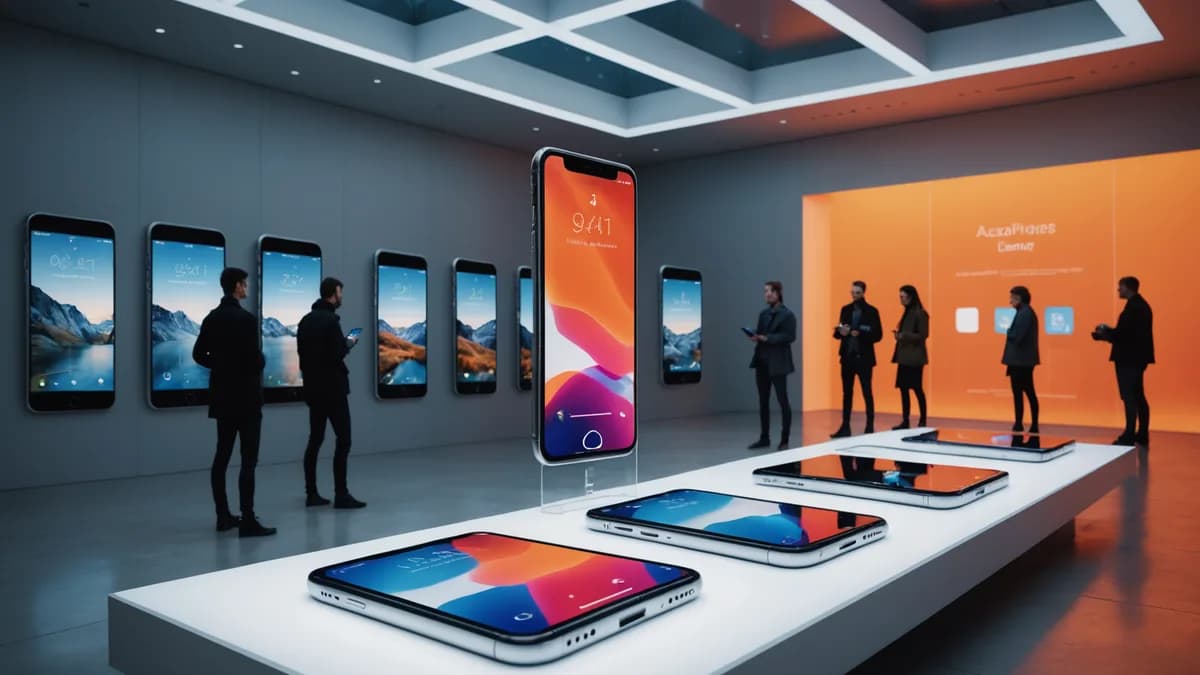
Apple just turned one of consumer tech's oldest rules on its head. Instead of dropping iPhone prices when a new model launches, it is raising them.
XOOMAR Intelligence
Analyst Take
According to TechCrunch, the company is adding $100 to the starting price of its existing models following the "Surprise and Shine" event that unveiled the iPhone 18 and foldable iPhone Duo. The iPhone 16 now starts at $799, the iPhone 17e at $699, and the pricier iPhone Air jumps to $1,099. The iPhone 17 Pro and Pro Max were discontinued entirely.
This isn't a simple supply-chain adjustment. It's a surgical strike on consumer psychology. By making last year's model more expensive, Apple is deliberately shrinking the window of perceived value, forcing a binary choice: pay up for the latest tech or get less for your money than you could have yesterday.
Your Obsolete iPhone Just Got More Expensive, and That's Exactly the Point
The traditional tech depreciation model is linear. New product launches, old ones get cheaper, creating a natural entry point for budget-conscious buyers. Apple has now bent that line into a hook. A customer who waited for the iPhone 18 launch to snag a discounted iPhone 17 just watched their target price increase by $100.
This flips the script from rewarding patience to penalizing it. The strategy signals that Apple's priority is no longer just selling hardware. It's meticulously controlling the perceived value of every device in its lineup at every moment. The "value" tier is no longer defined by age. It's defined by what Apple decides it's worth today, a move that directly attacks the savvy shopper's playbook.
"Apple could no longer fully absorb the rising costs of memory and storage chips," former CEO Tim Cook told The Wall Street Journal in June.
While the source cites component costs and competitive pressures as reasons, applying the hike specifically to older models is a separate, aggressive tactic. It weaponizes artificial scarcity. You aren't just buying a phone. You're buying into a timeline where hesitation has a literal price tag.
The Math of Artificial Scarcity: How $100 Changes the Entire Upgrade Calculus
Let's break down the new price ladder. The move creates a compressed, more expensive middle ground.
Before the hike: A new Pro model might have been $300-$400 more than a deeply discounted previous-generation standard model. That gap justified waiting for many.
After the hike: A $100 increase on the iPhone 16 and 17 narrows that gap significantly. Suddenly, the jump to the latest iPhone 18 seems less extreme by comparison. The psychological math shifts from "Is the new one worth $400 more?" to "Is it worth $200 more than this now-overpriced old one?"
For the consumer who waits, the calculation is brutal. Their expected discount has transformed into a penalty. This isn't an incidental price adjustment. It's a lever to increase the attach rate for newer, higher-margin models by making the older ones feel like a bad deal.
This data point fits into Apple's broader ecosystem lock-in strategy, where protecting hardware margins is fundamental. As we've seen in its approach to Apple's CEO Revives Jobs's Hub Strategy for iPhone, controlling the core device is paramount. Making the "cheaper" option less appealing funnels users toward the more profitable center of that hub.
From Steve Jobs's Clear Tiers to Tim Cook's Price Distortion
Historically, Apple used clear price drops on older iPhones to create accessible entry points into the iOS ecosystem. The strategy was simple: new phone at the top, last year's model becomes the mid-tier, two-year-old model becomes the budget option. It was a predictable, consumer-friendly depreciation curve.
The shift began as iPhone sales growth plateaued. Apple responded with more aggressive segmentation (Pro, Pro Max, SE, now Air) and the introduction of financing plans like the iPhone Upgrade Program. The goal was to manage the product lifecycle and maintain revenue per user.
This price hike on older models is the next, more audacious step. It's an attempt to control not just the lifecycle, but the perceived depreciation curve itself. Instead of value naturally declining over time, Apple is asserting the right to redefine it, effectively creating "price anchors" that make its newest products look more reasonably priced.
It's a move from Steve Jobs's reality distortion field, which sold a vision, to what might be called Tim Cook's price distortion field, which sells a financial calculus.
Who Wins, Who Loses, and Who Just Shrugs?
The stakeholder fallout from this move is uneven.
The Casual, Budget-Conscious Upgrader: Loses. Their go-to strategy, buying a perfectly capable one-generation-old iPhone at a sweet spot, is degraded. The "value" they were waiting for has been legislated away by a price hike.
The Potential Android Defector: Faces a Higher Wall. The price hike on older models raises the barrier to entry into the iOS ecosystem. The standard playbook of buying a recent, but not latest, iPhone to test the waters just got more expensive.
The Investor & Analyst: Likely Applauds. From a purely financial perspective, this is a margin defense play. It should boost average selling prices (ASPs) and likely push more buyers toward the newest models, which carry better margins. Protecting the premium brand's pricing power is a win in a saturated market.
The Refurbished & Secondary Market: Could See a Paradoxical Boost. If Apple's official "old new" stock is less competitive, third-party refurbishers and the peer-to-peer resale market may become more attractive. This could unintentionally strengthen channels outside Apple's direct control, a dynamic the company has historically disliked, as seen in its tight management of the accessory ecosystem with moves like those in Belkin Attack Cuts Apple's AirTag Accessory Taxes Dead.
The Carrier and Credit Card Coup: Financing the Inevitable
This $100 hike is a masterstroke for driving consumers into financing arms. The increased sticker shock makes carrier subsidies ("Get an iPhone 17 for $0 down with trade-in!") and Apple's own monthly installment plans seem more necessary than ever.
The psychology is powerful. A $1000 phone split over 24 months is "just" $41.67 per month. Add $100, and it's "just" $45.83. The monthly difference feels trivial, masking the total cost increase. This move all but forces the normalization of perpetual phone payments, deepening the lock-in to upgrade cycles that Apple and its partners control.
It turns a discrete, lump-sum purchase decision into a manageable, ongoing subscription fee. For Apple, this ensures a more predictable revenue stream and ties the customer more tightly to its renewal timetable.
This Isn't Just About iPhones: The New Rules for Tech Ownership
Apple's move writes a new playbook for the hardware industry, with implications far beyond Cupertino.
For Consumers: The era of patient, savvy shopping for tech is under direct assault. The strategy of waiting for a predictable post-launch price drop is now financially risky. Waiting is no longer rewarded. It's penalized. Ownership becomes a game where the manufacturer constantly changes the rules of depreciation.
For the Industry: Every premium hardware maker in a saturated market is watching. If Apple succeeds in conditioning the market to accept this, or if consumer pushback is minimal, expect rivals to test similar strategies. The playbook for maintaining margins shifts from pure innovation to include aggressive price and perception management across the entire product stack.
The bigger picture is a continued shift from products you own on your terms to premium tiers you access on the manufacturer's timeline. Apple is dictating the terms, and the first term is that time is not on your side.
The 2025 Price Tag: Predicting Apple's Next Margin-Maximizing Moves
If the market absorbs this price hike without significant sales erosion, expect the strategy to evolve and harden.
Prediction 1: The 'Air' Becomes the Permanent Price Anchor. The iPhone Air, positioned as a premium non-Pro model, could become the permanent "new old" price anchor. Standard models like the iPhone 18 might see steeper effective price drops in their first year, only to be bumped back up the following September, creating a rollercoaster designed to confuse comparison shopping.
Prediction 2: Trade-In Values Become the Key Softener. Apple could offer enhanced trade-in values for older devices, but only if you're staying within its ecosystem and buying a new model. This would soften the blow of the higher new price while further binding the upgrade cycle to Apple's own valuation metrics, making third-party sales even less appealing.
Final Take: This is a stress test. Apple is probing the elasticity of its brand loyalty and the limits of its pricing power. The watch item for 2025 isn't just the price of the iPhone 19. It's the price of the iPhone 18 next September. If that price also goes up, the new rule is cemented: in Apple's world, your phone's value doesn't fall over time unless Apple decides it should. The cost of not upgrading will be the headline they want you to read.
Why This Changes Everything
- Apple's $100 price increase on older iPhones breaks the traditional tech discounting model that rewards patient shoppers.
- This strategy forces consumers into a binary choice: pay more for current-year technology or get less value for older models than before.
- It represents a fundamental shift in how Apple controls perceived device value, potentially influencing how other tech companies price their products.
iPhone Price Changes After iPhone 18 Launch
| Model | New Starting Price |
|---|---|
| iPhone 16 | $799 |
| iPhone 17e | $699 |
| iPhone Air | $1,099 |
iPhone Price Increases After New Model Launch
Primary Sources & Disclosures

Written by
XOOMAR Insights Team
Research and Editorial Desk
The XOOMAR Insights Team pairs automated research with human editorial judgment. We track hundreds of sources across technology, fintech, trading, SaaS, and cybersecurity, cross-check the facts, and explain what happened, why it matters, and what to watch next. We do not just rewrite headlines. Every article is fact-checked and scored for reliability before it goes live, and we link back to the original sources so you can verify anything yourself.