In his first keynote as Apple CEO, John Ternus answered a question Wall Street has been muttering for years, but in a way nobody expected. He didn't announce the iPhone's successor. Instead, he declared it Apple's permanent center, reviving a playbook Steve Jobs used in 2001 to defend the Mac. For a $5 trillion company, this isn't a lack of imagination. It's a strategic cannon shot across the bow of the entire "post-smartphone" narrative.
XOOMAR Intelligence
Analyst Take
What Did Steve Jobs Do When Everyone Said the PC Was Dead?
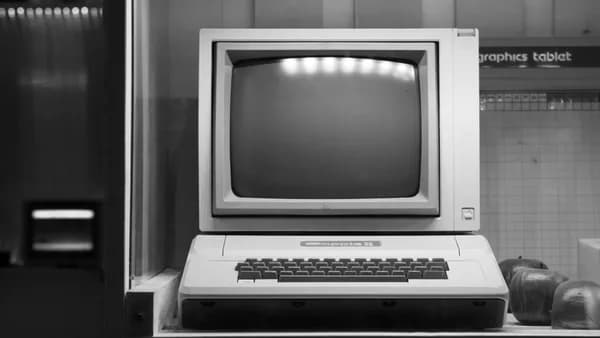
Almost exactly 25 years ago, Steve Jobs stood on a stage facing the same existential chatter. Pundits like Walt Mossberg and the leaders of Compaq and Gateway were writing the PC's obituary. At Macworld New York in 2001, Jobs projected a tombstone for the "Beloved PC" on the screen behind him. His response wasn't to flee.
"We don’t think the PC is dying at all. We don’t think the PC is moving away from the center at all. We think it’s evolving," Jobs said. He argued the Mac was entering its "third great age" as a digital hub, connecting the new flood of camcorders, digital cameras, and DVD players to "add value" to all of them. Less than ten months later, he pulled the iPod from his pocket, a device that answered "Why do you still need a PC?" and became the profit engine that financed the iPhone. Ternus's first keynote was a direct homage to this moment. He didn't just praise the iPhone; he architecturally repositioned it as the "intelligent personal hub" for the AI era. The parallel is precise: when a core product seems mature to outsiders, Apple's playbook is to lean in, declare it the indispensable center, and use that foundation to launch the next revolution.
If the iPhone Isn't a Legacy Product, What Is It Now?
Ternus's declaration is both defensive and aggressive. He explicitly rebutted recent headlines declaring "The smartphone’s days are numbered" and that Apple must find "what comes after the iPhone." His counter-argument reframes the entire AI challenge.
“There’s no product in the world better designed to be your intelligent personal hub than iPhone,” Ternus said. He then listed its qualifications: a powerful processor, high-resolution cameras, persistent networking, and on-device AI. The intelligent personal assistant strategy isn't about replacing the phone with a chat bot or smart glasses. It's about making the iPhone the command center for a more expansive, ambient intelligence. This is a pivot from the Tim Cook era. Cook spent years trying to convince analysts Apple was "more than just the iPhone," highlighting services and wearables. Ternus is doing the opposite: he's putting the iPhone back at the center of everything. The bet is that ecosystem lock-in powered by AI will be harder to escape than any individual piece of hardware.
Can a Hardware CEO Manage a $5 Trillion Status Quo?
The source material paints Ternus's profile clearly: a 50-year-old mechanical engineer who joined Apple in 2001, rose through Mac hardware, and eventually ran engineering for nearly every major product line. Colleagues call him detail-obsessed and fluent in internal politics. He is, as our analysis of Apple's $4.5T Gambit on a Hardware CEO noted, a "hardware savant asked to become a public strategist." His ascent signals Apple's priority: defending and extending its hardware moat. The company's most visible gap has been in flashy, cloud-based AI. Apple's retort, orchestrated by Ternus, is that hardware integration and privacy are its unfair advantages. As the source states, "Apple’s argument is that people will use AI through devices they already love... rather than through chat windows alone." But the risk for a hardware-focused CEO is myopia. Can Ternus, who oversaw the iterative refinements that made devices thinner and more repairable, now force the company through a "single product vision" like Jobs did? The source frames the challenge perfectly: "Ternus faces a third problem: how to invent the next platform while defending a $5 trillion franchise."
What Does 'Intelligence' Mean for Your Next iPhone?
For consumers, Ternus's strategy has immediate, tangible implications. AI as a Feature, Not a Product: Expect "Intelligence" to become the marquee spec, akin to "Retina Display" or "Apple Silicon." Upgrades will be sold on smarter Siri, deeper cloud integration, and on-device processing that feels seamless and private. The hardware itself may become increasingly familiar. Services Get Sticky: The push to make the iPhone your lifelong "hub" means Apple's services, iCloud, Apple One subscriptions, Apple Card, will become more deeply baked in. Leaving the ecosystem will feel increasingly costly and complex.
XOOMAR Analysis: The most revealing line in Ternus's pitch was a question: “If you were designing the ideal version of this hub from scratch, how would you do it?” His answer described the current iPhone. This is the core of the strategy: convincing the market that the ideal form factor for the next decade already exists, and Apple is simply upgrading its "intelligence." It sidelines competitors racing to define the next physical paradigm.
Is Ternus Quietly Sitting on an iPod-Like Surprise?
The haunting question from the 2001 parallel is timing. Jobs announced the digital hub strategy in January 2001 and unveiled the iPod that October. As the source asks, "We don’t know if Ternus is quietly sitting on an iPod-like product, one that will secure the iPhone’s position as Apple’s hub for years to come." The known catalyst is the foldable iPhone, a product Ternus reportedly led hardware development on. Its rumored debut this fall, as covered in Apple's First Foldable iPhone Starring Ternus Debuts, is a perfect test. It's not a new category, but a new form factor for the existing hub. If successful, it could extend the iPhone's lifecycle and premium pricing power for years. If it fails, it will be seen as a costly spec bump on a mature platform.
How Will We Know If This Hub Strategy Is Failing?
The success of Ternus's Jobs-like pivot won't be measured in next quarter's iPhone sales. It will be measured in strategic flexibility. Watch for Acquisitions: Ternus may be a hardware engineer, but the ultimate test is recognizing when a required technology can't be built in-house fast enough. A major acquisition in AI, robotics, or sensors would signal he's buying the next paradigm to protect the hub. Monitor the 'Other Products' Line: Financial reports will show if moonshot spending (on Vision Pro successors, car projects, or AR glasses) is being trimmed to fortify the iPhone's AI capabilities, or if Ternus is managing to fund both. The legacy of Steve Jobs wasn't just saving the Mac; it was having the iPod ready before the PC's decline became irreversible. John Ternus has now committed publicly to the first half of that equation. The next 18 months will show if Apple's new CEO has the second act in his pocket, or if he's simply presiding over the most elegant management of a peak.
Why This Changes Everything
- This shifts Apple's public narrative from constantly chasing a 'next iPhone' to making the iPhone the enduring centerpiece of its ecosystem, fundamentally changing investor and competitive expectations.
- It signals that Apple's trillion-dollar AI and wearable strategies will be built around the iPhone as a hub, not as replacements, affecting product development and partnerships for years to come.
- By reviving a proven Steve Jobs-era playbook, Apple is reminding the market that its greatest strength is evolving mature products into new foundational platforms, directly countering the 'post-smartphone' narrative.
Primary Sources & Disclosures

Written by
XOOMAR Insights Team
Research and Editorial Desk
The XOOMAR Insights Team pairs automated research with human editorial judgment. We track hundreds of sources across technology, fintech, trading, SaaS, and cybersecurity, cross-check the facts, and explain what happened, why it matters, and what to watch next. We do not just rewrite headlines. Every article is fact-checked and scored for reliability before it goes live, and we link back to the original sources so you can verify anything yourself.