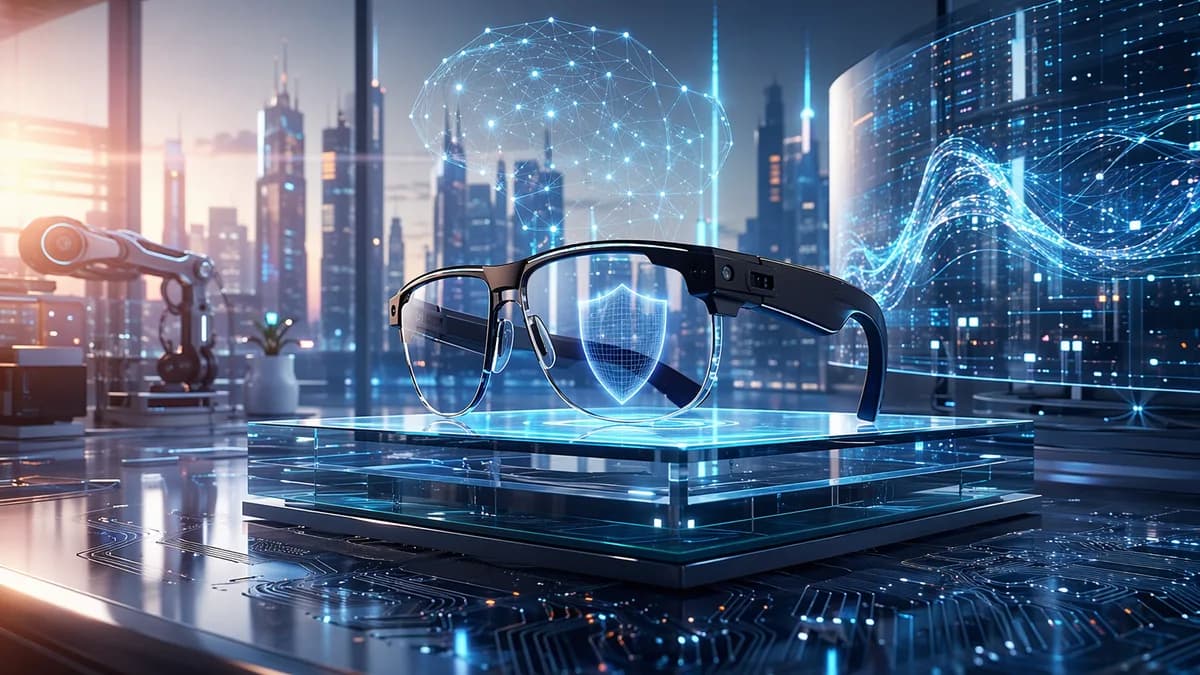
Even Realities smart glasses just became a $1 billion privacy bet, after the Shenzhen startup raised $150 million to build wearable displays that deliberately leave cameras out.
XOOMAR Intelligence
Analyst Take
The three-year-old company, founded by former Apple team members, closed a pre-Series B round led by Meituan and existing backer Tencent, according to TechCrunch. The round values Even Realities at $1 billion, putting a camera-free smart glasses startup into unicorn territory while Meta and Snap push camera-equipped glasses onto users’ faces.
Even Realities smart glasses reach $1 billion valuation after Meituan and Tencent-led round
The funding gives Even Realities a deeper war chest in a category that is suddenly crowded with Big Tech hardware, AI assistants, and unresolved privacy questions.
Founder and CEO Will Wang has positioned the company around a different route from rivals chasing content capture. Even is focused on display-first glasses that put information in the wearer’s line of sight without adding a camera.
That choice is the center of the pitch. The company is betting that smart glasses can be useful as a discreet information layer, rather than as another face-worn recording device. In a market where camera-equipped frames raise social and regulatory questions, leaving the camera out becomes more than a design detail.
The new lead investors matter because Meituan and Tencent are major Chinese technology platforms. Their participation gives Even more credibility and capital at a time when consumer hardware companies must prove they can scale beyond early adopters.
The startup was launched in 2023 by former Apple team members, giving it a hardware pedigree that fits the product it is trying to build. For smart glasses, small industrial design choices can decide whether a product becomes daily hardware or a drawer gadget.
Camera-free frames make privacy the product, not an apology
Even’s sharpest claim is that smart glasses don’t need a camera to be useful.
That’s a direct contrast with the broader direction of the market, where Meta and Snap have pushed smart glasses that bring cameras and AI assistants closer to users’ faces. Even is betting that the face is too sensitive a place for the same old camera-first smart glasses playbook.
The company’s public pitch emphasizes a more restrained version of wearable computing: information shown in front of the wearer, without turning the wearer into a walking capture device. That makes privacy part of the product’s identity instead of a reassurance added later.
The product emphasis is also different. Rather than competing mainly on social video, creator tools, or hands-free photography, Even is trying to make heads-up information feel useful, discreet, and socially acceptable.
| Company or approach | Core hardware bet | Source-supported contrast |
|---|---|---|
| Even Realities | Display-first, camera-free glasses | Information appears in the wearer’s line of sight |
| Meta and Snap | Camera-equipped smart glasses | Rivals are pushing camera-based wearable devices |
| Even Realities approach | Privacy-centered wearable display | The absence of a camera is central to the pitch |
The harder question is not simply whether AI can be added to glasses. It is whether the display, optics, comfort, battery life, and social acceptability work well enough together for people to wear them regularly.
That detail matters. Even is not trying to win by having the loudest AI demo. It is trying to make the display itself defensible. If the glasses are uncomfortable, socially awkward, or optically weak, no software feature will rescue them.
Sales, pricing, and user base questions give investors something to underwrite
The new valuation implies that investors see more than a niche hardware experiment. It suggests they believe camera-free smart glasses can become a larger consumer category, even as the market remains early and difficult to read.
The supplied source material does not provide detailed sales figures, pricing, profitability, staffing growth, or customer demographic data. That makes the next phase especially important. Even has the valuation of a breakout company, but it still needs to prove the scale and durability of demand.
For wearable hardware, the underwriting case usually depends on several linked questions. Can the company manufacture at consistent quality? Can it keep the product light enough for daily use? Can it make the software useful without overwhelming the wearer? Can it persuade people that glasses are a better place for certain information than a phone or watch?
Even’s camera-free stance gives it a cleaner privacy story, but it also narrows some obvious use cases. A product without a camera cannot lean on photo, video, or visual capture in the same way camera-equipped rivals can. That puts more pressure on the display experience and the everyday usefulness of glanceable information.
The company’s official positioning through Even Realities presents the glasses as a more subtle form of wearable computing. That simplicity is the point, but it also raises the bar. If the product is not obviously useful in ordinary moments, users may not keep it on.
Premium hardware companies often face the same test: early buyers may tolerate friction because the product feels new, but mainstream buyers usually demand comfort, reliability, and clear daily value. That is the gap Even now has to cross.
Meituan and Tencent backing raises the scale test for Even Realities smart glasses
The new funding changes the question. Even no longer has to prove only that a niche group will buy camera-free smart glasses. It has to prove that Even Realities smart glasses can scale beyond early enthusiasts and professional users.
The company has not disclosed a detailed use of proceeds in the supplied source material. The obvious pressure points are product development, manufacturing scale, hiring, retail reach, developer tools, and AI features, because those are the areas most consumer hardware companies must strengthen after a major financing round.
The next proof will not be the valuation. It will be whether users keep wearing the glasses after the novelty fades.
Practical milestones to track:
- Availability: whether Even broadens access without losing control of product quality or support.
- Pricing: whether the company can balance premium hardware economics with wider consumer adoption.
- Battery and comfort: whether all-day wear feels natural enough for repeated use.
- Developer support: whether third-party software turns the glasses into more than a single-purpose device.
- Repeat use: whether translation, teleprompting, notifications, and heads-up context become daily habits.
The forward path is clear enough. If Even’s camera-free design lowers social friction while its display experience keeps information readable and discreet, the company has a real opening against camera-first rivals. If not, the $1 billion valuation becomes a very expensive test of whether people want computers on their faces without cameras watching back.
The Bottom Line
- Even Realities has reached unicorn status with a camera-free alternative to Big Tech smart glasses.
- Backing from Meituan and Tencent gives the startup capital and credibility in a crowded hardware market.
- The deal highlights privacy as a major battleground for the future of wearable AI devices.
Smart Glasses Strategy: Even Realities vs. Camera-Equipped Rivals
| Company/Approach | Core Product Bet | Privacy Position |
|---|---|---|
| Even Realities | Display-first smart glasses without cameras | Avoids face-worn recording concerns |
| Meta and Snap | Camera-equipped smart glasses | Faces social and regulatory questions around recording |
Even Realities Funding Round vs. Valuation
Primary Sources & Disclosures

Written by
XOOMAR Insights Team
Research and Editorial Desk
The XOOMAR Insights Team pairs automated research with human editorial judgment. We track hundreds of sources across technology, fintech, trading, SaaS, and cybersecurity, cross-check the facts, and explain what happened, why it matters, and what to watch next. We do not just rewrite headlines. Every article is fact-checked and scored for reliability before it goes live, and we link back to the original sources so you can verify anything yourself.