
More than 800,000 menu items and grocery products are available to the average U.S. consumer on DoorDash, and the company now wants users to search that sprawl by asking for what they want.
TechnologyJune 11, 2026· 6 min read· By XOOMAR Insights Team
DoorDash AI Chatbot Kills the 800,000-Item Scroll
Updated on June 12, 2026
XOOMAR Intelligence
Analyst Take
59/ 100
4 sources analyzedLow confidenceTrend10Freshness98Source Trust90Factual Grounding96Signal Cluster20
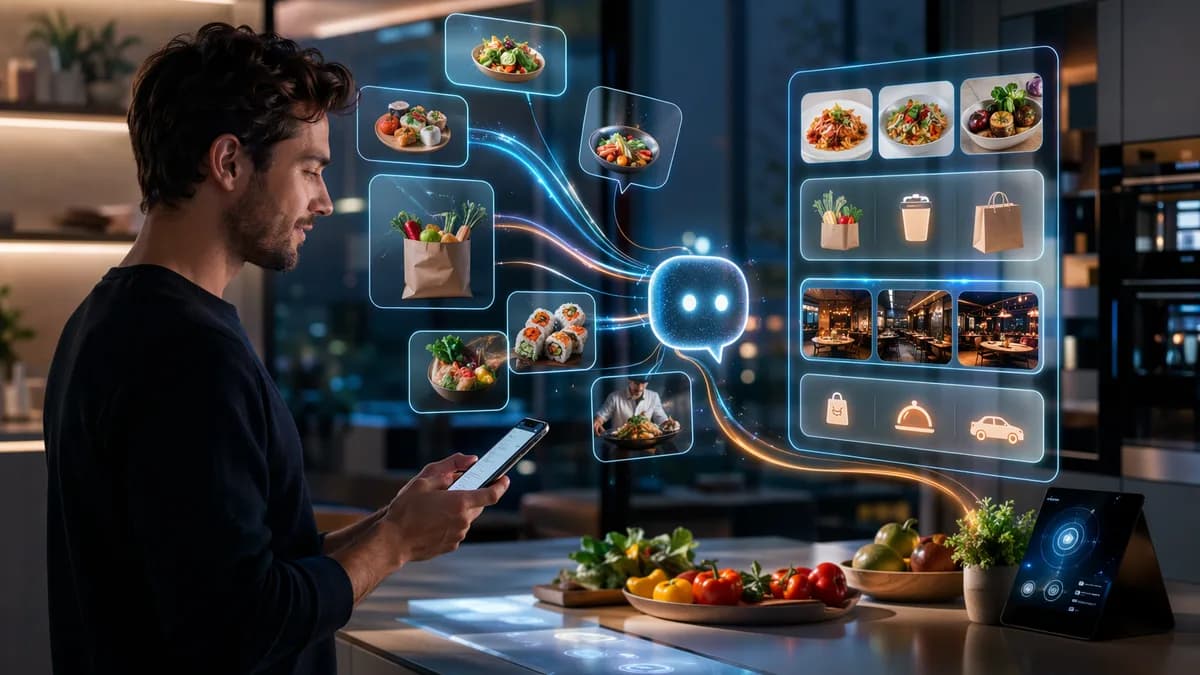
DoorDash announced Ask DoorDash, an AI chatbot that lets users find food, groceries, and reservations through text prompts, recipe links, and photos instead of manually scrolling through restaurants and stores, according to TechCrunch.
DoorDash launches Ask DoorDash AI chatbot for prompt and photo-based ordering
Ask DoorDash sits inside the DoorDash app as a discovery and search layer. It isn't a separate app. Users can describe a craving, upload a recipe or grocery list, or ask for a reservation in plain language.
DoorDash framed the product as a fix for searches where users don't already know the exact merchant, dish, or table they want.
“Traditional search works best when you know the exact restaurant or table you’re looking for,” DoorDash wrote in a blog post. “Ask DoorDash is designed for the moments when you don’t.”
The examples show how broad DoorDash wants this interface to become. A user can ask for a “filling dinner for a family of 4”, then get restaurants with a personalized explanation of why each result matches. The user can narrow the search with a follow-up like “Show me kid-friendly vegetarian spots with mild options.”
For groceries, the feature can build a cart from a cookbook photo, a picture of a grocery list, or a recipe. DoorDash says it will add the items and correct quantities, then prompt users to check whether they already have staples such as sugar and butter.
Reservations are part of the same push. A user can ask for a “table for two downtown for a date-night dinner around 8 PM”, then refine the results by asking for something more intimate.
| Ordering task | Traditional DoorDash flow | Ask DoorDash flow |
|---|---|---|
| Restaurant search | Browse carousels, cuisines, merchants, menus | Type a plain-language request and refine results |
| Grocery shopping | Search item by item or browse store shelves | Upload a recipe, list, or cookbook photo |
| Group meals | Manually compare menus and portions | Ask for suggestions based on group size, budget, diet, or past orders |
| Reservations | Search availability directly | Describe the occasion, location, time, and vibe |
The feature is rolling out on iOS in select regions for restaurant search and grocery shopping, and within DoorDash Reservations. DoorDash says it will reach more users across the U.S. in the coming weeks.
Ask DoorDash targets a 800,000-item discovery problem inside one app
DoorDash's pitch is simple: more selection has created more work. A marketplace with hundreds of thousands of options can bury the right meal or grocery item under too many taps.
That makes prompts and images useful if they reduce the gap between intent and checkout. A user may know they want a quick vegetarian dinner, a family meal, or ingredients from a recipe, but not which restaurant or store carries the right mix.
XOOMAR analysis: Ask DoorDash is best understood as a new front door for the marketplace. The chatbot doesn't just answer questions. It changes how demand gets routed across restaurants, grocers, and available tables.
DoorDash co-founder Andy Fang described that shift directly in a statement cited by industry coverage:
“We’ve spent over a decade building an app that puts everything in your city at your fingertips, but more options shouldn’t mean more work. Now you can search DoorDash in your own words to find exactly what you want.”
DoorDash isn't alone. TechCrunch notes that Uber Eats launched an AI-powered “Cart Assistant” in February, while Instacart has rolled out an AI shopping assistant that grocers can offer to customers.
The broader pattern is clear from the supplied facts: consumer apps are moving chat-style AI into search, shopping, support, and recommendations. For readers tracking how AI assistants are being folded into mainstream products, DoorDash's move sits near the same interface debate raised by Siri AI Shuts Up, and Apple Bets You'll Trust It More.
There is also a restaurant discovery angle. DoorDash previously launched Zesty, a restaurant discovery app, then shut it down in April, according to the related source material. Some Zesty features were expected to move into the main DoorDash app, including personalized recommendations and conversational search. That makes Zest Restaurant App Bets Your Card Knows Taste Best useful context for how food apps are testing new ways to infer taste.
Accuracy, merchant visibility, and checkout control will decide whether Ask DoorDash sticks
The product's hardest test won't be whether people try it once. It will be whether it understands vague requests well enough to become faster than browsing.
Photo-based grocery ordering raises the stakes. If Ask DoorDash misreads a cookbook image, gets quantities wrong, or misses an ingredient, the user still has to audit the cart. DoorDash's prompt to check for staples such as sugar and butter shows the company knows automated carts can overbuy.
Merchant visibility is another pressure point. Restaurants and stores will care whether Ask DoorDash sends users toward relevant options or simply repeats the app's most obvious listings.
A DoorDash spokesperson told Restaurant Business that Ask is not built to favor one type of business over another and uses factors including the customer’s prompt, order history, and the fit of nearby restaurants. Restaurants will not be able to pay to show up higher in Ask results at this point, the person said.
For users, the trust layer comes at checkout. A chatbot can suggest the dinner, build the grocery cart, and surface the table, but the app still has to make prices, fees, substitutions, delivery times, and final approval clear before an order is placed.
XOOMAR analysis: Ask DoorDash could become a meaningful ordering shortcut if it consistently turns messy intent into accurate carts. If it adds another review burden, users may treat it as a novelty and return to search.
The next signals to watch are rollout speed, how DoorDash expands Ask across categories, and whether Uber Eats, Instacart, or other commerce apps answer with more aggressive AI ordering tools. The feature is starting in select iOS markets. The real test comes when it has to handle the full mess of everyday cravings, missing pantry items, group preferences, and last-minute dinner plans at U.S. scale.
The Bottom Line
- DoorDash is using AI to reduce browsing friction across food, groceries, and reservations.
- Prompt and photo-based ordering could make large marketplaces easier to navigate.
- The feature may shift user behavior from exact searches toward intent-based shopping.
Traditional DoorDash Search vs. Ask DoorDash
| Ordering task | Traditional DoorDash flow | Ask DoorDash flow |
|---|---|---|
| Finding food | Search by known restaurant, dish, or cuisine | Describe a craving, such as a filling family dinner, and get personalized matches |
| Refining results | Manually filter and browse options | Use follow-up prompts like kid-friendly, vegetarian, or mild options |
| Grocery shopping | Search and add items individually | Upload a recipe, cookbook photo, or grocery list to build a cart |
| Reservations | Look for specific restaurants or available times | Ask for a table by occasion, location, party size, and time |
Average DoorDash Selection Available to U.S. Consumers
Menu items and grocery products
items800,000
Sources

Written by
XOOMAR Insights Team
Research and Editorial Desk
The XOOMAR Insights Team pairs automated research with human editorial judgment. We track hundreds of sources across technology, fintech, trading, SaaS, and cybersecurity, cross-check the facts, and explain what happened, why it matters, and what to watch next. We do not just rewrite headlines. Every article is fact-checked and scored for reliability before it goes live, and we link back to the original sources so you can verify anything yourself.
Explore More Topics
Related Articles
 Technology
Physical AI Delivery Robots Hit the Costly Last 50 Feet
The hard part of delivery automation is the porch, where $90 billion in costs and messy doorsteps could decide physical AI's future.
Jul 21, 20268 min
 Technology
Spotify AI Chatbot Takes Over the Premium Listening Flow
Spotify is testing Talk to Spotify, an AI chatbot for Premium users that handles music, podcasts, and audiobooks inside the app.
Jul 20, 20266 min
 Technology
Ride or Die Online Skips the Streaming Guesswork on Prime
Ride or Die streams globally on Prime Video July 15, with all eight episodes arriving at once and no country-by-country app hunt.
Jul 19, 20268 min
 Technology
Google Opens Android App Stores but Keeps the Cash
Google will share Play listings with US Android app stores, but downloads and fees still run through Google Play.
Jul 19, 20267 min
 Technology
Private Equity Puts NHS Patient Records System in TPG Hands
TPG's £300m Optum UK deal puts EMIS, used by most English GP practices, under private equity control.
Jul 27, 20268 min
 Global Trends
Tariff Detours Crush the US Manufacturing Jobs Pitch
Tariffs haven't sparked a US factory jobs boom. Chinese inputs are taking longer routes, with higher costs and more automation.
Jul 27, 20268 min
 Global Trends
33,772 ZIP Codes Redraw the American Dream Index Map
Newsweek's American Dream Index ranks 33,772 ZIP codes and finds opportunity isn't dead. It's just become brutally local.
Jul 27, 20267 min
 Trading
Gold Price Breakout Exposes the Dollar Trade Behind Rally
Gold broke higher as the dollar softened, making DXY follow-through the key test for bulls, not just US-Iran tension.
Jul 26, 20267 min
 Global Trends
Zippy Puppeteer Ronnie Le Drew Dies at 78 After Illness
Ronnie Le Drew, the puppeteer behind Zippy and Labyrinth goblins, has died at 78 after a short illness.
Jul 27, 20266 min
 Global Trends
Logo Revolt Haunts Cracker Barrel CEO Masino's Exit
Julie Masino is leaving after Cracker Barrel's logo revolt became a culture-war test. David Deno inherits the bruised brand.
Jul 27, 20266 min
Don't miss the signal
Get our weekly roundup of the stories that matter across tech, fintech, and trading. No noise, just signal.
Free forever. No spam. Unsubscribe anytime.