
The US recalled almost 1.9 million power banks in 2025, and the battery fix arriving first is gel, not true solid-state.
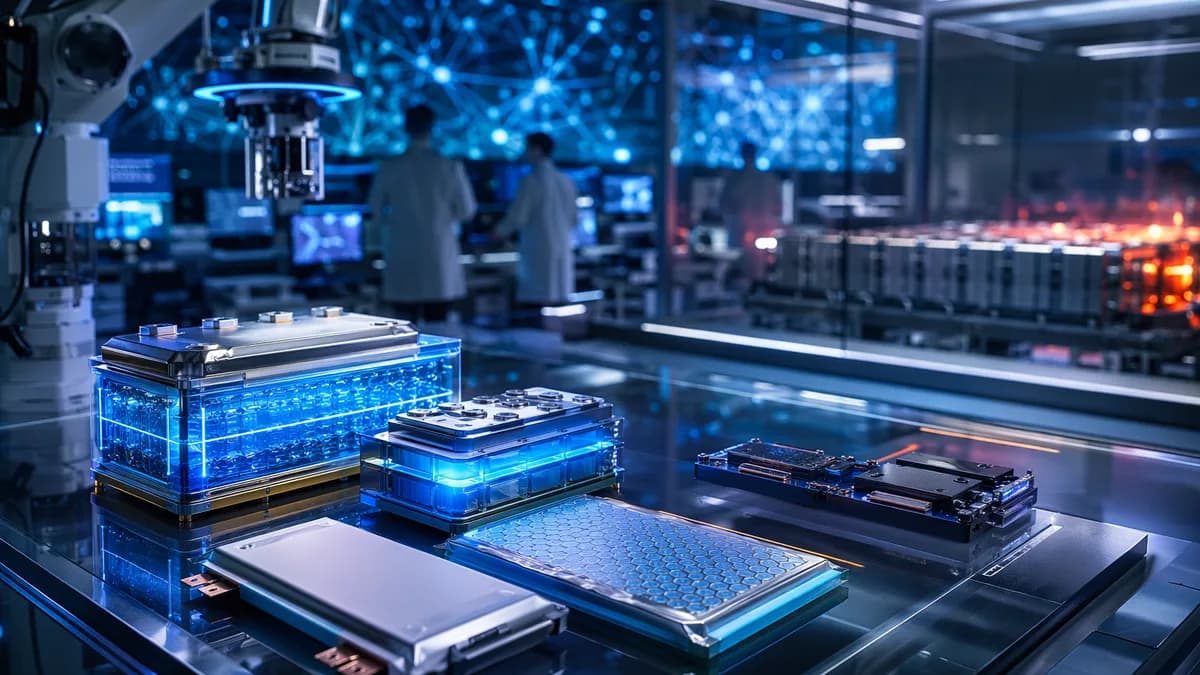
TechnologyJune 14, 2026· 8 min read· By XOOMAR Insights Team
1.9M Power Bank Recall Puts Gel Batteries on Notice
Updated on June 14, 2026
XOOMAR Intelligence
Analyst Take
75/ 100
4 sources analyzedMedium confidenceTrend10Freshness100Source Trust88Factual Grounding94Signal Cluster40
That matters for anyone charging an e-bike in an apartment, packing a battery bank for a flight, or buying a portable power station for backup. The long-promised solid-state future is still waiting. The near-term shift is semi-solid-state batteries, which replace volatile liquid electrolyte behavior with a gel-like middle ground, according to The Verge.
“Semi-solid-state batteries are a less volatile bridge to the future.”
That phrase captures the real story. These batteries aren't magic. They don't make bad packs safe by default. But they can reduce one of the nastier failure modes in today’s lithium-ion devices: flammable liquid electrolyte feeding thermal runaway.
Why are regulators and device makers paying attention to gel batteries now?
Lithium-ion batteries are now embedded in daily life: phones, power banks, e-bikes, drones, EVs, and home backup systems. The Verge points to a clear pressure point: fires tied to battery packs have become hard for regulators to ignore.
In 2025, the US Consumer Product Safety Commission issued recalls for almost 1.9 million power banks from companies including Anker, Baseus, and INIU. It also prompted recalls for tens of thousands of e-bikes over fire concerns and issued a rare warning to immediately stop using batteries found in several Rad Power Bikes models.
The immediate question is simple: if more devices need more stored energy, what chemistry can reduce fire risk without waiting another decade?
That is where semi-solid-state cells become useful. They are not fully solid-state. They are not the final prize. But they are already showing up in products. The Verge says Kuxiu had the “world’s first” semi-solid-state power bank reviewed in April 2025, and several other brands now sell similar devices.
For readers tracking the broader power hardware theme, this fits alongside XOOMAR’s coverage of how reliable energy is becoming a product feature in Reliable Power Beats Hustle for Never Post's Rugnetta, and how storage is moving into bigger industrial conversations in AI Power Crunch Pulls GM and Ford Into Energy Storage.
How do gel electrolytes make power banks and e-bike packs less volatile?
A standard lithium-ion cell has an anode, a cathode, and an electrolyte that lets ions move back and forth as the cell charges and discharges. The Verge’s key point is that semi-solid batteries keep the broad architecture but change the electrolyte.
Instead of a traditional liquid electrolyte, they use a gel-like composition. That matters because liquid electrolyte is the part repeatedly described as volatile in the source material. In product demos, companies have shown puncture and abuse tests where traditional liquid-electrolyte cells ignite, while semi-solid gels do not.
The practical safety case looks like this:
| Battery type | Electrolyte form | Status in consumer devices | Safety claim in the source |
|---|---|---|---|
| Traditional lithium-ion | Liquid | Widespread | Volatile liquid electrolytes are tied to fire risk |
| Semi-solid-state | Gel-like | Appearing in power banks, e-bikes, phones, and more | Lower risk of thermal runaway than traditional lithium-ion |
| True solid-state | Solid | Still largely promised rather than common | Promised as combustion-free, cheap, light, fast-charging, cool-running, and energy dense |
For manufacturers, the important line is not just safety. It is manufacturability. The Verge says semi-solid-state batteries can be made on the same assembly lines as traditional lithium-ion cells with minor adjustments.
That is why gels are more credible as a near-term shift. They improve one dangerous part of the cell without requiring the entire battery industry to rebuild itself first.
Why aren't true solid-state batteries ready for everyday gadgets and EVs yet?
Solid-state batteries replace the liquid electrolyte with a solid ion-conducting material. The appeal is obvious: less combustion risk, fast charging, lower heat, lighter packs, and more energy in less space. The problem is that those benefits have been “perpetually imminent,” as The Verge puts it.
The source gives the cleanest market read through contrast. A claimed “miracle” solid-state battery from Donut Lab drew attention because it sounded ready for production. It was later “thoroughly debunked,” according to The Verge.
So what is the obstacle for buyers: chemistry, hype, or factory scale?
The safest answer from the supplied material is factory reality. Semi-solid-state cells are already moving into power banks and e-bikes because they can fit into existing manufacturing with smaller changes. True solid-state still has to prove that its promised performance can survive mass production at consumer price points and reliability requirements.
The Verge also cites a blunt timeline marker: the CEO of Lotus says mass production of true solid-state batteries is still a decade away. That is not the same as saying no solid-state products will appear before then. It means broad, cheap, mainstream availability remains the harder milestone.
XOOMAR analysis: this is why semi-solid cells matter. They don't need to win the science-fiction battery race. They only need to be safer enough, durable enough, and easy enough to build at scale before solid-state catches up.
How would a gel battery change the risk profile for an apartment e-bike?
Take a concrete example from the source: Ride1Up announced the Revv1 EVO in early May, calling it “the world’s first semi-solid-state electric bike.” Its 1,040Wh battery is made by Heyuan Lithium Inno and is meant to withstand over 1,200 charging cycles, rather than 500 for typical e-bike batteries, before dropping below 80 percent of original storage capacity.
That is not just a spec-sheet flex. In dense housing, the battery is the risk object. A pack charged indoors carries consequences beyond the owner.
The useful question is: what changes if the pack uses a gel electrolyte?
Based on The Verge’s reporting, the gel chemistry should make the cell less likely to overheat and catch fire over its lifetime. It may also perform better in cold weather and last two to three times longer than traditional lithium-ion power banks, based on the power bank category described in the source.
But the limits matter. A semi-solid battery is still a battery. It can still be part of a badly designed product. It can still be paired with weak electronics. It can still be misused. The source supports a narrower claim: gel-like semi-solid electrolytes reduce the risk associated with volatile liquid electrolytes. They don't erase every failure path in a pack.
For an apartment building, that distinction is the policy point. Safer chemistry can reduce the odds of a catastrophic event, but it should not become a permission slip for careless charging.
What do buyers, cities, and airlines need to watch before solid-state arrives?
China is already pushing the issue through regulation. The Verge says new Chinese e-bike rules that came into force in December 2025 require batteries to pass a puncture test to see whether it triggers a fire or explosion.
Power banks face their own pressure. The Verge says they need to pass rigorous tests to receive China’s CCC mark, which is required for air travel and is described as analogous to the CE mark in Europe or UL in the US.
That creates a strong manufacturing signal. If semi-solid-state batteries naturally perform better under puncture and abuse testing, companies have a reason to adopt them even before buyers fully understand the chemistry.
The early rollout is already broader than one product category:
- Power banks: Kuxiu was reviewed with a semi-solid-state model in April 2025, and more brands now sell similar devices.
- E-bikes: Ride1Up’s Revv1 EVO begins shipping in August 2026, according to The Verge.
- Giant: The company is working on at least five mass-produced e-bikes using Heyuan Lithium Inno semi-solid-state batteries.
- Phones: Vivo announced the X200 series in 2024 with a battery combining a semi-solid-state electrolyte and silicon-carbon anode. The same BlueVolt-branded battery appears in newer Vivo devices like the X300 Ultra.
- EVs: The Verge says SAIC is following last year’s “world’s first mass-produced semi-solid-state EV” with a $15,000 MG 4X electric SUV, with SolidCore batteries coming to Europe later this year.
The practical takeaway is clear. Buyers should not treat “solid-state” as the only label that matters. In the next product cycle, semi-solid-state may be the more meaningful safety signal in power banks, e-bikes, and portable storage.
The watch item now is certification. If regulators keep tightening puncture, abuse, and travel tests, gels may become less of a premium feature and more of a baseline requirement. True solid-state can still be the long-term prize. For now, the safer battery future looks sticky.
Impact Analysis
- Nearly 1.9 million recalled power banks show battery fire risks are now a mainstream consumer safety issue.
- Semi-solid-state batteries could reduce thermal runaway risk sooner than true solid-state batteries arrive.
- The shift matters for people using e-bikes, portable chargers, and home backup batteries in everyday spaces.
Battery Technology Readiness and Safety Tradeoffs
| Battery type | Status | Safety implication |
|---|---|---|
| Lithium-ion | Common in phones, power banks, e-bikes, drones, EVs, and backup systems | Uses flammable liquid electrolyte that can feed thermal runaway |
| Semi-solid-state | Already appearing in products such as Kuxiu's 2025 power bank | Uses a gel-like electrolyte to reduce volatile liquid behavior |
| True solid-state | Still not ready for broad consumer rollout | Long-promised safer future, but not the near-term fix |
US Power Bank Recalls in 2025
Power banks recalled
million1.9
Sources

Written by
XOOMAR Insights Team
Research and Editorial Desk
The XOOMAR Insights Team pairs automated research with human editorial judgment. We track hundreds of sources across technology, fintech, trading, SaaS, and cybersecurity, cross-check the facts, and explain what happened, why it matters, and what to watch next. We do not just rewrite headlines. Every article is fact-checked and scored for reliability before it goes live, and we link back to the original sources so you can verify anything yourself.
Explore More Topics
Related Articles
 Technology
AI Power Crunch Pulls GM and Ford Into Energy Storage
AI's power crunch is making grid batteries a richer prize than EVs, and Tesla already has the margin proof.
Jun 10, 20268 min
 Technology
$72 SpaceX IPO Premium Bets on Orbital AI Compute
SpaceX's IPO premium rests on a $72-per-share bet that Musk can turn orbital AI compute into the next infrastructure gold rush.
Jun 14, 20267 min
 Technology
US Order Kills Anthropic's Mythos 5, Fable 5 for All
A US order pushed Anthropic to shut Mythos 5 and Fable 5 for all users, turning an alleged jailbreak into an AI governance fight.
Jun 13, 20267 min
 Technology
US Cuts Off Anthropic's New AI Models, Developers Lose
Anthropic's top models vanished after a U.S. security order, proving frontier AI access can become a regulated asset overnight.
Jun 13, 202612 min
 Technology
US Bars Foreign Access, Anthropic Kills Top AI Models
Anthropic shut down Fable 5 and Mythos 5 after a U.S. order barred foreign access, putting frontier AI under export-control pressure.
Jun 13, 20267 min
 Cybersecurity
5GB Cal Water Hack Leak Puts 2M Customers on Alert
Handala claims it hacked Cal Water and leaked 5GB of data, but real utility system access remains unconfirmed.
Jun 13, 20266 min
 Trading
Oil Shock Puts Indian Rupee’s 7.7% Growth Shield to Test
India’s 7.7% growth can't shield the rupee if oil, war risk and dollar liquidity turn against it at once.
Jun 12, 20268 min
 Global Trends
Iran Deal Hits Snag as Tehran Rejects Trump's Clock
Trump is selling an Iran deal as imminent. Tehran isn't rejecting it, but it's refusing to sign on his timeline.
Jun 14, 20266 min
 Global Trends
Yamal Call Turns Spain vs Cape Verde Into Nerve Test
Spain's unbeaten run meets Cape Verde's World Cup debut, with Yamal's starting role the pressure point in Group H.
Jun 14, 20268 min
 Cybersecurity
Tchap Breach Exposes France's Sovereign Chat Gamble
France's Tchap breach threatens trust in its sovereign messaging push, with public rooms emerging as the exposure risk.
Jun 14, 20268 min
Don't miss the signal
Get our weekly roundup of the stories that matter across tech, fintech, and trading. No noise, just signal.
Free forever. No spam. Unsubscribe anytime.