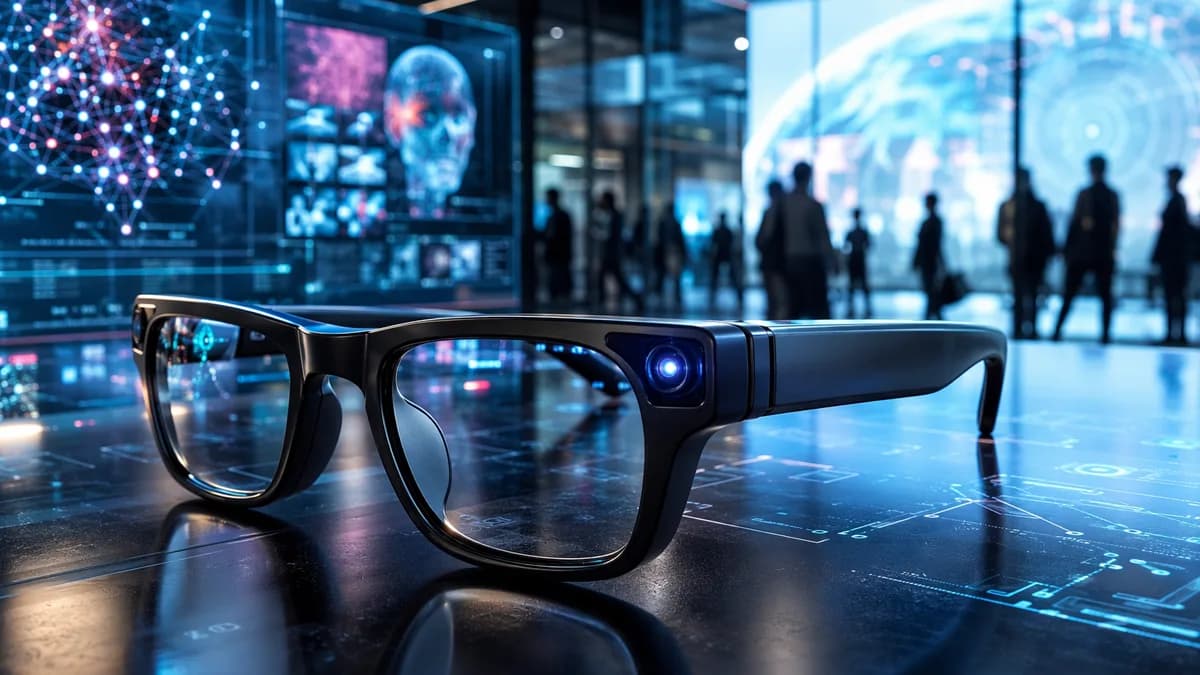
Meta smart glasses were sold as effortless capture, and now Instagram is having to ban some of the content that effortless capture produced. That is the contradiction Meta can’t talk its way around. XOOMAR’s view: Meta created this moderation crisis by putting discreet cameras on people’s faces, then treating predictable abuse as a content-policy problem after the damage moved online.
XOOMAR Intelligence
Analyst Take
The backlash is no longer theoretical. People are angry about privacy, public surveillance, and strangers being turned into content without consent, according to The Verge. The ugliest signal is cultural, not technical: when a product starts getting called “pervert glasses,” the brand problem has already escaped the marketing deck.
Meta smart glasses turned privacy anxiety into a moderation crisis
Meta’s problem is bigger than a few creeps with cameras. The company’s own platform now has to judge whether content filmed with its own hardware crosses the line into harassment. That is an admission that smart glasses are not neutral pipes.
Instagram head Adam Mosseri said content “taking advantage of people and harassing them, like a lot of these pickup line kind of videos,” would be removed from Instagram, per Business Insider reporting cited by The Verge.
“We don’t want people to be surreptitiously taking videos of other people and harassing them and then posting them on our platform,” Mosseri said, according to Business Insider. “So we’re trying to fight that every way we can.”
That line matters because it ties the hardware to the harm. Meta can’t say this is just user behavior when the device’s core appeal is making recording feel natural, fast, and less visible. The glasses change the social contract in public. They let one person know a performance is happening while everyone else is still living a normal moment.
Here is the shift Meta now has to police:
- Before: A phone raised in someone’s direction gave a visible clue that recording might be happening.
- After: Glasses can record from eye level while the wearer appears to be simply looking.
- Before: Harassment videos depended on obvious filming or a second person holding a camera.
- After: One person can approach, record, publish, and monetize the encounter.
- Before: Moderation focused mainly on what appeared in the uploaded clip.
- After: The capture method itself becomes part of the moderation context.
That last point is the nightmare.
Discreet cameras make strangers into unwilling social media props
A phone camera is not polite. It announces itself. Someone lifts an arm, frames a shot, points a screen, maybe asks for permission. None of that guarantees consent, but it gives bystanders a chance to notice what is happening.
Meta glasses blur that warning. The person wearing them can film “pranks” on random strangers or record pickup-style interactions with women who don’t know they’re being turned into a Reel. The Verge describes women becoming unsuspecting social media content for men filming themselves hitting on them without their knowledge.
That consent gap is the core issue. The creator knows the scene has a purpose. The stranger does not. One side is producing content. The other side is being used as raw material.
| Recording tool | Social signal | Consent risk |
|---|---|---|
| Phone camera | Usually visible when raised or pointed | Still high, but easier to notice |
| Meta smart glasses | Can appear like normal eye contact | Higher when people don’t realize recording is happening |
The creator economy rewards this behavior because ambush content is cheap. Walk up to someone, provoke confusion, flirt badly, annoy a cashier, extract a reaction, post it. The stranger’s discomfort becomes the product.
That is why Meta’s moderation move can’t be treated as a narrow cleanup job. It is a reaction to an incentive structure Meta helps host.
For readers tracking platform accountability across different policy fights, XOOMAR has also covered Snap Dodges Social Media Addiction Trial, Meta Left and Vietnam Mutes Kids as Social Media Bans Spread Worldwide. Those are separate stories, but they point to the same hard question: platforms keep being forced to answer for harms they once framed as user choice.
Instagram’s ban exposes the hardware-platform contradiction
Meta wants the glasses to feel normal. Meta’s own product language for Ray-Ban Meta AI glasses says users can “Capture, share and stay in the moment, completely hands-free,” according to Meta. That pitch is clean. The social reality is messy.
The reported Instagram ban is unusual because it treats the device as relevant to enforcement. If a video is harassment, the fact that it was filmed with glasses matters because the glasses may have helped conceal the recording. That means moderation can no longer stop at the content layer. It has to ask how the content was made.
This is where Meta gets trapped. The smoother the capture experience, the less friction there is before a bad idea becomes a public post. Meta can say it doesn’t want harassment. Fine. But the company also built a product whose selling point is that recording takes less effort and draws less attention.
XOOMAR’s analysis: this is the familiar tech sequence in miniature. Launch the behavior-changing tool. Watch early users discover the most invasive edge cases. Then write rules once public outrage makes the abuse impossible to ignore.
Meta spokesperson Albert Aydin told The Verge the company is working on disabling cameras on glasses when tampering is detected and removing content from accounts associated with those devices. That is a product-level response, not just a moderation response. It also shows the first design was not enough.
The recording light is not real consent
Recording indicators help only if people notice them, understand them, and feel able to object. In many public settings, that is a weak standard.
A tiny light on a pair of glasses does not solve the social problem of being filmed in a bar, gym, store, airport lounge, train, campus, sidewalk, or fast-food line. People may be distracted. They may not know what the light means. They may feel unsafe confronting the person recording. The source material also says activists plastered anti-smart glasses posters in New York, which is a blunt sign that people are trying to create social warning systems outside Meta’s product design.
The gendered dimension makes this sharper. Women filmed during unwanted approaches are not background scenery. They are the point of the post. Their confusion, refusal, politeness, discomfort, or vulnerability becomes the entertainment.
That is why “public space” is not a magic permission slip. Yes, people have limited expectations of privacy in public. But social norms still matter. Consent still matters. And a company building wearable cameras should design for the people in front of the lens, not just the person wearing the device.
Meta’s unanswered questions are also important. Aydin did not answer The Verge’s specific questions about whether someone filmed without knowledge could appeal to have content removed. He also did not provide The Verge with a copy of the actual policy. That gap is not administrative trivia. It determines whether the people harmed by the content have any real path to relief.
Useful Meta glasses use cases don’t erase the abuse case
The strongest defense of Meta smart glasses is that not every wearer is a creep. The Verge notes people use the glasses for “day in the life”-style content, meals, and concerts. There are harmless uses. Some are probably enjoyable.
But useful recording does not excuse covert social extraction. A knife can cut bread or threaten someone, but a company selling knives still thinks about safety, packaging, age restrictions, and misuse. That is the one analogy this story needs.
The bad-user argument is too convenient. Of course the people filming harassment deserve blame. But Meta designed the tool, sells the tool, hosts much of the content, and now benefits from proving it can clean up the worst examples. That gives the company responsibility at every layer.
Trust will decide whether these glasses become socially acceptable or socially toxic. If people start assuming every wearer might be recording them, the product loses before regulators, courts, or platform rules even enter the room. Resentment is a market signal too, even when it doesn’t show up as a chart.
Meta needs consent-first rules before smart glasses become normal
Meta’s next move should be product-first, not PR-first. Takedowns are necessary, but they are late. By the time a humiliating clip spreads, the person filmed has already been used.
Meta should publish specific rules for harassment, sexualized ambush content, prank exploitation, and videos where bystanders are the main attraction. It should also make recording signals clearer, defaults tighter, and posting friction higher when footage centers on strangers.
Platforms hosting this content share responsibility too. Virality is the incentive that turns awkward encounters into mass entertainment. If the reward system stays intact, creators will keep testing the boundary until Meta draws it in public.
The practical watch item is simple: can Meta prove that people being filmed matter as much as people wearing the glasses? If it can’t, computers on faces won’t feel futuristic. They’ll feel hostile.
Impact Analysis
- Meta’s smart glasses blur the line between convenient recording and non-consensual surveillance.
- Instagram’s removals show that hardware design choices can create downstream moderation problems.
- The backlash could shape public trust, platform rules, and future wearable camera adoption.
Meta Smart Glasses: Product Promise vs. Platform Reality
| Product Promise | Moderation Reality |
|---|---|
| Effortless, natural capture | Surreptitious filming can enable harassment |
| Discreet wearable cameras | Public privacy anxiety and surveillance concerns |
| Content creation made easier | Instagram must remove abusive videos filmed with the hardware |
Primary Sources & Disclosures

Written by
XOOMAR Insights Team
Research and Editorial Desk
The XOOMAR Insights Team pairs automated research with human editorial judgment. We track hundreds of sources across technology, fintech, trading, SaaS, and cybersecurity, cross-check the facts, and explain what happened, why it matters, and what to watch next. We do not just rewrite headlines. Every article is fact-checked and scored for reliability before it goes live, and we link back to the original sources so you can verify anything yourself.