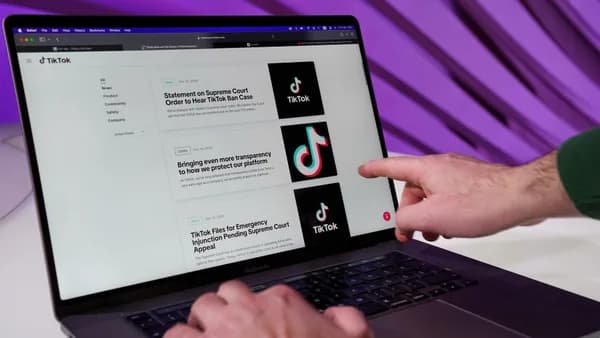
Meta's $18 billion settlement with state attorneys general over teen mental health claims isn't a defeat. It's a weapon. The most revealing part isn't the staggering sum according to The Verge, but an unprecedented clause: up to $5.3 billion of that total only comes due if TikTok and YouTube agree to pay the same amount and adopt identical teen safety rules. Meta's open letter in major newspapers asking its rivals to "join" isn't a plea for cooperation. It's a compliance marketing campaign. This raises a single, stark question: Can a corporation facing massive regulatory punishment not just survive it, but turn its own punishments into a competitive cudgel against rivals?
XOOMAR Intelligence
Analyst Take
How Does a Company Turn an $18 Billion Fine Into a PR Win?
Meta's ad blitz unveils the core strategy. C.J. Mahoney, Meta’s Chief Legal Officer, stated the deal was "bigger than a legal resolution." In an open letter positioned as an "industry standard," Meta wrote: "These protections will only be truly effective if we work with our peers, TikTok and YouTube, to put the same measures in place."
The company is spending heavily to frame this narrative. According to a report corroborating the clause, Meta has run more than 3,500 unskippable national TV commercials across major networks since November, touting teen safety features.
The masterstroke is flipping liability into leadership. By publicly calling on TikTok and YouTube to copy its imposed rules, Meta repositions itself from the industry's chief defendant to its proactive safety steward. When Connecticut Attorney General William Tong says, "To TikTok, YouTube and Snapchat, our expectations are clear. You're next," it sounds like law enforcement pressure. But the demand aligns perfectly with Meta's commercial interest. Meta is no longer fighting the rules; it's now marketing them to its rivals, a shift we have documented in previous Instagram Time Limits Enforced by Attorneys General.
Key settlement details Meta must implement:
- Guaranteed payment: Approximately $12.7 billion to states, billed as "the biggest payout, by far, in Meta’s history."
- Daily limits & "Night Mode": A two-hour default daily limit on teen use of Facebook and Instagram. The "night mode" blocks access between midnight and 6 a.m.
- Other teen changes: Bans on cosmetic surgery filters, removal of "Likes" by default on teen posts, and stronger parental controls.
"Our new Time Limit commitments, Night Mode features, and usage limits during school hours set the right path forward for our whole industry, but this framework will only work if all our peers join us," said Mahoney.
It’s textbook crisis PR turned offensive. The company admits no wrongdoing, pays a sum [$18 billion] that Fortune reports Meta can earn in 33 days based on its $200.1 billion 2025 revenue, and seizes the high ground. If the goal is to end the political and legal punishment, this is a more effective play than any courtroom defense.
Why Is Meta Holding $5.3 Billion Hostage?
The financial contingency is the settlement's operational engine and its sharpest strategic edge. Jess Nall, a California litigator, told Fortune the clause is abnormal: "There's definitely nothing really about this that's all that normal."
Here is the contingency breakdown, which compels TikTok and YouTube to become de facto partners in Meta's compliance:
| Requirement | Benefit for Meta | Condition to Trigger Full Payment |
|---|---|---|
| TikTok & YouTube pay $5.3B combined | Offsets Meta's cost | Meta pays the full $18B; rivals pay $5.3B. |
| TikTok & YouTube adopt Meta's rules | Levels advertising & engagement playing field | Default one-hour teen daily limits, Night Mode, and school-hour blocks enforced on all platforms. |
| No action by rivals | Meta saves $5B & paints rivals as safety holdouts | Meta's total payment drops by $5.3B to ~$12.7B. |
This isn't charity. It's a hard-nosed business calculation. Without industry-wide adoption, teens limited on Instagram would simply migrate their screen time to unrestricted rivals, eroding Meta's user engagement metrics and ad revenue. The settlement enshrines Meta's own long-held defense: causality is impossible to pin on one app when teens use many. But now, that argument is codified as a financial incentive for rivals to conform.
The clause also subtly pressures app stores run by Apple and Google to standardize age verification, something Meta has lobbied for. The settlement notes Meta's age framework will incorporate "reliable age signals shared with Meta by operating systems and app stores." This pulls platform giants deeper into the regulatory architecture Meta helped design.
What Does This Mean for TikTok, YouTube, and User Experience?
TikTok and YouTube now face a compliance dilemma engineered by Meta. No law forces them to accept Meta's rules, but the political and financial pressure to do so is immense.
- TikTok, with its uniquely addictive, algorithm-driven "For You" feed, would face a fundamental redesign challenge under the one-hour daily limit.
- YouTube, built on a vast library of long-form content and endless recommendations, would see its core "watch next" mechanics disrupted for teen users.
Both companies, according to the sources, have remained silent on Meta's public call-out.
For users, particularly teens and parents, the settlement promises concrete, if blunt, controls. The regulated social web would become more uniform:
- Pro: Standardized boundaries like Night Mode and usage alerts could ease parental oversight.
- Con: Josh Golin, executive director of Fairplay, criticized the settlement's core flaw: "The fact that Meta doesn't have to pay the full penalty unless its corporate rivals follow suit underscores that this settlement is not nearly enough." He also noted the deal expires after 10 years.
The risk for platforms is homogenization. Innovation in user engagement, the very feature that propelled TikTok's rise, becomes a legal liability when framed as "addictive." The social media landscape would edge toward a "lowest common denominator" of safety, where unique, engaging features are stripped to mitigate legal risk, a dynamic at play in other heavily regulated sectors like NDIS Reforms Clear Parliament After Last-Minute 63-Amnesty Deal
Who Actually Wins in This High-Stakes Settlement?
The stakeholders are all playing a different game.
State Attorneys General secure a massive headline win and billions for youth mental health programs. But they may have inadvertently handed Meta a ready-made regulatory blueprint to constrain its fiercest competitors, achieving through commercial pressure what law could not directly mandate.
Meta achieves multiple objectives: it caps litigation risk on a major front, publicly rebrands as a safety leader, and uses the settlement to force its major rivals to either adopt its costly new operational constraints or face public shaming as safety laggards.
TikTok and YouTube are now on defense. They must decide whether to spend billions and redesign core features to match a standard set by their largest competitor, or resist and absorb relentless political and PR attacks portraying them as dangers to children.
Users and Activists get tangible new controls, a multi-billion-dollar funding pool for mental health, and proof that litigation can force change. But veterans of platform accountability wars, like Golin, see the limitations: core issues like recommendation algorithms and long-term enforcement remain unaddressed. This fight now shifts to a new, more complex battlefield of compliance parity.
Is This the Playbook for Regulatory Capture?
Meta's settlement is a potential masterclass in turning compliance into a competitive moat. Philip Yannella, a privacy lawyer at Blank Rome, called the structure "savvy tactical lawyering."
The underlying principle is simple: large, established players with vast legal and lobbying resources can absorb and shape regulatory costs. Smaller, nimbler rivals, or those with fundamentally different product architectures, cannot. By having its own mandated features presented as the "sensible, ready-made template" for all, Meta can slow innovation and cement its market position under the banner of safety.
Jess Nall framed this as a strategic, but not final, victory for Meta: "This is a big thing, but it's a speed bump on the long highway that we're going to keep on driving for a couple of years." The deal doesn't resolve thousands of private lawsuits, and conceding platform changes is, as she noted, "tantamount toward an admission that whatever they had in the past was problematic." The broader questions of Section 230 immunity and product design liability will continue, reaching "every AI company and every AI startup."
What Will Social Media Look Like in Five Years?
The immediate future now hinges on whether TikTok and YouTube capitulate or fight. Their silence is telling, but likely temporary.
Watch for:
- Policy Ripples: Other jurisdictions globally will likely point to the "Meta standard" as a template. A de facto global rulebook for teen online safety could emerge, with Meta's design choices at its core.
- Market Fracturing: If the major platforms converge on uniform restrictions, a user exodus to smaller, less-regulated apps or emerging mediums, like the kind enabling secret code features examined in our coverage of TikTok Buried Code Reveals P2P Payment Weapon, could ironically recreate the "wild west" environment this settlement aimed to tame.
- Algorithm Armistice: The most glaring omission from the settlement is any mandated change to Meta's core recommendation engines. This leaves the most potent drivers of engagement and potential harm untouched. Future legal battles will focus here.
Meta’s settlement shows that in the modern tech landscape, the penalty is not the end of the story. It’s the opening move in the next, more complex game of commercial warfare waged with regulatory weapons. For Meta, the message is delivered: if we're going down, we aren't going alone.
Why This Changes Everything
- This transforms regulatory penalties from financial losses into competitive weapons, reshaping how companies approach settlements.
- It forces Meta's main rivals (TikTok and YouTube) to either pay billions matching Meta's terms or face public criticism for not protecting teens.
- The tactic could set a precedent where large fines become tools for market leaders to impose their operational standards on competitors.
Comparison of Key Players in Settlement Context
| Company | Financial Exposure | Required Action |
|---|---|---|
| Meta | $18 billion settlement (up to $5.3B contingent) | Adopt & market teen safety rules |
| TikTok | Up to $5.3B if they match Meta | Must match Meta's safety rules |
| YouTube | Up to $5.3B if they match Meta | Must match Meta's safety rules |
| Snapchat | Implied pressure from AG (no $ amount) | Implied expected compliance |
Meta's Contingent Settlement Breakdown
Primary Sources & Disclosures
- [1]The Verge
- [2]Don't praise Meta 'for what the court orders them to do': Meta will only pay the full $17.1 billion settlement if TikTok and YouTube match it | Fortune
- [3]Meta calls out YouTube, TikTok after historic $18 billion settlement
- [4]Meta demands TikTok and YouTube adopt same safety changes before paying full $18B settlement

Written by
XOOMAR Insights Team
Research and Editorial Desk
The XOOMAR Insights Team pairs automated research with human editorial judgment. We track hundreds of sources across technology, fintech, trading, SaaS, and cybersecurity, cross-check the facts, and explain what happened, why it matters, and what to watch next. We do not just rewrite headlines. Every article is fact-checked and scored for reliability before it goes live, and we link back to the original sources so you can verify anything yourself.