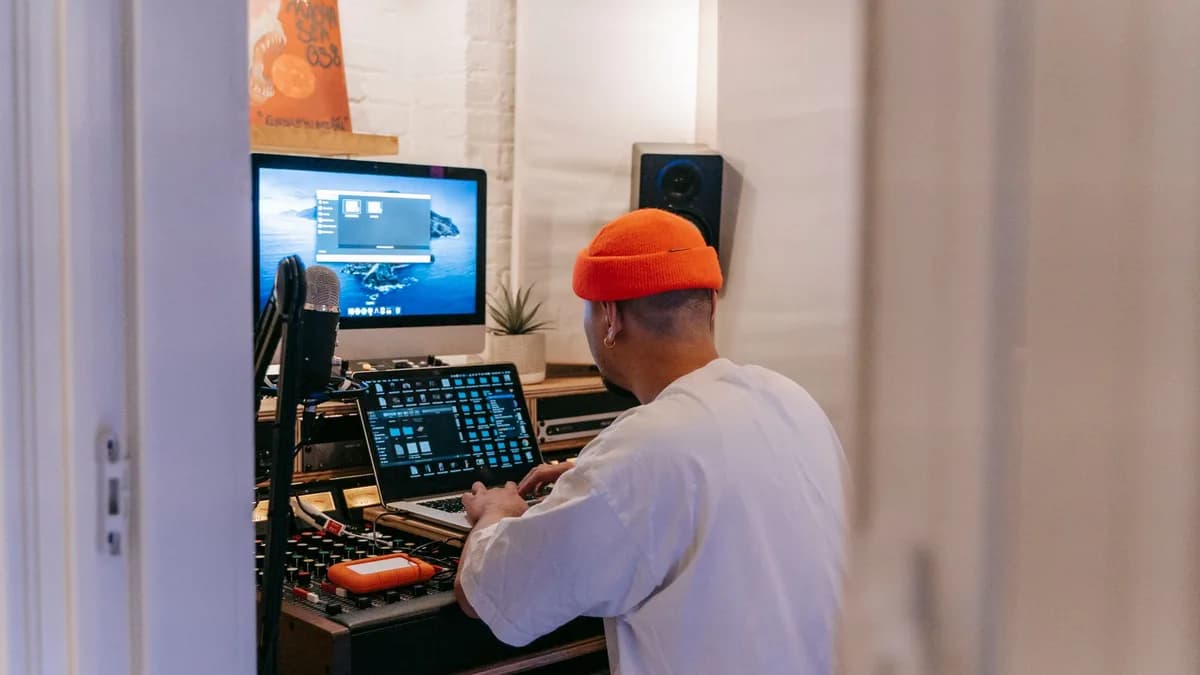
A 26-year-old electronic music producer scrolling through his feed hears a song that feels wrong. The vocals and melodies seem to jerk and stutter in unnatural unison, like instruments fused into one unnatural mass. He hears a persistent, sharp hissing he links to AI models building sound from digital "white noise." He posts a video calling it out. This is now a daily routine in electronic dance music, where a community of musicians has turned detective, hunting for fakes in a space flooded with what one producer calls "the sound of Suno." According to a report by The Verge, the question isn't just about copyright. It's about identity theft, the hollowing out of a creative scene, and whether fans can even tell the difference anymore.
XOOMAR Intelligence
Analyst Take
Why Are Musicians Forced To Play Detective?
The impact isn't abstract. For creators like Italy's Nihil Young, it's a direct hit to his livelihood. He told The Verge that "almost as soon as AI began rolling out, I started losing many of my clients," including work for Sony Music, Warner, and Universal. His income from mixing and mastering evaporated.
The financial pain is amplified by a deeper violation of artistic identity. Young explains that AI users are "just straight up uploading original, copyrighted tracks of artists like Madonna and asking the platform to remix them. If they can do it with major artists like her, they can do it with you, me, and everyone else." This creates a landscape of confusion and distrust, where every new viral track is suspect. As these detectives see it, platforms like Suno aren't just tools. They are engines for a new form of theft, one that steals not just a melody but an entire artistic persona to generate "new" songs.
What Are The Unmistakable Tells Of An AI Fake?
The hunters rely on a mix of technical ear training and digital pattern recognition. They've developed a list of forensic clues that point to AI generation.
Max "H4RRIS" Harris, a producer leading the charge, describes several auditory red flags:
- "A sharp hissing throughout the track," which he theorizes comes from AI models starting with "a big white noise block."
- Vocal and melodic elements that "start stuttering at the exact same time." He argues AI models "treat these elements like one big instrument," a composition choice no human would logically make.
The scrutiny extends beyond sound. Visuals are a dead giveaway. Harris points to AI persona Lionsaddle, whose videos show fingers "vanishing in and out of existence," and content from Midnite Manna that carries an "overly glossy visual quality" typical of AI-generated imagery.
These investigations are often crowdsourced. Harris was inspired by Nihil Young's Threads posts, and suspicions coalesce around tracks like MANSA’s "Midnight on My Mind" and Danny and Ian Asher’s "Take Me (To The Moon)." While no definitive proof exists (the artists haven't commented), the collective ear of the community flags them as examples of what they term "slop." This mirrors a larger trend where online communities are banding together to identify digital fraud, as seen in cases like art platforms using new tools to fight AI scrapers.
How Do The AI Music Machines Actually Work?
The core of the issue lies in how these generative models are built and function. According to the producers fighting them, the process is fundamentally different from human creation. Harris describes his own, human process: it begins with a concept, involves hundreds of creative decisions using hardware and software like Ableton Live and analog synthesizers, and culminates in a mix crafted to evoke specific emotion.
"I don't consider AI-generated material to be art," Harris states. "It's a technological advancement that's giving people a way to steal real art and pass it off as their own."
The AI alternative, as understood by these artists, involves training on massive datasets of existing music. Platforms like Suno then allow users to generate complete songs. Young notes that Suno's Simple Mode lets users create a track by selecting a genre and clicking a button, requiring "basically zero thinking." The more detailed prompting options still rely on the model's algorithmic interpretation of the ingested data, often merging and mimicking the styles it has consumed. The ethical breach, for these musicians, occurs when users prompt these tools specifically to sound like a known artist, effectively creating an unauthorized audio deepfake.
Is This Just High-Tech Fan Art, Or Is It Theft?
This creates a vast ethical gray zone. Proponents of AI music might call it a new form of sampling or fan tribute. The artists on the frontline reject this framing entirely. For them, the lack of consent and compensation is the critical fault line.
The distinction between a "soundalike" tribute and a deepfake is murky in law but feels visceral in practice. When an AI-generated track like King Willonius's "BBL Drizzy" (made with Udio) went viral and was later used by Metro Boomin to diss Drake, it blurred lines. It was parody, but its creation still involved cloning a voice. Meanwhile, purely synthetic artists are being monetized at scale. According to data cited in the report, Kapwing estimates the top 10 AI music creators on Spotify and YouTube collectively made over $6 million in 2025. Hallwood Media signed AI avatar Xania Monet to a $3 million recording deal. This commercial push to normalize AI content forces a stark question: when a machine's output directly competes with a human's for attention and revenue, where does fan art end and market displacement begin?
Will Labels And Watermarks Save Human Music?
The response is unfolding on three fronts: legal, technological, and cultural.
Legally, the landscape is fragmented. While specific legislation like the Tennessee ELVIS Act targets voice cloning, the core issue of algorithmic style mimicry remains a legal gray area, as seen in ongoing lawsuits from major labels. Platforms are beginning to react, but slowly. This reflects a broader struggle across tech to balance innovation with creator protection, a tension also apparent in the financial sector's fight against sophisticated fraud.
Technologically, solutions like mandatory audio watermarking for AI-generated content and improved detection tools are being discussed. But Deezer reports that AI songs already account for over 50 percent of new uploads. The scale of the flood may outpace the development of the dam.
The most immediate battle is cultural, fought on platforms like TikTok and Spotify. Artists like Young urge listeners to be more discerning: "In my opinion, it becomes obvious that you're listening to AI-generated music when you put on a good pair of headphones. But I also think that a lot of people these days are consuming music like fast food." His temporary retreat from callouts after facing hacking attempts and harassment shows the personal risk involved.
What to watch next: The critical signal will be whether streaming platforms move beyond voluntary labeling to active enforcement and curation that privileges human artistry. Will they develop a "Verified Human" badge with the rigor of a financial identity check, akin to advanced fraud prevention systems? Or will the economic incentive of endless, cheap content override those concerns? The musicians playing detective today are the canaries in the coal mine. Their fight isn't just about their own tracks. It's a referendum on whether the human hand in art has a defendable value in the algorithmic age. The answer will determine if the next generation of producers reaches for a synthesizer or a prompt box.
Why This Changes Everything
- Musicians are losing real income as clients turn to AI for mixing and mastering work instead.
- AI is being used to directly copy and remix copyrighted tracks of major artists, escalating copyright issues into identity theft.
- The flood of AI-generated music creates market confusion and erodes listener trust in the authenticity of new music.
Primary Sources & Disclosures

Written by
XOOMAR Insights Team
Research and Editorial Desk
The XOOMAR Insights Team pairs automated research with human editorial judgment. We track hundreds of sources across technology, fintech, trading, SaaS, and cybersecurity, cross-check the facts, and explain what happened, why it matters, and what to watch next. We do not just rewrite headlines. Every article is fact-checked and scored for reliability before it goes live, and we link back to the original sources so you can verify anything yourself.