The Galaxy S26 FE costs $50 more than its predecessor while keeping nearly all of the core physical components untouched. Software is the product.
XOOMAR Intelligence
Analyst Take
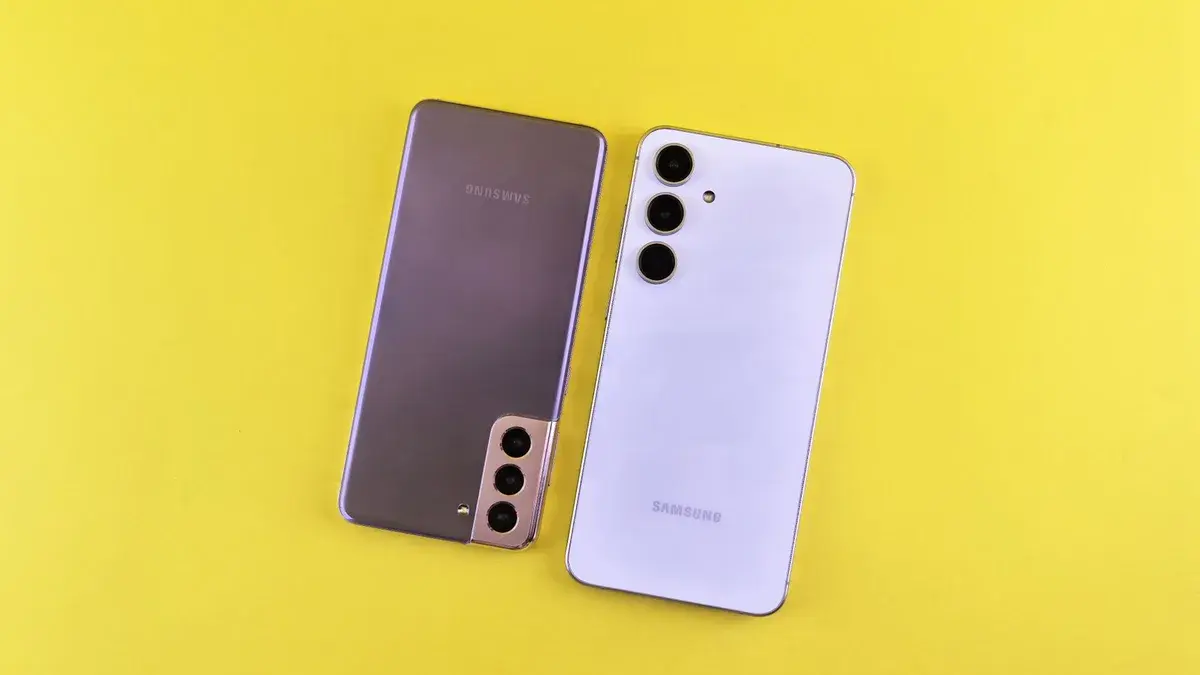
According to a hands-on preview in The Verge, the new Galaxy S26 FE has the same 6.7-inch OLED display, 4,900mAh battery, and triple rear camera system as the S25 FE from last year. The hardware updates are a new chipset, the Exynos 2500, a slightly wider selfie camera, and glossier finishes. Its main new features, like My FanCam and expanded Audio Eraser, are software tricks ported from Samsung's 2026 flagships.
This raises a stark question: what are you actually paying for?
Is This Still a Hardware Upgrade?
On paper, the answer is barely.
The S26 FE's spec sheet is an exercise in minimalism. The display, battery capacity, and main camera array are literal carryovers. The annual chipset upgrade is a given, not a headline. The most tangible hardware change might be the 12-megapixel selfie camera's field of view, now 85 degrees instead of 80.
The changes are few: The chipset has been given its annual upgrade to the Exynos 2500, and the 12-megapixel selfie camera is a little wider, with an 85-degree field of view, up from 80.
Even the new colors, graphite, blueberry, and pistachio, are iterations, with pistachio borrowed directly from the Galaxy Z Fold 8. The design tweak is a raised camera island to match the look of other S26 models.
For a product line historically billed as offering near-flagship hardware at a friendlier price, this is a fundamental shift. The hardware is no longer the compressed-time flagship of yesteryear; it's last year's model, full stop.
Why Would Samsung Shift to a Software-Led Model?
The move is a clear, margin-protecting play.
Developing new display panels, camera sensors, or structural designs is expensive. Porting software features from existing flagship devices is not. By keeping the physical platform stable, Samsung minimizes its bill of materials and retooling costs. The $699.99 starting price represents a $50 increase over the S25 FE's launch price, which the report attributes partly to "RAMageddon," a reference to industry-wide memory cost pressures.
The software features themselves are not trivial. My FanCam uses AI to track a subject in video. Audio Eraser now works in third-party apps like YouTube. Now Brief gets custom AI cards. But these features debuted on the S26 series and foldables months earlier. You are paying for a delayed software download on old hardware.
This strategy only works if the market accepts it. Samsung seems to be betting that for the mid-tier buyer, a suite of recognizable AI features carries more marketing weight than a new sensor they can't quantify.
What Happens to the 'Fan' in Fan Edition?
It gets diluted, potentially beyond recognition.
The "Fan Edition" concept originally served tech enthusiasts priced out of the ultra-premium segment. It was a hardware compromise, not a hardware re-run. This model asks a different kind of enthusiast to pay more for a platform that is, in every meaningful physical sense, unchanged from the model they could have bought a year ago for less money.
XOOMAR Interpretation: This creates a branding crisis. If "Fan Edition" comes to mean "last year's specs with this year's software," it transforms from a unique value proposition into just another iterative SKU in Samsung's crowded calendar. The risk is that the very audience it targets, knowledgeable users who track specs, will be the first to see through the veneer and question the value.
The report notes that the S26 Plus, though launched at $1,099.99, can now be found for $899.99 with 256GB of storage, just $100 more than a similarly equipped S26 FE. That shrinking price gap, against a backdrop of superior cameras, build, and performance in the mainline model, makes the FE's positioning even more precarious.
Is the S26 FE a Bellwether for the Entire Mid-Range?
It signals a path to profitability in a stalled market.
The smartphone industry's era of revolutionary annual hardware leaps is over. The S26 FE's strategy, monetizing software and AI integration atop a stable hardware base, is a logical, if cynical, adaptation to that reality. It's not about thrilling fans with value; it's about extracting reliable revenue from a mature product line.
XOOMAR Interpretation: This mirrors a broader industry pivot where the battleground is shifting from pure specs to ecosystem and AI utility. We're seeing similar moves elsewhere, like AI features being packed into unexpected form factors, such as an Earbud Case Holds an AI Agent That Completes Your Tasks. When hardware innovation plateaus, companies will increasingly compete on the intelligence layer they can slap on top.
For consumers, the takeaway is practical: your next phone upgrade is less about the new screen or camera and more about the software experience and long-term support it will receive. The physical shell is becoming a vessel for code.
Does This Strategy Have a Shelf Life?
Only if Samsung can maintain the perception of value.
The immediate risk is that savvy buyers will simply wait. If the S26 FE is a lightly refreshed S25 FE, then the S25 FE, likely discounted, becomes the obvious value purchase. This trains consumers to skip launch day and erodes the product's pricing power.
Looking ahead, the FE line faces a strategic fork:
- Continue this path: It becomes a predictable, annual software update atop biennial hardware, slowly morphing into "Samsung's Mid-Range" in all but name.
- Reinvent itself: Samsung could shock the market with a radical hardware re-design for a future FE, but the marginal economics make this unlikely.
- Fade away: If sales stagnate under this model, the line could be quietly retired, its role absorbed by discounted previous-generation flagships.
The S26 FE's success or failure won't be measured in raw sales alone, but in whether Samsung can convince buyers that software is a worthy substitute for hardware progress. Its release is a test of a new industry axiom: in a mature market, you don't sell a device, you sell an update.
Impact Analysis
- It signals a major strategic shift where consumers pay more for software updates instead of significant hardware improvements, changing the value proposition of the 'refresh' model.
- It reveals an industry trend where manufacturers are cutting R&D costs on physical components to protect margins, potentially slowing tangible innovation for mainstream devices.
- It forces consumers to question if a $50 price hike for minimal hardware changes and ported software features represents fair value, affecting purchasing decisions.
S26 FE vs. S25 FE Hardware Comparison
| Component | Galaxy S26 FE | Galaxy S25 FE |
|---|---|---|
| Display | 6.7-inch OLED | 6.7-inch OLED |
| Battery | 4,900mAh | 4,900mAh |
| Rear Camera | Triple System | Triple System |
| Selfie Camera | 12MP, 85° FOV | 12MP, 80° FOV |
| Chipset | Exynos 2500 | Previous generation chipset |
Primary Sources & Disclosures

Written by
XOOMAR Insights Team
Research and Editorial Desk
The XOOMAR Insights Team pairs automated research with human editorial judgment. We track hundreds of sources across technology, fintech, trading, SaaS, and cybersecurity, cross-check the facts, and explain what happened, why it matters, and what to watch next. We do not just rewrite headlines. Every article is fact-checked and scored for reliability before it goes live, and we link back to the original sources so you can verify anything yourself.